
Mango Ginger Benefits & Kasturi Manjal Uses (Amba Haldi Explained)
Mango ginger and kasturi manjal get confused often, since both are rhizomes related to turmeric and ginger — but they’re distinct ingredients with.
Key Takeaways
- Mango ginger and kasturi manjal are distinct rhizomes, often confused with turmeric.
- Mango ginger is edible, used in pickles and chutneys, with mild digestive benefits.
- Kasturi manjal is not eaten – it’s used topically in skincare for its brightening reputation.
- Both have lower or different curcumin content than regular, well-studied turmeric.
- Mango ginger is seasonal, typically appearing in markets during winter.
Mango ginger benefits and kasturi manjal uses get confused often, since both are rhizomes related to turmeric and ginger — but they’re distinct ingredients with different traditional purposes, worth telling apart rather than lumping in with regular turmeric.
Mango ginger benefits (amba haldi)
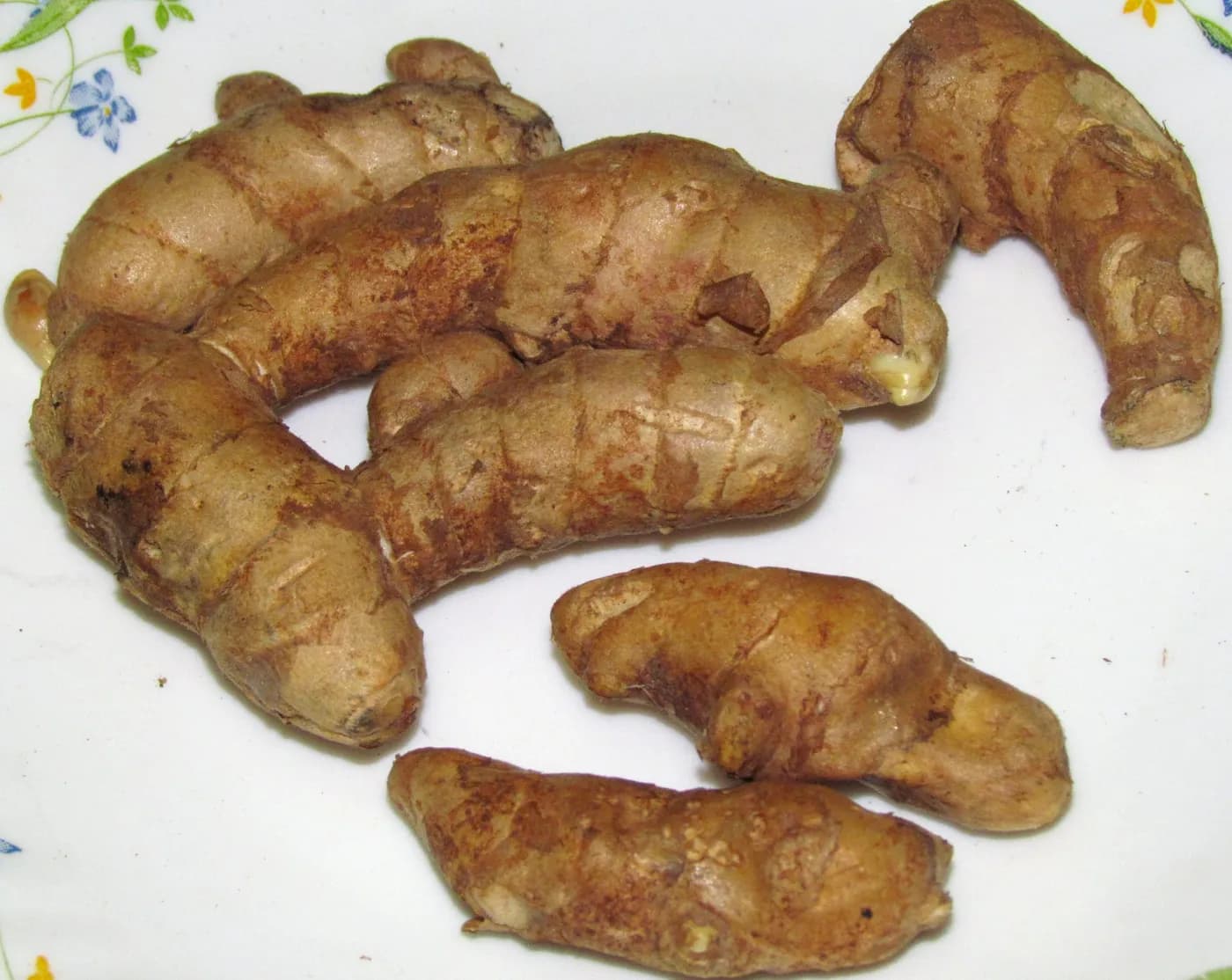
Mango ginger looks like ginger but smells faintly of raw mango, hence the name. It’s used more as a food ingredient than a medicinal one in most Indian kitchens — commonly in pickles and chutneys.
Traditional and culinary uses: – Digestive support, often eaten as a pickle alongside meals – Mild antioxidant content, though less studied than true turmeric’s curcumin – Used in some regional home remedies for mild throat or cold discomfort
These mango ginger benefits are mild compared to turmeric’s curcumin, which is part of why it’s treated as a food ingredient rather than a medicinal one.
Kasturi manjal (wild turmeric)
Kasturi manjal is a different turmeric species, notably not meant for regular cooking or eating — it’s primarily used topically, especially in skincare.
Traditional and topical uses: – Common in face packs for its brightening, exfoliating reputation – Used traditionally before weddings and festivals as part of skincare rituals – Has a bitter taste and stronger aroma than edible turmeric, another reason it’s kept out of food
Key differences from regular turmeric
Here’s how mango ginger benefits compare with kasturi manjal and regular turmeric:
| | Mango ginger | Kasturi manjal | Regular turmeric |
| --- | --- | --- | --- |
| Edible | Yes | No (topical only) | Yes |
| Primary use | Culinary/digestive | Skincare | Culinary/anti-inflammatory |
| Curcumin content | Low | Different profile | Higher, well-studied |
For the well-researched anti-inflammatory compound, see Turmeric & Curcumin Benefits — that’s specifically about regular turmeric, not these two.
Photo: Manoj Karingamadathil, CC BY-SA 4.0, via Wikimedia Commons
How mango ginger is traditionally used
Understanding the mango ginger benefits fully means looking at how it actually shows up in Indian kitchens, since it’s treated more like a seasonal ingredient than a supplement:
- Fresh pickle (achar) — thin slices or grated mango ginger mixed with lemon juice, salt, and chilli is the most common preparation, especially in Maharashtrian and South Indian households
- Chutneys — ground with jaggery, tamarind, or raw mango for a tangy-sweet side dish
- Raw, as a garnish — thinly sliced and eaten alongside a meal for its digestive-support reputation
- Seasonal availability — it typically appears in markets during winter, so most of the mango ginger benefits people experience come from seasonal, occasional use rather than daily consumption
Haldi (turmeric) milk is the other place these rhizomes usually show up in daily routines — see Haldi Milk Benefits for how that compares, and Turmeric & Curcumin Benefits for the actual research-backed compound behind true turmeric.
Who should be cautious with mango ginger and kasturi manjal
- Anyone with a known sensitivity to ginger or turmeric family spices — mango ginger belongs to the same rhizome family and can cause similar mild digestive discomfort in sensitive individuals
- Anyone tempted to try kasturi manjal internally — it is not food-safe and can cause stomach upset; keep it strictly topical
- Anyone with sensitive or broken skin — kasturi manjal face packs should be patch-tested first, since its exfoliating reputation can occasionally irritate reactive skin
- Anyone expecting medicinal-strength results — neither mango ginger benefits nor kasturi manjal’s topical effects are backed by the same volume of research as regular turmeric’s curcumin, so expectations should stay realistic
Mango ginger benefits and kasturi manjal: myths vs facts
- Myth: Mango ginger is just a flavoured version of regular ginger. Fact: it’s a different plant entirely (Curcuma amada), and the mango ginger benefits people associate with it — mild digestive support, antioxidant content — come from its own distinct compound profile, not ginger’s.
- Myth: Kasturi manjal can be used as a turmeric substitute in cooking. Fact: it’s a different, non-edible species meant only for topical use — swapping it into food is a genuine mistake, not a creative substitution.
- Myth: Mango ginger benefits include the same anti-inflammatory strength as curcumin. Fact: mango ginger’s curcumin content is low and far less studied, so it doesn’t deliver the same researched anti-inflammatory effect as regular turmeric.
- Myth: Anything called “haldi” or “turmeric” in its name works the same way. Fact: mango ginger, kasturi manjal, and true turmeric are three separate plants with different uses — the shared naming is about resemblance, not identical properties.
Common mistakes about mango ginger benefits and kasturi manjal
- Using kasturi manjal in cooking — it isn’t meant to be eaten and can cause stomach discomfort
- Confusing mango ginger with regular ginger — they look similar but taste and are used differently
- Expecting the same curcumin-linked benefits as turmeric — neither of these has the same research base as true turmeric
Frequently Asked Questions
Related Articles

Healthy fats: why your body needs fat
Healthy fats help your body absorb vitamins and support brain, hormones, joints, cells and daily meals. Learn simple vegetarian sources and habits.

Good fats vs bad fats: choose fats wisely
Understand good fats vs bad fats in simple words. Learn which vegetarian fats to choose, what to reduce and how to read food labels better.
