
Mustard Benefits: Seeds, Oil, Greens and Safety
Mustard refers to seeds, leaves, prepared condiment and oil. Each form has a different nutrition profile and cooking role.
Key Takeaways
- The seeds, greens, condiments and oil are not nutritionally identical.
- Seeds add flavour in small quantities, while greens contribute fibre and micronutrients.
- Bottled mustard may contain substantial sodium or sugar.
- Use only food-grade oil permitted for cooking in your location.
- An allergy to the seeds or products made from them can cause a serious reaction.
This familiar ingredient may appear as tiny seeds used in tadka, leafy sarson, bottled condiments or cooking oil. These forms come from related plants but differ greatly in nutrition, portion size and use.
Understanding mustard benefits requires knowing which form is being discussed. It can add flavour and variety to vegetarian meals, but it does not detoxify the body or treat disease.
What is it?
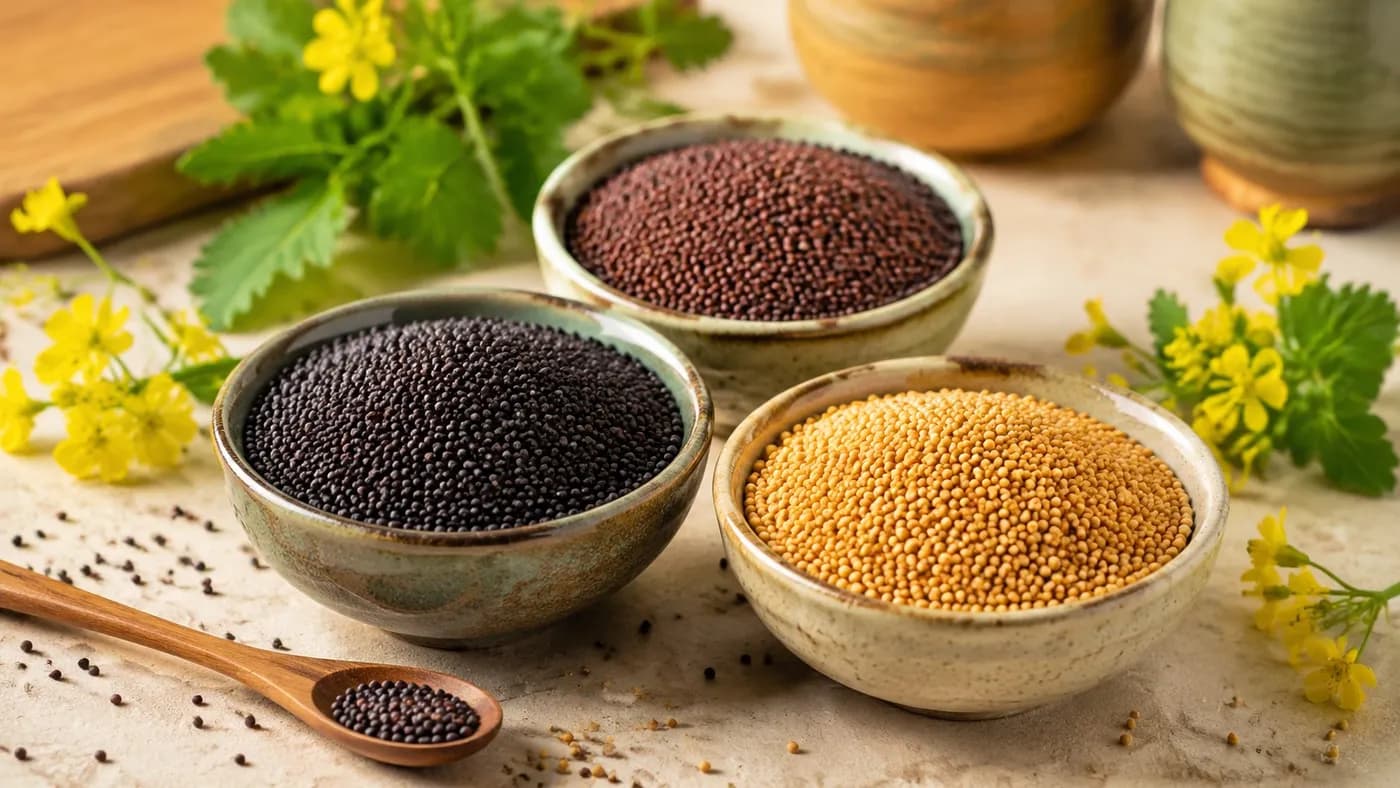
The plant belongs to the Brassica family, which also includes cabbage, broccoli and cauliflower. Brown, black and yellow seeds are used as spices. The leaves are cooked as sarson ka saag, while ground seeds are mixed with liquid to make condiments.
Mustard oil is pressed from the seeds and has a strong aroma. Because the leaves, sauces, seeds and oil are consumed in very different quantities, a claim about one form should not automatically be applied to another.
Nutrition and benefits by form
Seeds
Seeds contain fat, protein, fibre and minerals, but a typical tadka uses a small quantity. They contribute flavour and texture more than a large share of daily nutrients.
Leafy greens
Sarson leaves provide water, fibre, folate, vitamin K and carotenoids. Their final nutrition depends on cooking and additions such as ghee, butter, cream or salt.
Prepared condiments
Bottled mustard often contains ground seeds, vinegar, water and salt. Sweetened sauces may add sugar or honey. A small amount can provide strong flavour, but check sodium when you use it frequently.
Cooking oil
Oil supplies fat and energy but not the fibre found in seeds or greens. Its suitability depends on food regulations and the product’s intended use. Never assume that a bottle sold for massage or external application is suitable for cooking.
Possible mustard benefits
Strong flavour in a small portion
The seeds and condiments can add pungency without requiring a large serving. This may help make vegetables, dal or homemade dressings enjoyable.
The practical value comes from how it fits the meal. A salty packaged sauce used in large quantities is different from a small spoonful of a simple homemade condiment.
Fibre and nutrients from leafy greens
Sarson contributes fibre and plant compounds alongside vitamins and minerals. Combining it with other greens can create variety in a vegetarian diet.
These benefits do not depend on eating an oversized bowl. Cook the greens safely and balance the meal with dal, beans, tofu, paneer or curd plus a suitable grain.
Unsaturated fat in the cooking oil
Food-grade mustard oil contains mostly unsaturated fat. Replacing some saturated fat with unsaturated oils may support a heart-friendly eating pattern.
This does not mean unlimited oil improves health. All oils are energy-dense. Measure the amount and consider the complete diet rather than relying on one oil to lower cholesterol or blood pressure.
Plant compounds
Plants in this family contain glucosinolates and related compounds studied in laboratory research. These findings do not prove that the spice prevents cancer, removes toxins or cures infection in people.
Food can contribute to a varied diet without needing a therapeutic claim. That is the realistic context for mustard benefits.
How to use it in Indian meals
Simple options include:
- Add a small amount of seeds to tadka.
- Use sarson in saag with other seasonal greens.
- Mix the prepared condiment into a curd-based dip.
- Add a little ground seed powder to a homemade dressing.
- Use a measured amount of food-grade oil for suitable cooking.
- Add seeds to pickles while following a tested food-safety method.
- Combine the condiment with lemon, herbs and spices for flavour.
These uses add variety without turning the ingredient into a supplement. Habuild’s everyday diet and nutrition guide can help place oils and condiments within a complete meal.
Mustard oil: what to check
Rules for this oil differ across countries. Buy only a sealed food-grade product labelled for edible use and follow local regulations. Do not consume an essential oil or cosmetic product.
Check the ingredient list because blended oils may contain other oils. Store the bottle away from heat and light, close it tightly and discard oil with an unusual rancid smell.
Using more oil does not increase mustard benefits. Measure it with a spoon and avoid repeatedly heating the same batch. People with a medically prescribed low-fat diet should follow their clinician’s guidance.
Prepared mustard and sodium
A condiment portion is usually small, but repeated use can add sodium. Compare labels and note the serving size. Products described as sweet, barbecue-style or honey mustard may also contain added sugar.
The prepared condiment can still fit the diet. Use enough for flavour and balance it with mostly minimally processed foods. People managing high blood pressure or kidney disease may need particular attention to sodium.
Allergy precautions
Mustard can trigger allergy through its seeds, powder, sauces, dressings, pickles or seasoned foods. Label requirements vary, so ask about ingredients when eating outside the home.
Symptoms may include hives, vomiting, swelling, wheezing or difficulty breathing. Seek urgent medical help for facial or throat swelling, faintness, breathing trouble or a widespread reaction.
Do not test a suspected allergy at home. An allergy professional can provide diagnosis, avoidance advice and an emergency plan.
Digestive and skin irritation
Strong preparations may irritate the mouth, stomach or skin. Large amounts can worsen heartburn or abdominal discomfort in some people.
Undiluted preparations and essential oils can burn the skin. Traditional plasters made from the seeds are not risk-free and should not be used to treat pain or respiratory symptoms.
Start with a small food portion if you are unfamiliar with the flavour. Stop if it repeatedly causes discomfort.
Pregnancy, medicines and medical conditions
Normal culinary portions are different from concentrated extracts or essential oils. Avoid supplement-style products during pregnancy or breastfeeding unless a qualified clinician recommends them.
People taking regular medicines, preparing for surgery or managing digestive, kidney or blood-pressure conditions should seek personalised advice before using concentrated preparations.
What mustard benefits cannot do
This ingredient cannot cure a cold, burn body fat, detoxify the liver or prevent cancer. Mustard benefits do not replace vegetables, protein-rich foods, movement, sleep or medical treatment.
Its most useful role is culinary: aroma from seeds, variety from greens and sharpness from condiments.
Sources
Frequently Asked Questions
Related Articles

Healthy fats: why your body needs fat
Healthy fats help your body absorb vitamins and support brain, hormones, joints, cells and daily meals. Learn simple vegetarian sources and habits.

Good fats vs bad fats: choose fats wisely
Understand good fats vs bad fats in simple words. Learn which vegetarian fats to choose, what to reduce and how to read food labels better.
