
Onion Benefits: Nutrition Facts, Uses and Safety
Onion benefits can add variety, flavour and useful nutrients to a vegetarian eating pattern. Its exact nutrition depends on the form, serving and.
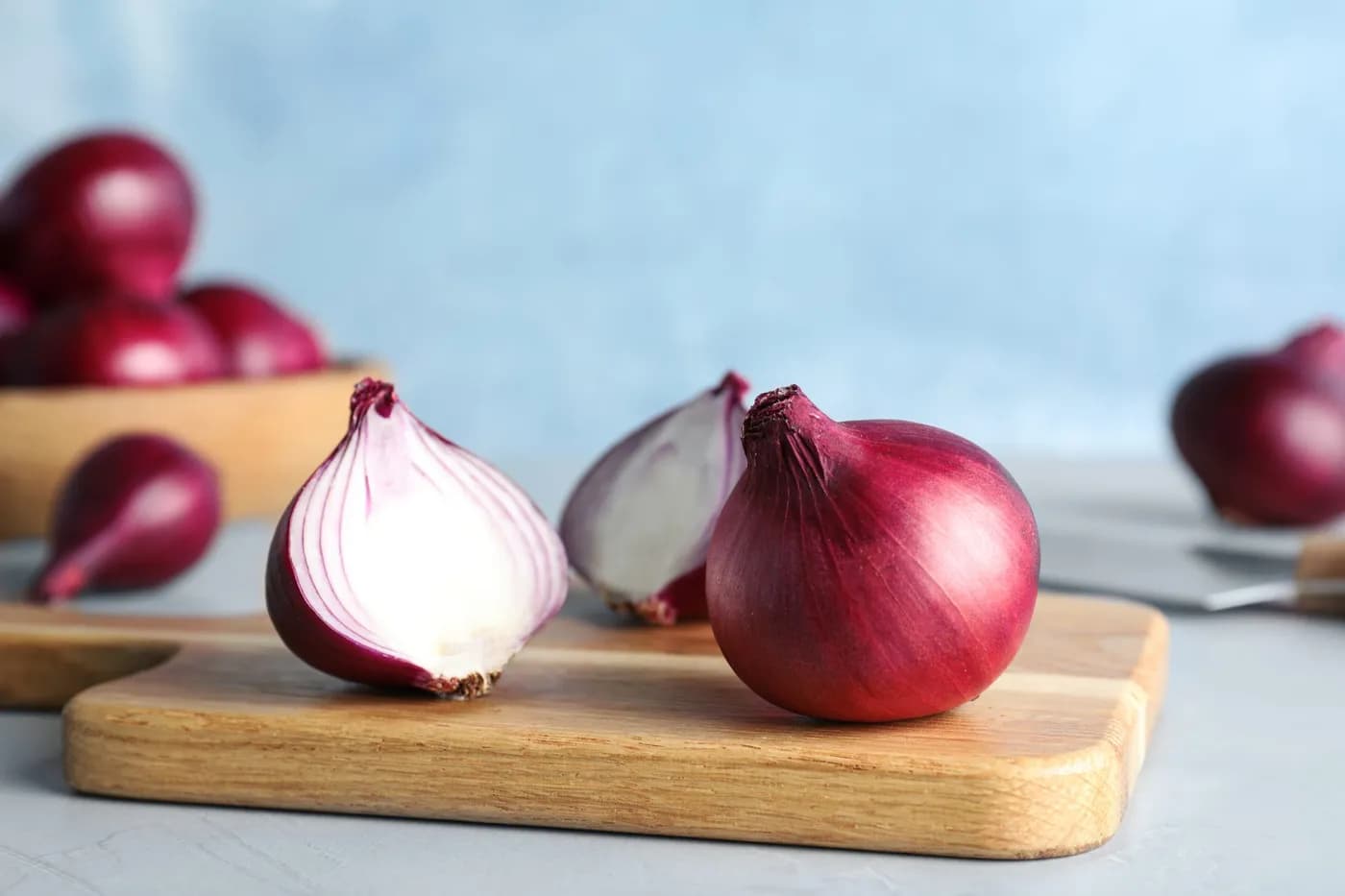
Key Takeaways
- Onions are low in calories and provide modest amounts of fibre, vitamin C, potassium and vitamin B6.
- Proposed onion benefits are linked partly to fibre, fructans, quercetin and sulphur-containing.
- Raw onions retain more heat-sensitive vitamin C, while cooking softens their flavour and may.
- Onions are high in fructans and may trigger gas, bloating or other symptoms in some people with.
- Onion juice and household onion remedies are not substitutes for medical treatment.
- Whole, cut and cooked onions require different storage practices to reduce spoilage and.
Onions are everyday vegetables used raw, sautéed, roasted and cooked in countless Indian dishes. They add sharpness, sweetness and aroma while contributing carbohydrates, fibre, vitamin C and several plant compounds. The most realistic onion benefits come from using onions as part of a varied eating pattern—not from eating unusually large raw portions or drinking concentrated onion juice.
Onion Benefits and Nutrition Facts
Raw onion consists mostly of water and carbohydrates, with a modest amount of fibre and very little fat. The figures below are approximate values for 100 grams of raw onion. The actual amount can vary according to the variety, growing conditions and database entry.
| Nutrient | Approximate amount per 100 g |
| --- | --- |
| Energy | 40 kcal |
| Carbohydrates | 9.3 g |
| Fibre | 1.7 g |
| Protein | 1.1 g |
| Fat | 0.1 g |
| Vitamin C | 7.4 mg |
| Potassium | 146 mg |
Source: USDA FoodData Central. Values are rounded, and a typical serving may be smaller than 100 grams.
Possible Onion Benefits
Fibre, Fructans and Gut Health
Onions contain fibre and fructans, a type of fermentable carbohydrate. Gut bacteria can ferment these compounds, which is why fructans are sometimes described as prebiotic. This fermentation may support certain gut microbes, but it can also produce gas and cause bloating, cramps or diarrhoea in sensitive people.
This is an important example of why onion benefits are not identical for everyone. People with irritable bowel syndrome may react to onions because they are high in FODMAP fructans. A dietitian-guided approach can help identify personal tolerance without unnecessarily removing several nutritious foods.
For more everyday fibre choices, read High-Fibre Foods and Simple Indian Meals.
People with IBS can also refer to Monash University’s guide to high- and low-FODMAP foods.
Raw Onion Benefits Versus Cooked Onion
Discussions of onion benefits often present raw and cooked onions as competitors, but each form has practical advantages. The overall meal, serving size and personal tolerance matter more than declaring one form universally healthier.
Raw onion is crisp, pungent and convenient in salads, raita and chutney. It generally retains more heat-sensitive vitamin C because it has not been exposed to cooking. However, a higher vitamin C content does not automatically make raw onion the best choice for every person or meal.
Cooking softens the texture and pungency of onions. Some people may find cooked onions easier to tolerate, although cooking does not necessarily make onions suitable for everyone with IBS or FODMAP sensitivity.
Easy Ways to Enjoy Onion Benefits
- Add chopped onions to dal, chana, rajma or vegetable curries.
- Combine sliced onion with cucumber, tomato, coriander and lemon for a simple salad.
- Roast onion wedges with cauliflower, carrots or capsicum.
- Use browned onion in pulao, khichdi or a mixed-grain dish for flavour.
- Blend a small amount into chutney or add finely chopped onion to raita.
- Add spring-onion greens to stir-fries, soups, cheela batter or savoury oats.
- Use onions with herbs and spices to add flavour without depending only on salt.
These everyday preparations are a practical way to obtain onion benefits without relying on juices, powders or concentrated extracts. Wash your hands, chopping board and knife before preparation. Remove damaged outer layers and rinse the onion if soil or visible dirt remains.
For help balancing vegetables with stronger meal anchors, read Vegetarian Protein: Needs, Myths and Meals and Diet and Nutrition: Your Everyday Guide.
Digestion, Reflux and Intolerance
Onions can worsen heartburn, belching, bloating or abdominal discomfort in some people. A smaller portion or cooked onion may be easier to tolerate, but individual responses differ.
If symptoms occur repeatedly, maintain a simple food-and-symptom record and discuss it with a clinician or dietitian. Do not eliminate multiple food groups without identifying a clear reason.
Persistent reflux, difficulty swallowing, vomiting, gastrointestinal bleeding or unexplained weight loss requires medical assessment.
Onion Allergy and Skin Irritation
A true onion allergy is uncommon but possible. Symptoms may include itching, hives, vomiting, wheezing or swelling. Handling onions can also irritate sensitive skin without representing a food allergy.
Seek urgent medical assistance if someone experiences:
- Difficulty breathing
- Swelling of the face or throat
- Faintness or dizziness
- A rapidly spreading allergic reaction
People with a diagnosed onion allergy should check spice mixes, sauces, stock powders and restaurant dishes in which onion may not be obvious.
Read the NHS guidance on food allergies for common symptoms and emergency warning signs.
Storage and Food Safety
Store whole dry onions in a cool, dry, dark and well-ventilated place. Avoid sealing them in damp plastic bags. Keep onions separate from potatoes during longer storage because moisture and gases can speed up deterioration.
Peeled, cut or cooked onions should be refrigerated promptly in a clean, covered container. Exact storage time depends on temperature and handling, so use them soon and discard them if there are signs of spoilage.
Follow the general advice of refrigerating cut produce within two hours. See the U.S. Food and Drug Administration’s produce-safety guidance for washing, separation and refrigeration recommendations.
Editorial Sources
- USDA FoodData Central
- U.S. FDA: Selecting and Serving Produce Safely
- Monash University: High- and Low-FODMAP Foods
- NHS: Food Allergy
- PubMed: Onions as a Source of Dietary Flavonoids
- PubMed: Effects of Cooking Methods on Onion Flavonoids
Medical review note: This article provides general information and does not replace individual medical advice.
Frequently Asked Questions
Related Articles

Healthy fats: why your body needs fat
Healthy fats help your body absorb vitamins and support brain, hormones, joints, cells and daily meals. Learn simple vegetarian sources and habits.

Good fats vs bad fats: choose fats wisely
Understand good fats vs bad fats in simple words. Learn which vegetarian fats to choose, what to reduce and how to read food labels better.
