
Paneer bhurji recipe with vegetables for breakfast
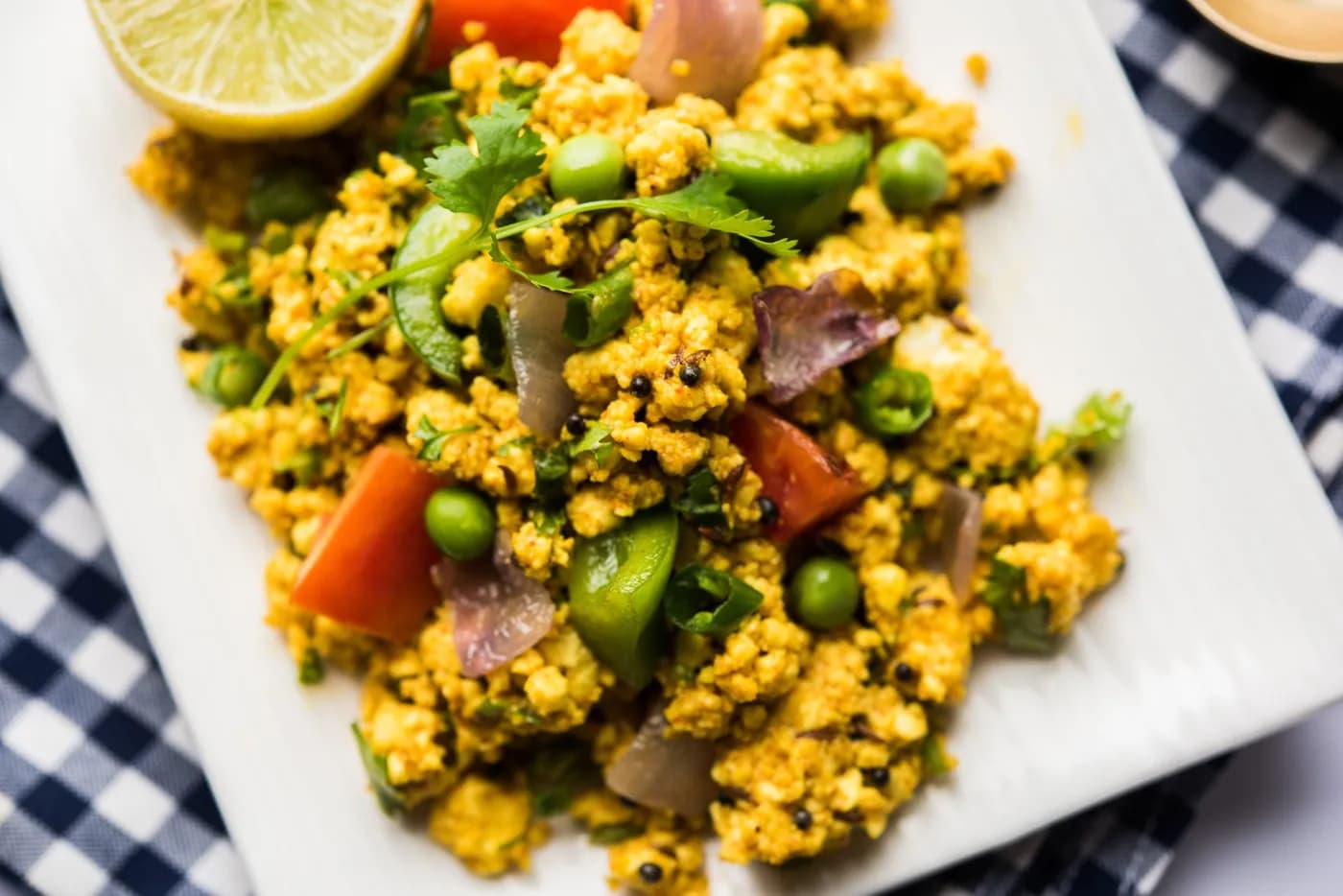
Veggie paneer bhurji is a quick, one-pan breakfast built from crumbled paneer and vegetables — protein and colour in one dish. Full recipe and quantities.
Key Takeaways
- Cook paneer for just 2-3 minutes after adding it – longer makes it dry and rubbery.
- ‘No-grain’ is a choice here, not a rule – the vegetables still contain carbohydrate.
- Firm tofu can replace paneer for a dairy-free version, pressed and crumbled first.
- Uses about 200g paneer, serving two people depending on the rest of the meal.
- Add a spoon of water rather than more oil if the bhurji looks dry.
Veggie paneer bhurji is a quick breakfast made with crumbled paneer, capsicum, tomato, onion and optional peas. It cooks in one pan and can be eaten on its own or paired with roti, toast or fruit depending on hunger. The image calls it a no-grain breakfast, but grain-free is a choice, not a rule.
Paneer provides protein and calcium, while the vegetables add colour, fibre and volume. The main cooking mistake is leaving paneer on the heat for too long. Two to three minutes after adding it is usually enough; longer cooking can make it dry and rubbery.
This recipe uses about 200 grams of paneer, so it can serve two people or more depending on the rest of the meal. Portions matter because paneer also contains fat. A balanced breakfast should feel satisfying, not heavy.
Why vegetable paneer bhurji works at breakfast
Breakfast does not have to be cereal-based every day. Paneer bhurji provides a clear protein food and the vegetables add texture. It is especially useful when you want a savoury meal that can be made in under fifteen minutes.
Indian dietary guidance includes milk and curd products among protein foods, alongside pulses, beans, nuts and seeds. The My Plate guide also shows that protein works best with vegetables and other food groups, not by itself.
No grains does not mean no carbohydrates
Tomato, onion, capsicum and peas still contain carbohydrate, and that is fine. If you have a long morning, exercise or a large appetite, adding one roti or a slice of whole-grain toast may make the breakfast more suitable. The goal is a useful meal, not a label.
Ingredients and useful swaps
- 200 grams paneer, crumbled
- Half a cup chopped capsicum
- Half a cup chopped tomato
- Half a cup chopped onion
- One-fourth cup peas, optional
- Two tablespoons coriander leaves
- Salt to taste
- Half a teaspoon spices, optional
- Two teaspoons ghee or mustard oil
Choose the paneer
Use fresh paneer with a clean smell and soft texture. Homemade or packaged paneer both work. If the paneer is very firm, soak the sealed block in warm water briefly, pat it dry and crumble it.
Dairy-free option
Firm tofu can replace paneer. Press out extra water and crumble it. The flavour will be milder, so add a little more tomato, coriander or spices.
How to make veggie paneer bhurji
- Heat ghee or mustard oil in a pan on medium-low heat.
- Add onion and cook until it softens. Avoid browning it heavily.
- Add capsicum and peas, if using. Cook for two to three minutes so they stay slightly crisp.
- Add tomato, salt and optional spices. Cook until the tomato softens but does not dry out completely.
- Add the crumbled paneer and mix gently.
- Cook for two to three minutes on low heat. Do not keep stirring aggressively.
- Turn off the heat, add coriander and serve warm.
If the bhurji looks dry, add one spoon of water or a little tomato rather than more oil. Paneer continues to firm as it cools, so stop cooking while it is still moist.
How to serve it for a balanced morning
No-grain plate
Serve the bhurji with cucumber, tomato or a small fruit. This may suit a lighter morning or someone who simply prefers a grain-free breakfast.
With grains
Pair it with one roti, millet roti, whole-grain toast or a small portion of poha. Adding grain is not a failure. It may improve energy and satisfaction for active people.
For more vegetables
Add spinach, grated carrot, mushrooms or beans. Keep the total vegetable amount sensible so the pan does not become watery. Cook watery vegetables before adding paneer.
Indian dietary guidance favours natural food sources of protein and varied meals. Paneer can be one option, while dals, chana, sprouts and tofu provide variety across the week.
Portion, storage and health notes
About 200 grams of paneer is usually more than one person needs in a simple breakfast, especially when oil or ghee is added. Divide the pan between two people and add vegetables or another side according to hunger.
Keep added fat measured
Paneer already contains fat, so two teaspoons of ghee or oil for the full pan is enough. Use a non-stick or well-seasoned pan to prevent sticking.
Store leftovers safely
Refrigerate leftovers in a covered container and use within one day for best texture. Reheat gently until hot. Repeated reheating can make paneer tough.
When to get personal advice
People with milk allergy should avoid paneer. Those managing high cholesterol, kidney disease or a prescribed protein limit should use the portion advised by their clinician or dietitian.
Paneer bhurji is also useful for meal prep, but the vegetables should not be overcooked in advance. Chop them the night before and refrigerate them separately. In the morning, the pan can be finished in less than ten minutes. For a lunch box, let the bhurji cool briefly before closing the lid so steam does not make it watery.
A breakfast without grains may suit some days, while other days need roti or toast. School, sports, travel and long work mornings can all change hunger. Use the meal as a flexible base instead of turning “no grains” into a strict rule.
Taste before adding extra salt because packaged paneer can already contain some.
Frequently Asked Questions
Related Articles
Veg Daliya Recipe: A Simple High-Fibre Meal
Veg daliya recipe made with broken wheat or millet daliya, mixed vegetables, jeera and ghee. A simple high-fibre meal for breakfast or lunch.


Healthy fats: why your body needs fat
Healthy fats help your body absorb vitamins and support brain, hormones, joints, cells and daily meals. Learn simple vegetarian sources and habits.