
Peanuts and Jaggery: Simple Gud Moongfali Snack
Roasted peanuts and a small piece of jaggery make a familiar, portion-controlled Indian snack — crunchy, sweet, and quick. See the full recipe.
Key Takeaways
- A small portion – about 4-5 peanuts with a tiny jaggery piece – is the smart habit.
- Peanuts add plant protein, healthy fat, and minerals alongside the jaggery’s sweetness.
- Roasting peanuts slowly and cooling them fully gives better crunch.
- Best used for a small sweet craving, not as a substitute for real hunger.
- People with diabetes or dental concerns should check with a doctor before eating jaggery often.
Peanuts and jaggery make a simple Indian snack that gives crunch, sweetness and quick satisfaction in a small portion. The combination is familiar, affordable and easy to carry.
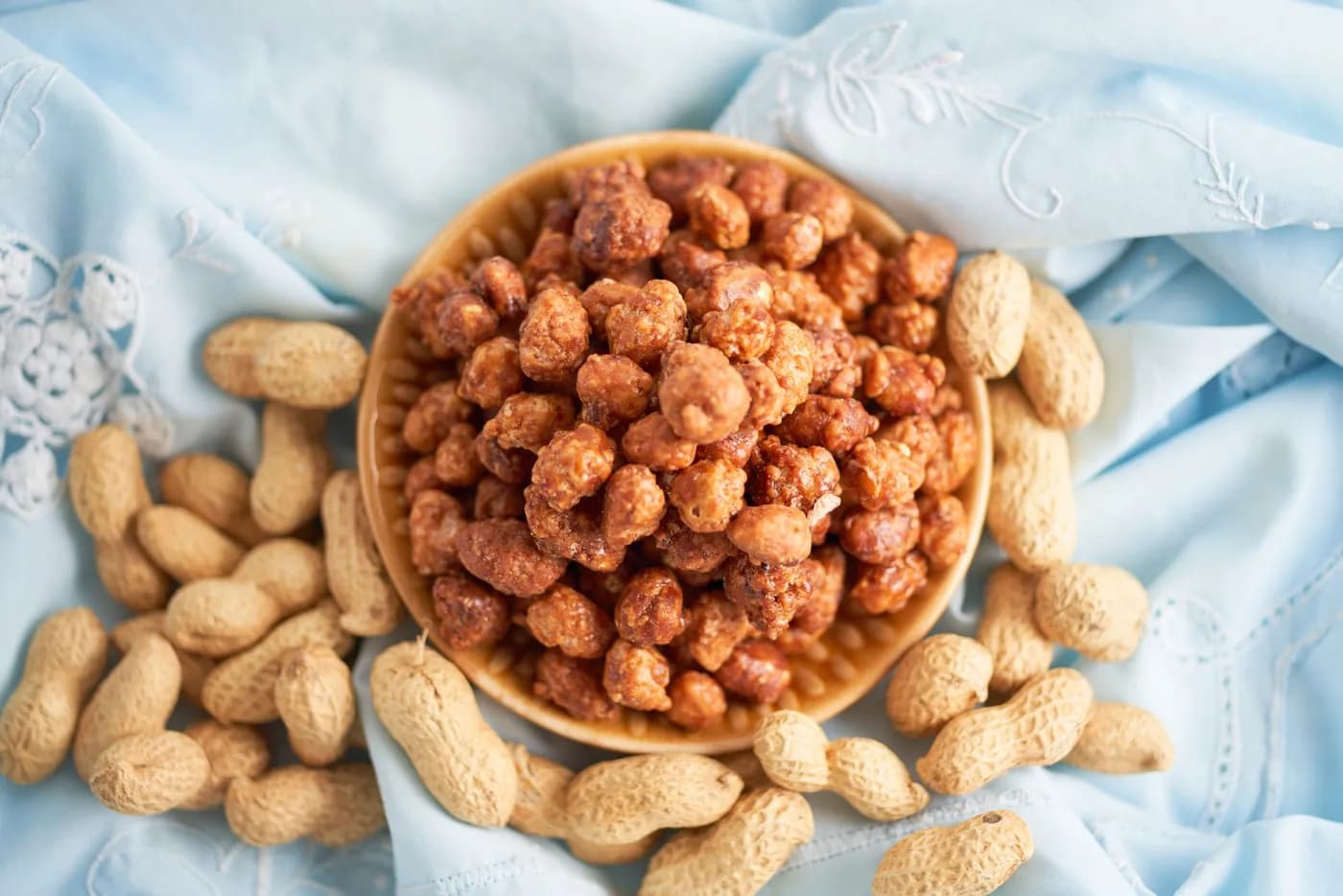
The image uses half cup roasted peanuts and one small piece of jaggery. It serves two people. The method is very simple: roast peanuts on a low flame, cool them fully, break jaggery into tiny bits and eat a small amount together.
This snack is not meant to be eaten by the handful. Peanuts are energy-dense and jaggery is still a sweetener. The smart habit is to keep the portion small: around 4 to 5 peanuts with a small jaggery piece when you want something sweet after a meal or between meals.
Why this snack works
It satisfies sweet cravings
Many people crave something sweet in the evening. Instead of a big dessert or packaged sweet, a small peanut and jaggery bite can satisfy the taste in fewer bites. The peanuts add crunch and help the snack feel more complete.
For daily eating, Indian dietary guidance recommends variety and sensible portions. This snack fits better when it stays small and does not replace a proper meal.
It gives more than plain sugar
Jaggery gives sweetness, but it should still be used in moderation. Peanuts add plant protein, healthy fat and minerals. Together, the snack is more satisfying than plain sugar candy, but it is still calorie-dense.
Eat Right Indiaencourages reducing excess sugar and fat through small daily changes. This is why portion control matters even with homemade snacks.
Ingredients and method
Ingredients
- 1/2 cup peanuts
- 1 small piece jaggery, about 1 inch
- Optional: a tiny pinch of cardamom powder or dry ginger powder
Method
- Heat a pan on low flame.
- Add peanuts and roast slowly until the skins loosen.
- Let the peanuts cool fully. This gives better crunch.
- Rub gently to remove loose skins if you prefer.
- Break jaggery into very small bits.
- Eat 4 to 5 peanuts with one tiny jaggery piece.
- Store the rest separately in airtight containers.
Best time and portion
Use it for small cravings
Peanuts and jaggery work best when you want a small sweet bite, not when you are very hungry. If you are hungry, first eat a real snack like sprouts, curd, roasted chana or fruit. Then use this as a small taste finisher.
Keep the portion visible
Do not keep the whole bowl in front of you. Take a small amount on a plate and put the rest away. This simple step makes overeating less likely.
For most people, a small portion is enough. People with diabetes, dental concerns or any medical diet should check with their doctor or dietitian before using jaggery often.
Smart variations and tips
Make it easier to chew
If peanuts feel hard, roast them slowly and cool them properly. You can also crush them lightly and mix with tiny jaggery bits. For children, serve according to age and allergy safety. Whole peanuts can be a choking risk for younger kids.
Try these small upgrades
- Add sesame seeds for extra crunch.
- Add a pinch of dry ginger powder in winter.
- Use roasted peanuts without added oil.
- Use softer jaggery if the piece is too hard to bite.
Avoid these mistakes
- Do not treat jaggery as unlimited because it is traditional.
- Do not fry peanuts in oil for this snack.
- Do not eat directly from a large jar.
- Do not use sticky or damp jaggery for storage with peanuts.
Nutrient values vary by peanut size and jaggery amount. Use Indian food composition resources for final calorie and nutrient estimates before publishing.
Use it in a weekly snack plan
This snack works best when it appears once or twice a week, not after every meal. Rotate it with roasted chana, fruit, makhana, curd or sprouts so your snacks do not become only sweet or only nut-based.
A good habit is to pre-roast peanuts for the week and keep jaggery in small pieces. When the portion is ready in small units, you are less likely to break a big piece and eat more than planned.
This also works well as a travel snack because it does not need cooking at the time of eating. Pack peanuts in one small box and jaggery in another. Keeping them separate keeps the peanuts crisp and stops the jaggery from making everything sticky.
Drink water after the snack if you feel thirsty. Sweet and salty snacks can make you reach for more food, so pause for a few minutes before deciding if you are still hungry.
You can also crush the peanuts and sprinkle them over curd or fruit for a different texture. Keep jaggery small in that version too. The goal is taste, not a dessert-sized serving.
Choose plain roasted peanuts whenever possible. Salted packaged peanuts can make the snack too salty, especially when eaten with jaggery. Eat it slowly and enjoy the crunch.
Frequently Asked Questions
Related Articles

Healthy fats: why your body needs fat
Healthy fats help your body absorb vitamins and support brain, hormones, joints, cells and daily meals. Learn simple vegetarian sources and habits.

Good fats vs bad fats: choose fats wisely
Understand good fats vs bad fats in simple words. Learn which vegetarian fats to choose, what to reduce and how to read food labels better.
