
Ragi idli recipe: soft fermented millet breakfast
Ragi idli swaps in finger millet flour for a fermented rice-and-urad-dal batter — same soft steamed texture, deeper colour, added calcium. See the full.
Key Takeaways
- Adds ragi flour to a fermented rice and urad dal batter for a deeper colour and taste.
- Fermentation makes the batter rise and turn slightly sour, giving idlis their soft texture.
- Sambar adds pulses and vegetables, making the full meal more balanced than idli alone.
- Ragi has notable calcium among cereals, but one dish alone isn’t a calcium treatment.
- Use fresh urad dal and fine ragi flour for the lightest batter.
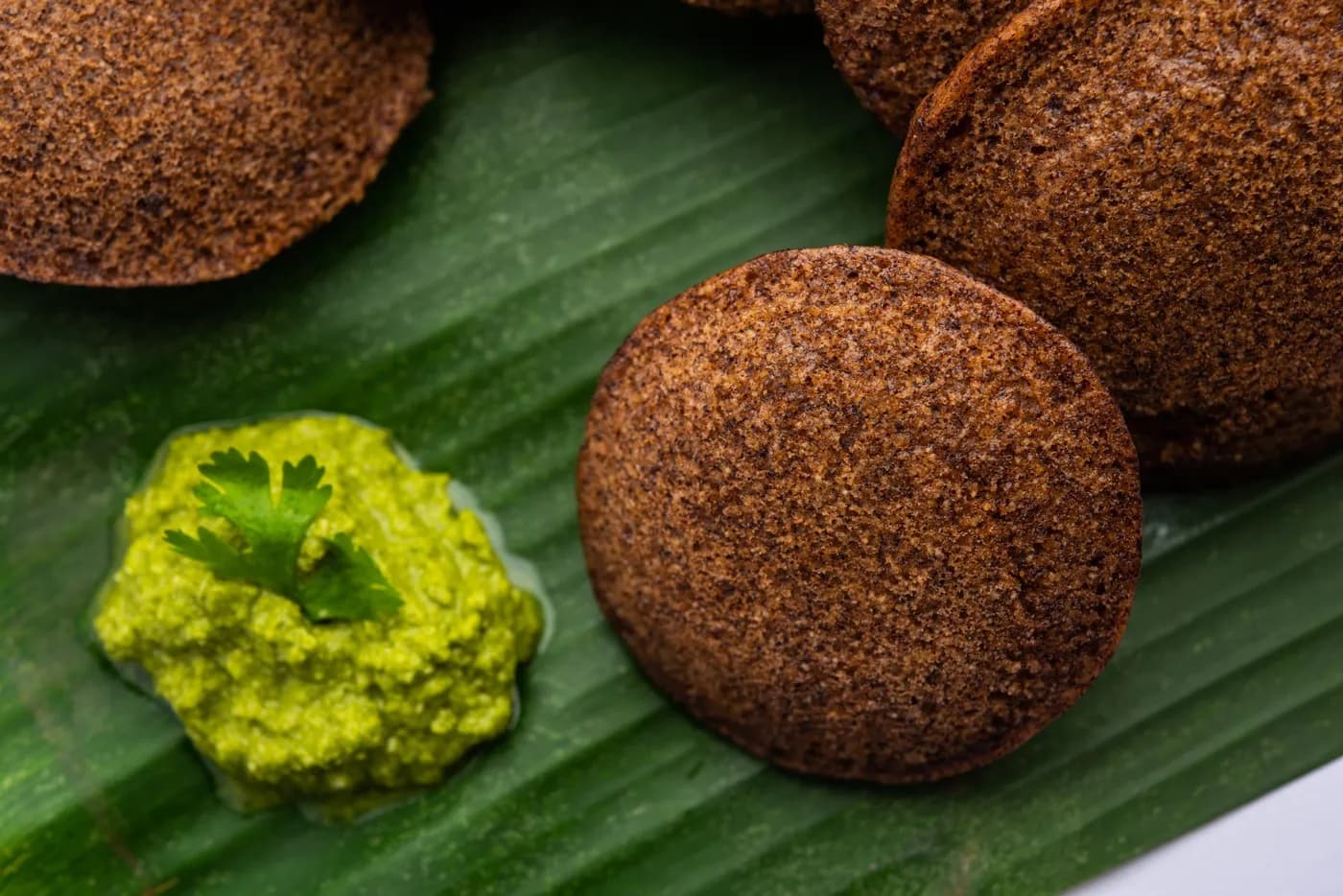
Ragi idli is a soft steamed breakfast made by adding finger millet flour to a fermented rice and urad dal batter. It keeps the familiar idli method while bringing a deeper colour and a slightly earthy taste. Pair it with sambar and coconut chutney for a breakfast that includes grain, pulse, vegetables and some fat.
This recipe uses half a cup of ragi flour, half a cup of rice, one-fourth cup of urad dal and half a teaspoon of fenugreek seeds. The rice, dal and methi are soaked, ground and mixed with ragi flour, then the batter ferments overnight before steaming.
Ragi is known for its calcium content, but a plate of idli is not a calcium treatment by itself. The final amount depends on the flour, recipe and serving size. It is better to see ragi as one useful grain among many and keep the full diet varied.
Why ragi idli can be a useful breakfast
Idli is steamed rather than fried, and fermentation gives the batter its light texture. Urad dal adds protein, while ragi and rice provide the cereal base. Sambar adds more pulses and vegetables, which makes the full meal more balanced than idli eaten alone.
The list finger millet as a grain with notable calcium compared with many cereals. That is useful, but calcium needs are met across the day through several foods, not by one recipe.
Fermentation changes texture and flavour
During fermentation, natural microorganisms produce acids and gas. The batter becomes slightly sour and rises, which helps the idlis turn soft. Fermentation time changes with room temperature, so use the look and smell of the batter rather than only the clock.
Ingredients and equipment
- Half a cup ragi flour
- Half a cup rice
- One-fourth cup urad dal
- Half a teaspoon fenugreek seeds
- Salt to taste
- Water as needed
Equipment
- Mixer or wet grinder
- Large bowl with room for batter to rise
- Idli steamer and moulds
Use fresh urad dal because old dal may not make a light batter. Choose fine ragi flour without a stale smell. The bowl should be clean, but avoid using very hot water or adding salt heavily before fermentation.
How to prepare and ferment the batter
- Rinse the rice and urad dal separately. Soak the rice, urad dal and fenugreek seeds for six to eight hours.
- Drain the urad dal and grind it with a little water until light and smooth.
- Grind the rice to a slightly grainy batter. Combine it with the urad batter.
- Add ragi flour gradually and mix well so no dry lumps remain.
- Add enough water to make a thick, pourable batter. It should fall from the spoon rather than run like water.
- Cover the bowl loosely and keep it in a warm place overnight, or until the batter rises and smells pleasantly sour.
- Add salt and fold the batter gently. Do not beat out all the air.
In cool weather, fermentation may take longer. Keep the bowl in a switched-off oven with the light on, near a warm appliance or wrapped in a cloth. Do not use a sealed airtight lid because the batter needs space to expand.
How to steam soft ragi idlis
- Grease the idli moulds very lightly or use wet cloth liners.
- Bring water to a simmer in the steamer before filling the moulds.
- Pour batter into each mould, leaving a little space at the top.
- Steam for ten to twelve minutes on medium heat.
- Insert a toothpick or knife. It should come out mostly clean.
- Let the idlis rest for two minutes, then remove them with a wet spoon.
If the idlis are dense
The batter may not have fermented enough, it may be too thick or the urad dal may not have been ground light. Use the same batter for dosa by adding water. A dense batch does not need to be wasted.
Pairing, storage and practical tips
Serve with sambar and chutney
Sambar adds dal and vegetables. Coconut chutney adds flavour and fat, so a small serving is enough. You can also use tomato chutney, peanut chutney or plain curd.
Store batter safely
Once fermented, refrigerate the batter and use it within two to three days. Use a clean spoon each time. If the smell becomes unpleasant, the colour changes oddly or mould appears, discard it.
Use variety
Ragi idli can be part of breakfast rotation with poha, upma, cheela, regular idli and paratha. Indian dietary guidance encourages variety in grains and millets rather than dependence on one food.
For young children or older adults, serve the idlis soft and moist with sambar or curd. People with diabetes should consider the full meal and portion rather than assuming millet is automatically low in blood-sugar impact.
Fermented batter should smell pleasantly sour, not rotten or sharply unpleasant. If it rises and then collapses, it can still make good idlis when used soon. Stir only gently. Overmixing after fermentation removes the trapped air that helps the idlis stay soft.
Steam only as many idlis as you need. Freshly steamed idlis are softer than ones kept warm for a long time.
Frequently Asked Questions
Related Articles

Veg Daliya Recipe: A Simple High-Fibre Meal
Veg daliya recipe made with broken wheat or millet daliya, mixed vegetables, jeera and ghee. A simple high-fibre meal for breakfast or lunch.


Healthy fats: why your body needs fat
Healthy fats help your body absorb vitamins and support brain, hormones, joints, cells and daily meals. Learn simple vegetarian sources and habits.