
Rajma Benefits: Nutrition, Protein, and Health Value of Kidney Beans
Rajma is one of the more accessible plant proteins in an Indian kitchen, packed with fibre, iron, and folate — not just a Sunday lunch comfort food. See.
Key Takeaways
- Roughly 8-9g protein and 6.4g fibre per 100g cooked kidney beans.
- Low glycemic impact releases energy gradually rather than spiking blood sugar.
- Pairing rajma with vitamin C, like lemon in the curry, improves iron absorption.
- Rajma chawal works nutritionally, not just for taste – rice supplies what beans lack.
- Budget-friendly and shelf-stable, making it an accessible everyday plant protein.
Rajma benefits go well beyond its popularity as a Sunday lunch staple across North Indian homes. This deep red kidney bean is one of the more accessible plant proteins in an Indian kitchen, packed with fibre, iron, and folate, and it holds up as a genuinely useful addition to a balanced vegetarian diet — not just a comfort food.
Rajma Benefits at a Glance
- Solid plant protein source — around 8-9g of protein per 100g cooked, useful for vegetarians building daily protein intake.
- High in dietary fibre — supports digestion and helps you feel fuller for longer after a meal.
- Good source of iron and folate — relevant for people managing mild iron gaps or planning pregnancy, alongside other iron-rich foods.
- Low glycemic impact — releases energy gradually rather than causing sharp blood sugar spikes.
- Rich in potassium and magnesium — minerals that support normal muscle and nerve function.
- Budget-friendly and shelf-stable — dried rajma stores for months and is inexpensive compared to many other protein sources.
Nutritional Profile of Rajma (Per 100g Cooked)
| Nutrient | Approximate Value |
| --- | --- |
| Calories | ~127 kcal |
| Protein | ~8.7 g |
| Dietary fibre | ~6.4 g |
| Iron | ~2.2 mg |
| Folate | ~130 mcg |
| Potassium | ~405 mg |
| Fat | ~0.5 g |
These figures vary slightly depending on the variety of kidney bean and cooking method, but the overall pattern holds: rajma is low in fat, moderate in calories, and dense in fibre and micronutrients relative to its calorie count — a nutrient density that underlies most of the rajma benefits discussed below.
Top Rajma Benefits for Everyday Health
The most talked-about rajma benefits centre on protein and fibre, but the fuller picture is more interesting. The combination of soluble and insoluble fibre in rajma slows down digestion, which can help moderate post-meal blood sugar rises — one reason legumes are often recommended as part of a diabetes-friendly diet. The iron and folate content also make rajma a reasonable dietary contributor for people watching their haemoglobin levels, though plant-based (non-heme) iron is absorbed less efficiently than iron from animal sources, so pairing rajma with a source of vitamin C — a squeeze of lemon over your curry, for instance — improves absorption.
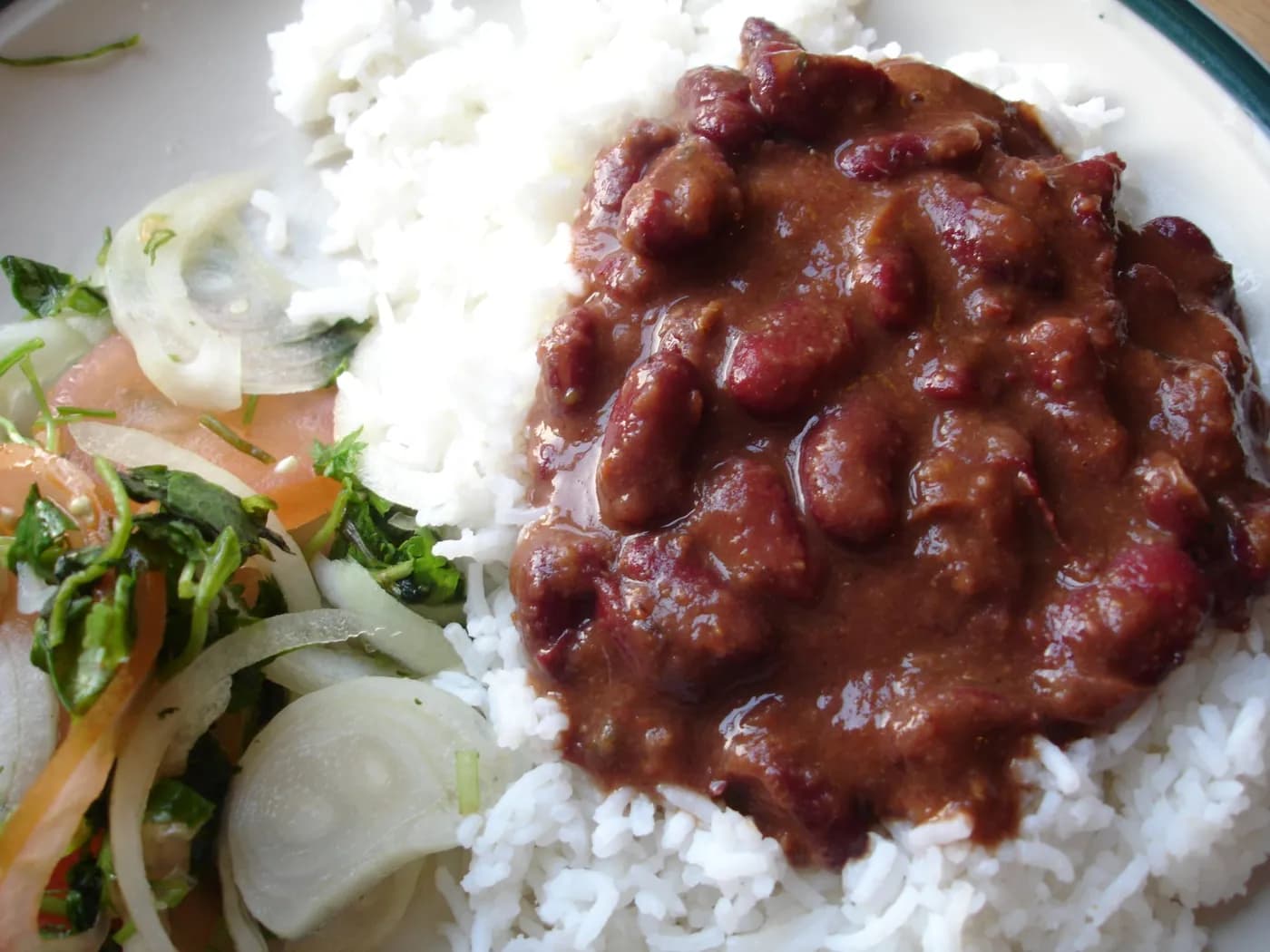
Rajma is also a complete-enough protein when eaten with rice or wheat. On its own, it’s lower in the amino acid methionine, but grains supply what beans lack, which is exactly why the classic rajma chawal combination works so well nutritionally, not just in taste. This is a genuinely practical benefit for anyone eating a largely vegetarian diet and trying to cover their essential amino acid needs without relying on supplements.
If you’re mapping out a full day of vegetarian protein, our list of high-protein vegetarian foods shows where rajma fits among other sources, and for how it compares to other legumes, beans health benefits rounds up the wider family.
Photo: rovingI, CC BY 2.0, via Wikimedia Commons
How to Cook Rajma Safely and Get the Most Out of the Rajma Benefits
One detail that often gets skipped: raw and undercooked kidney beans contain a natural compound called phytohaemagglutinin, which can cause stomach upset if the beans aren’t cooked properly. Soaking dried rajma for at least 6-8 hours and then boiling it thoroughly — a pressure cooker for 15-20 minutes after soaking works well — neutralises this compound and also improves digestibility. Skipping the soak or under-boiling isn’t just a texture issue; it’s a real food-safety step, not an optional one, and getting it right is what lets you actually access the rajma benefits without any digestive downside.
How Rajma Fits Into a Balanced Diet
A cooked cup of rajma (roughly 175g) works well as the protein anchor of a meal alongside rice, roti, or a mixed vegetable sabzi. Because it’s filling and fibre-rich, a moderate portion — around one small bowl — is usually enough to feel satisfied without needing a very large serving of rice alongside it. People managing weight or blood sugar often find that swapping some refined carbs for a rajma-forward meal helps keep energy levels steadier through the afternoon, which is one of the more practical rajma benefits for everyday meal planning. As with any legume, introducing rajma gradually into your diet and drinking enough water can help your gut adjust if you’re not used to eating much fibre.
Who Should Be Cautious With Rajma Benefits
The rajma benefits are considerable, but kidney beans aren’t the automatic right choice for absolutely everyone in large portions. Rajma contains purines, so people managing gout or high uric acid should keep portions moderate and check with their doctor rather than eating large servings daily. Anyone with IBS or a known FODMAP sensitivity may find rajma triggers more bloating than better-tolerated legumes, so starting with a smaller bowl and increasing gradually is a reasonable way to test how your gut responds. People prone to kidney stones linked to oxalates should also keep portions sensible, since legumes are one of several everyday contributors to dietary oxalate alongside spinach and nuts. None of this changes the core rajma benefits for most people eating a normal, varied diet — it simply means portion awareness matters more if you fall into one of these groups.
Rajma Benefits: Myths vs Facts
Myth: Rajma is too heavy to eat regularly. Fact: a standard bowl of rajma is lighter on calories than most people assume — it’s the oil-heavy gravy, not the beans themselves, that adds weight to the meal. Myth: Soaking is optional if you cook rajma long enough. Fact: proper soaking isn’t just about texture — it’s a genuine food-safety step that helps neutralise a natural compound in raw kidney beans, so it shouldn’t be skipped even with extended boiling. Myth: Rajma alone provides complete protein. Fact: rajma is a strong protein source but is genuinely more complete when paired with rice or roti, which is exactly why rajma chawal became a nutritionally sound combination rather than just a regional preference.
Frequently Asked Questions
Related Articles
Healthy fats: why your body needs fat
Healthy fats help your body absorb vitamins and support brain, hormones, joints, cells and daily meals. Learn simple vegetarian sources and habits.

Good fats vs bad fats: choose fats wisely
Understand good fats vs bad fats in simple words. Learn which vegetarian fats to choose, what to reduce and how to read food labels better.
