
Spinach Benefits: Nutrition and Simple Meal Ideas
Spinach provides folate, vitamin K and carotenoids. Learn its benefits, cooking tips, iron facts and cautions for warfarin or kidney stones.
Key Takeaways
- Spinach provides folate, vitamin K and carotenoids.
- Its plant iron is absorbed better with vitamin C.
- People taking warfarin need a consistent vitamin K intake.
- Cooking reduces volume and makes a larger serving easier to eat.
Spinach benefits is a versatile leafy green with folate, vitamin K and carotenoids. Learn its real benefits, cooking tips and important cautions.
What does spinach benefits provide?
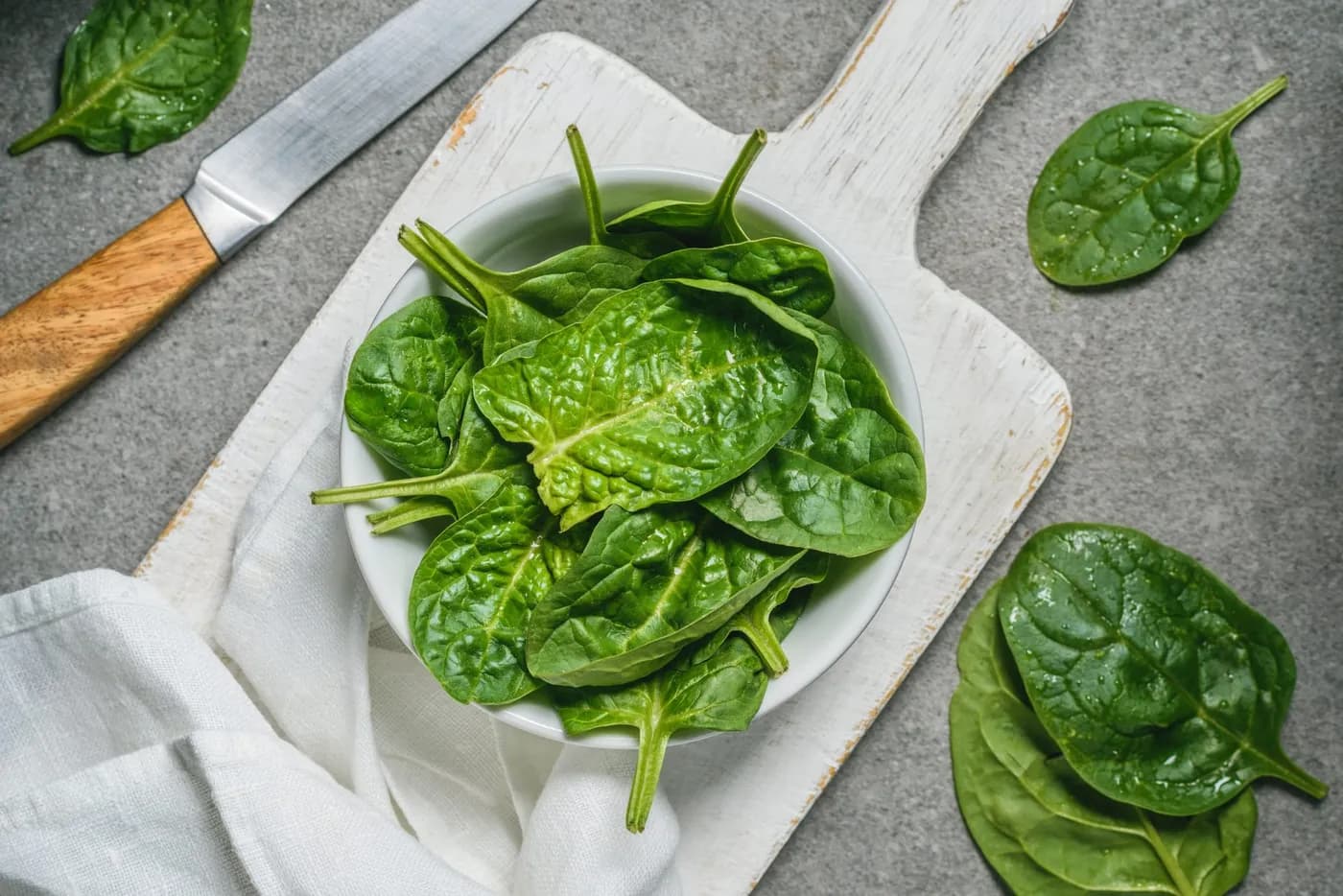
Spinach is a dark green leafy vegetable used raw or cooked. It provides folate, vitamin K, carotenoids, fibre and minerals such as magnesium.
It also contains iron and calcium, but these minerals are not absorbed as fully as the total number on a nutrition table suggests because spinach benefits contains oxalate.
Possible benefits
Folate for cell growth
Folate helps make DNA and supports cell division. It is especially important before and during pregnancy. Spinach contributes folate but does not replace prescribed folic acid when it is recommended.
Vitamin K for blood clotting and bones
Spinach is rich in vitamin K, a nutrient needed for normal blood clotting and bone health. (1)
This is helpful for most people but needs planning for those taking warfarin.
Carotenoids for eye health
Spinach benefits contains lutein, zeaxanthin and beta-carotene. These plant pigments support normal eye and body functions as part of a varied diet.
Spinach does not reverse poor eyesight or replace eye treatment.
Fibre and meal volume
Spinach benefits adds fibre and volume with relatively little energy. It can make dal, sabzi, omelette or tofu dishes more colourful and filling.
Is spinach a good source of iron?
Spinach contains non-haem iron, the type found in plants. The body absorbs it less easily than haem iron, and oxalate can reduce availability.
Pair spinach benefits with vitamin C from lemon, amla, guava, tomato or capsicum. Also include stronger iron foods such as lentils, chickpeas, soy, sesame and fortified foods.
Do not use spinach alone to treat anaemia. Iron deficiency needs proper testing and a dose recommended by a clinician.
Raw or cooked spinach benefits?
Both can fit a healthy diet. Raw leaves keep a crisp texture and work in salads when washed safely. Cooked spinach shrinks, so you can eat more leaves in one serving.
Cooking changes some nutrients and can reduce some oxalate. Boiling and discarding the water may lower more oxalate, but it can also remove water-soluble nutrients.
Use different methods across the week: quick sauté, steaming, dal, soup or blanching.
How to wash spinach benefits safely
- Remove damaged or slimy leaves.
- Wash your hands and clean the sink.
- Rinse leaves under cool running water.
- Separate leaves so dirt can wash away.
- Do not use soap or detergent.
- Dry with a clean towel or salad spinner.
FDA produce guidance recommends washing vegetables before preparation and keeping them away from raw animal foods and dirty surfaces. (2)
If you’re also curious about Magnesium Rich Foods or 50 healthy vegetarian foods for everyday eating, both are worth a read.
Simple vegetarian meal ideas
- Add chopped spinach to moong dal.
- Make palak tofu or palak paneer with moderate oil.
- Stir it into besan chilla batter.
- Add it to vegetable poha or upma.
- Mix cooked spinach into curd dip.
- Use it in soup with beans.
The whole recipe matters. A very creamy, salty palak dish is different from spinach benefits cooked with dal, tofu or vegetables.
For more easy vegetable habits, read Habuild’s Diet and Nutrition guide.
Spinach and kidney stones
Spinach benefits is high in oxalate. People with a history of calcium-oxalate kidney stones may be told to limit high-oxalate foods.
Do not remove all calcium without advice. Eating an appropriate calcium food with meals can help bind oxalate in the gut. Ask a kidney specialist or dietitian for a personal plan.
Spinach and warfarin
Warfarin works through vitamin K pathways. NIH advises people taking warfarin to keep vitamin K intake about the same from day to day. (1)
Do not suddenly stop spinach or start large green smoothies. Tell the anticoagulation team about major diet changes so the medicine can be managed safely.
Other cautions
People with kidney disease may need limits for potassium or oxalate. Infants and people with swallowing problems need age-safe textures.
Spinach benefits allergy is uncommon but possible. Seek urgent help for breathing trouble, throat swelling, fainting or widespread hives.
Throw away leaves that are slimy, mouldy or smell bad. Refrigerate cooked spinach promptly and reheat leftovers until hot.
A simple spinach benefits habit
Add one handful of spinach to a familiar dish twice this week. Pair one meal with lemon or tomato and a protein source.
If fresh spinach benefits spoils too quickly, use plain frozen spinach. Convenience can make the habit easier to repeat.
Frequently Asked Questions
Related Articles

Healthy fats: why your body needs fat
Healthy fats help your body absorb vitamins and support brain, hormones, joints, cells and daily meals. Learn simple vegetarian sources and habits.

Good fats vs bad fats: choose fats wisely
Understand good fats vs bad fats in simple words. Learn which vegetarian fats to choose, what to reduce and how to read food labels better.
