
Spirulina: benefits, limits and safety
Spirulina is a blue-green supplement with protein and pigments. Learn what research shows, how to choose it safely and who should be careful.
Key Takeaways
- Spirulina provides protein, pigments and some minerals, but usual servings are small.
- It is not a reliable source of active vitamin B12.
- Research suggests possible benefits for certain health markers, but the evidence remains limited.
- Spirulina cannot replace medicines or balanced vegetarian meals.
- Choose a product tested for microcystins, heavy metals and harmful microbes.
- Check with your doctor if you take regular medication or have a medical condition.
Spirulina is instantly recognisable because of its deep blue-green colour. It is sold as a powder, tablet or capsule and is commonly promoted for protein, iron, energy, immunity and “detoxification.”
Some research has explored spirulina’s possible effects on blood pressure, cholesterol and blood sugar. However, the studies are often small, and their results do not show that spirulina can treat a health condition.
If you choose to use it, think of it as an optional supplement rather than an essential part of a healthy diet. The quality of the product matters because poorly produced blue-green algae supplements may contain unwanted contaminants.
What is spirulina?
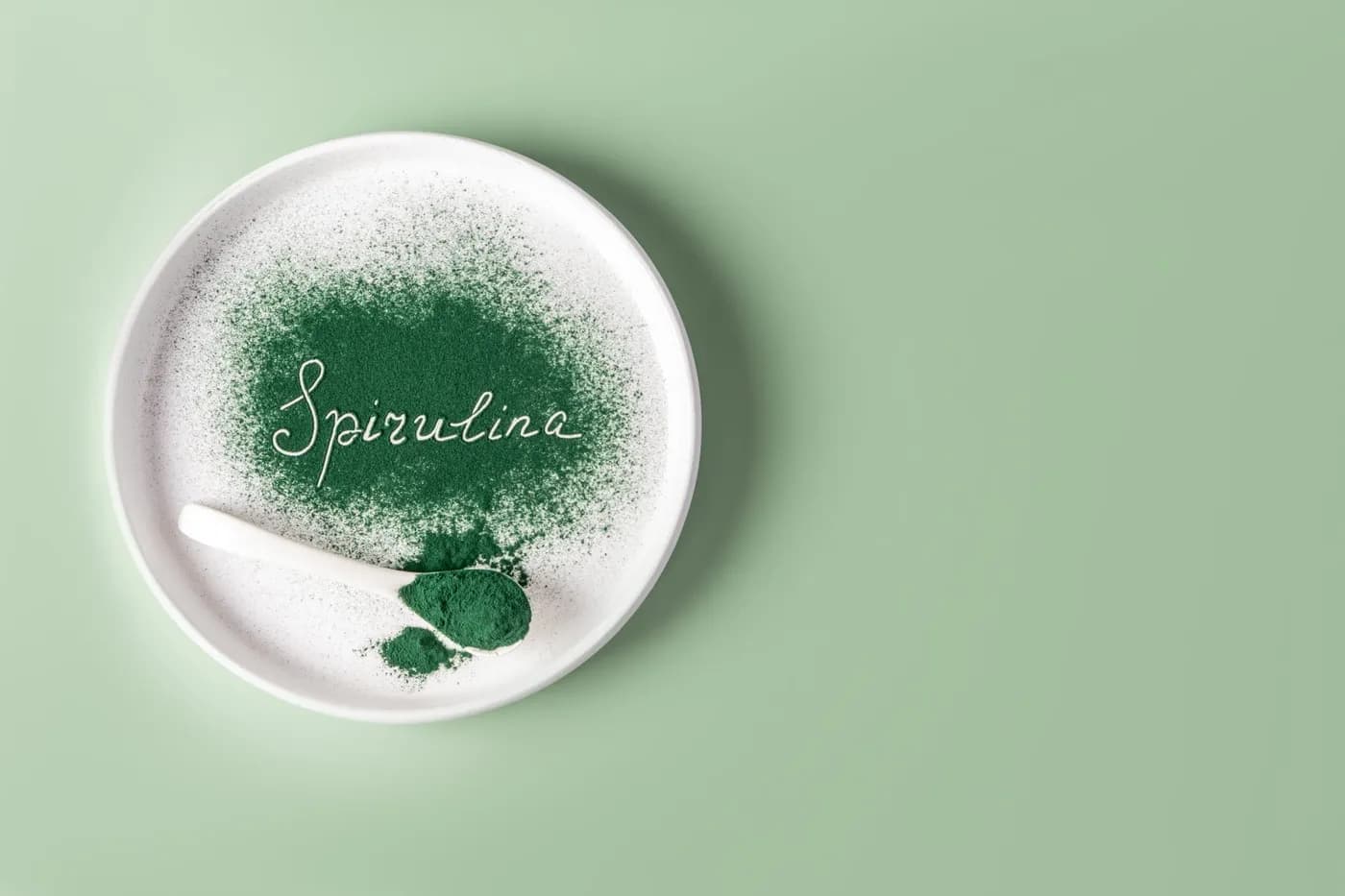
Spirulina is made from cyanobacteria, a type of organism commonly described as blue-green algae. The varieties used in supplements are usually forms of Arthrospira.
The characteristic blue-green colour comes partly from phycocyanin, a naturally occurring pigment. It also contains chlorophyll, which contributes to its green appearance.
After being grown and harvested, this herb is dried and processed into powder, tablets, capsules or extracts. “Blue spirulina” usually refers to an extract containing a high concentration of phycocyanin. It is not necessarily the same as a whole spirulina product.
What nutrients does spirulina provide?
Dried spirulina contains a high percentage of protein by weight. It also provides iron and small amounts of other nutrients.
However, percentages can be misleading when the serving size is only a few grams. A small spoonful of spirulina cannot provide the same amount of protein as a full portion of dal, rajma, chana, soy, tofu, paneer or curd.
It may contribute a little nutrition, but it should not become the foundation of a meal. Regular foods provide energy, fibre and a broader combination of nutrients that a small supplement serving cannot match.
Is spirulina a source of vitamin B12?
Spirulina is sometimes promoted as a natural vitamin B12 source for vegetarians and vegans. This claim needs caution.
Some compounds in spirulina resemble vitamin B12 when measured in laboratory tests. However, much of this may be in an inactive form that the human body cannot use effectively.
Do not depend on it to prevent or correct vitamin B12 deficiency. Vegetarians and vegans should use dependable fortified foods or an appropriate B12 supplement based on professional advice. A blood test may be needed if deficiency is suspected.
What does the research say about spirulina benefits?
Spirulina has been tested in studies involving blood pressure, blood fats and blood sugar. These findings may sound encouraging, but they need to be understood in context.
Researchers have used different products, quantities and study durations. Participants have also had different health conditions. As a result, an average finding from a review cannot predict how one particular product will affect you.
Blood pressure
A review of five controlled trials involving 230 participants found average reductions in systolic and diastolic blood pressure among people taking this herb. The trials were small, and the researchers stated that larger studies were needed. (1)
This finding does not make spirulina an alternative to blood-pressure treatment. If you have hypertension, continue taking your prescribed medicine and monitoring your readings as advised.
Tell your doctor about every supplement you use. Taking a supplement alongside medication may influence your readings, even when evidence about the interaction is incomplete.
Cholesterol and triglycerides
A 2023 systematic review combined the results of 20 trials involving 1,076 participants. It reported improvements in several blood-fat measures, including total cholesterol, LDL cholesterol and triglycerides. (2)
There were still important differences between the studies. Participants did not all use the same product, dose or routine.
A supplement trial also cannot prove that every brand sold online or in a shop will produce the same result. Overall food choices, movement, sleep, medicines, smoking and genetics remain important influences on cholesterol.
Blood sugar
A review of trials involving people with type 2 diabetes reported a possible improvement in fasting blood sugar. It did not find clear improvements in HbA1c or after-meal glucose, and the available evidence was limited. (3)
HbA1c reflects average blood sugar over a longer period, so a change in one fasting measurement does not necessarily show sustained diabetes control.
It should not be used to replace diabetes medicine or professional dietary advice. Continue checking your blood sugar as instructed and speak to your doctor before adding a daily supplement.
Does spirulina improve energy or immunity?
Spirulina is frequently marketed as an energy booster or immunity supplement. These descriptions are broader and more confident than the available human evidence supports.
A supplement may contribute some nutrients when a person’s diet is limited, but it does not correct every possible reason for low energy. Constant tiredness can be connected to poor sleep, anaemia, vitamin B12 deficiency, thyroid problems, infection, depression, stress, low food intake or medicine side effects.
If tiredness lasts for several weeks, affects your daily activities or is accompanied by breathlessness, dizziness, unexplained weight change or weakness, seek medical advice instead of trying to cover the symptom with a supplement.
Normal immune function depends on adequate nutrition, sleep, movement, vaccination and appropriate medical care. No single powder can prevent every infection.
Can spirulina detox the body?
NO. It does not “flush toxins” from the body.
Your liver, kidneys, digestive system and lungs already process and remove waste. A spirulina drink cannot replace these organs or undo the effects of an otherwise unbalanced routine.
Be cautious with products that promise detoxification, rapid weight loss, liver cleansing or disease reversal. These phrases are often marketing claims rather than conclusions supported by good clinical evidence.
How to choose a spirulina product
Product quality is one of the most important considerations when buying spirulina.
Some cyanobacteria can produce natural toxins called microcystins. Contamination may occur if unwanted cyanobacteria grow alongside the organism being harvested or if production and testing are poorly controlled.
The US Food and Drug Administration notes that significant exposure to microcystins can harm the liver and kidneys. (4)
Before buying spirulina:
- Choose a product that clearly identifies its ingredients.
- Check the serving size and usage directions.
- Look for independent testing for microcystins.
- Check whether the product has been tested for heavy metals and harmful microbes.
- Avoid products that promise to cure disease or cause rapid weight loss.
- Check the manufacturing and expiry dates.
- Make sure the seal and packaging are intact.
- Buy from a company that provides contact and batch information.
Independent testing can reduce uncertainty about contamination. It does not prove that the supplement will deliver a particular health benefit.
Keep the packet after opening it. The batch number and ingredient details may be useful if you develop an unexpected reaction.
How to use spirulina
There is no single spirulina dose that is right for everyone. Research trials have used different quantities, and supplement products can vary in concentration.
Follow the product’s serving instructions unless a qualified healthcare professional gives you different advice. Do not assume that taking more will provide greater benefits.
If you are trying it for the first time, begin with a small amount. It has a strong earthy flavour and may cause nausea, stomach discomfort or loose stools in some people.
A little powder can be mixed into:
- Plain curd
- An unsweetened fruit smoothie
- Oats or porridge
- A moist chutney or dip
- A homemade snack mixture
This herb can strongly change the colour of food without adding a large amount of nutrition. There is no need to include it in every meal.
Ask these questions before taking spirulina daily
Before turning spirulina into a habit, write down what you expect it to do.
Are you taking it for protein, iron, vitamin B12, cholesterol, blood sugar or energy? Once the goal is clear, ask:
- Can ordinary vegetarian food meet this need?
- Is the concern supported by a blood test or diagnosis?
- Is there stronger evidence for another option?
- Could spirulina interact with my medicine or condition?
- Has the product been independently tested?
- How will I assess whether it is useful?
- When will I stop using it if there is no benefit?
If you cannot answer these questions, pause before buying it. A supplement habit is most useful when it addresses a genuine need rather than a vague wellness promise.
For everyday meal guidance, read Habuild’s Diet and Nutrition guide.
Who should be careful with spirulina?
Ask a doctor before using spirulina if you:
- Are pregnant or breastfeeding
- Are considering giving it to a child
- Have liver or kidney disease
- Have an autoimmune condition
- Have phenylketonuria
- Have a serious allergy history
- Take regular prescription medication
You should also seek advice if you take medicines for blood pressure, blood sugar, blood thinning or immune suppression. Research on potential interactions is incomplete, which is a reason for caution rather than reassurance.
Stop taking the product and seek medical help if you develop yellowing of the skin or eyes, dark urine, severe abdominal pain, breathing difficulty, facial swelling, faintness or widespread hives.
The NIH LiverTox review describes clinically apparent liver injury linked to spirulina as very rare. In reported cases, other medicines or product contamination may also have contributed. (5)
What spirulina cannot do
Spirulina cannot replace a balanced diet, cure diabetes, remove toxins, correct anaemia without diagnosis or guarantee weight loss.
It should also not replace dependable sources of protein, iron or vitamin B12. For most people, regular vegetarian foods provide a more practical foundation for nutrition.
If you enjoy its taste and choose a tested product, it may fit into your routine as a small optional addition. It does not need to become an everyday requirement.
Editorial sources
- Systematic review of spirulina and blood pressure
- Systematic review and meta-analysis of spirulina and blood lipids
- Systematic review of spirulina in type 2 diabetes
- FDA: Blue-Green Algae Products and Microcystins
- NIH LiverTox: Spirulina
Editorial note: This article was independently researched and written for Habuild Habitology. It must be reviewed by a qualified medical or nutrition professional before publication.
Frequently Asked Questions
Related Articles

Healthy fats: why your body needs fat
Healthy fats help your body absorb vitamins and support brain, hormones, joints, cells and daily meals. Learn simple vegetarian sources and habits.

Good fats vs bad fats: choose fats wisely
Understand good fats vs bad fats in simple words. Learn which vegetarian fats to choose, what to reduce and how to read food labels better.
