
Sugar Control Foods: A Practical Indian Guide for Blood Glucose
No food instantly lowers blood glucose. Steadier readings come from the type and amount of carbohydrate, what you pair it with, and your overall routine.
Key Takeaways
- No single food lowers blood glucose instantly; the whole meal and routine matter.
- Pair roti, rice or fruit with dal, curd, paneer, tofu or vegetables for a steadier response.
- Jaggery, honey and 'no added sugar' biscuits still raise glucose; read the full label.
- Never reduce or stop prescribed medicines because you are trying a food or home remedy.
There is no food that instantly lowers blood glucose after a meal. Better control comes from the type and amount of carbohydrate, what accompanies it, meal timing, movement, medicines and the person's own glucose response. Choosing sugar control food is therefore less about a miracle ingredient and more about which everyday Indian foods you put together on the plate.
Pair carbohydrates instead of fearing them
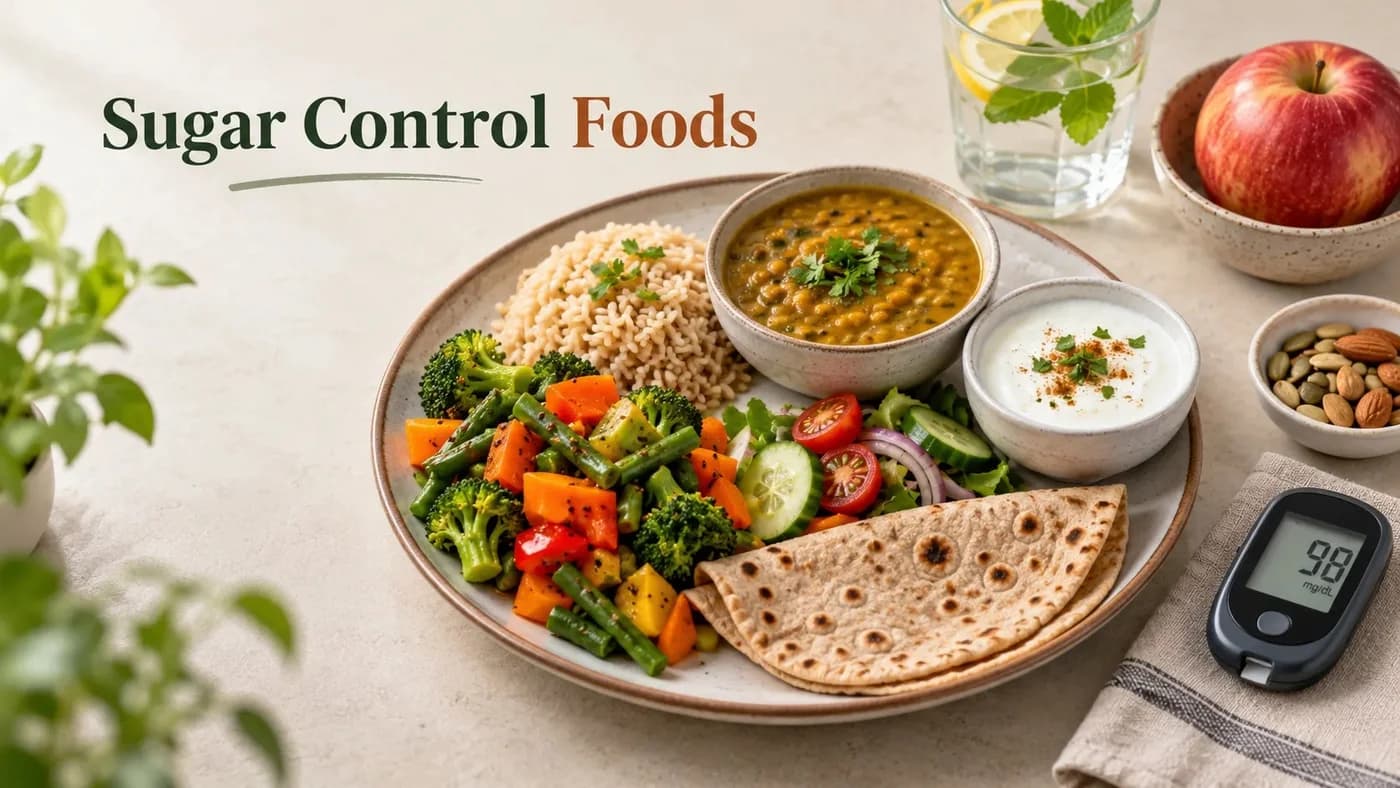
Carbohydrates raise glucose, but they do not all act at the same speed. Whole grains, beans, fruit and milk also carry fibre or useful nutrients, so carbohydrate is not automatically unhealthy. Pairing a modest portion of roti, rice or another grain with dal, tofu, paneer, curd, nuts, seeds or vegetables can slow the pace of a meal and improve fullness.
A practical way to picture this is a plate with roughly half non-starchy vegetables, a vegetarian protein food and a measured portion of grain. The exact split should suit glucose readings, appetite, activity, treatment and cultural preference. No spice, seed or leaf can cancel a large refined meal.
High-fibre foods that help
Oats, barley, whole grains, pulses, vegetables, whole fruit, nuts and seeds contribute fibre. Soluble fibre slows digestion and may help glucose and cholesterol control. Increase fibre gradually and drink appropriate fluids to avoid discomfort.
Vegetarian protein foods to add
Curd, paneer, tofu, soy chunks, dals, beans, peas and nuts can supply vegetarian protein. Adding protein and vegetables to a carbohydrate meal often produces a steadier response than eating the carbohydrate alone. This does not make portions unlimited: dal and beans contain both carbohydrate and protein, so their portions still matter.
Rice, roti and traditional favourites
Diabetes does not require permanently banning rice, roti, potatoes, bananas or mangoes. Quantity, preparation, ripeness and the rest of the meal influence the response. Compare glucose readings with your clinician's targets rather than following viral "diabetic food" lists. The most useful sugar control food choices are the familiar ones you can portion and pair well, day after day.
Whole fruit over juice
Whole fruit is generally preferable to juice because it retains fibre and is harder to consume rapidly. Choose whole fruit most often, one portion at a time, and notice your own readings rather than memorising a universal "diabetic fruit" list.
Sweeteners, drinks and labels
Sugar, jaggery, honey and syrups all contribute carbohydrate; calling one natural does not make it free. Water, unsweetened tea or buttermilk can replace sugary drinks. Non-nutritive sweeteners can reduce sugar in some situations, but they do not repair an otherwise unbalanced diet.
Labels such as "no added sugar", "diabetic-friendly" or "natural" do not guarantee a low-carbohydrate food. Biscuits and drinks may contain refined flour, concentrated fruit ingredients or sugar alcohols, while large servings still affect glucose or digestion. Read the full ingredient list and nutrition panel.
Methi, cinnamon and bitter gourd
Cinnamon, fenugreek (methi) and bitter gourd can be part of everyday food, but concentrated preparations may interact with medicines or cause side effects. They should never replace prescribed treatment, and medication should never be reduced or stopped because a home remedy is being used.
Food works alongside movement and monitoring
Gentle movement after meals helps working muscles use glucose and may reduce the post-meal rise for some people. Even ten to fifteen minutes can be a realistic habit; start according to fitness, foot health and medical advice. Sleep and stress also matter, because food is only one part of diabetes care.
If you monitor at home, note the meal, timing, sleep and activity so patterns are easier to discuss with your care team. Targets vary with pregnancy, age, medicines and the risk of low glucose, so do not intensify fasting or remove entire food groups because of one number.
Low blood glucose needs a different response
People using insulin or medicines that can cause hypoglycaemia need an individual plan for meal timing and treatment of lows. Shaking, sweating, confusion or weakness may require fast-acting carbohydrate according to the care plan, not a high-fibre meal. Carry fast-acting carbohydrate if your medicine can cause low glucose. Repeated highs or lows need a medication review with your doctor.
Editorial sources
Frequently Asked Questions
Related Articles

Low Glycemic Index Foods: What They Are and Why They Matter for Blood Sugar
Low glycemic index foods raise blood sugar slowly and steadily instead of causing a sharp spike. See what glycemic index actually measures, and everyday.

Diabetic Meal Plan Indian Style: A Full-Day Guide to Balanced Eating
A diabetic meal plan doesn’t mean giving up dal, roti, or rice — it means getting portions, timing, and combinations right. See a full day of eating.

How to Control Sugar: 7 Natural Ways to Manage Blood Glucose Daily
Stable blood sugar means stable energy — the afternoon slump and evening cravings often trace back to swings you can smooth out daily. See 7 natural ways to manage blood glucose.
