
Vegan Thai Green Curry: A Complete, Authentic Recipe
Traditional Thai green curry paste usually relies on seafood-based ingredients — this recipe replaces them entirely with plant-based alternatives.
Key Takeaways
- Traditional curry paste usually relies on shrimp paste and fish sauce, not obvious from the name.
- White miso paste and soy sauce replace those seafood-based ingredients here.
- Store-bought curry paste isn’t automatically vegan – check for ‘shrimp’ or ‘kapi’ on the label.
- Takes about 40 minutes total, including tofu prep.
- Works well with rice, glass noodles, or on its own as a lighter bowl.
A good vegan Thai green curry comes down to one detail most recipes skip: traditional curry paste and finishing sauces usually rely on seafood-based ingredients, which this recipe replaces entirely with plant-based alternatives. This recipe keeps the real flavour — herbaceous, spicy, coconut-rich — using swaps that taste just as layered. You get crisp-fried tofu, a mix of vegetables, and a fragrant coconut broth, all built from a paste you can make at home or buy off the shelf if you check the label first.
Quick Facts
- Total time: about 40 minutes, including tofu prep
- Serves: 3-4 people
- The biggest swap: seafood-based paste and sauces are replaced with white miso paste (or soy sauce) and a splash of extra lime
- Store-bought curry paste isn’t automatically vegan — always check the ingredient list for “shrimp paste” or “kapi”
- Works well with rice, glass noodles, or on its own as a lighter bowl
- Once you’ve made the paste from scratch once, a vegan Thai green curry comes together almost as fast as a store-bought jar
Why Most Green Curry Isn’t Automatically Vegan
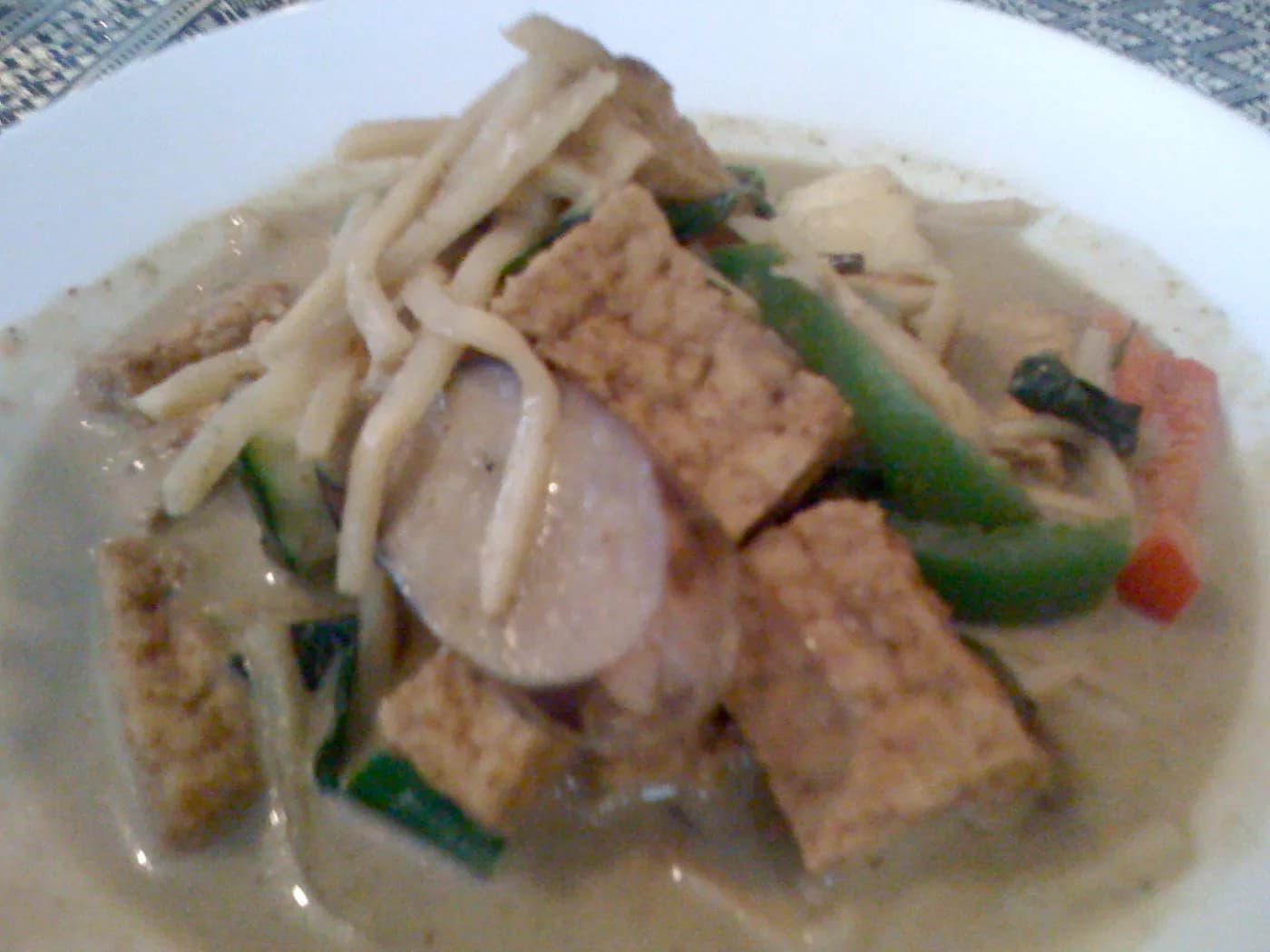
Classic Thai green curry paste is pounded from green chillies, lemongrass, galangal, kaffir lime, garlic, and shallots — all plant-based — but most traditional recipes and commercial jars also include shrimp paste for umami depth. The finished curry is then usually seasoned with fish sauce rather than salt. Neither ingredient is obvious from the name “green curry,” which is why so many people accidentally order or cook a version that isn’t actually vegetarian, let alone vegan. Making your own vegan Thai green curry paste, or carefully checking a store-bought jar’s ingredients for words like “shrimp,” “kapi,” or “fish,” is the only reliable way to know what you’re eating. Once you clear that hurdle, a genuinely vegan Thai green curry tastes every bit as layered as the traditional version.
Photo: wonderyort, CC BY-SA 2.0, via Openverse
Ingredients
Everything here builds toward one pot of vegan Thai green curry, split into the paste and the curry itself so you can prep in stages.
For the vegan green curry paste (or use 3-4 tablespoons of a store-bought vegan version):
- 3-4 green chillies, roughly chopped
- 2 stalks lemongrass, tender part only, sliced
- 1-inch piece galangal or ginger, sliced
- 4 kaffir lime leaves (or zest of 1 lime)
- 4 cloves garlic
- 2 shallots, chopped
- 1 tsp coriander seeds, toasted
- ½ tsp cumin seeds, toasted
- 1 tsp white miso paste (replaces shrimp paste)
- A handful of coriander stems
- 2 tbsp water, to help blend
For the curry:
- 200g firm tofu, pressed and cubed
- 1 tbsp oil, for frying tofu
- 1 can (400ml) full-fat coconut milk
- 1 cup vegetable stock
- 1 tbsp soy sauce (replaces fish sauce)
- 1 tsp brown sugar or jaggery
- 1 cup mixed vegetables (Thai eggplant, bell peppers, green beans, or bamboo shoots)
- 4-5 Thai basil leaves, plus extra for garnish
- 1 red chilli, sliced, for garnish
- Juice of ½ lime
If tracking down hidden shrimp paste and fish sauce here has you thinking about ingredient-checking more broadly, Vegan Diet Basics covers the same kind of label vigilance across the rest of your plate. And if you enjoyed this style of Asian vegan cooking, Vegan Korean Food walks through a similar set of swaps for dishes like bibimbap and kimchi.
Method
Work through these steps in order and you’ll have a proper vegan Thai green curry on the table in well under an hour.
- Make the paste. Blend all the paste ingredients in a small food processor with the water until you get a fairly smooth, fragrant paste. If it’s too dry to blend, add another tablespoon of water.
- Fry the tofu. Heat oil in a pan and shallow-fry the pressed tofu cubes until golden on most sides. Remove and set aside.
- Bloom the paste. In the same pan, spoon in about a third of the coconut milk (the thicker part if it’s separated) and cook over medium heat with the curry paste for 3-4 minutes, until it turns aromatic and slightly darker.
- Build the curry. Add the remaining coconut milk, vegetable stock, soy sauce, and sugar. Stir well and bring to a gentle simmer.
- Add vegetables. Add the harder vegetables first (eggplant, beans) and simmer for 5-6 minutes, then add quicker-cooking vegetables like bell peppers.
- Return the tofu. Add the fried tofu back in and simmer for another 3-4 minutes so it soaks up the sauce without breaking apart.
- Finish. Stir in Thai basil leaves and lime juice off the heat. Taste and adjust with more soy sauce, sugar, or lime as needed.
- Serve. Ladle over steamed jasmine rice, garnished with sliced red chilli and extra basil.
At this point you’ve got a full pot of vegan Thai green curry ready to portion out, and it holds up well as leftovers too.
Vegan Thai Green Curry: Nutrition Notes
A typical bowl of this curry (without rice) runs roughly 320-380 calories, largely from the coconut milk and tofu, with about 12-15g of protein per serving from the tofu. Full-fat coconut milk carries a good amount of saturated fat, so if you’re watching that closely, a light coconut milk or a mix of coconut milk and stock will cut calories without losing much flavour. The vegetables contribute fibre, vitamin C, and a range of micronutrients depending on what you use — bell peppers and green beans are good choices if you want more colour and crunch. Overall, a bowl of this vegan Thai green curry lands as a reasonably balanced main rather than a side dish.
Frequently Asked Questions
Related Articles

Healthy fats: why your body needs fat
Healthy fats help your body absorb vitamins and support brain, hormones, joints, cells and daily meals. Learn simple vegetarian sources and habits.

Good fats vs bad fats: choose fats wisely
Understand good fats vs bad fats in simple words. Learn which vegetarian fats to choose, what to reduce and how to read food labels better.
