
10-3-2-1-0 Sleep Rule: What It Is and How to Use It
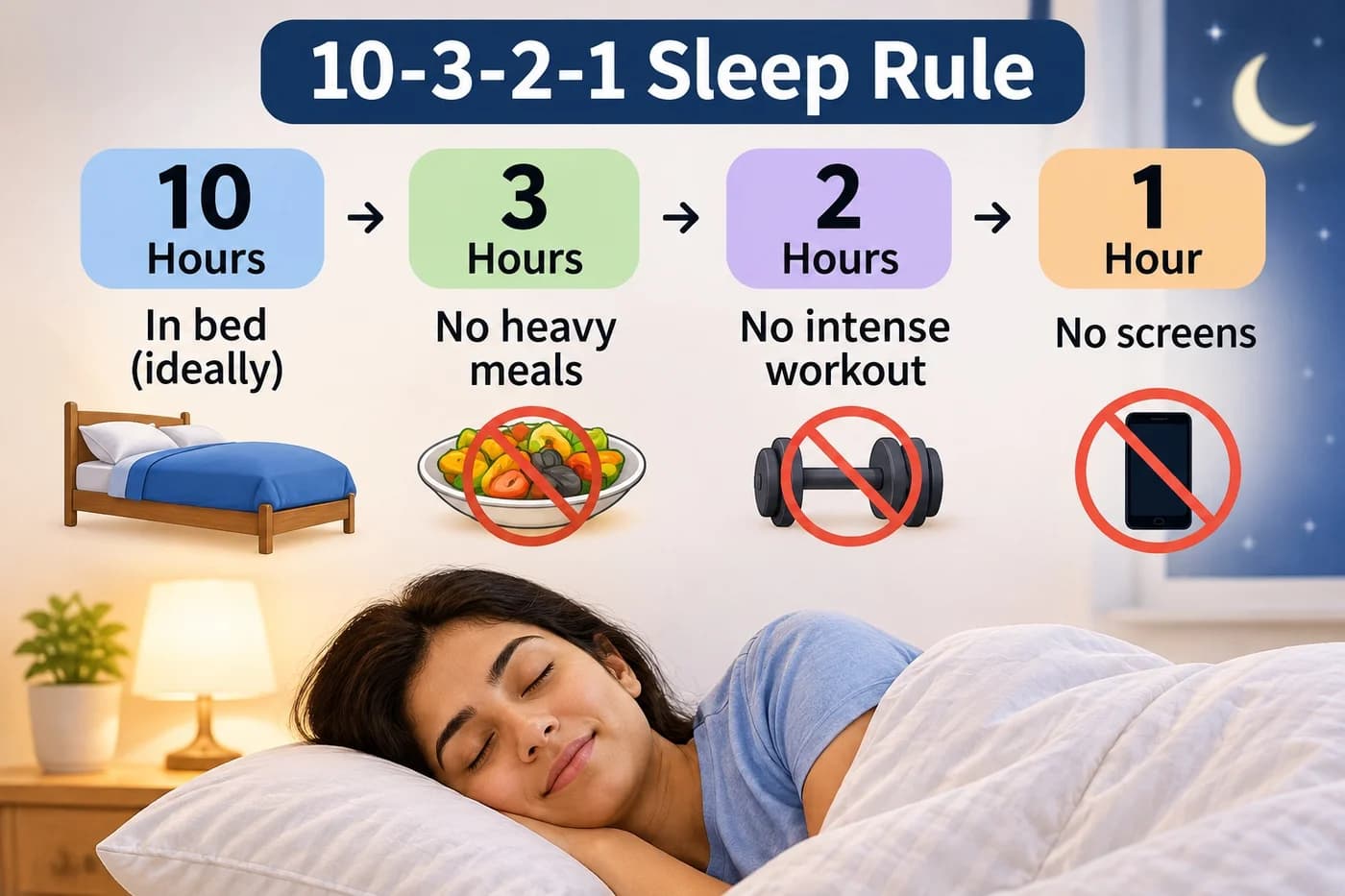
No caffeine 10 hours before bed, no food 3 hours before, no work 2 hours before, no screens 1 hour before and zero snoozes. Here's how it works.
Key Takeaways
- The rule: no caffeine 10 hours before bed, no food or alcohol 3, no work 2, no screens 1.
- The "0" means pressing snooze zero times in the morning.
- Each step targets a common sleep disruptor: caffeine, late meals, stress and light.
- Caffeine taken even 6 hours before bed has been shown to cut sleep.
- You don't need to follow every step perfectly; start with the one you break most.
What Is the 10-3-2-1-0 Sleep Rule?
The 10-3-2-1-0 rule is a simple countdown for the hours before bed. It spread widely on social media as an easy-to-remember way to build better sleep habits, and sleep doctors who have commented on it say its steps are sensible. Each number stands for one change:
- 10 hours before bed: no more caffeine.
- 3 hours before bed: no more heavy food or alcohol.
- 2 hours before bed: no more work.
- 1 hour before bed: no more screens.
- 0: the number of times you hit snooze in the morning.
The rule isn't a medical treatment, and it hasn't been tested as a package in research. But each step is based on sleep hygiene advice that sleep experts have given for years. What makes it useful is that it turns vague advice like "have a calm evening" into a clear timeline you can actually follow.
10 Hours Before Bed: No Caffeine
Caffeine works by blocking adenosine, a chemical that builds up during the day and makes you feel sleepy. The problem is that caffeine stays in your body for a long time. For most people, it takes about 4 to 6 hours for the body to clear half of it, so a cup of strong coffee at 4 pm can still be working when you go to bed at 10.
Research backs this up. In a 2013 study, people who took a large dose of caffeine even 6 hours before bed slept about an hour less than usual, as measured by a sleep monitor, and their own sleep diaries underestimated the loss. A 10-hour cut-off may sound strict, but if you sleep at 10:30 pm, it simply means finishing your last tea or coffee by around lunchtime. Remember that tea, coffee, colas, energy drinks and dark chocolate all contain caffeine.
3 Hours Before Bed: No Food or Alcohol
Eating a large meal shortly before lying down can cause indigestion and acid reflux, both of which make it harder to fall and stay asleep. In many Indian homes, dinner is eaten late, sometimes just before bed, so this step can make a noticeable difference. Try moving dinner a little earlier, and if you're hungry later, have something light, such as a small bowl of curd or a banana.
Alcohol is included for a different reason. A drink may make you feel drowsy, but alcohol makes sleep lighter and more broken in the second half of the night, so you're more likely to wake up early and feel unrefreshed.
2 Hours Before Bed: No Work
Answering emails, finishing a presentation or checking work chats late at night keeps your mind switched on. Stress and mental effort raise alertness, which is the opposite of what you need before sleep. Stopping work two hours before bed gives your brain a buffer to slow down.
If work thoughts follow you into the evening, try writing a quick to-do list for tomorrow before you stop. Getting tasks out of your head and onto paper makes them easier to let go of.
1 Hour Before Bed: No Screens
Phones, tablets, laptops and TVs give off bright light, including blue light, that can delay the release of melatonin, the hormone that tells your body it's time to sleep. Just as important, scrolling social media or watching videos keeps your brain engaged and makes it easy to stay up far later than planned.
Use the last hour for calmer activities instead, such as reading a paper book, light stretching, a warm bath, chatting with family or a few minutes of slow breathing. Charging your phone outside the bedroom makes this step much easier.
0: No Snooze Button
The final step is about the morning. Research on snoozing is mixed: a 2023 study of regular snoozers found that half an hour of snoozing cost them only a few minutes of sleep and didn't make them groggier. Even so, many people find that getting up with the first alarm makes mornings feel less of a struggle and helps them keep a steady wake-up time. And if you regularly can't get up without several snoozes, it's usually a sign that you need an earlier bedtime.
How to Start Using the Rule
You don't have to adopt all five steps at once. Look at your evenings and pick the step you break most often, whether that's late coffee, late dinners or scrolling in bed, and work on that first. Once it becomes a habit, add the next one.
Work backwards from your bedtime to set the times. If you plan to sleep at 10:30 pm, that means no caffeine after 12:30 pm, dinner finished by 7:30 pm, work closed by 8:30 pm and screens off by 9:30 pm. Writing these times down or setting reminders on your phone during the day helps you remember them.
Be flexible, too. Life doesn't always allow perfect evenings, and missing a step now and then is fine. The goal is a calmer evening routine most days of the week, along with a regular bedtime and wake-up time.
When the Rule Isn't Enough
Good habits help many people, but they can't fix every sleep problem. If you follow a healthy routine and still lie awake for long periods, wake up often or feel tired all day, speak to a doctor. Insomnia, sleep apnea, anxiety and other health conditions need proper assessment and treatment.
Building a Calmer Evening With Habuild
Regular movement during the day and calm breathing in the evening both support better sleep. Habuild's live sessions combine yoga, exercise and breathing practice, and the Habuild app's Box Breathing habit fits neatly into the screen-free hour before bed.
Editorial Sources
- Good Housekeeping via AOL – Doctors Say This Viral 'Sleep Rule' Actually Works
- Drake et al. – Caffeine effects on sleep taken 0, 3, or 6 hours before going to bed (2013)
- Sleep Foundation – How Long Does It Take for Caffeine to Wear Off?
- Sundelin et al. – Is snoozing losing? (2023)
- Sleep Foundation – Alcohol and Sleep
- Chang et al. – Evening use of light-emitting eReaders negatively affects sleep, circadian timing, and next-morning alertness (2015)
Health Disclaimer
This article is for general information only and is not medical advice. If you have ongoing trouble sleeping, please consult a doctor.
Frequently Asked Questions
Related Articles
Sleep Hygiene: The Daily Habits Behind Better Sleep
Sleep hygiene is the cumulative, unglamorous consistency of daily habits, not a single fix. See the core habits that matter most, and the ones most people overlook.

How to Fall Asleep Fast When Your Mind Won’t Quiet Down
How to fall asleep fast usually comes down to giving your body the right signals, not trying harder. See the military method and other techniques that genuinely work.
How to Fix Your Sleep Schedule (Without an All-Nighter)
Fixing a drifted sleep schedule doesn't need a risky all-nighter reset — small daily shifts work better and are far easier on your body. See the gradual approach that actually sticks.
How to Sleep Better at Night: 8 Proven Habits for Deeper, More Restful Sleep
Sleep quality is highly responsive to a few specific evening habits — no medication, expensive devices, or complicated protocols required. See all 8 proven habits.