
How to Fall Asleep Fast When Your Mind Won’t Quiet Down
How to fall asleep fast usually comes down to giving your body the right signals, not trying harder. See the military method and other techniques that genuinely work.
Key Takeaways
- States being physically tired and being ready for sleep are two genuinely different states.
- Recommends the 20-minute rule – get up and do something calm if not asleep by then.
- Names cognitive shuffling – picturing random neutral objects like a chair or a spoon.
- Details the military method’s full sequence, from facial muscles down to the legs.
- States the military method was originally developed to help soldiers sleep in high-stress settings.
- Warns that expecting instant results from the first attempt sets up disappointment.
How to fall asleep fast is usually less about a single trick and more about giving your body the right signals — slowing your breath, dimming stimulation, and not fighting wakefulness when it shows up. The good news is that most of what works can be done lying right where you are, without getting up or reaching for your phone.
Why you can’t fall asleep even when you’re tired
Learning how to fall asleep starts with understanding that being physically tired and being ready for sleep are two different states. A racing mind, leftover stress hormones, or a body that’s still alert from a screen or a late meal can keep you awake even when you’re exhausted. This is why the fastest routes to how to fall asleep almost all target the nervous system directly, rather than just waiting for tiredness to win.
Techniques for how to fall asleep fast
- 4-7-8 breathing — inhale for 4 counts, hold for 7, exhale slowly for 8; the long exhale is what calms your nervous system quickest
- Progressive muscle relaxation — tense and release each muscle group from your feet upward, which distracts the mind while physically releasing tension
- The 10-20-minute rule — if you’re not asleep in 20 minutes, get up, do something calm and dim-lit, and return to bed rather than lying there frustrated, since frustration itself keeps you awake
- Cognitive shuffling — picture random, unrelated, neutral objects in your mind (a chair, a cloud, a spoon) to occupy your thoughts without giving them anything meaningful to hold onto
- Cool down your room and your body — a slightly cool room and a warm shower beforehand both nudge your core temperature in the direction associated with sleep onset
Is there a way to fall asleep instantly?
Realistically, no single method for how to sleep instantly works every time for everyone — but the military method (a structured sequence of muscle relaxation and mental imagery originally used by soldiers) comes closest for many people, especially with practice. Expecting instant results from the first attempt sets you up to feel like it “isn’t working,” when actually these techniques usually get more effective the more familiar your body becomes with them.
The military method, step by step
Since it’s the closest thing to a genuine shortcut for how to fall asleep fast, it’s worth walking through in full: relax every muscle in your face, including your tongue and jaw. Drop your shoulders as low as they’ll go, then let your arms go completely limp, one side at a time. Exhale slowly, relaxing your chest. Relax your legs, starting with your thighs and working down. Once your body is fully relaxed, clear your mind for 10 seconds by imagining one of two scenes: lying in a canoe on a calm lake with a clear blue sky above, or lying in a black velvet hammock in a completely dark room. If your mind wanders, repeat “don’t think, don’t think, don’t think” for about 10 seconds before returning to the image. Developed originally to help soldiers fall asleep in high-stress, noisy conditions, it reportedly takes about six weeks of practice for most people to reliably fall asleep within two minutes using this sequence.

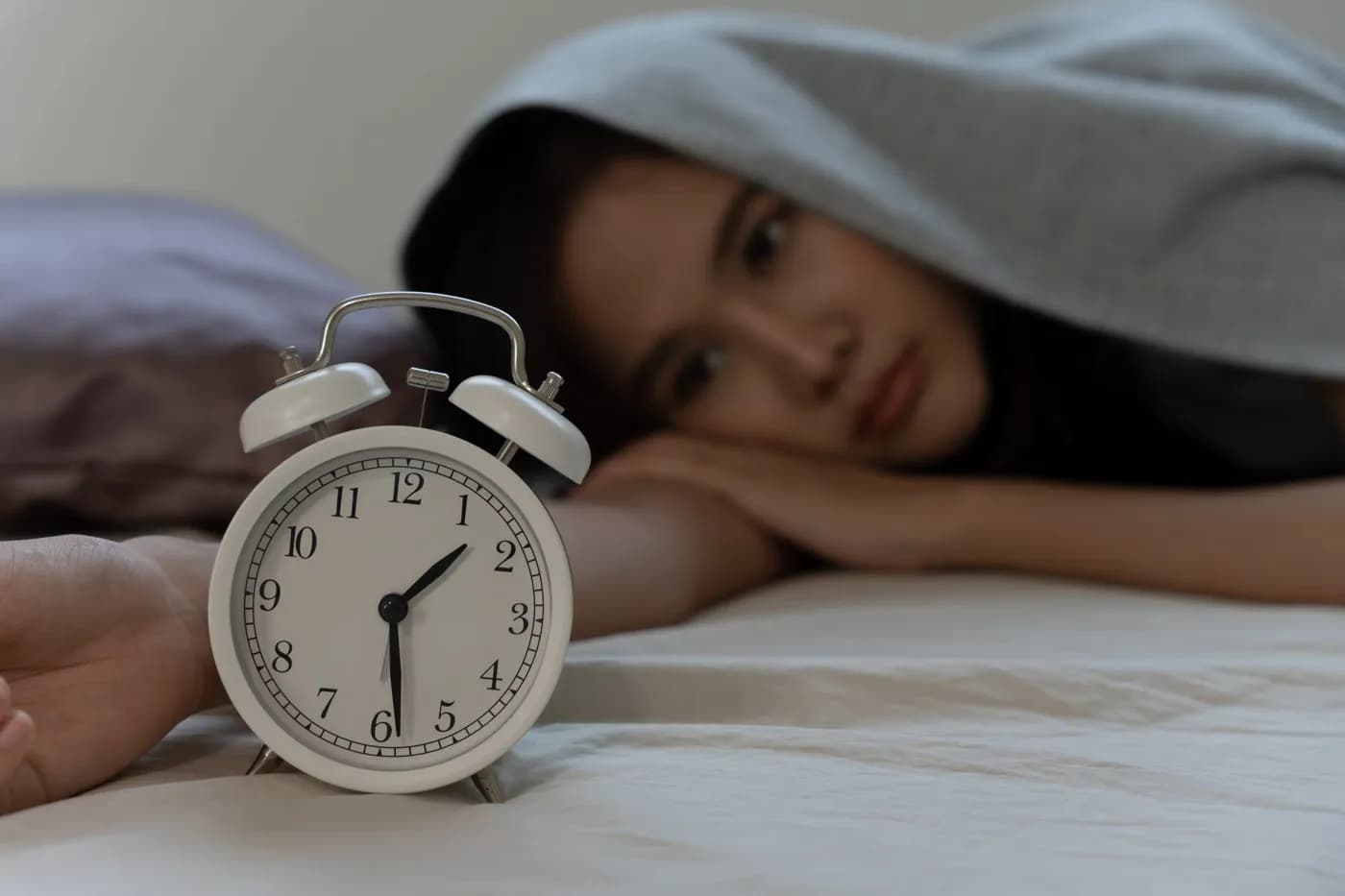
Lying awake at night trying how to fall asleep
Why environment matters as much as technique for how to fall asleep
Even the best technique for how to fall asleep fast works against you in the wrong environment. A room that’s too warm, too bright, or too noisy keeps your nervous system on partial alert regardless of how well you’re breathing or relaxing your muscles. Before troubleshooting technique, it’s worth ruling out the basics: a cool room (around 18-21°C), blackout curtains or an eye mask if light is an issue, and earplugs or white noise if sound is the disruptor. Fixing an obvious environmental issue often does more for how fast you fall asleep than any breathing pattern or mental trick layered on top of a bad setup.
Build a routine, not just a technique
Any single trick for how to fall asleep fast works better inside a consistent wind-down routine than used as a one-off. Pairing a breathing technique with a calming pre-bed ritual gives your body two signals instead of one — if you want a more structured version of this, breathing exercises for sleep covers a few specific patterns in more depth, and a nightly meditation for sleep practice builds the same calm state your body will start to recognise and respond to faster over time.
Common mistakes that slow down how to fall asleep
- Checking the time repeatedly — this fuels anxiety about not sleeping, which itself keeps you awake longer
- Trying too hard — actively “trying” engages the alert part of your brain, which works against everything else on this list for how to fall asleep; calm, passive attention works better than effort
- Using your phone in bed — even brief scrolling resets your alertness and delays the process significantly
Frequently Asked Questions
Related Articles

How to Get Deep Sleep: 7 Proven Ways to Improve and Lengthen Deep Sleep
Deep, slow-wave sleep is when the body physically repairs and the brain clears waste — the single most important phase for health and recovery. See 7 proven ways to improve and lengthen it.


How to Sleep Better at Night: 8 Proven Habits for Deeper, More Restful Sleep
Sleep quality is highly responsive to a few specific evening habits — no medication, expensive devices, or complicated protocols required. See all 8 proven habits.