
Do Planks Reduce Belly Fat? the Honest Truth and What Actually Works for Visible Belly Fat Loss
Planks don't spot-reduce belly fat, but they build deep core muscle, improve posture, and add to total daily caloric burn as part of a bigger programme.

Key Takeaways
- A 2011 study by Vispute et al. systematically refuted spot reduction for targeted ab exercise.
- The deep core acts as a natural corset, visually flattening the midsection even before fat loss.
- Visible belly improvements from posture correction alone can appear within just 2-4 weeks.
- A 2019 review found resistance plus deficit produces 30-40% more fat loss than cardio-only.
- Chronic lower back pain is named as a barrier that prevents higher-calorie-burn cardio for many.
- Strengthening the core specifically enables more total exercise volume by protecting the spine.
Most people searching do planks reduce belly fat want a clear yes or no — and the honest answer is that planks alone do not directly burn belly fat through spot reduction, but they play a meaningful supporting role in overall belly fat loss programmes by building deep core muscle, improving posture (which visually flattens the belly), and adding to total daily caloric burn. The spot-reduction myth was systematically refuted by Vispute et al. in their 2011 Journal of Strength and Conditioning Research study, which confirmed that targeted abdominal exercise does not preferentially burn fat from the abdominal region. What works for belly fat is full-body training, moderate caloric deficit, and lifestyle support — with planks contributing to the underlying core that determines how the belly looks as fat drops. This guide covers the honest mechanism, the real role of planks, and the daily routine that produces visible results. The same habit-building structure that powers our daily online yoga classes makes consistent practice possible.
7 Benefits of Daily Planks in a Complete Belly Fat Loss Routine
Daily planks contribute meaningful benefits when combined with full belly fat loss programming. Below are the seven most important benefits.
- Stronger Deep Core That Visually Flattens the Belly — The most direct benefit. Building the deep core canister — transverse abdominis, pelvic floor, multifidus — produces a flatter midsection appearance even before significant fat loss occurs. The deep core acts as a natural corset, holding the belly area firm. Members focused on broader belly fat loss often pair their plank work with our strength training for belly fat programme.
- Better Posture That Reduces Belly Appearance — The postural benefit. Forward-rounded posture pushes the belly forward, making it appear larger than it actually is. Daily plank practice strengthens the core muscles that support upright posture — and improved posture often produces visible belly improvements within 2–4 weeks, before any fat is lost.
- Increased Daily Caloric Burn from Core Training — The metabolic contribution. Planks contribute to total daily caloric burn that drives systemic fat loss when combined with full-body training. Stat: A 2019 review in Sports Medicine by Wewege et al. confirmed that combining resistance training (including core exercises) with moderate caloric deficit produces 30–40% greater fat loss than cardio-only protocols.
- Reduced Lower Back Pain That Limits Other Fat-Loss Exercise — The functional benefit. Many people cannot perform the high-calorie-burn exercises (running, burpees, sustained cardio) needed for fat loss because of chronic lower back pain. Daily plank practice strengthens the core stabilisers that support the spine, reducing back pain and enabling more total exercise.
- Foundation for the Full Body Training That Drives Fat Loss — The systemic benefit. Strong core supports better squats, deadlifts, push-ups, rows, and the compound movements that drive systemic fat loss. Members focused on whole-body fat loss often pair plank work with our strength training for fat loss programme.
- Reduced Cortisol-Driven Belly Fat Storage through Stress Regulation — The hormonal benefit. Daily exercise (including planks) reduces cortisol — and cortisol from chronic stress preferentially drives fat storage in the midsection. Combined with broader stress regulation, daily planks address one of the most underaddressed drivers of stubborn belly fat. Members building broader core capacity often pair their work with our core strength plank programme.
- Long-Term Body Composition and Healthy Ageing — The cumulative benefit. The same daily plank practice that supports current belly fat loss also protects against age-related core weakness, postural decline, and the visceral fat accumulation that accelerates with age.
How to Get Started with Planks for Belly Fat Loss
Getting started requires no equipment and no gym — just understanding the realistic role of planks in a complete fat loss programme.
What You Need to Begin
A flat clear floor space (yoga mat optional), comfortable clothing, and 30–45 minutes daily for full training (planks plus complementary exercises). A measuring tape for tracking waist circumference is more useful than the scale alone — body composition changes often happen without dramatic scale changes.
Setting Realistic Goals
Be honest about timelines. Visible belly fat reduction takes 12–16 weeks of combined planks, full-body training, daily cardio, and moderate caloric deficit — not days or weeks. Aim for waist circumference reduction of 4–6 cm over 16 weeks, which is achievable. Avoid the “planks for flat belly” promise as a standalone strategy — planks alone will not produce dramatic belly fat reduction.
Start with the Basics
Begin with three foundational practices: 3 sets of 30-second planks 4 times per week (the core foundation), 30 minutes of daily moderate cardio (drives systemic fat burn), and 3 weekly full-body strength sessions. Combined with moderate caloric deficit, these practices drive the belly fat reduction planks alone cannot.
Best Plank Variations and Complementary Exercises for Belly Fat
Standard Forearm Plank — Deep Core, Shoulders, Glutes — Hold 30–60 Seconds × 3 Rounds
The foundational core exercise — engages the deep core canister that visually flattens the midsection. Sets and reps: 3 rounds of 30–60 seconds with 60 seconds rest, performed 4 times per week. Modification: knee plank for beginners.
Side Plank — Obliques, Lateral Chain — Hold 30–60 Seconds per Side × 2 Rounds
Side planks build the obliques and lateral chain that contribute to a defined waistline. Hold: 30–60 seconds per side, 2 rounds, performed 3 times per week. Modification: knee side plank for beginners.
Mountain Climbers — Full Body Compound + Cardio + Core — 3 Sets × 30 Seconds
Mountain climbers combine core engagement with full-body movement and cardiovascular demand — producing maximum metabolic burn while training the abs dynamically. The highest-calorie-burn core movement most home routines can include. Modification: slow tempo for beginners.
Burpees — Full Body Compound + Cardio — 3 Sets × 8–12 Reps
Burpees combine push-up motion with explosive jumping — producing maximum metabolic demand in minimum time. The single highest-calorie-burn movement for belly fat goals. Modification: step-back burpees for beginners.
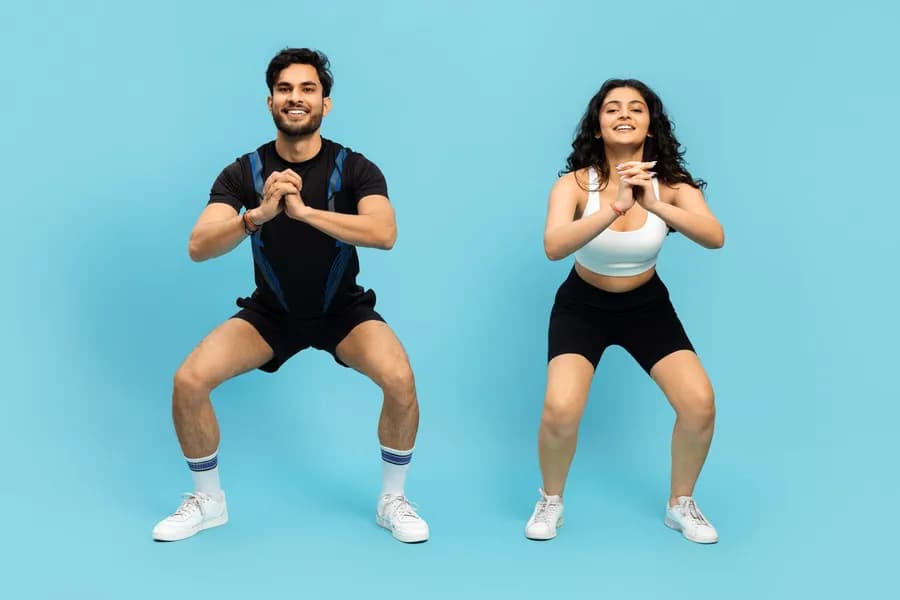
Squats — Full Body + Lower Body Strength — 3 Sets × 15 Reps
Squats engage the largest muscle groups in the body simultaneously, driving caloric burn and metabolic adaptation. Members focused on broader abdominal definition often pair their work with our abdominal workouts programme.
Bicycle Crunches — Upper and Lower Abs, Obliques — 3 Sets × 20 Reps
Bicycle crunches train the visible abdominal muscles that become defined as belly fat drops. Slow controlled tempo produces better results than fast repetition.
Brisk Walking — Cardiovascular System + Sustainable Fat Burn — 30 Mins, 5×/week
Brisk walking complements planks and full-body training by driving systemic fat burn in low-impact, sustainable daily practice. The combination of all seven exercises (planks + side planks + mountain climbers + burpees + squats + bicycle crunches + walking) produces dramatically better belly fat reduction than any subset alone.
Common Mistakes to Avoid
- Expecting Planks Alone to Burn Belly Fat (Spot Reduction Myth) — The most damaging mistake. Planks build core muscle but do not directly burn belly fat. The spot-reduction myth was refuted by Vispute et al. 2011. Performing 100 daily planks without addressing overall body fat or training the full body produces stronger abs hidden under the same fat layer.
- Skipping Strength Training in Favour of Pure Plank/Cardio — Pure plank-and-cardio approaches strip lean muscle alongside fat — producing fast initial scale weight loss but leaving the body weaker and at high rebound risk. Always combine planks with 2–3 weekly full-body strength sessions.
- Aggressive Caloric Restriction Without Resistance Training — Aggressive caloric deficits produce fast scale weight loss but disproportionately strip lean muscle from the upper body and core — leaving the midsection looking deflated rather than defined. Combine moderate deficit (300–500 calories) with consistent strength and core training.
- Ignoring Cortisol, Sleep, and Hormonal Drivers of Belly Fat — Cortisol from chronic stress preferentially drives fat storage in the midsection — and no amount of plank exercise will fully overcome cortisol-driven fat storage if stress and sleep remain unaddressed. Combine training with stress management and 7–8 hours of sleep nightly.
Who Should Try Planks for Belly Fat Reduction?
- Beginners Wanting Sustainable Body Composition Change — Belly fat loss is most effective when approached as a sustainable lifestyle change rather than aggressive short-term protocols. Beginners benefit from starting with planks, walking, and balanced eating before increasing intensity.
- Women Managing Hormonal Belly Fat — Hormonal belly fat (postpartum, perimenopausal, PCOS-related) benefits from practices that support broader hormonal balance through stress regulation, consistent moderate exercise, and adequate sleep. The myth that women must avoid resistance training is exactly that — a myth.
- Older Adults Wanting to Prevent Visceral Fat Accumulation — Visceral fat accumulation accelerates with age. Daily plank-and-full-body practice protects metabolic health, supports cardiovascular function, and prevents the disease patterns associated with abdominal fat. (Disclaimer: those with cardiac conditions should consult a doctor before high-intensity exercise.)
- Working Professionals with Sedentary Lifestyles — Prolonged sitting drives belly fat through cortisol elevation and reduced movement. Daily 30–45 minute practice (including planks) directly counteracts these drivers.
Build a Flatter Belly with a Routine That Actually Works
Reducing belly fat isn’t about doing endless planks or chasing single-exercise miracles — it’s about consistency, full-body programming, and following a structured plan that combines core training (including planks) with cardio, moderate caloric deficit, and the lifestyle habits sustainable fat loss depends on. With the right support, you can practise effectively from home and see real visible reductions within 12–16 weeks.
What You Get with Habuild’s Strong Everyday Programme:
- Daily live guided strength and yoga sessions
- Beginner to advanced progression
- No-equipment and home-friendly workouts
- Expert guidance to ensure correct form
- Community support to stay consistent
Start Your Belly Fat Loss Journey Form Fields:
- Name
- Mobile Number
- Email Address
Used consistently, a plank exercise to reduce belly fat works best paired with full-body movement. Planks build deep core strength, and yoga extends that same principle across a fuller range of positions: side plank, boat pose, and forearm variations challenge the core from angles a standard plank doesn’t reach, while also improving the posture that visually flattens the stomach this guide mentions. The breathing practiced throughout a session adds a stress-management layer that plain core work doesn’t offer. Habuild’s free yoga challenge is a good way to round out your core routine.
Frequently Asked Questions
Related Articles
Does Squats Reduce Belly Fat? the Honest Answer about How Squats Actually Help You Lose Belly Fat
Squats engage the largest muscle groups in the body, driving caloric burn and building the lean muscle that raises resting metabolism — not spot


Does Sit Ups Reduce Belly Fat? the Honest, Evidence-Based Answer
Sit-ups don't spot-reduce belly fat, but they do build core musculature and elevate metabolism as part of a complete fat-loss programme. See the

How to Reduce Belly Fat in 7 Days: What’s Realistic and What Actually Works
You can't eliminate belly fat in a week, but you can reduce bloating significantly and lose real body fat while building the habits that produce lasting