
How to Sleep After C Section: Comfortable Positions That Help
How to sleep after a C-section comes down to one priority in the first few weeks: protecting your healing incision from pressure. See the safest positions, and what to avoid.

Key Takeaways
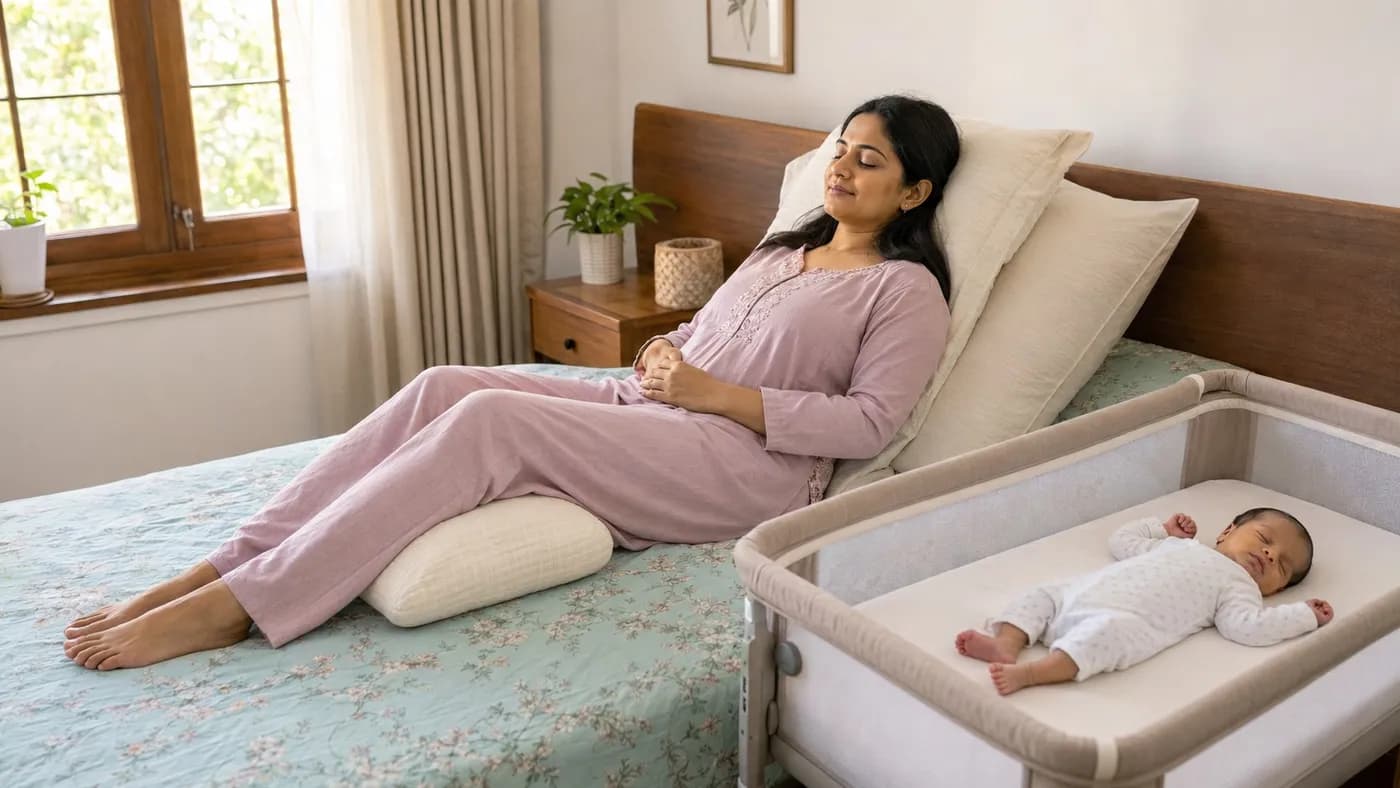
- Recommends a semi-upright, pillow-propped position in the first week or two, not lying flat.
- Recommends rolling to the side first, then pushing up with the arms, not sitting straight up.
- Recommends hugging a pillow against the stomach when coughing or laughing to reduce incision strain.
- Recommends positioning the bassinet on the side requiring less twisting to reach at night.
- States prescribed pain medication plays a bigger role in comfortable sleep than most mothers expect.
- Names sharp pain, not mild discomfort, as the specific signal to adjust position immediately.
How to sleep after c section comes down to one main priority in the first few weeks: protecting your healing incision from direct pressure and strain, which changes almost everything about how you’d normally get comfortable in bed.
The best position for how to sleep after c section
A slightly reclined, semi-upright position is usually the most comfortable in the first week or two — propped up with pillows rather than lying fully flat, since a reclined angle reduces the pull on your abdominal incision when shifting or breathing deeply. Side sleeping, with a pillow hugged against your stomach for support, is the next most comfortable option once you’re ready to lie flatter.
Getting in and out of bed safely post-C-section
Learning how to sleep after c section isn’t just about the position itself — getting in and out of bed without straining your core matters just as much. Roll onto your side first, then use your arms to push yourself up sideways, rather than sitting straight up using your abdominal muscles, which directly stresses a fresh incision. The same rolling technique works in reverse to lie back down.
What to avoid when figuring out how to sleep after c section
- Stomach sleeping — direct pressure on the incision makes this uncomfortable and inadvisable for at least the first several weeks
- Sitting straight up from flat on your back — this uses your abdominal muscles directly against the incision; always roll to your side first
- Skipping pillow support — a pillow hugged against your stomach when coughing, laughing, or shifting position reduces strain on the incision significantly
- Ignoring pain as a signal — if a position causes sharp pain rather than mild discomfort, that’s your body telling you to adjust, not push through
Managing a newborn’s sleep needs while recovering yourself
Part of what makes how to sleep after c section especially challenging is that recovery coincides with a newborn’s unpredictable feeding and sleep schedule, meaning the careful positioning and gradual movement described above often has to happen in the middle of the night, half-asleep, and under time pressure. A few practical adjustments help: keeping the baby’s bassinet on the side of the bed that requires less twisting to reach, asking a partner or family member to handle diaper changes during the first couple of weeks so you’re not repeatedly getting in and out of bed, and accepting help with lifting anything heavier than the baby itself, since lifting strains the same core muscles the incision needs time to heal. Recovery and newborn care don’t have to be optimised separately — building the sleep setup around both at once from day one reduces unnecessary strain.
Pain management and how to sleep after c section more comfortably
Prescribed pain medication in the first week or two plays a bigger role in how to sleep after c section than most new mothers expect, since unmanaged pain itself disrupts sleep as much as any positioning issue. Taking pain medication on the schedule your doctor recommends, rather than only when pain becomes severe, tends to keep discomfort more level through the night and makes position changes (like the roll-to-your-side technique) considerably less painful to execute. As healing progresses and medication is tapered down under medical guidance, sleep position becomes the primary lever again, but in the earliest days, don’t underestimate how much staying ahead of pain affects sleep quality.
When does how to sleep after c section stop being a daily puzzle?
Most women find sleeping noticeably more comfortable by 2-4 weeks post-surgery, as the incision heals and core strength gradually returns, though full recovery of comfortable movement can take 6-8 weeks. If back pain (common in postpartum recovery generally, on top of incision healing) is compounding the discomfort, how to relieve back pain during pregnancy while sleeping covers pillow and position adjustments that carry over well into the postpartum period too.
Frequently Asked Questions
Related Articles

Mudra for Sleep (Shakti Mudra): Steps, Benefits, and Precautions
Shakti Mudra and Prithvi Mudra activate the parasympathetic nervous system and establish a conditioned pre-sleep signal when held for 10-15 minutes before


Sleeping Mudra: Best Hand Gestures to Fall Asleep Faster
Practice Sleeping Mudra with Habuild. Follow the best sleep hand gesture steps to relieve insomnia, calm the mind, and promote deep restful sleep. Start today!