
Left Side Sleeping Position: Why It’s Good for You
The left side sleeping position is the one doctors recommend most consistently — gravity and anatomy both work in your favour. See why it helps digestion, and how to make it comfortable.
Key Takeaways
- Explains left-right differences matter here because the body’s organs sit asymmetrically.
- States the stomach and pancreas sit on the left side, letting gravity aid digestion directly.
- States right-side sleeping can theoretically add slight pressure against organs positioned there.
- Names improved uterine blood flow as the specific pregnancy benefit tied to left-side sleeping.
- Notes some researchers link it to supporting gravity-dependent lymphatic drainage as well.
- Recommends a body pillow to support the top arm and leg, easing shoulder pressure overnight.
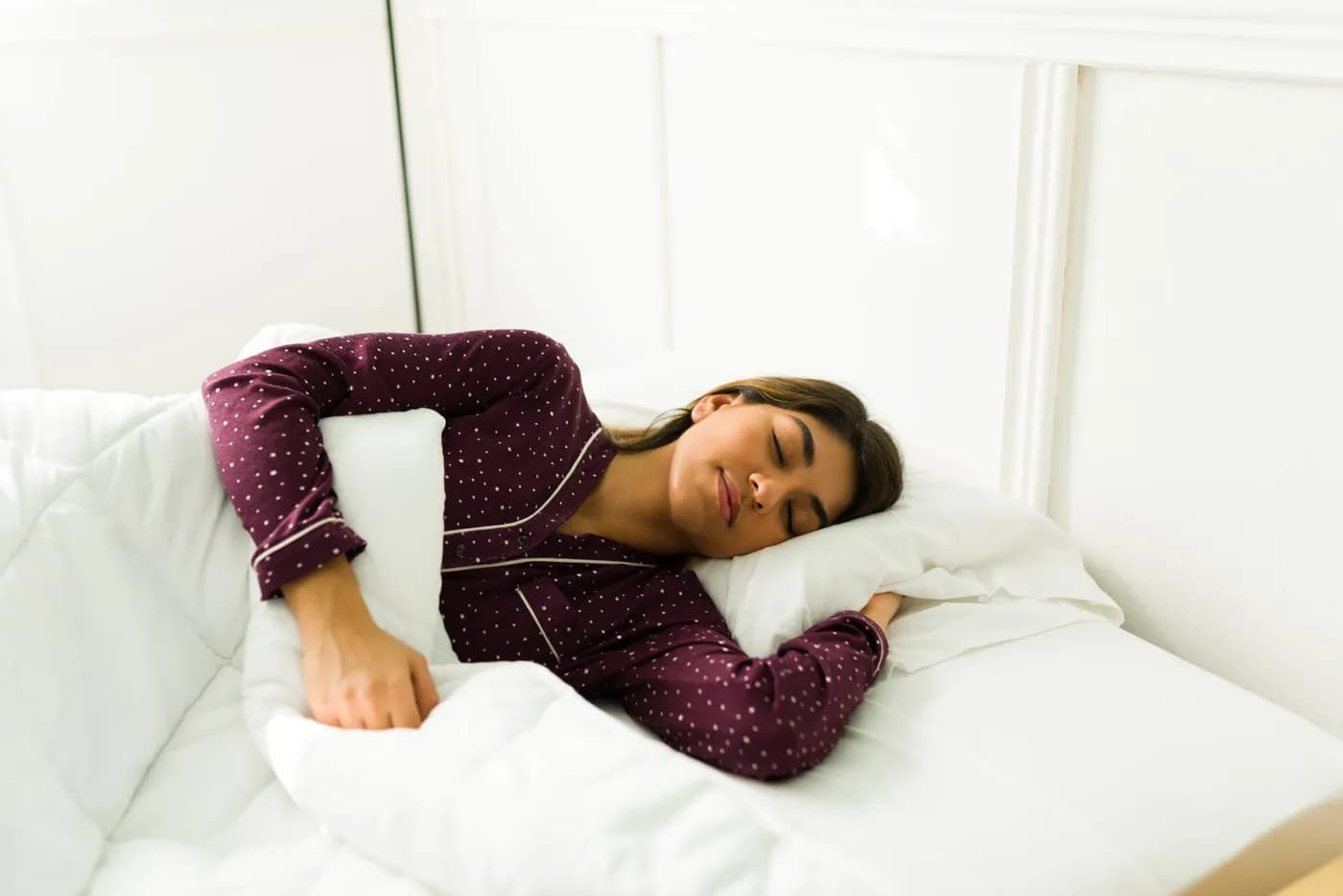
The left side sleeping position is the one most consistently recommended by doctors among all sleep positions, largely because of how the body’s internal organs are arranged — gravity and anatomy both work in your favour when you sleep on your left rather than your right.
Left vs right: why the specific side actually matters here
Unlike some sleep advice where “just pick a side sleeping position” would be good enough, left versus right genuinely makes a physiological difference in this specific case, because of how asymmetrically the body’s organs are arranged. Most general side-sleeping advice (reduced snoring, less pressure on the airway compared to back sleeping) applies to either side roughly equally. The left side sleeping position’s added benefits — digestion, reduced reflux, pregnancy blood flow — are specifically tied to organ placement, which is why “just sleep on your side” and “sleep on your left side” aren’t quite the same recommendation, even though they’re often used interchangeably in casual conversation.
Why the left side sleeping position helps digestion
Your stomach and pancreas sit on the left side of your body, and the left side sleeping position lets gravity help move food and waste through the digestive tract more efficiently. This is part of why, when people ask which side sleeping is good for digestion, the left side is the near-universal answer — it can reduce acid reflux and heartburn by keeping the stomach positioned below the oesophagus, making it harder for stomach acid to travel upward.
Which side sleeping is good for health, more broadly
Beyond digestion, the left side sleeping position is specifically recommended during pregnancy, since it improves blood flow to the uterus and reduces pressure on the liver, which sits on the right side of the body. It’s also considered gentler on the heart for some people, since sleeping on the right side can theoretically add slight pressure against organs positioned there. For general side sleeping position comfort, the left side is the one most consistently linked to these small but real physiological advantages.
How to make the left side sleeping position comfortable
- Use a firm enough pillow to keep your neck aligned with your spine, not tilted up or down
- Place a pillow between your knees to keep your hips level and reduce lower back strain
- Consider a body pillow to support your top arm and leg, reducing shoulder pressure over a full night
- If you’re not used to side sleeping, expect a short adjustment period before it feels natural
If acid reflux specifically is your reason for trying this position, acid reflux sleeping position goes into more detail on exactly how to set it up for that purpose.
The left side sleeping position and lymphatic drainage
Beyond digestion and heart-adjacent benefits, some researchers point to the left side sleeping position as potentially supporting the body’s lymphatic system, which relies partly on gravity and movement to drain waste and toxins. The body’s major lymphatic drainage point (the thoracic duct) empties into a vein on the left side, so sleeping on the left is theorised to support slightly more efficient lymphatic flow overnight compared to the right side. This research is newer and less extensively studied than the digestion and pregnancy benefits, but it’s a commonly cited additional reason practitioners recommend this position when patients ask why left over right specifically.
Left side sleeping position across different body types and conditions
The core recommendation holds broadly, but a few groups benefit from small adjustments. People with a larger body frame often find a slightly firmer mattress necessary to prevent excessive sinking on the left side specifically, since more body weight concentrates on fewer contact points than back sleeping distributes it across. People recovering from left shoulder or hip surgery may need to temporarily favour the right side or back sleeping until healing progresses, even though the left is otherwise preferred. Pregnant women in the third trimester sometimes find a full-length pregnancy pillow essential for sustaining the left side sleeping position comfortably through a full night, given the added weight and shifted centre of gravity.
Are there downsides to the left side sleeping position?
For most people, very few — the main complaint is shoulder or hip pressure over a long night, which a supportive mattress and the right pillow setup usually resolves. People with certain shoulder injuries on that side may find it uncomfortable and should adapt with extra cushioning or consider the right side instead, since consistency and comfort still matter more than chasing the theoretically ideal side.
Frequently Asked Questions
Related Articles

Sleeping Mudra: Best Hand Gestures to Fall Asleep Faster
Practice Sleeping Mudra with Habuild. Follow the best sleep hand gesture steps to relieve insomnia, calm the mind, and promote deep restful sleep. Start today!


Mudra for Sleep (Shakti Mudra): Steps, Benefits, and Precautions
Shakti Mudra and Prithvi Mudra activate the parasympathetic nervous system and establish a conditioned pre-sleep signal when held for 10-15 minutes before