
Military Sleep Method: Can You Fall Asleep in 2 Minutes?
Can you really fall asleep in 2 minutes? Here's where the military sleep method comes from, how to practise it and what to expect.
Key Takeaways
- The military sleep method relaxes your face, shoulders, arms and legs, then clears your mind.
- It comes from a 1981 book about training US Navy pilots to relax under pressure.
- The "2 minutes" claim is anecdotal; it hasn't been tested in proper studies.
- Muscle relaxation and calm breathing do have research support for better sleep.
- It takes practice; most people need a few weeks before it works well.
What Is the Military Sleep Method?
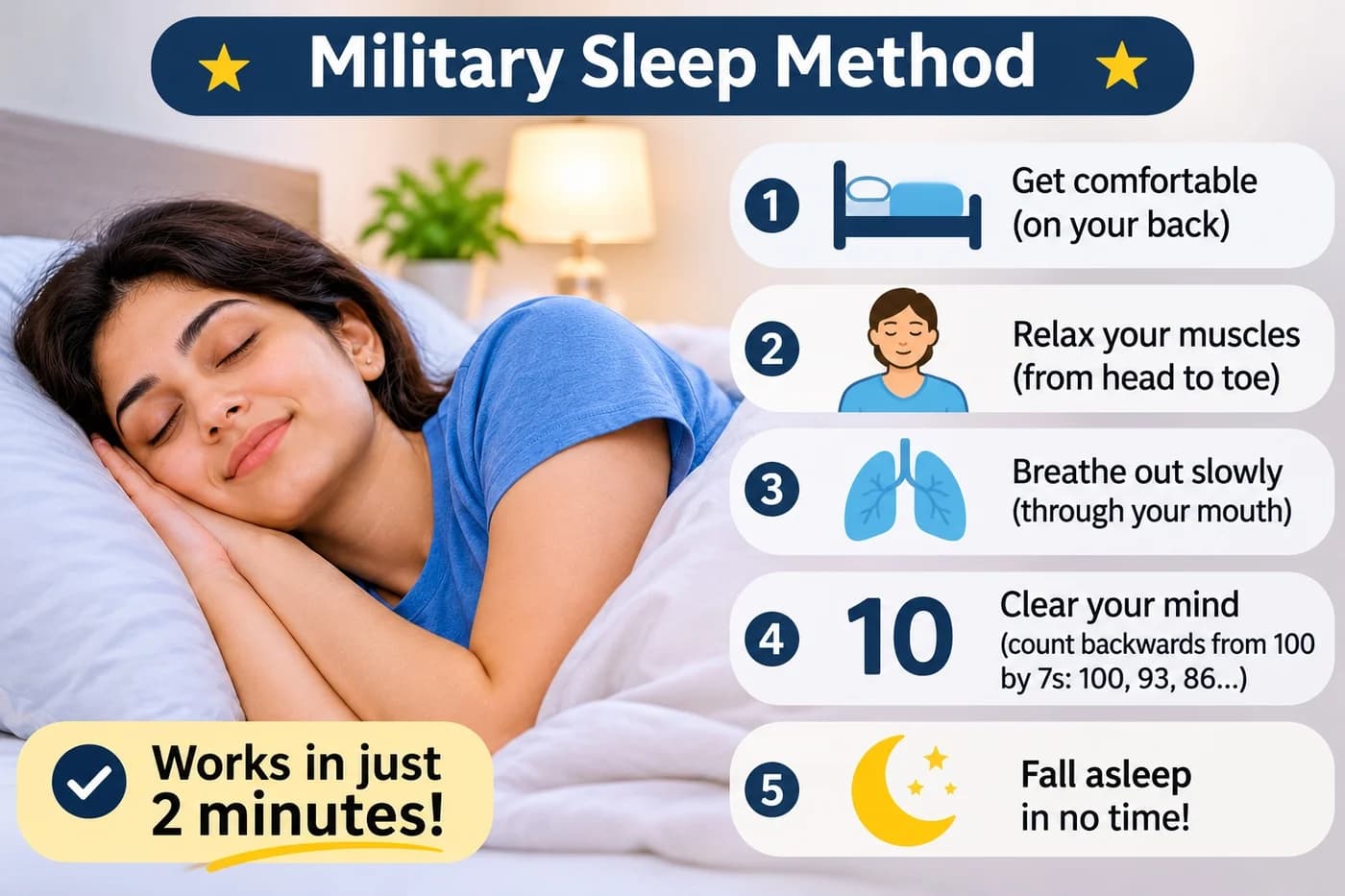
The military sleep method is a relaxation routine designed to help you fall asleep quickly, even in noisy or stressful conditions. You relax your body one area at a time, starting with your face and working down to your legs, and then spend a few seconds clearing your mind with a simple image or phrase.
It has gone viral on social media with the promise that you can fall asleep in just two minutes. That claim makes it sound like a trick, but the method itself is really a practical form of relaxation training, and its basic ideas are sensible for anyone who lies awake with a tense body and a busy mind.
Where Does It Come From?
The method is usually traced to a 1981 book called Relax and Win: Championship Performance by Lloyd "Bud" Winter, an American track coach. During World War II, Winter worked with the US Navy to help pilots relax so they could perform better and rest whenever they had the chance.
According to the book, about 96% of pilots could fall asleep within two minutes after six weeks of practice, even with distractions such as background noise. It's worth knowing that this figure comes from the book's own account, not from a controlled scientific study. It shows what regular practice might achieve, but it isn't proof that the method will work the same way for everyone.
How to Do the Military Sleep Method
Lie in bed in a comfortable position and keep the lights low. Then work through these steps slowly:
- Relax your face. Let go of the muscles in your forehead, around your eyes, your jaw and your tongue.
- Drop your shoulders. Let them sink as low as they will go, then relax your upper and lower arms, one side at a time.
- Breathe out and relax your chest. Take a slow breath and let your chest soften as you exhale.
- Relax your legs. Start with your thighs, then your calves, ankles and feet.
- Clear your mind for about 10 seconds. Picture a calm scene, such as lying in a canoe on a still lake, or silently repeat "don't think, don't think".
If you're still awake, simply start again from your face. There's no need to feel frustrated; the aim is to relax, and sleep tends to follow. Take your time with each step rather than rushing through the list, as the slower you go, the more fully each muscle group can let go.
Does the Military Sleep Method Work?
There isn't direct research on the military sleep method as a whole, so nobody can promise it will put you to sleep in two minutes. However, the method combines techniques that are well studied.
Relaxing your muscles one group at a time is closely related to progressive muscle relaxation. The American Academy of Sleep Medicine suggests relaxation therapy as one option for treating long-term insomnia, although it notes that the evidence shows a modest benefit. Slow breathing can help calm the body's stress response, and focusing on a single calm image or phrase helps stop the stream of worries that keeps many people awake. Relaxation training is also one of the tools used in cognitive behavioural therapy for insomnia (CBT-I), which is the recommended first treatment for long-term insomnia.
So while the "two minutes" promise is best taken with a pinch of salt, the method is a reasonable, low-risk way to help your body and mind wind down at night.
Why Practice Matters
The pilots in the original story practised for six weeks before the method worked reliably. That's an important detail that often gets lost online. Learning to relax on purpose is a skill, and like any skill it improves with repetition.
Try the method every night for a few weeks, and practise it during the day too, for example during a quiet break, when there's no pressure to fall asleep. Over time, your body will start to associate the routine with switching off, which can make it more effective at bedtime.
Tips to Make It Work Better
The method works best alongside good sleep habits. Keep your bedroom cool, dark and quiet, and put your phone away at least 30 minutes before bed, because bright screens and scrolling keep your brain alert. Try to go to bed and wake up at about the same time every day, including weekends.
Avoid caffeine from the afternoon onwards, and avoid heavy meals close to bedtime. If you've been lying awake for around 20 minutes, it often helps to get up, do something calm in dim light and return to bed when you feel sleepy, rather than lying there trying harder.
When to See a Doctor
If you regularly take a long time to fall asleep, wake up often during the night or feel tired during the day despite trying these methods, talk to a doctor. Ongoing sleep problems can have causes such as stress, anxiety, sleep apnea or other health conditions that need proper treatment.
How Habuild Can Help You Wind Down
Daily movement and calm breathing both support better sleep. Habuild's live sessions combine yoga, exercise and breathing practice, and the Habuild app's Box Breathing habit is a simple way to add a calming breathing routine to your evening.
Editorial Sources
- Healthline – How to Fall Asleep Fast in 10, 60, or 120 Seconds
- Edinger et al. – Behavioral and psychological treatments for chronic insomnia disorder in adults: an AASM clinical practice guideline (2021)
- American College of Physicians – CBT recommended as initial treatment for chronic insomnia (2016)
- NHS – Fall asleep faster and sleep better
Health Disclaimer
This article is for general information only and is not medical advice. If you have ongoing trouble sleeping, please consult a doctor.
Frequently Asked Questions
Related Articles
How to Fall Asleep Fast When Your Mind Won’t Quiet Down
How to fall asleep fast usually comes down to giving your body the right signals, not trying harder. See the military method and other techniques that genuinely work.

Breathing Exercises for Sleep: Techniques to Calm Your Mind
Breathing exercises for sleep work because slowing your exhale is one of the few nervous-system responses you can control directly. Try the techniques that calm a racing mind fastest.
Insomnia Treatment: Medical Options for Chronic Sleeplessness
Insomnia treatment looks different for a rough few weeks versus genuinely chronic sleeplessness, and knowing which one you have changes what helps. See the medical options, from CBT-I to medication.
How to Sleep Better at Night: 8 Proven Habits for Deeper, More Restful Sleep
Sleep quality is highly responsive to a few specific evening habits — no medication, expensive devices, or complicated protocols required. See all 8 proven habits.