
Power Nap: Benefits, Ideal Length and Best Time
A short afternoon nap can lift your energy and focus. Here's how long a power nap should be, when to take it and who should skip it.
Key Takeaways
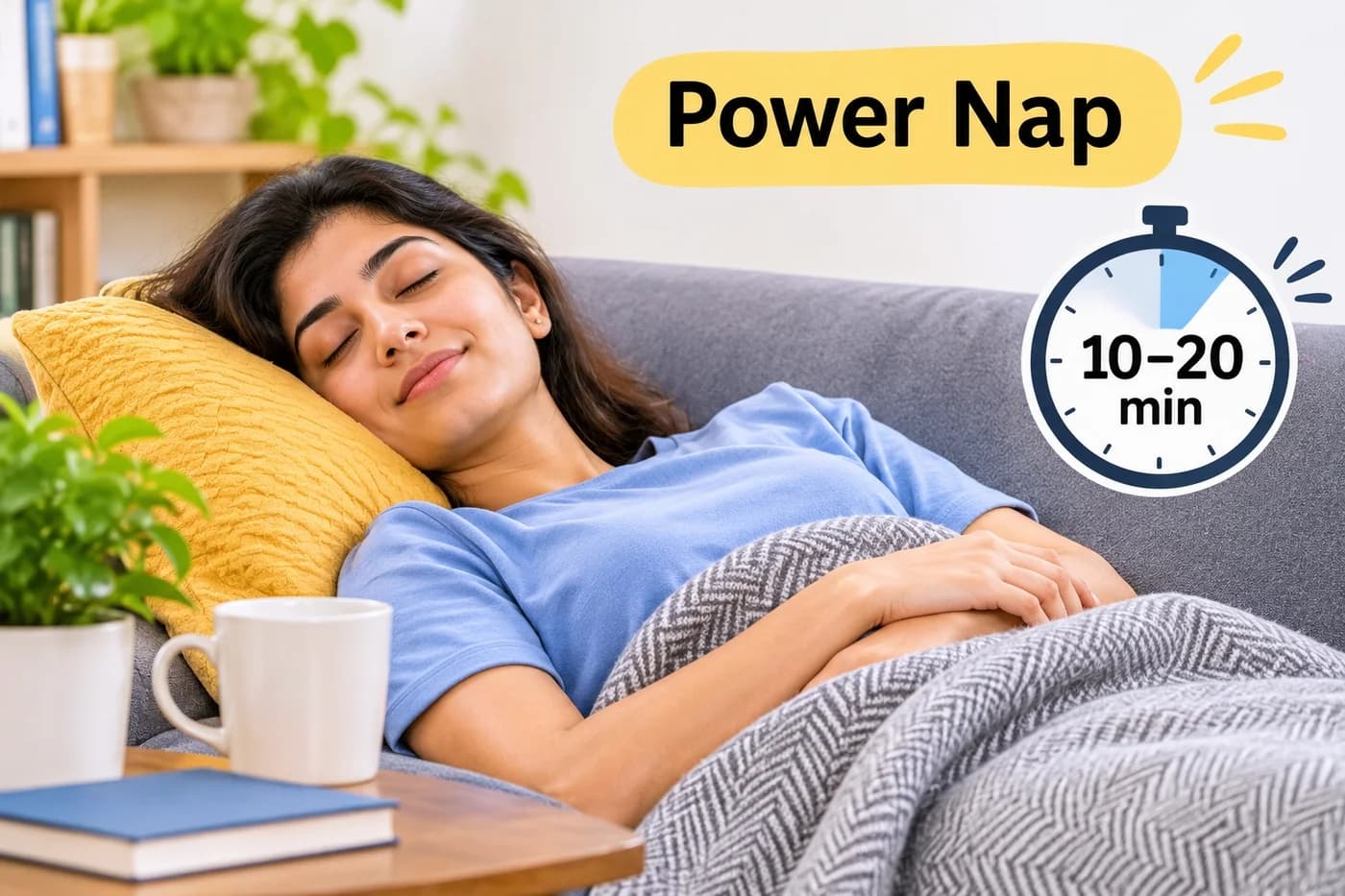
- A power nap is a short, planned daytime nap, usually 10 to 30 minutes long.
- Short naps can improve alertness and mood without making you groggy.
- Naps longer than about 30 minutes can leave you groggy after waking.
- Early afternoon is the best time; late naps can disturb night sleep.
- A nap helps, but it can't replace 7 or more hours of sleep at night.
What Is a Power Nap?
A power nap is a short, planned sleep taken during the day, usually lasting 10 to 30 minutes. The idea is to rest just long enough to feel refreshed, but not so long that you slip into deep sleep. That's what separates a power nap from a long afternoon sleep that leaves you feeling heavier than before.
Many people in India already know the after-lunch slump well. Energy dips in the early afternoon partly because of the body's natural daily rhythm, not only because of a heavy meal. A well-timed power nap works with that dip instead of fighting it with another cup of tea.
Benefits of a Power Nap
Better alertness
The clearest benefit of a short nap is feeling more awake. Research on brief afternoon naps has found that even 10 minutes of sleep can improve alertness and reduce sleepiness, and the effect can last for a couple of hours. One well-known NASA study of long-haul pilots found that those allowed a planned rest in the cockpit, during which they slept for about 26 minutes on average, were more alert and performed better later in the flight than pilots who didn't rest.
Sharper focus and memory
When you're tired, simple tasks take longer and mistakes creep in. A short nap gives your brain a chance to reset, which can help with concentration, reaction time and learning. This is why many students and shift workers find a brief nap useful before an evening of work or study.
A better mood
Feeling exhausted makes most people irritable and less patient. A short rest during the day can lift your mood and make the rest of the afternoon feel more manageable, especially after a poor night's sleep.
Less reliance on caffeine
If you reach for coffee or tea every afternoon to stay awake, a power nap is an alternative worth trying. It addresses the tiredness directly, and it won't affect your sleep at night the way late-afternoon caffeine can.
How Long Should a Power Nap Be?
For most adults, somewhere between 10 and 30 minutes is the sweet spot. Mayo Clinic describes a 20- to 30-minute nap as ideal and advises against regularly napping longer than 30 minutes, because the longer you sleep, the more likely you are to wake up feeling groggy. In a 2006 study comparing nap lengths after a short night, a 10-minute nap gave an immediate boost in alertness that lasted for over two hours, while a 30-minute nap was first followed by a period of grogginess.
That groggy, heavy feeling has a name: sleep inertia. It happens when you wake from deeper sleep, and according to Mayo Clinic it often fades within about 35 minutes. Keeping your nap short means you wake up during light sleep, so you get the benefit without the fog.
If you often wake from naps feeling worse, try shortening them by 5 or 10 minutes at a time until you find the length that leaves you refreshed. For an everyday energy boost, short is better.
The Best Time to Take a Power Nap
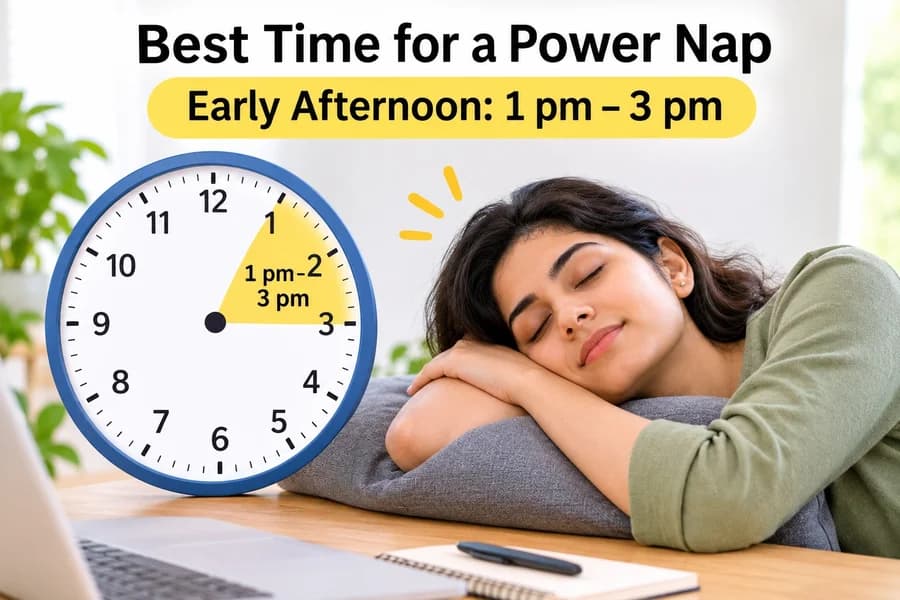
The best time for a power nap is early afternoon, roughly between 1 pm and 3 pm, which is when the natural energy dip happens for most people. Mayo Clinic notes that napping after 3 pm can make it harder to fall asleep at night, because it takes the edge off the sleepiness that builds up through the day.
If you work night shifts or have an unusual schedule, adjust the timing to the middle of your waking day rather than the clock.
How to Take a Good Power Nap
Getting the most from a short nap is mostly about setting up the right conditions:
- Set an alarm for 20 to 30 minutes, allowing a few minutes to fall asleep.
- Choose a quiet, dim and comfortable spot; an eye mask helps in daylight.
- Lie down or recline, but avoid getting into bed under the covers if it makes you sleep too long.
- Do a few slow breaths to settle your body before you drift off.
- Get up as soon as the alarm goes off, then splash water on your face or step into daylight.
Don't worry if you don't fall fully asleep. Even quiet rest with your eyes closed can help you feel calmer and more refreshed.
Who Should Be Careful With Naps?
Naps don't suit everyone. If you have insomnia, daytime napping can make it harder to fall asleep at night, so it's often better to skip naps and keep your sleep for bedtime. If you feel the need to nap every day despite sleeping 7 or more hours at night, that's worth discussing with a doctor, because constant daytime sleepiness can be a sign of a sleep problem such as sleep apnea, or another health issue.
Older adults who nap for long periods during the day may also find their night sleep becomes lighter and more broken. Keeping naps short and early usually avoids this.
Power Naps and Your Daily Routine
A power nap works best as part of a steady routine rather than a fix for regularly short nights. Going to bed and waking up at similar times, moving your body during the day and getting morning daylight all help you feel less drained in the afternoon. Habuild's live sessions include breathing practices, and the Habuild app's Box Breathing habit is a simple way to calm down before a short rest.
Editorial Sources
- Mayo Clinic – Napping: Do's and don'ts for healthy adults
- Brooks & Lack – A brief afternoon nap following nocturnal sleep restriction: which nap duration is most recuperative? (2006)
- Rosekind et al. – Crew factors in flight operations: effects of planned cockpit rest on crew performance and alertness, NASA
- Cleveland Clinic – Should You Take Power Naps?
- CDC – About Sleep
Health Disclaimer
This article is for general information only and is not medical advice. If you feel very sleepy during the day despite enough sleep at night, please consult a doctor.
Frequently Asked Questions
Related Articles

Why meals make you sleepy: balanced plate fix
That sleepy, sluggish feeling after a meal is often a sign of an unbalanced plate — too many carbs, not enough protein or fibre. See the simple fix.
Feeling Sleepy All the Time: Causes, Warning Signs and Next Steps
Feeling drowsy despite enough opportunity to sleep can reflect poor sleep quality, sleep apnoea, iron or vitamin B12 deficiency, thyroid disease,…


Sleep Debt: What It Is and How to Pay It Back
Sleep debt compounds quietly from small nightly shortfalls, not just one dramatic sleepless night. See how to calculate it, and why weekend catch-up sleep only partly repays it.
How to Sleep Better at Night: 8 Proven Habits for Deeper, More Restful Sleep
Sleep quality is highly responsive to a few specific evening habits — no medication, expensive devices, or complicated protocols required. See all 8 proven habits.
