
REM vs NREM Sleep: What’s the Difference?
REM vs NREM sleep is the most fundamental split in how sleep is organised — one handles physical restoration, the other handles memory and emotion. See how they differ, and why you need a balance of both.
Key Takeaways
- States slow wave sleep, the deepest NREM stage, is when growth hormone release peaks.
- States cutting sleep short disproportionately cuts into REM since it’s weighted toward later cycles.
- States alcohol can leave someone physically rested but emotionally flat by suppressing REM.
- Distinguishes NREM-stage parasomnias like sleepwalking from REM-associated nightmares.
- States narcolepsy involves REM-like paralysis intruding into wakefulness, triggered by emotion.
- States NREM sleep still processes some memory, particularly factual info, despite lower activity.
REM vs NREM sleep is the most fundamental split in how sleep is organised — NREM (non-REM) sleep comes first each cycle and handles physical restoration, while REM sleep follows and handles memory and emotional processing, and a full night needs a healthy balance of both.
The core difference between REM and NREM sleep
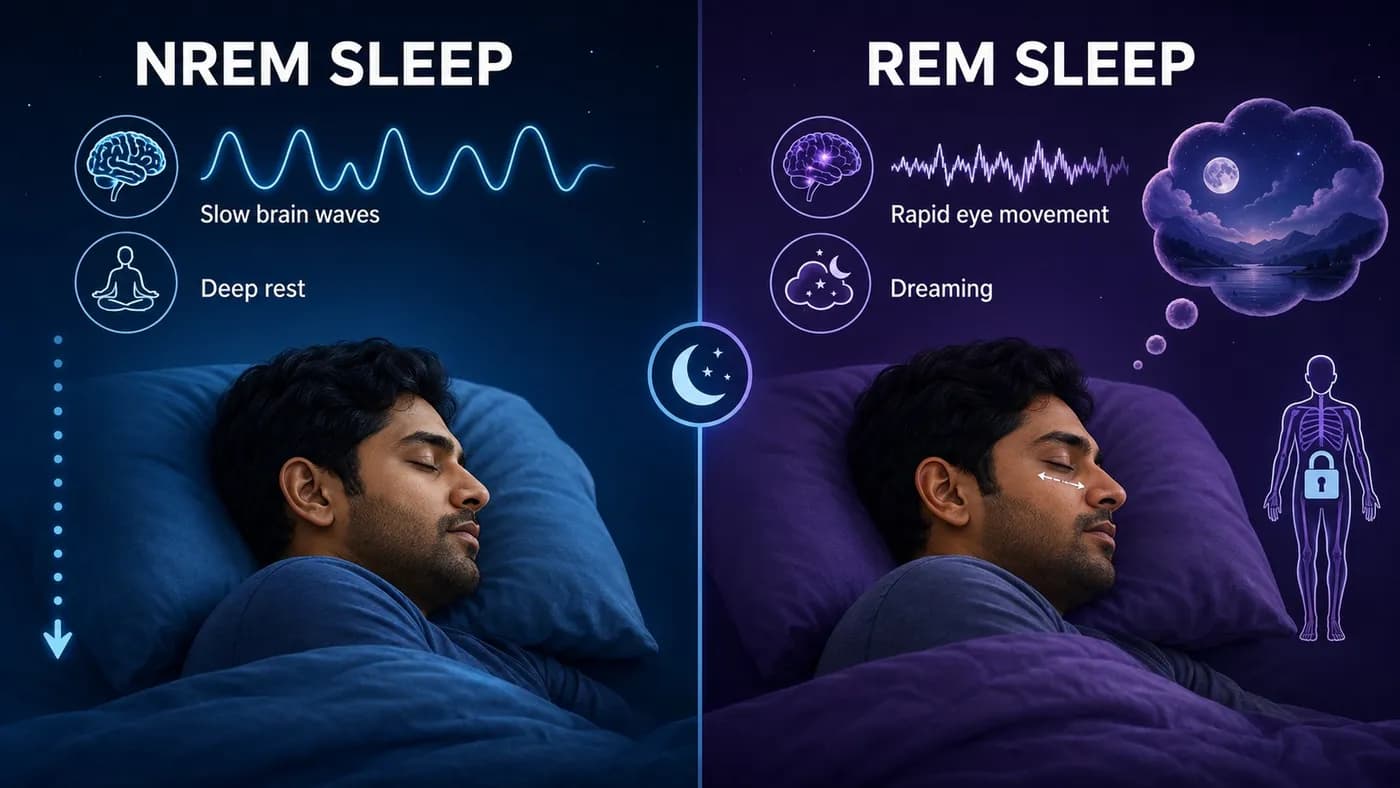
NREM sleep itself has stages, moving from light sleep into slow wave sleep — the deepest, most physically restorative stage, where brain waves slow dramatically and the body is hardest to wake. REM sleep is different in almost every measurable way: brain activity resembles wakefulness, eyes move rapidly, major muscles are temporarily paralysed, and most vivid, story-like dreaming happens here rather than in NREM sleep.
REM vs NREM in the NREM half of the equation: what happens
- Slow wave sleep dominates the deepest NREM stage, where growth hormone release peaks and tissue repair happens most actively
- Heart rate and breathing slow and steady throughout NREM sleep, in contrast to the more irregular pattern of REM
- The brain is less active overall than during REM, though it isn’t inactive — some memory processing happens here too, particularly for factual information
REM vs NREM: the REM half of the equation
- Brain activity increases significantly, in some measures resembling wakefulness more than sleep
- Muscle paralysis kicks in, preventing the body from acting out dreams
- Most vivid dreaming occurs, along with emotional memory processing
- REM periods lengthen across the night, concentrated more heavily in the second half
Why REM vs NREM actually matters for how rested you feel
Because each stage serves such different functions, disproportionately losing one or the other has distinct consequences. Cutting sleep short tends to cut into REM sleep disproportionately, since it’s weighted toward later cycles, potentially affecting memory and emotional regulation more than physical repair. Certain substances (like alcohol) and some medications can suppress REM sleep specifically while leaving NREM sleep relatively intact, which is part of why alcohol before bed can leave you feeling physically rested but emotionally flat or foggy the next day.
REM vs NREM sleep disorders: when the balance goes wrong
Certain sleep disorders specifically involve a disruption to normal REM vs NREM patterns rather than sleep duration itself. REM sleep behaviour disorder, where the usual muscle paralysis fails, allows people to physically act out dreams — a rare but serious condition usually requiring medical treatment. Parasomnias like sleepwalking and night terrors occur specifically during NREM sleep, particularly during the transition out of slow wave sleep, distinct from the REM-associated nightmares many people are more familiar with. Narcolepsy, meanwhile, involves an unusual intrusion of REM-like features (including muscle paralysis) into wakefulness, causing sudden loss of muscle tone triggered by strong emotion. Understanding which stage a specific sleep disturbance is tied to helps doctors narrow down what’s actually happening and how to treat it.
How age changes the REM vs NREM balance across life
The proportion of time spent in REM versus NREM sleep shifts substantially across a lifespan. Newborns spend up to half their total sleep time in REM, a proportion thought to support the rapid brain development of early infancy, gradually declining to the 20-25% typical of adults by early childhood. NREM’s slow wave sleep component peaks in childhood and adolescence and declines steadily through adulthood, which is part of why growth hormone release (concentrated in slow wave sleep) is so much higher during childhood growth spurts than at any point in adult life. This age-related shift in the REM vs NREM balance is a normal part of ageing, not something to try to reverse or fight against.
Getting a healthy balance of both
A typical adult spends roughly 75-80% of total sleep time in NREM sleep and 20-25% in REM, cycling between them about every 90 minutes across the night. Consistent, sufficient total sleep — rather than trying to selectively optimise for one stage over the other — is the most reliable way to get an appropriate balance of both. The stages of sleep covers the fuller sequence these two categories fit into across a full night.
Frequently Asked Questions
Related Articles

Why Is Sleep Important? Benefits for Your Body and Mind
Why is sleep important? It's an active process your body uses for memory, immune function and emotional regulation, not just rest. See what actually happens overnight, and why cutting it short costs more than it seems to save.

Mudra for Insomnia: Hand Gestures That Support Better Sleep
Each finger represents one of the five elements, and joining specific fingers is said to balance these elements and shift the body toward calm before


Sleeping Mudra: Best Hand Gestures to Fall Asleep Faster
Practice Sleeping Mudra with Habuild. Follow the best sleep hand gesture steps to relieve insomnia, calm the mind, and promote deep restful sleep. Start today!