
Sleep Bruxism: Why You Grind Your Teeth at Night
Sleep bruxism often happens with zero awareness until a partner mentions the sound or a dentist spots the wear. See what causes it, and how it's treated before it damages your teeth.
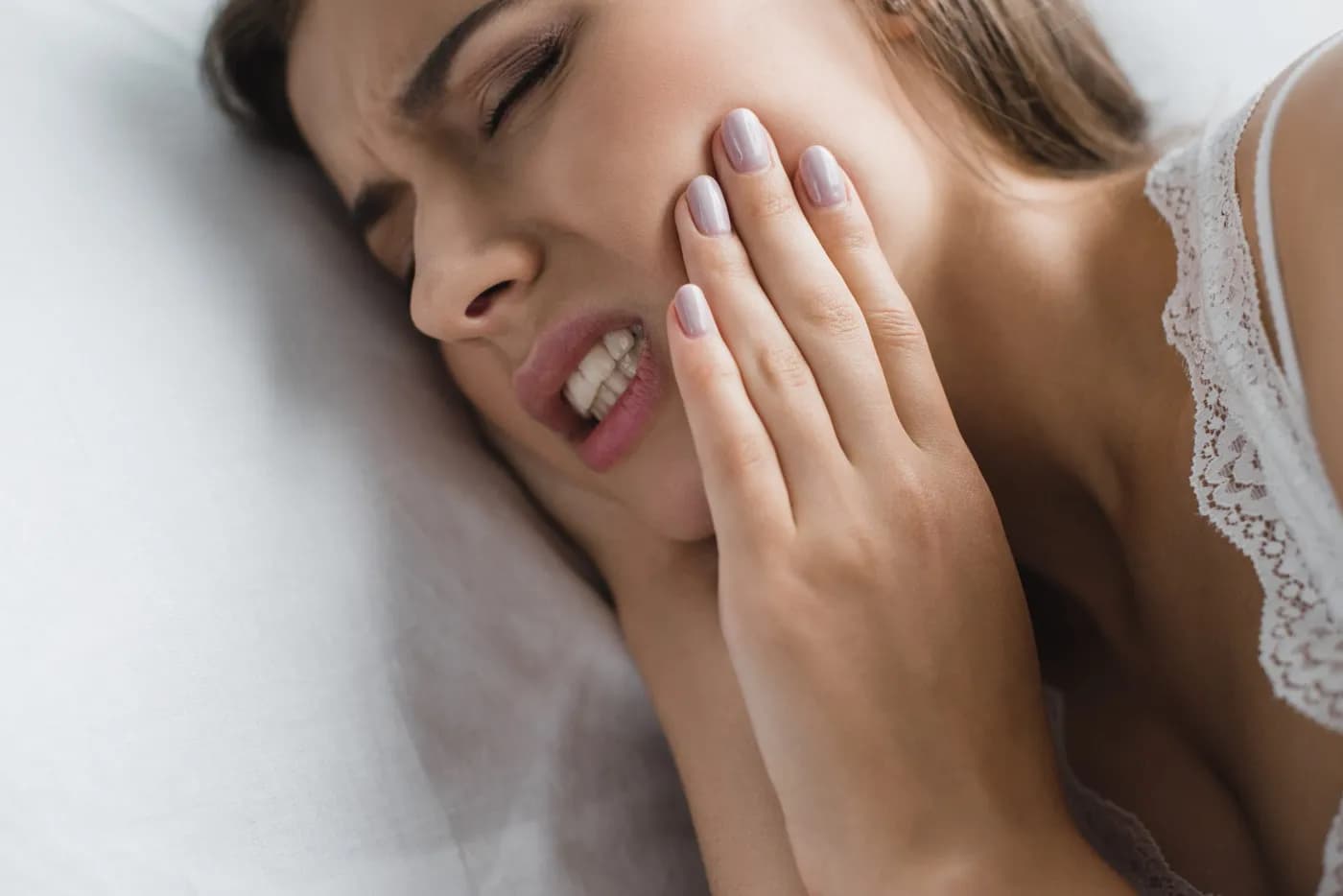
Key Takeaways
- States bruxism is more common in people who also have other sleep disorders like apnea.
- Names an abnormal bite and certain antidepressants as specific factors linked to grinding.
- States a night guard protects teeth but doesn’t actually stop the underlying grinding itself.
- States childhood bruxism usually resolves on its own once adult teeth and jaw growth settle.
- States it’s often under-detected since mild grinding goes unnoticed until someone else flags it.
- States untreated bruxism can gradually wear enamel and contribute to TMJ jaw joint problems.
Sleep bruxism is the medical term for grinding or clenching your teeth during sleep, often happening entirely without awareness until a partner mentions the sound or a dentist notices the wear it leaves on your teeth.
Why sleep bruxism happens
Sleep bruxism is classified among sleep-related movement disorders, and its exact cause isn’t fully understood, but several factors are consistently linked to it: heightened stress and anxiety, an abnormal bite or missing/crooked teeth, certain medications (particularly some antidepressants), and lifestyle factors like smoking, alcohol, and caffeine. It’s also more common in people with other sleep disorders, including sleep apnea, suggesting the two can be connected in some cases.
How common is sleep bruxism?
Estimates suggest sleep bruxism affects a meaningful share of adults, though exact figures vary since many people grind without ever becoming aware of it, only finding out from a partner or a dentist’s observation during a routine check-up. This under-detection is part of why the condition is often considered more common than reported statistics suggest — mild, infrequent grinding that never gets noticed or mentioned to a dentist simply doesn’t make it into most prevalence estimates, even though it’s the same underlying phenomenon as the more clearly documented, symptomatic cases.
Signs you might have sleep bruxism
- A partner reporting grinding sounds during the night
- Waking up with jaw soreness, tightness, or a headache near the temples
- Worn, flattened, or chipped teeth noticed by a dentist
- Increased tooth sensitivity
- Jaw clicking or difficulty opening your mouth fully in the morning
Is sleep bruxism something to worry about?
Occasional, mild grinding usually isn’t a serious concern, but ongoing sleep bruxism can gradually wear down tooth enamel, contribute to jaw joint problems (TMJ disorder), and cause chronic headaches if left unaddressed. This is why a dentist noticing wear patterns often catches sleep bruxism before the person experiencing it is even aware it’s happening.
Sleep bruxism in children
Sleep bruxism is actually quite common in children, particularly during the years when baby teeth are being replaced by permanent ones, and it usually resolves on its own once the adult teeth are fully in and jaw growth settles. Unlike adult bruxism, childhood grinding is less consistently linked to stress and more often considered a normal, if noisy, part of dental development. Dentists generally recommend monitoring rather than immediate intervention for otherwise healthy children with mild grinding, reserving treatment for cases involving significant tooth wear or a child who reports jaw pain, since a night guard for a still-growing mouth requires different considerations than one fitted for an adult.
How sleep bruxism is treated
- A night guard, custom-fitted by a dentist, is the most common treatment — it doesn’t stop the grinding itself but protects teeth from the damage
- Stress management, since anxiety is one of the most consistently linked triggers — a calming bedtime routine can meaningfully reduce episodes for some people
- Addressing an underlying sleep disorder, like sleep apnea, if one is present and contributing to bruxism
- Reviewing medications with a doctor if a specific prescription is a suspected contributing factor
If stress and a racing mind at bedtime seem to be part of your pattern, sleep anxiety covers the broader connection between an unsettled nervous system and disrupted, tension-filled sleep, of which bruxism can be one expression.
Jaw exercises and self-care alongside dental treatment
Beyond a night guard and stress management, a few jaw-focused habits can support treatment: gently massaging the jaw muscles before bed, applying a warm compress to ease tension in the jaw joint, and consciously noticing and releasing daytime jaw clenching, which often happens unconsciously during concentration or stress and can carry the same tension into nighttime grinding. Some dentists also recommend avoiding chewing gum, since it keeps jaw muscles more active throughout the day than they’d otherwise be, potentially reinforcing the same clenching pattern that shows up at night.
Frequently Asked Questions
Related Articles

Sleeping Mudra: Best Hand Gestures to Fall Asleep Faster
Practice Sleeping Mudra with Habuild. Follow the best sleep hand gesture steps to relieve insomnia, calm the mind, and promote deep restful sleep. Start today!

How to Sleep Better at Night: 8 Proven Habits for Deeper, More Restful Sleep
Sleep quality is highly responsive to a few specific evening habits — no medication, expensive devices, or complicated protocols required. See all 8 proven habits.
