
Sleeping on the Floor: Benefits, Risks and Tips
Many Indian homes have slept on the floor for generations. Here's what sleeping on the floor may do for your back, who should avoid it and how to start.
Key Takeaways
- There is little direct research on sleeping on the floor; most claims are based on experience.
- Some people with back pain feel better on a firm surface, but very hard isn't always best.
- A study found medium-firm mattresses eased low back pain more than firm ones.
- Floor sleeping may not suit older adults, side sleepers or people with joint problems.
- Use a thin mattress or mat, and switch gradually rather than overnight.
Why Do People Sleep on the Floor?
In many Indian homes, sleeping on the floor on a thin mattress, a mat or a folded chatai is completely normal. It keeps rooms cool in summer, saves space and is how many grandparents slept their whole lives. In Japan, sleeping on a futon laid on the floor is also traditional. Today, floor sleeping has a new following online, with claims that it fixes back pain, improves posture and helps you sleep better.
So is there anything to it? The honest answer is that there's very little research on sleeping on the floor itself. Most of what we know comes from studies on mattress firmness and from people's own experience. The effects depend a lot on your body, your sleeping position and any health problems you have.
Possible Benefits of Sleeping on the Floor
Some people find it eases back pain
A mattress that is old, saggy or too soft can let your hips sink lower than your shoulders, which may strain your lower back. Moving to a firm, flat surface removes that sag, and some people with back pain say they feel better as a result.
However, firmer isn't always better. In a well-known study published in The Lancet, people with chronic low back pain who slept on a medium-firm mattress had less pain and disability than those who slept on a firm one. This suggests that the goal is good, even support rather than the hardest surface possible. For many people, a thin mattress on the floor sits closer to medium-firm than to bare floor.
A cooler sleeping surface
Heat rises, so the floor is often the coolest part of the room. In hot Indian summers, especially without air conditioning, sleeping lower down can feel more comfortable. Since your body needs to cool slightly to fall asleep, a cooler surface may help some people settle more easily.
Simple and affordable
A mat or thin mattress on the floor costs far less than a bed and a thick mattress, and it can be rolled away during the day to free up space. For small homes, that's a practical advantage.
Possible Risks and Downsides
Not ideal for side sleepers
When you lie on your side on a hard surface, your shoulder and hip take most of your weight. Without some cushioning, this can cause pressure, numbness or aching in those joints, and you may toss and turn more during the night.
Harder for older adults and people with joint problems
Getting down to the floor and back up again takes strength and flexibility. For older adults, and for anyone with knee, hip or back problems, it can be difficult and raise the risk of falls. A bed at a comfortable height is usually safer.
Dust, allergens and cold
Dust and allergens tend to settle at floor level, which can be a problem for people with allergies or asthma. In winter, or on cold tile and stone floors, the floor can also be uncomfortably cold, which may disturb sleep.
Not suitable for everyone with back pain
While some people find floor sleeping helps, others find it makes their pain worse. If your back pain is severe, recent or getting worse, speak to a doctor or physiotherapist before making a big change.
Who Might Want to Try It?
Floor sleeping tends to suit people who sleep on their back, have no joint pain and find their current mattress too soft or saggy. Stomach sleepers may also find a firmer surface keeps their lower back from sinking. People who mainly sleep on their side, are pregnant, are older or have mobility problems are usually better off on a supportive mattress at bed height.
How to Sleep on the Floor Comfortably
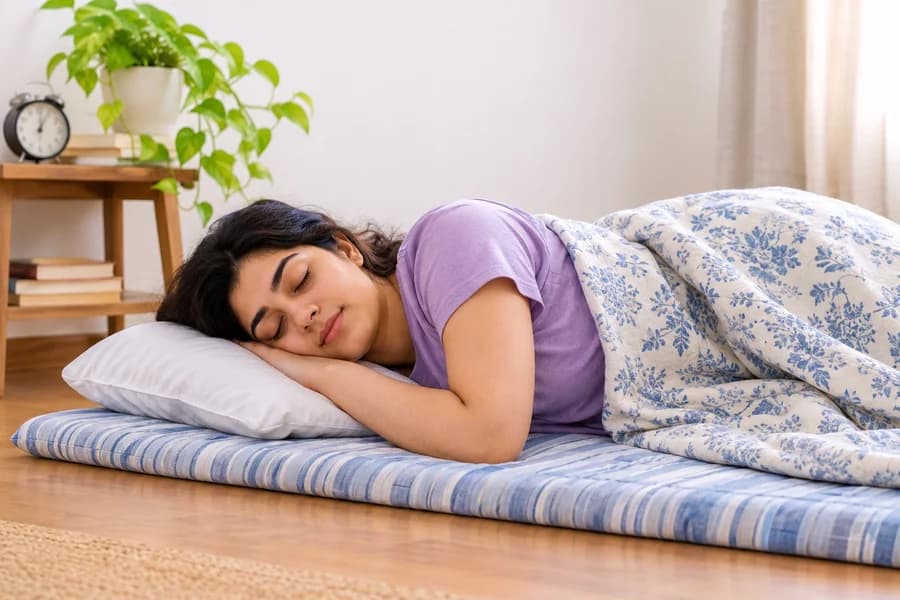
Don't move from a soft bed straight onto bare tiles. Start with a thin mattress, a cotton gadda or a thick yoga mat with a blanket on top, so you have some cushioning. Choose a clean, dry spot away from draughts, and sweep or mop the area regularly to reduce dust.
Use a pillow that suits your sleeping position. Back sleepers usually need a thin pillow, while side sleepers need more height to keep the neck level. Placing a small pillow under your knees when you lie on your back can also take pressure off your lower back.
Give your body time to adjust. Some people try sleeping on the floor for part of the night or on a few nights a week at first. Notice how your back, hips and shoulders feel each morning. If you wake up stiff or sore for more than a week or two, floor sleeping may not be right for you.
Floor Sleeping vs a Firm Mattress
If you like the feel of a firmer surface but find the floor too hard, a medium-firm mattress may give you the best of both. It keeps your hips and shoulders from sinking too far while still cushioning pressure points. A mattress topper or a thicker cotton gadda on a bed frame is another middle ground. The right choice is the one that lets you wake up without pain and feeling rested.
Looking After Your Back Beyond Your Bed
Where you sleep is only one part of back health. Sitting for long hours, weak core and hip muscles and a lack of movement all contribute to back pain. Regular walking, gentle stretching and strengthening exercises help support your spine during the day and at night.
How Habuild Can Help
Habuild's live sessions include yoga and strength exercises that build mobility and core strength, which can help ease everyday back stiffness. The Habuild app's Walk Daily habit helps you keep moving, and the Box Breathing habit is a calm way to wind down before bed.
Editorial Sources
- Kovacs et al. – Effect of firmness of mattress on chronic non-specific low-back pain, The Lancet (2003)
- Sleep Foundation – Is Sleeping on the Floor Good for You? Benefits, Risks, and Tips
Health Disclaimer
This article is for general information only and is not medical advice. If you have back pain, joint problems or are pregnant, please consult a doctor before changing how you sleep.
Frequently Asked Questions
Related Articles
Lower Back Pain Sleeping Positions: What Actually Helps
Lower back pain sleeping positions that actually help share one goal: keeping your spine's natural curve supported, not flattened or twisted. See what to try tonight.


Best Sleeping Position for Your Health: Back, Side or Stomach?
The best sleeping position isn't the same for everyone — it depends on what you're optimising for, from spinal alignment to acid reflux. See how back, side and stomach sleeping actually compare.
Best AC Temperature for Sleeping: What to Set at Night
The best AC temperature for sleeping sits lower than most people set it — your body needs to drop its core temperature to sleep well. See the ideal range, and how to adjust it for Indian summers.

Stomach Sleeping Positions: Are They Bad for You?
Stomach sleeping positions are generally considered the least favourable of the three main positions — but that doesn't mean dangerous for everyone. See who should switch, and how to reduce strain if you don't.