
Lower Back Pain Sleeping Positions: What Actually Helps
Lower back pain sleeping positions that actually help share one goal: keeping your spine's natural curve supported, not flattened or twisted. See what to try tonight.
Key Takeaways
- Names disc-related pain as responding best to semi-reclined or knees-elevated back sleeping.
- Names sciatica as responding best to lying on the unaffected side with a knee pillow.
- States a too-thin or too-thick pillow can indirectly disrupt lower back alignment via the neck.
- Recommends a rolled towel under the small of the back specifically for back sleepers.
- States stomach sleeping is generally the hardest position on lower back pain specifically.
- Recommends a physiotherapist assessment once pain becomes persistent rather than occasional.
Lower back pain sleeping positions that actually help share one common goal: keeping your spine’s natural curve supported rather than flattened or twisted for hours at a stretch, since the wrong position can quietly undo any relief you get from stretching or treatment during the day.
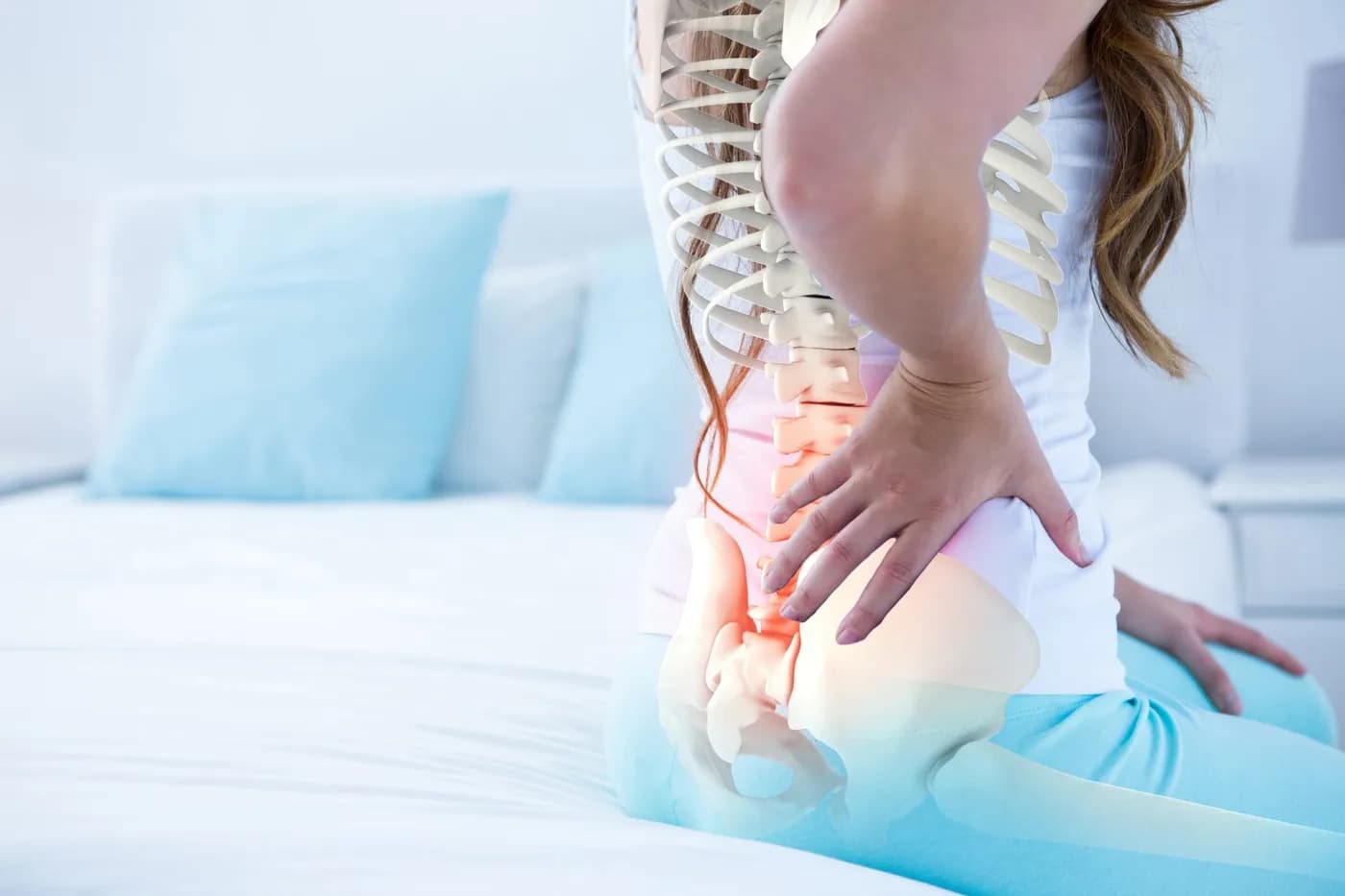
Spine anatomy showing lower back pain sleeping affects
Best lower back pain sleeping positions to try
- On your back, with a pillow under your knees — this is generally the top recommendation for lower back pain sleeping, since it takes pressure off the lower spine by slightly bending the hips and knees
- On your side, with a pillow between your knees — keeps your hips, pelvis, and spine aligned rather than letting your top leg pull your lower back out of position
- In a semi-reclined position, if you have an adjustable bed — this can reduce pressure on the lower spine more than lying fully flat for some people with disc-related pain specifically
What correct sleeping posture means for lower back pain
Correct sleeping posture for lower back pain isn’t about a single rigid position — it’s about keeping the natural curve of your lower spine supported rather than either flattened (as stomach sleeping does) or excessively arched. If you’re currently a stomach sleeper, that position is generally the hardest on lower back pain specifically, since it forces an exaggerated arch in the lower spine for the whole night.
Mattress and pillow adjustments that matter as much as position
- A mattress that’s too soft lets your hips sink lower than your shoulders, straining the lower back regardless of position — a medium-firm mattress is generally better for lower back pain sleeping
- A pillow that’s too thick or too thin disrupts spinal alignment at the neck, which can indirectly affect how your whole spine, including your lower back, settles overnight
- A small rolled towel placed under the small of your back (for back sleepers) can add extra support beyond what a standard mattress provides
How different causes of lower back pain change the ideal position
Not all lower back pain responds the same way to position changes, since the underlying cause matters. Disc-related pain (like a bulging or herniated disc) often responds best to a semi-reclined position or lying on the back with knees elevated, both of which reduce pressure on the affected disc space. Muscular strain from overuse or poor daytime posture often responds well to any position that keeps the spine neutral, with less sensitivity to the exact angle. Sciatica, where pain radiates down the leg from nerve compression, sometimes responds best to lying on the unaffected side with a pillow between the knees, taking pressure off the compressed nerve root specifically. Because the right position genuinely depends on what’s actually causing the pain, a physiotherapist’s assessment can be more useful than generic position advice once pain becomes persistent rather than occasional.
Stretching and movement to pair with better lower back pain sleeping positions
Position alone often isn’t the full solution — gentle stretches before bed, like knee-to-chest stretches or a supported child’s pose, can release tension that would otherwise carry into your sleeping position and undermine even a well-chosen posture. Morning stretching matters too, since the spine tends to be stiffest right after waking, and easing into movement gradually reduces the risk of straining an already-sensitive lower back first thing in the day.
When lower back pain sleeping adjustments aren’t enough
If pain persists despite trying supportive positions and pillow adjustments for a couple of weeks, or if it comes with numbness, tingling, or pain radiating down a leg, that’s a signal to see a doctor or physiotherapist rather than continuing to adjust sleep position alone — those symptoms can point to a disc or nerve issue that sleep position changes won’t resolve on their own.
Frequently Asked Questions
Related Articles
Yoga Poses for Back Pain: Best Asanas for Lower Back, Upper Back and Sciatica
Back pain is the leading cause of disability worldwide, affecting 619 million people, and yoga is among the most evidence-supported non-pharmacological interventions for it. See the best asanas.

How to Sleep Better at Night: 8 Proven Habits for Deeper, More Restful Sleep
Sleep quality is highly responsive to a few specific evening habits — no medication, expensive devices, or complicated protocols required. See all 8 proven habits.


Yoga Poses for Posture
Strengthening the chronically weak postural muscles — mid back, glutes, deep core — while releasing the tight ones — chest, hip flexors, neck — retrains the body's sense of alignment over weeks. See the most effective poses.