
Sleeping Without a Pillow: Benefits and Side Effects
Some people swear by sleeping flat. Others wake up with a stiff neck. Here's who might benefit from sleeping without a pillow and who should keep one.
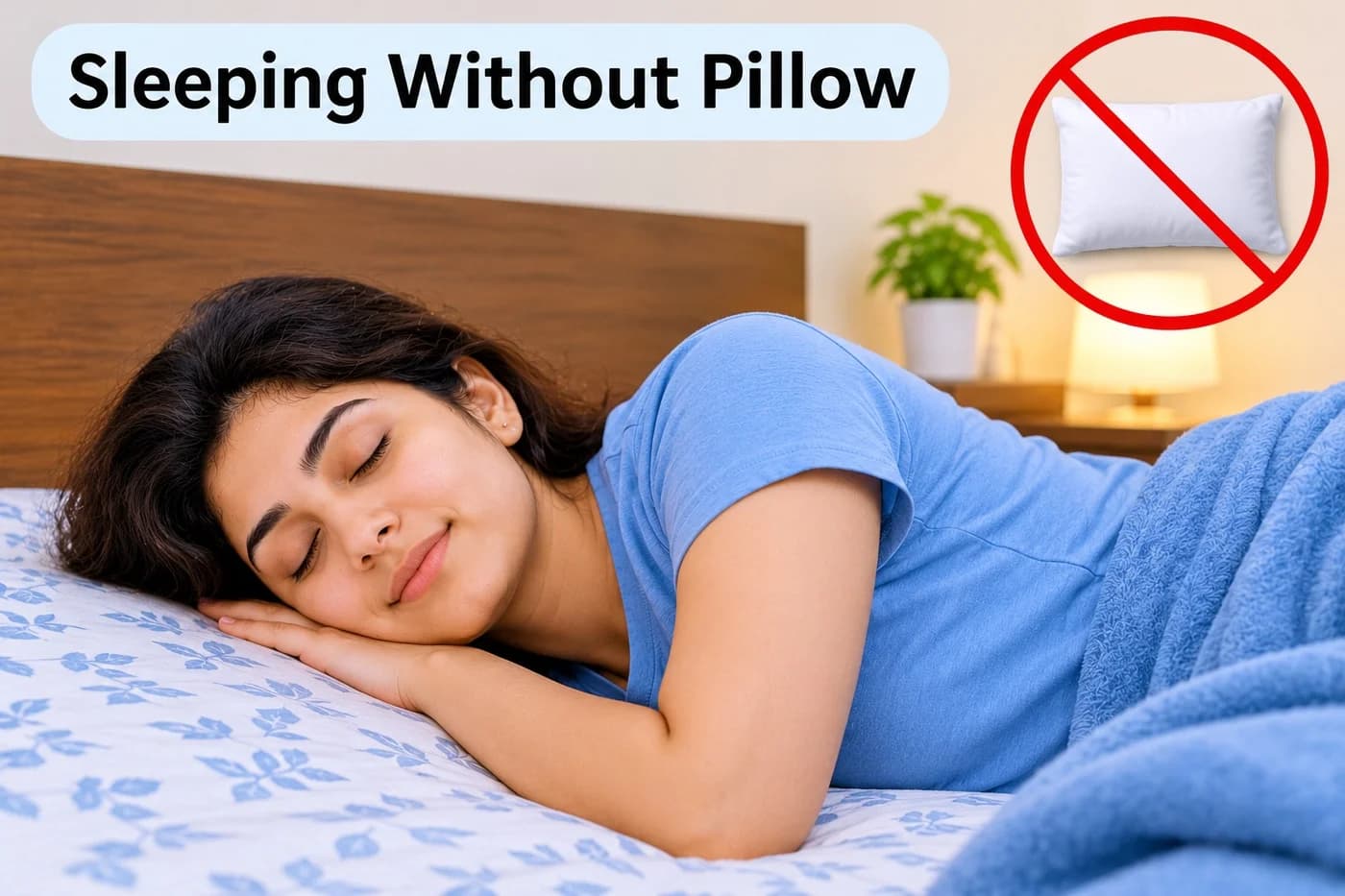
Key Takeaways
- Research on sleeping without a pillow is limited; most advice is based on neck alignment.
- Stomach sleepers may benefit most, as a flat surface keeps the neck less twisted.
- Side and back sleepers usually need some support to keep the neck in line with the spine.
- Waking up with neck pain or stiffness is a sign your setup isn't working.
- If you want to try it, switch gradually, starting with a thinner pillow.
Is Sleeping Without a Pillow Good for You?
Many people grow up sleeping on a thick pillow, while others, including many in Indian homes who sleep on a mattress on the floor, prefer something thin or nothing at all. Online, you'll find claims that sleeping without a pillow fixes neck pain, improves posture and even prevents wrinkles. The truth is more nuanced.
There's very little direct research on sleeping without a pillow. Most of what experts recommend is based on a simple idea: while you sleep, your head and neck should stay roughly in line with the rest of your spine. Whether a pillow helps or hurts depends mainly on the position you sleep in, your body shape and how firm your mattress is.
Possible Benefits of Sleeping Without a Pillow
Better neck position for stomach sleepers
If you sleep on your stomach, your head is turned to one side for hours, and a thick pillow pushes it upwards as well. That combination bends your neck at an awkward angle. Sleeping with a very thin pillow or none at all lets your head lie flatter, which can reduce the strain on your neck and upper back.
Less pressure from an unsuitable pillow
A pillow that's too high, too firm or lumpy can push your head forward or to the side all night. For some people, removing a poor pillow feels better than keeping it. In this case, though, the real fix is often a better-fitting pillow rather than no pillow at all.
Simplicity and comfort for some people
Some people simply find a flat surface more comfortable and sleep well that way. If you wake up without pain or stiffness and feel rested, there's no need to change what works for you.
Possible Side Effects
Neck pain and stiffness
For back and side sleepers, going without a pillow often causes problems. When you lie on your side, there's a gap between your head and the mattress equal to the width of your shoulder. Without a pillow to fill it, your head tilts down towards the mattress all night, straining the muscles on one side of your neck. On your back, a lack of support can let your head tip backwards, which some people find uncomfortable.
Poor sleep
Discomfort doesn't only cause pain in the morning. It can also make you shift around and wake up more often during the night, leaving you less rested.
Problems for people with certain conditions
People with acid reflux, snoring or some breathing problems often feel better with their head and upper body slightly raised. Lying completely flat can make these issues worse.
Which Sleeping Position Suits Sleeping Without a Pillow?
Stomach sleepers are the most likely to benefit. A flat surface or a very thin pillow keeps the neck straighter. Placing a thin pillow under your hips can also help keep your lower back from sagging.
Back sleepers usually do best with a thin to medium pillow that supports the natural curve of the neck without pushing the head forward. Some people with a firm mattress manage well with a very thin pillow or a folded towel.
Side sleepers generally need a firmer, higher pillow to fill the space between the ear and the shoulder and keep the head level. Sleeping on your side without a pillow is the most likely to cause neck pain.
How to Try Sleeping Without a Pillow
If you'd like to try it, don't switch overnight. Start by using a thinner pillow, or fold a towel to the height you want and reduce it gradually over a week or two. This gives your neck and shoulders time to adjust.
Pay attention to your mattress as well. A mattress that's too soft lets your body sink, which changes how your head and neck line up. And notice how you feel each morning. If you wake up with more neck pain, headaches or stiffness, go back to a pillow and look for one that suits your sleeping position instead.
Choosing the Right Pillow Instead
For many people, the answer isn't removing the pillow but finding one that fits. A good pillow keeps your head level with your spine in your usual sleeping position. When you lie on your side, your nose should line up roughly with the centre of your chest, rather than tilting up towards the ceiling or down towards the mattress. On your back, your chin shouldn't be pushed towards your chest.
Pillow material matters too. In a 2009 study of side sleepers, the type of pillow people used affected how much neck pain they woke up with and how well they slept. Pillows also lose their shape over time. If yours has gone flat, lumpy or keeps folding in half, it may no longer give even support. A medium-firm pillow that springs back when you press it is a sensible place to start for most back and side sleepers.
Caring for Your Neck Beyond the Pillow
Your pillow is only one part of neck health. Long hours bent over a phone or laptop also strain the neck. Regular movement, gentle neck and shoulder stretches, and strengthening the muscles of your upper back all help. Yoga practices that mobilise the spine can support better posture throughout the day.
When to See a Doctor
See a doctor or physiotherapist if neck pain lasts more than a few weeks, keeps getting worse, or comes with numbness, tingling or weakness in your arms or hands. These can be signs of a problem that needs proper assessment.
How Habuild Can Help
Habuild's live sessions include yoga and exercises that work on mobility and posture, which can help ease everyday neck and shoulder stiffness. The Habuild app's Box Breathing habit also offers a simple way to relax before bed.
Editorial Sources
- Sleep Foundation – Sleeping Without a Pillow
- Healthline – Sleeping Without a Pillow: Benefits and Effects on the Body
- Sleep Foundation – Is Sleeping on Your Stomach Bad?
- Gordon et al. – Pillow use: the behaviour of cervical pain, sleep quality and pillow comfort in side sleepers (2009)
Health Disclaimer
This article is for general information only and is not medical advice. If you have ongoing neck or back pain, please consult a doctor or physiotherapist.
Frequently Asked Questions
Related Articles

Best Sleeping Position for Your Health: Back, Side or Stomach?
The best sleeping position isn't the same for everyone — it depends on what you're optimising for, from spinal alignment to acid reflux. See how back, side and stomach sleeping actually compare.

Stomach Sleeping Positions: Are They Bad for You?
Stomach sleeping positions are generally considered the least favourable of the three main positions — but that doesn't mean dangerous for everyone. See who should switch, and how to reduce strain if you don't.
Lower Back Pain Sleeping Positions: What Actually Helps
Lower back pain sleeping positions that actually help share one goal: keeping your spine's natural curve supported, not flattened or twisted. See what to try tonight.

Left Side Sleeping Position: Why It’s Good for You
The left side sleeping position is the one doctors recommend most consistently — gravity and anatomy both work in your favour. See why it helps digestion, and how to make it comfortable.