
Meditation for Peace: A Simple Path to Calm
Meditation for peace trains your mind to feel steady from the inside, instead of waiting for circumstances to cooperate first. Start building that calm with Habuild's guided sessions.
Key Takeaways
- Peace isn’t the absence of problems – it’s a shift in how tightly your mind grips them.
- Meditation for peace won’t promise a problem-free life, just a calmer place to stand.
- Many people quietly quit when problems don’t disappear – that was never the goal.
- The goal is a steadier internal weather system that doesn’t swing with every email.
- Even reaching life goals rarely brings the peace people expect – new worries replace old ones.
Most of us think peace will arrive once the problems stop — once the exams are over, the money situation eases, the relationship sorts itself out, or the house finally goes quiet. But if you’ve ever noticed that even calm days can feel restless, and even hard days can feel oddly settled, you already know peace isn’t only about circumstances. That’s exactly what meditation for peace is about. It’s a way of training your mind to feel steady and content from the inside, instead of waiting for the outside world to cooperate first. It doesn’t promise a problem-free life. It offers something more useful — a calmer place to stand while life keeps doing what life does.
In this piece, we’ll look at what peace really means in the context of meditation, walk through two simple practices you can try today, and talk honestly about the difference between feeling calm for twenty minutes and actually carrying a sense of peace through your week.
What Meditation for Peace Really Means
When people search for meditation for peace, they’re often picturing something dramatic — a moment where all their worries dissolve and life suddenly feels easy. That’s not quite how it works, and it helps to set that expectation early so you don’t feel disappointed after your first few sessions.
Peace, in this sense, isn’t the absence of problems. It’s a shift in how you relate to them. The same traffic jam, the same difficult colleague, the same uncertain future — these don’t necessarily change. What changes is the tightness with which your mind grips onto them. A person practising meditation for mental peace isn’t someone whose life has become perfect. They’re someone who has learned to meet an imperfect day without their whole nervous system going up in flames over it.
This is an important distinction because a lot of people quietly give up on meditation when their problems don’t disappear. That was never the goal. The goal of meditation for calmness of mind is a steadier internal weather system — one that doesn’t swing wildly with every email, every comment, every delay. Over time, that steadiness starts to feel like something worth calling peace.
Meditation for Peace Is Not the Same as a Problem-Free Life
It’s worth sitting with this idea a little longer, because it changes how you’ll experience your practice. Many of us grew up assuming peace was a destination — something we’d reach once we sorted out our career, our health, our relationships, or our finances. But talk to anyone who has actually achieved those things, and you’ll often hear the same surprising confession: the peace they expected didn’t automatically show up. New problems replaced the old ones. The mind found something else to worry about. This is exactly the gap meditation for peace is designed to close.
This isn’t meant to be discouraging. It’s actually freeing, because it means you don’t have to wait for your life to be sorted before you’re allowed to feel at peace. Meditation for inner peace works on the relationship between you and your circumstances, not on rearranging the circumstances themselves. You can be in the middle of a stressful season and still touch a sense of calm during your practice — not because the stress has vanished, but because you’ve built a small, reliable space inside yourself that isn’t at the mercy of it. That space is what regular practice is really building.
A Simple Loving-Kindness Meditation for Peace
One of the most effective techniques for meditation for peace comes from a very old practice sometimes called loving-kindness, or metta. It sounds unfamiliar to a lot of Indian practitioners at first, but it maps closely onto something we already know from our own traditions — the idea of wishing well for all beings, not just ourselves. Here’s a simple version of this meditation for peace you can try in ten minutes.
- Sit comfortably and close your eyes. Let your shoulders drop and take two or three slow, natural breaths.
- Silently offer yourself a few simple wishes. Something like: “May I be happy. May I be at peace. May I be free from unnecessary suffering.” Say these slowly, letting each phrase actually land rather than rushing through them.
- Bring to mind someone you love, and offer them the same wishes. “May you be happy. May you be at peace.” Picture their face if that helps.
- Extend it to someone neutral — a shopkeeper, a colleague you don’t know well, someone you pass on your commute. Offer them the same simple wishes.
- If you’re ready, extend it to someone you find difficult. This step is optional, especially when you’re starting out. There’s no pressure to force warmth you don’t feel yet.
- Close by widening the circle — “May all beings be happy. May all beings be at peace” — and sit quietly for a minute before opening your eyes.
If loving-kindness feels a little strange or performative the first time, that’s completely normal — stick with it for a few sessions before deciding it isn’t for you. And if you’d rather work with the body first, a body-focused option like meditation for relaxation is a gentler way in, since it lets you settle physically before you attempt anything reflective. It’s also worth understanding why any of this works in the first place, and our piece on the benefits of meditation is a useful companion read for the science and reasoning behind these practices.
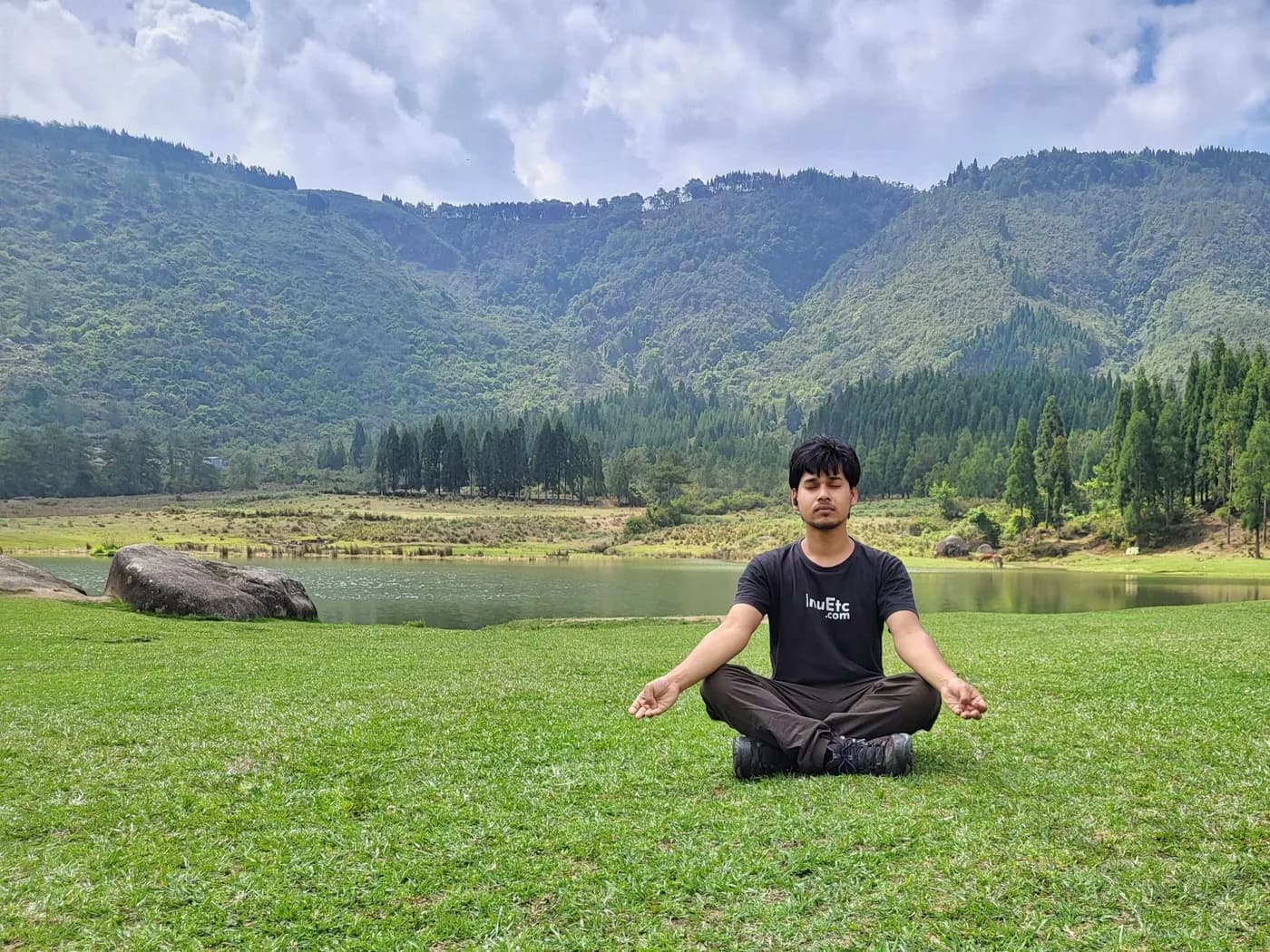
Photo: Prameeta Sharma, CC BY-SA 4.0, via Wikimedia Commons
Prefer Something Simpler? A Breath-and-Stillness Practice
If loving-kindness feels like too much too soon, there’s nothing wrong with starting simpler. A breath-and-stillness practice is an equally valid form of meditation for calmness of mind, and many people find it easier to begin with.
- Sit or lie down somewhere quiet, with your spine reasonably tall but not stiff.
- Close your eyes and take a few slower breaths — in through the nose, out through the nose or mouth, whichever feels natural.
- Let your attention rest on the feeling of breathing — the coolness of the air coming in, the slight warmth going out, the gentle rise and fall of your chest or belly.
- When thoughts pull your attention away, notice it gently and return to the breath. This will happen many times in a single session, and that’s not a failure — the returning is the actual exercise.
- Continue for five to fifteen minutes, then sit quietly for a moment before opening your eyes and going about your day.
Both practices work. Loving-kindness tends to build warmth and connection alongside calm, while breath-and-stillness is more about settling the mind on its own. Try each a few times and notice which one your mind responds to more easily — there’s no wrong answer when choosing a meditation for peace practice.
Meditation for Peace: Fleeting Calm vs Lasting Peace
Let’s be honest about something a lot of articles skip over. After a single session of meditation for peace, you’ll likely feel calmer for a while — softer shoulders, a quieter mind, maybe a better mood for the next hour or two. That feeling is real, but it’s also temporary — a normal part of how meditation for peace works. It’s the meditation equivalent of a good stretch: pleasant, useful, and gone by evening if it’s a one-off.
Lasting peace is a different thing entirely, and it isn’t built in a single sitting. It comes from showing up regularly — most days, for a few weeks or months — so that the calm you touch during practice slowly becomes a baseline you carry around rather than a visitor who leaves once the session ends. Somewhere around the third or fourth week of consistent practice, many people notice they recover faster from a stressful moment, or that irritation passes through them more quickly than it used to. That’s the shift from a state you visit to a trait you’re building through meditation for peace.
It helps to expect this honestly rather than chasing an instant transformation. If you sit down once expecting to feel permanently different, you’ll likely be disappointed and stop. If you sit down expecting a small, real dose of calm today and a slowly deepening sense of peace over the coming weeks, you’ll actually stick around long enough to feel it.
Building Meditation for Peace Into Daily Life
The single biggest factor in whether meditation for peace actually changes how you feel isn’t the technique you choose — it’s whether you keep doing it. Ten quiet minutes most days will do more for your sense of peace than an hour-long session you only manage once a month.
A few things help this stick. Practising around the same time each day — right after waking, or just before bed — turns it into a habit rather than a decision you have to make fresh every day. Keeping sessions short in the beginning, even five minutes, makes it easier to show up on the days your motivation is low. And giving yourself grace when you miss a day matters too — peace of mind isn’t built by being hard on yourself for an imperfect streak. It’s built, gently, one ordinary meditation for peace sitting at a time.
Frequently Asked Questions
Related Articles

Binaural Beats Meditation: Does It Work?
Binaural beats meditation plays two slightly different tones, one in each ear, so the brain perceives a third pulsing beat used as a calming anchor. Learn how to try it, and what the evidence actually supports.

10 Minute Meditation: A Quick Daily Reset
A 10 minute meditation is long enough to settle into real calm and short enough to actually do daily. Find your own quick daily reset with Habuild's guided sessions.

Benefits of Meditation: A Simple, Honest Guide
What meditation can really do for your mind and body — and what it can't. Start noticing the shifts for yourself with Habuild's daily guided meditation practice.