
Meditation for Women: Practices for Every Life Stage
Meditation for women isn't different in technique, but the context often is — motherhood, hormonal shifts, and caregiving loads all shape when and why it helps. Find practices for your life stage with Habuild's guided sessions.
Key Takeaways
- Technique stays the same across life stages – what changes is available time and context.
- New mothers: keep it to a minute of breathing during nursing, not a rigid routine.
- During pregnancy, gentle breath awareness is safer than forceful breath-retention techniques.
- A missed week isn’t a broken streak – picking it back up is the whole practice.
- Perimenopause, career pressure, and household load all create stress this can help ease.
Meditation for women isn’t fundamentally different in technique, but the context often is — the specific pressures of new motherhood, hormonal shifts, caregiving loads, and the mental load many women carry daily all shape when and why this practice becomes genuinely useful. What tends to change across life stages isn’t the underlying technique so much as how much time and flexibility a woman realistically has to give it.
Meditation for New Mothers
The exhaustion and identity shift of early motherhood make even five quiet minutes feel like a lot to ask for, and that’s completely understandable. Meditation for new mothers works best kept extremely short and flexible — a minute of slow breathing while nursing, or a few conscious breaths during a nap window, rather than a rigid twenty-minute routine that adds pressure rather than relief. The goal is a small pocket of calm, not one more thing to get “right.” A common mistake in this stage is trying to “catch up” on missed sessions or feeling like a broken streak means starting over from scratch — with a newborn, some weeks simply won’t have room for it, and picking it back up whenever a window opens is the whole practice, not a failure of it.
Meditation During Pregnancy
Meditation for women during pregnancy has its own considerations worth knowing. Gentle breath awareness and body-based practices are generally considered safe and often genuinely helpful for the anxiety and physical discomfort that can come with pregnancy, but forceful breath-retention practices, or pranayama techniques that involve holding the breath for long periods, are typically advised against, particularly in the later trimesters — a simple, natural breath focus is the safer and equally effective choice. As always, it’s worth mentioning any new practice to your doctor or midwife if you have a high-risk pregnancy or specific medical guidance already in place.
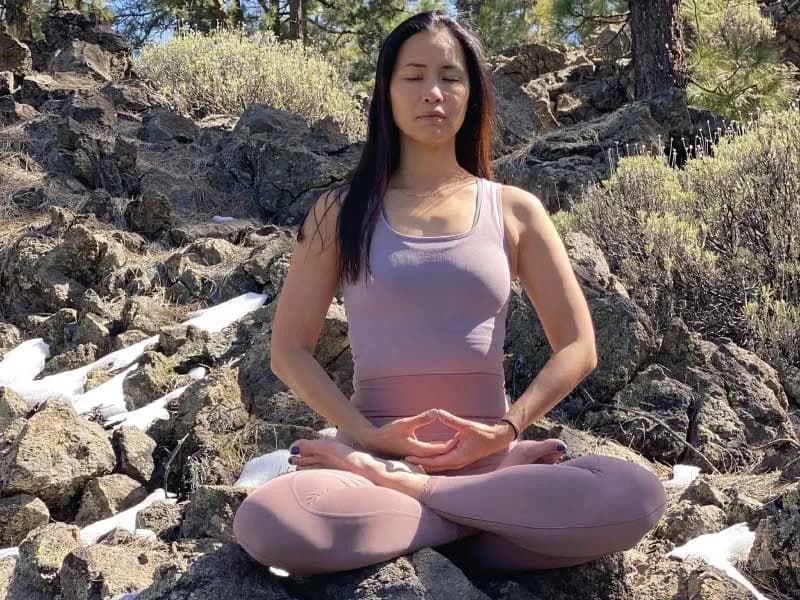
Photo: Spirit-Fire, CC BY 2.0, via Openverse
A Simple Daily Practice
- Find any five minutes — this may shift daily, and that’s fine.
- Sit or lie down, and bring attention to your breath, without trying to control or slow it artificially.
- When your mind wanders to the to-do list, gently return to the breath. It will wander often, especially with a long mental list running in the background — this is normal, not a sign the practice isn’t working.
- Let the session be whatever length actually happens today, even if it’s cut short by a call from school or a baby waking early.
A guided meditation for women, with a voice offering gentle structure, can be especially helpful on days when even choosing what to focus on feels like too much.
Meditation Across Life Stages
The mental load of running a household, career pressures, and hormonal changes across different life stages all create genuine, specific stress that meditation for women can help ease — not by removing any of these responsibilities, but by offering a steadier place to meet them from. Perimenopause and menopause bring their own version of this: sleep disruption, mood swings, and hot flashes can all make a fixed sitting practice feel harder to maintain some weeks than others, and it helps to treat those fluctuations as information rather than a reason to quit — a shorter session on a rough night is still a session. If you’d like to pair this with physical practice tailored to these life stages, Habuild’s guide on yoga benefits for women is a useful companion read.
The Double Load of Working Women
For women balancing a career with the bulk of household and caregiving responsibilities — still the reality in many Indian households — meditation for women in this position often works best treated as non-negotiable, protected time rather than something squeezed in only if everything else gets done first. Even five minutes taken before anyone else in the house is awake, or during a commute, can function as one of the only truly uninterrupted moments in a day otherwise spent managing everyone else’s needs.
This is often where guilt shows up, too — a sense that sitting quietly for five minutes is indulgent when there’s a list of things that “need” doing. It helps to think of it less as time taken away from the household and more as basic maintenance, the same way you wouldn’t skip charging your phone because there’s too much to do on it. A steadier, calmer version of you tends to handle that same list better than a depleted one, which is really the practical case for meditation for women who feel they can’t justify the time.
Frequently Asked Questions
Related Articles

Chakra Meditation: A 7-Chakra Guide for Beginners
Chakra meditation moves through all seven energy centres in a single sitting, giving beginners a felt sense of the whole system. Try a guided 7-chakra practice with Habuild.

Benefits of Meditation: A Simple, Honest Guide
What meditation can really do for your mind and body — and what it can't. Start noticing the shifts for yourself with Habuild's daily guided meditation practice.

Binaural Beats Meditation: Does It Work?
Binaural beats meditation plays two slightly different tones, one in each ear, so the brain perceives a third pulsing beat used as a calming anchor. Learn how to try it, and what the evidence actually supports.