
Bodyweight Exercises at Home: Benefits, Moves & Beginner Guide
Discover the best bodyweight exercises at home to build strength, burn fat & improve fitness. No equipment needed. Start your free trial today.
Key Takeaways
- Uses your body weight as resistance – squats, push-ups, lunges, planks – no equipment.
- Done three to four times a week, they support muscle growth, fat loss, and better daily movement.
- Especially important for adults over 35, when bone density naturally begins to decline.
- A jump squat and an archer push-up are progressions of the standard squat and knee push-up.
- Nothing to set up and nowhere to go removes the biggest barrier to consistency.
- A doorframe pull-up bar is a useful optional addition once you want to build pulling strength.
Bodyweight exercises at home use your own body weight as resistance — squats, push-ups, lunges, planks, and more — to build real, functional strength without any equipment. Done consistently three to four times a week, they support muscle growth, fat loss, improved endurance, and better movement in daily life.
Whether you're a complete beginner or returning to fitness after a long break, training with your own body weight gives you everything you need to develop muscle, improve endurance, and move better every day. This guide walks you through the benefits, the best exercises, and exactly how to get started.
8 Key Benefits of Bodyweight Exercises at Home
- Builds Lean Muscle Compound movements like push-ups, squats, and lunges engage multiple muscle groups at once. Done consistently with progressive difficulty, they stimulate real muscle growth — particularly in the legs, core, and upper body.
- Boosts Metabolism Strength-based bodyweight training elevates your resting metabolic rate. The more lean muscle your body carries, the more calories it burns — even while sitting still. This makes it far more efficient than cardio alone for body composition.
- Improves Bone Density Weight-bearing movements apply mechanical load to your bones, signalling them to grow denser and stronger over time. This is especially important for adults over 35, when bone density naturally begins to decline.
- Enhances Functional Strength Unlike machine-based training, bodyweight moves train your body to work as a unit. Squatting, hinging, pushing, and pulling are all patterns you use in daily life — going up stairs, lifting groceries, sitting down and standing up without effort.
- Supports Fat Loss Bodyweight circuits that combine strength and movement keep your heart rate elevated throughout the session. This supports sustained fat loss through both the workout itself and the post-exercise calorie burn that follows.
- Requires Zero Equipment A yoga mat and a small floor space is genuinely all you need. This removes the most common barrier people face — the friction of getting to a gym.
- Scales to Any Fitness Level Every bodyweight exercise can be made easier or harder depending on where you are. A squat becomes a jump squat. A knee push-up becomes an archer push-up. The progression is built into the movement itself.
- Builds the Daily Habit That Actually Sticks Because there is nothing to set up and nowhere to go, the consistency gap disappears. Research consistently shows that the biggest predictor of fitness results is not intensity — it's showing up regularly. Training at home makes that dramatically easier.
How to Get Started with Bodyweight Training at Home
What You Need to Begin
Truly nothing beyond a flat surface and comfortable clothes. A yoga mat helps with floor work and joint comfort. If you want to progress upper body pulling strength eventually, a doorframe pull-up bar is a useful optional addition — but entirely unnecessary to start.
Setting Realistic Goals
Aim for three to four sessions per week in your first month. The goal is not to exhaust yourself — it is to build the habit and let your body adapt. Most people who quit in the first two weeks do so because they trained too hard too soon and couldn't recover. Start at 60–70% of what you feel you can do.
Start with the Basics
Your first two weeks should focus entirely on form over volume. Learn how a squat feels when done correctly — knees tracking over toes, chest tall, weight through the heels. Learn how a push-up should load the chest and triceps, not strain the lower back. Once those movement patterns feel natural, adding reps and difficulty becomes straightforward.
A simple beginner structure: 3 sets of 8–12 reps per exercise, with 60 seconds of rest between sets. Three exercises per session is plenty when starting out.
Best Bodyweight Exercises to Do at Home
Squats
Stand with feet shoulder-width apart, toes slightly out. Lower until thighs are parallel to the floor, then drive through your heels to stand. Targets quads, hamstrings, glutes, and core. Start with 3 sets of 12 reps.
Push-Ups
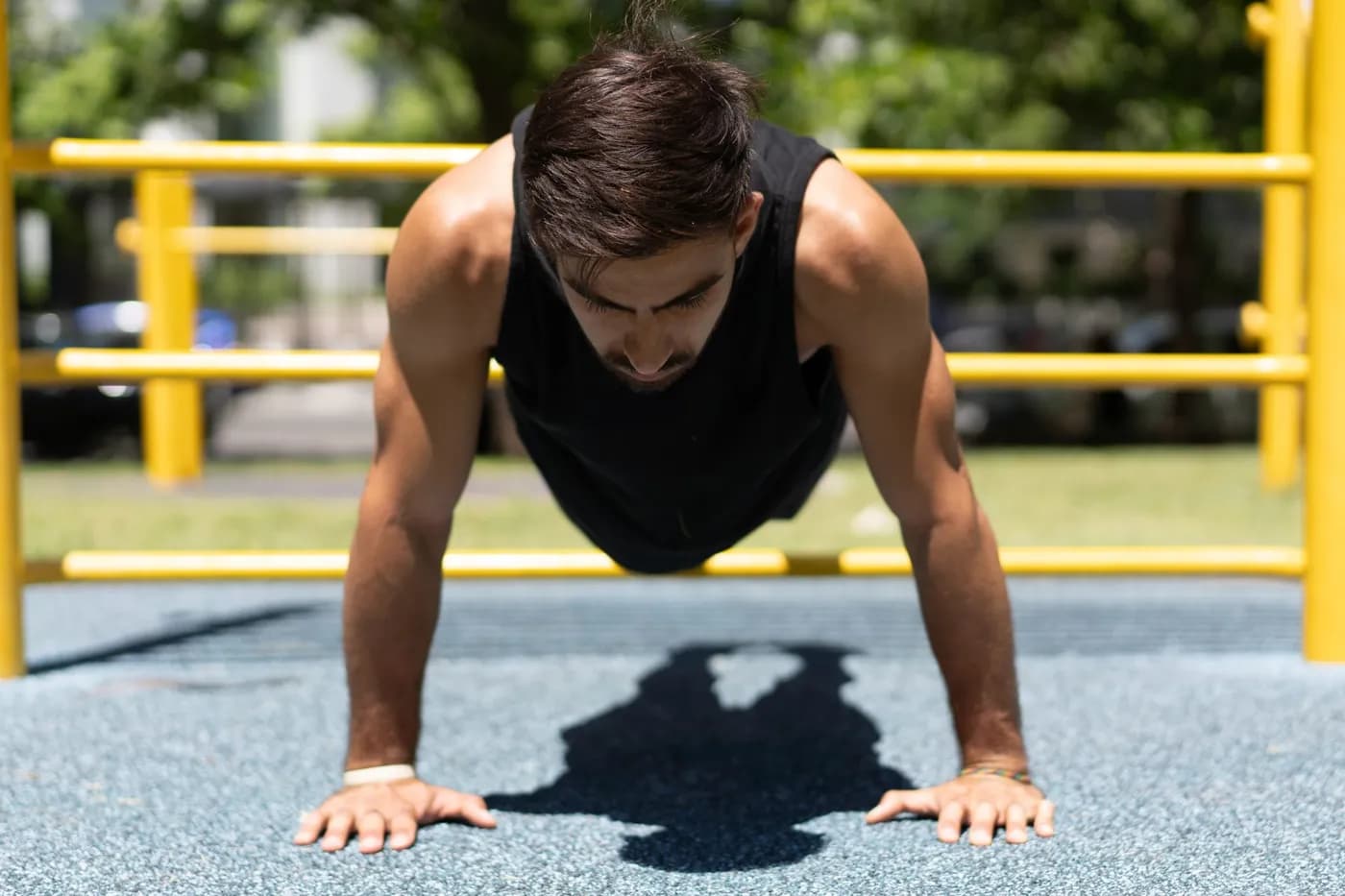
Hands slightly wider than shoulder-width, body in a straight line from head to heel. Lower your chest to within an inch of the floor, then press back up. Targets chest, triceps, front deltoids, and core stability. Beginners can start from the knees. Work toward 3 sets of 10 reps.
Lunges
Step forward with one foot and lower your back knee toward the floor without touching it. Keep your front shin vertical and alternate legs. This unilateral exercise trains each leg independently, correcting imbalances and improving knee and hip stability. Do 3 sets of 10 reps per leg. To deepen your lower body work, explore a structured lower body workout to complement this routine.
Plank
Forearms on the floor, body in a straight line. Hold for 20–45 seconds without letting your hips sag or rise. The plank builds deep core stability that transfers to every other movement. Progress by extending hold time or moving to a high plank variation.
Glute Bridges
Lie on your back with knees bent and feet flat. Drive your hips up by squeezing your glutes, hold for two seconds at the top, then lower slowly. This is the best entry-level posterior chain exercise — activating glutes and hamstrings without requiring hip flexor mobility. 3 sets of 15 reps.
Mountain Climbers
Start in a high plank position. Drive alternate knees toward your chest in a controlled rhythm. This doubles as core work and cardiovascular conditioning in a single movement. 3 sets of 20 reps (10 per side) at a moderate pace.
Tricep Dips (Using a Chair)
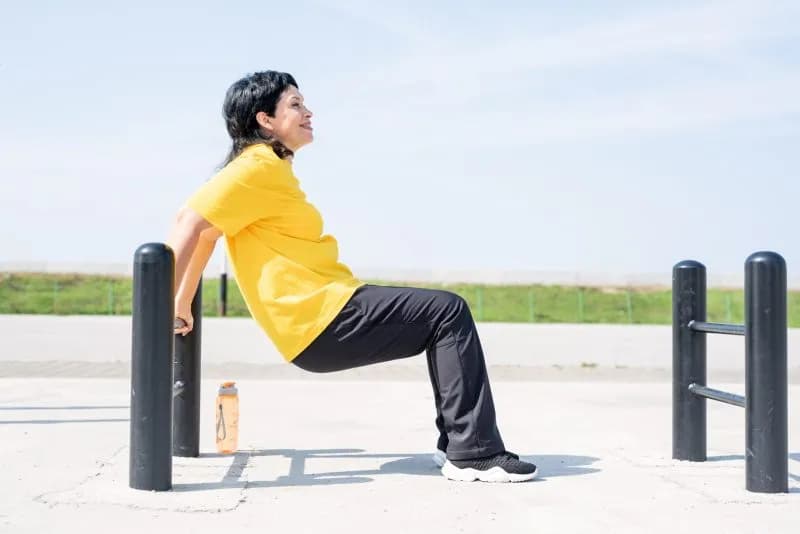
Place your hands on the edge of a sturdy chair, legs extended forward. Lower yourself by bending your elbows to 90 degrees, then press back up. Targets the triceps and rear shoulders. 3 sets of 10–12 reps.
Common Mistakes to Avoid
- Poor Form The most common and most damaging mistake. Doing 20 sloppy squats is genuinely worse than doing 8 good ones. Sloppy form shifts load onto joints rather than muscles, leading to injury and plateaus. If you find yourself compensating — chest caving in a push-up, knees collapsing in a squat — reduce the reps and focus on quality.
- Skipping the Warm-Up Five minutes of dynamic movement before training changes everything. Leg swings, arm circles, hip circles, and cat-cow stretches raise tissue temperature and prepare your joints for load. People who skip warm-ups are significantly more likely to strain a muscle in the first set.
- Overtraining More is not always better — especially in the first four to six weeks. Muscles grow during rest, not during the workout itself. Training the same muscle group daily without recovery days leads to fatigue, soreness, and regression. Three to four days a week with rest days between is a more effective structure than daily effort.
- Inconsistency The single biggest obstacle between people and results is not lack of knowledge — it is showing up on the days when motivation is low. Understanding why strength training matters in the long run can be a powerful motivator to stay consistent.
Who Should Try Bodyweight Training at Home?
- Beginners Bodyweight training is the ideal starting point for anyone who has never trained before. The movements are low-risk, require no technique-heavy learning curve, and build a movement foundation that makes future training far safer and more effective. You can start today, in your living room, without spending a rupee on equipment.
- Women There is a persistent myth that strength training — even bodyweight training — will make women bulky. It will not. Consistent bodyweight training creates a leaner, more defined physique, improves posture, and supports long-term bone health. Strength training for women is one of the highest-return fitness investments available.
- Older Adults Adults over 50 benefit enormously from bodyweight training — particularly for maintaining bone density, preventing falls, and preserving mobility. Movements like glute bridges, sit-to-stand squats, and wall push-ups are low-impact and highly effective. If you have a pre-existing joint or bone condition, consult your doctor before starting a new routine.
- Working Professionals If your day involves eight or more hours of sitting, your hip flexors tighten, your glutes deactivate, and your posture deteriorates. A 20–30 minute bodyweight session in the morning or evening actively helps deal with these effects. It also requires no commute, no schedule, and no preparation beyond changing your clothes.
Build Strength with a Routine That Actually Works
Building strength isn't about doing random workouts — it's about consistency, guidance, and following a structured plan. With the right support, you can train effectively from home and see real progress over time. The gap between people who see results and people who don't is almost never knowledge. It is structure and accountability.
What You Get with Habuild's Strong Everyday Program:
- Daily live guided strength sessions — no pre-recorded videos, actual instruction
- Beginner to advanced progression built into the programme
- No-equipment and home-friendly workouts designed for Indian home spaces
- Expert guidance to ensure correct form and prevent injury
- Community support from thousands of members training alongside you
Start Your Strength Training Journey
Related reads: Beginner Bodyweight Exercises: Build Strength at Home Without Equipment · Hip Exercises for Pain: Best Moves to Feel Better at Home
Bodyweight training builds real strength only when the exercises progress over time — holding at the same difficulty level for months rarely produces the results this guide describes. A structured plan handles that progression for you instead of leaving it to guesswork. Habuild's Strong Everyday program offers guided, structured strength training you can do at home without any equipment.
Frequently Asked Questions
Related Articles
Bodyweight Training for Beginners: Benefits & Best Exercises
Discover the top benefits of bodyweight training for beginners, best exercises to start, and how Habuild helps you build real consistency. Try free for ₹1.
Calisthenics Kya Hai
Calisthenics kya hai? Jaaniye is bodyweight training ke fayde, best exercises aur shuruaat kaise karein. Pehle 7 din sirf 14-day free trial mein try karein!
Home Calisthenics Routine: Build Strength Without Equipment
Build real strength with a home calisthenics routine. No gym, no equipment needed. Start your beginner-friendly plan today — try Habuild with a 14-day free trial.
What is a Calisthenics Workout? the Complete Beginner's Guide
Bodyweight resistance training, rather than external weights or machines, develops strength, endurance, coordination, and body control. See the complete beginner's guide.
Burpees for Fat Loss: Benefits, Technique & Beginner Guide
Discover how burpees for fat loss work, key benefits, correct form, and a beginner routine. Start your free 7-day trial with Habuild today.