
Difference between Crunches and Sit-Ups: Which One Should You Do?
Crunches isolate the rectus abdominis through a short-range spinal flexion; sit-ups involve the full range with significant hip flexor contribution and higher lumbar disc load. See which is appropriate for your goals and spine health.
Key Takeaways
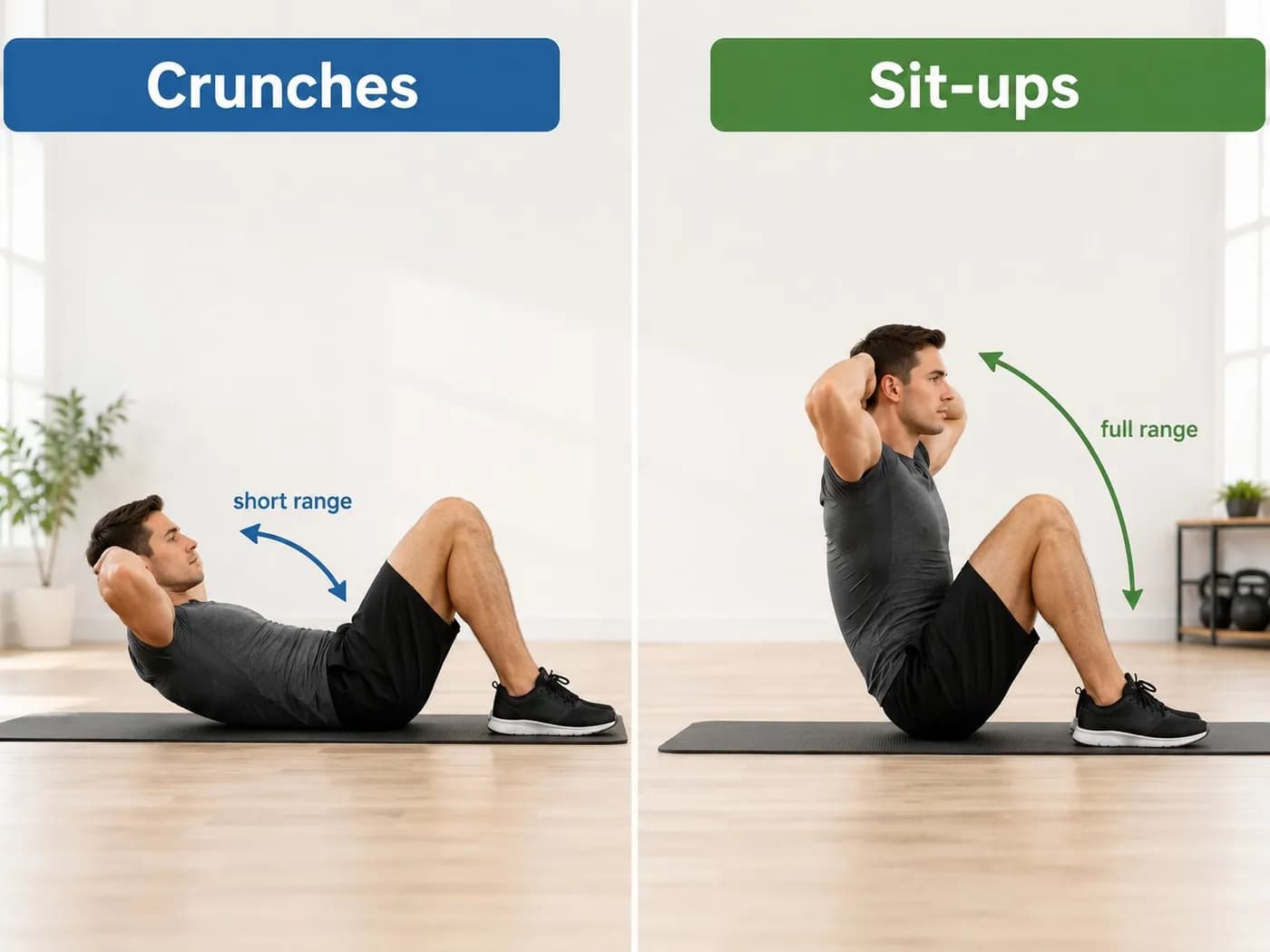
- A crunch lifts the shoulders just 15-30 degrees; a sit-up moves the trunk to 90 degrees upright.
- Sit-ups recruit the iliopsoas hip flexors that crunches, back grounded, never reach.
- Stuart McGill’s research found sit-ups produce roughly 3,300 N of lumbar disc compression.
- Crunches produce only about 2,000 N of compression by comparison, gentler on the spine.
- Crunches isolate the rectus abdominis; sit-ups combine abdominal and hip flexor training.
- The range-of-motion difference is the mechanical root of every other distinction between them.
Crunches and sit-ups are the two most commonly confused core exercises — performed by millions daily without clarity on which muscles they actually target, which is safer for the spine, and which produces better results for different goals. The difference between Crunches and Sit-Ups matters: crunches isolate the rectus abdominis through a short-range spinal flexion; sit-ups involve the full sit-up range with significant hip flexor contribution and higher lumbar disc load. Understanding which is appropriate for your goals and spine health is the first step to building core strength that actually works.
The difference between crunches and sit-ups goes beyond just range of motion — it determines which muscles are primarily trained, how much spinal loading occurs, which goal each exercise serves better, and whether the exercise is appropriate for your current fitness level and spinal health. Understanding the difference between sit-ups and crunches allows you to choose the right exercise for your specific core training goal.
The Core Difference between Crunches and Sit Ups
The fundamental difference between crunches and sit-ups is range of motion and primary muscle involvement. A crunch involves only the upper portion of the movement — lifting the shoulders off the floor while the lower back remains in contact with it. A sit-up involves the full range from lying to upright sitting, which additionally recruits the hip flexors (iliopsoas) to complete the movement. This distinction in muscle involvement and spinal loading is the basis of every practical difference between sit-ups and crunches that determines which exercise is better for a given goal.
Crunches vs Sit-Ups: Key Differences and Benefits
- Range of Motion: the Primary Difference between Crunches and Sit-Ups Crunches: partial spinal flexion — shoulders lift 15-30 degrees off the floor. Sit-ups: full spinal flexion — the trunk moves from lying to 90 degrees upright. This range difference is the mechanical foundation of every other difference between sit-ups and crunches: muscle involvement, spinal load, hip flexor contribution and injury risk all follow directly from this distinction.
- Muscle Involvement Difference between Crunches and Sit-Ups Crunches primarily target the rectus abdominis and obliques through the isolated spinal flexion range. Sit-ups additionally activate the hip flexors (iliopsoas, rectus femoris) and hip stabilisers through the second half of the movement that crunches do not reach. The difference between sit-ups and crunches for muscle development: crunches provide more isolated abdominal training; sit-ups provide combined abdominal and hip flexor training.
- Spinal Loading Difference between Crunches and Sit-Ups Stuart McGill's research documents that sit-ups produce significantly greater lumbar disc compression than crunches — estimated 3,300 N compressive force during sit-ups versus approximately 2,000 N during crunches. This difference between crunches and sit-ups in spinal loading is the primary reason physiotherapists typically recommend crunches over sit-ups for individuals with disc pathology or lower back pain.
- Functional Carry-Over: Which is Better? The difference between sit-ups and crunches for functional benefit: sit-ups more closely replicate the get-up movement pattern used in daily life; crunches more closely train the pure abdominal flexion endurance that postural control requires. Neither is universally superior — the difference between crunches and sit-ups for programming means using both strategically based on the training goal.
- Hip Flexor Contribution: a Key Difference The sit-up's full-range movement requires hip flexor activation — which is both a benefit (training the hip flexors for functional get-up movements) and a limitation (allowing the hip flexors to compensate for weak abdominals, reducing the abdominal training stimulus). The difference between crunches and sit-ups for abdominal isolation: crunches are superior for pure abdominal development because they eliminate the hip flexor substitution that sit-ups allow.
For people with healthy spines and no lower back history, this difference between sit-ups and crunches in spinal load is less clinically significant — but the distinction remains relevant for programming decisions.
How to Get Started with Crunches and Sit Ups
What You Need to Begin
Only a yoga mat and floor space. The difference between crunches and sit-ups in equipment requirement is zero — both are complete bodyweight exercises accessible from home from day one.
Setting Realistic Goals
Improved core endurance within 2-3 weeks of either exercise. The difference between sit-ups and crunches in results timeline is minimal — both produce measurable abdominal strength improvement at 4-6 weeks of consistent daily practice.
Start with These Basics
Begin with crunches if lower back health is a concern or if isolated abdominal training is the goal. Begin with sit-ups if functional get-up strength and combined hip flexor development are the goal. Most effective approach: use both, understanding the difference between crunches and sit-ups to rotate them based on training focus.
Best Exercises Combining Benefits of Crunches and Sit-Ups

- Standard Crunch — Pure Abdominal Activation The crunch side of the difference between crunches and sit-ups: shoulders lift only until the lower back begins to rise — maximum rectus abdominis activation with minimum hip flexor contribution and minimum disc compression. Sets/reps: 3 x 15-20. See also: benefits-of-crunch
- Standard Sit-Up — Functional Abdominal and Hip Flexor The sit-up side of the difference between crunches and sit-ups: full range from lying to upright sitting — training the hip flexors alongside the abdominals for the functional movement pattern of getting up from the floor. Hands crossed on chest (not behind the neck). Sets/reps: 3 x 12-15. See also: exercise-for-lower-belly-fat
- Bicycle Crunch — Best of Both: High Abdominal Activation Plus Rotation Bicycle crunches produce the highest documented rectus abdominis and oblique EMG activation of any abdominal exercise — combining the crunch range of motion with the rotation that adds oblique work. Sets/reps: 3 x 20 each side. See also: exercises-for-transverse-abdominis
- V-Sit — Progressive Combination of Crunch and Sit-Up Demands Balancing on the tailbone with both legs and trunk raised into a V shape — combines the abdominal activation of crunches with the hip flexor demand of sit-ups in the most challenging available bodyweight combination exercise. Sets: 3 x 20-30 second holds. Difficulty: Intermediate. See also: yoga-for-flat-tummy
- Dead Bug — Superior to Both for Deep Core Stability For spinal stability and lower back health, the dead bug supersedes the difference between crunches and sit-ups entirely — it develops the transverse abdominis and anti-extension control that neither crunch nor sit-up can train. See also: resistance-exercises
Common Mistakes When Choosing between Crunches and Sit-Ups
- Mistake 1: Choosing Sit-Ups with Lower Back Problems The difference between crunches and sit-ups in spinal loading makes crunches the safer option for individuals with lower back history, disc pathology or core weakness. Use crunches until core strength and spinal tolerance support the higher load of sit-ups.
- Mistake 2: Only Doing Crunches and Missing Functional Core Training Understanding the difference between sit-ups and crunches means knowing that crunches alone leave the functional get-up movement pattern undertrained. Include sit-up variations for the hip flexor and full-range movement benefit that the crunch's limited range cannot provide.
- Mistake 3: Using Either Exercise as the Only Core Training The difference between crunches and sit-ups matters less than understanding that both are flexion-dominant exercises that must be balanced with anti-extension (Dead Bug, Plank) and rotation (bicycle crunch) exercises for complete core development.
- Mistake 4: Anchor-Foot Sit-Ups That Maximise Hip Flexor Substitution Sit-ups performed with feet anchored under a sofa edge maximise the hip flexor contribution that defeats the abdominal training purpose. Free-foot sit-ups without anchoring require more genuine abdominal participation.
Who Should Try Crunches vs Sit-Ups?
- Beginners and Those with Lower Back Concerns — The difference between crunches and sit-ups for beginners: start with crunches. The limited range and lower spinal loading make crunches the safer starting point for anyone new to core training or managing lower back issues.
- Women Building Core Strength — The difference between sit-ups and crunches for women: crunches provide the isolated abdominal training for definition; sit-ups provide the functional get-up strength. The benefits of sit-ups for females specifically include that same functional get-up strength for everyday movement. Both have their place in a complete women's core programme.
- Athletes Needing Functional Core Training — Athletes benefit from sit-ups for functional movement pattern training and crunches for isolated abdominal endurance — the difference between crunches and sit-ups for athletes is a programming tool, not an either-or choice.
- Older Adults Maintaining Core Function — The difference between sit-ups and crunches for older adults: sit-ups develop the functional get-up strength that ageing adults specifically need; crunches provide the lower-load isolated abdominal option that is safer for those with spinal sensitivity.
Build a Stronger Core with a Routine That Actually Works
Building a stronger core is not about doing random workouts — it is about consistency, guidance and following a structured plan. With the right support, you can train effectively from home and see real progress over time.
What You Get with Habuild's Programme:
- Daily live guided sessions — 45 minutes, 6 days a week
- Beginner to advanced progression built in
- No equipment required — home-friendly workouts
- Expert guidance for correct form every session
- Community of 50,000+ members for daily accountability
Related reads: Difference between Cardio and Strength Training: Which One Should You Do? · What Are Crunches: a Complete Guide to the Classic Ab Exercise
The difference between sit ups and crunches comes down to hip flexor involvement more than which one wins on paper. Whichever exercise you pick between crunches and sit-ups, the muscle you actually build depends far more on how consistently you train than on which variation wins the debate. Both belong inside a broader, guided core routine rather than being performed in isolation on and off. Habuild's Strong Everyday program folds core exercises like these into a structured plan, so the choice matters less than the consistency behind it.
Frequently Asked Questions
Related Articles
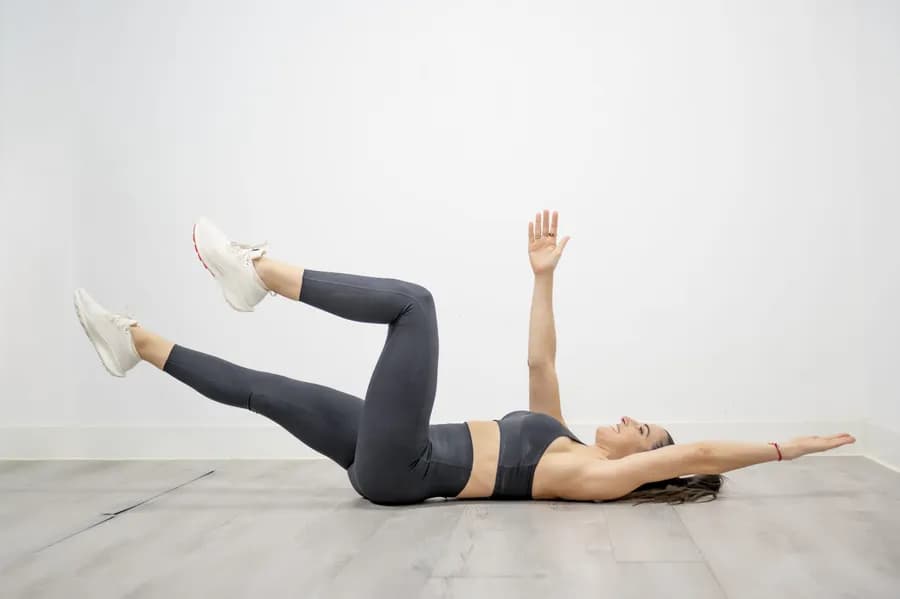
How to Do Dead Bug Exercise: Step-by-Step Guide for Deep Core Stability
This clinically supported core exercise builds transverse abdominis activation and anti-rotation strength with zero compressive load on the spine — but is almost always performed incorrectly. See the step-by-step guide.

Benefits of Sit-Ups for Females: Core Strength, Posture and Functional Fitness
Done with correct form, sit-ups develop the rectus abdominis and hip flexors and improve functional core strength for daily activities, despite common misconceptions about back safety. See the full evidence base.

What Are Crunches: a Complete Guide to the Classic Ab Exercise
Crunches bias the upper portion of the rectus abdominis, the visible six-pack muscle most beginners want to develop first — though most people perform them poorly. See the complete guide.

Benefits of Crunch Exercise: Core Strength, Abs and Beyond
Done correctly, the crunch produces real rectus abdominis strength and core stability; done incorrectly, it strains the cervical spine and recruits the hip flexors instead. See the full evidence base and technique.