
What Are Crunches: a Complete Guide to the Classic Ab Exercise
Crunches bias the upper portion of the rectus abdominis, the visible six-pack muscle most beginners want to develop first — though most people perform them poorly. See the complete guide.
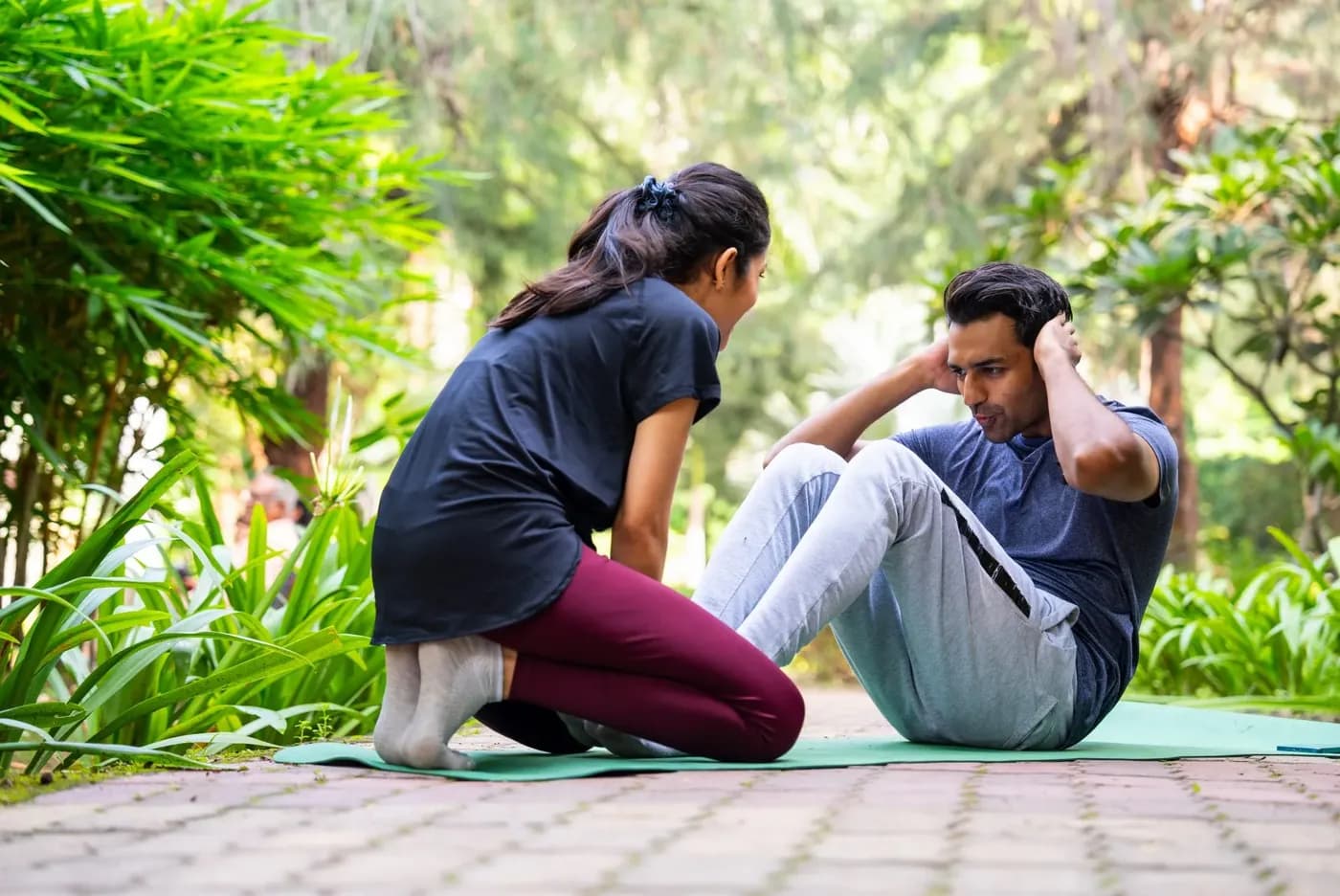
Key Takeaways
- Crunches specifically bias the upper rectus abdominis, the section most beginners want first.
- Reverse crunches target the lower abs while bicycle crunches target the obliques instead.
- Just 5 minutes of focused crunches per session is described as sufficient for most adults.
- Framed as the necessary foundation before advancing to hanging leg raises or the ab wheel.
- The slow, controlled movement builds a mind-muscle connection that transfers to other exercises.
- A realistic target is 3 sets of 12-15 reps, 4 days weekly, with rest days between sessions.
Crunches are one of the most recognised abdominal exercises, but most people perform them poorly or use them incorrectly. This guide explains what crunches are, how they differ from sit-ups, the most effective variations including bicycle crunches and reverse crunches, and the mistakes that limit results. Whether you are starting out or refining your form, the methods below produce real results.
10 Benefits of Crunches
- Builds Upper Abdominal Definition — Crunches bias the upper portion of the rectus abdominis (the visible six-pack muscle), which is the section most beginners want to develop first.
- Strengthens the Core for Daily Movement — A stronger upper core supports posture, lifting, and athletic performance. The carryover into daily life is meaningful.
- Easy to Learn and Practise — Crunches require minimal coordination and can be done anywhere with a soft surface. Beginner-friendly from day one.
- Combinable with Many Variations — Bicycle crunches, cable crunches, and reverse crunches all build different aspects of core strength while keeping the basic pattern.
- No Equipment Required for Most Variations — Standard, bicycle, and reverse crunches need only floor space. Cable crunches require a gym, but the floor versions cover most of the benefit.
- Time-Efficient Core Work — 5 minutes of focused crunches per session is enough for most adults.
- Improves Mind-Muscle Connection — The slow, controlled movement teaches awareness of how the core engages, which carries over into other exercises.
- Supports Better Posture — Stronger upper abs balance the spinal erectors and reduce the slumped-forward posture desk work creates.
- Trains Different Ab Sections with Variations — Standard crunches hit the upper abs, reverse crunches hit the lower abs, bicycle crunches hit the obliques. Variation covers the full muscle.
- Builds Foundation for Advanced Core Work — Master crunches first. Advanced movements (hanging leg raises, dragon flags, ab wheel) require the foundation crunches build.
How to Get Started with Crunches
What You Need to Begin
A yoga mat or soft surface. Nothing else. Crunches at home need no equipment.
Setting Realistic Goals
3 sets of 12 to 15 reps, 4 days a week, with at least one rest day between sessions. More is not better. Quality reps matter more than quantity.
Start with the Basics
The standard crunch is the foundation. Master 15 clean reps before adding variations. The complete core picture sits inside a broader workouts to build core framework that addresses every layer of the abdominal wall.
Best Crunch Variations to Try
Standard Crunch
Lie on your back with knees bent. Place hands behind the head lightly. Lift the shoulder blades 4 to 6 inches off the floor. Lower with control. Targets the upper abs.
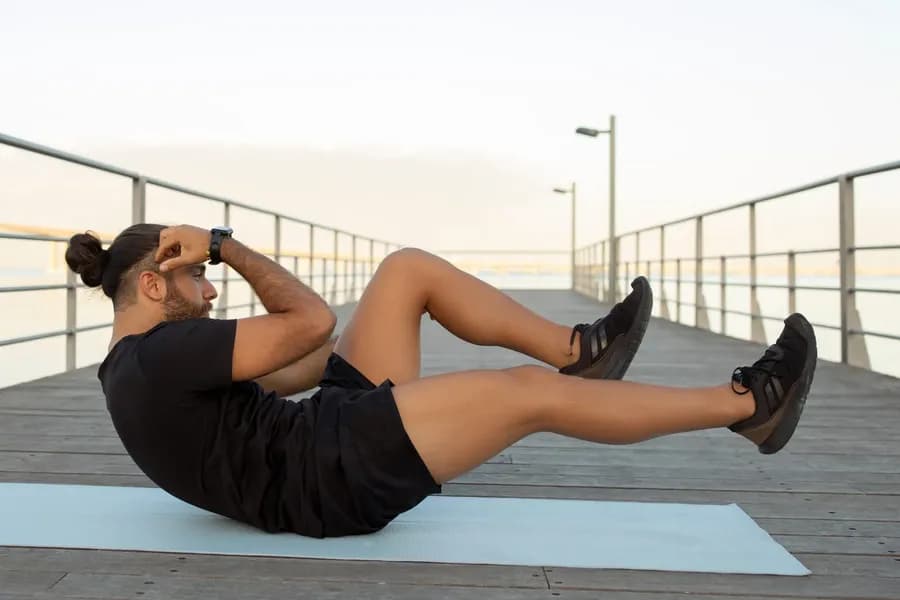
Bicycle Crunch
Lie on your back, knees bent. Bring your right elbow toward your left knee while extending the right leg. Alternate sides. Good for oblique development plus rectus abdominis loading.
Reverse Crunch
Lie on your back with knees bent and feet off the floor. Curl the hips toward the chest. Targets the lower abs — a pelvic-curl variation that biases the bottom of the rectus abdominis.
Cable Crunch
Kneel facing a cable pulley with the rope attachment at the top. Hold the rope behind your head and crunch downward against resistance. A weighted variation for advanced trainees who have outgrown bodyweight crunches.
Crunch with Twist
Standard crunch, but rotate the torso slightly at the top of each rep. Adds oblique engagement to the upper-ab focus.
Decline Crunch
Performed on a decline bench. The increased range of motion makes the exercise harder. Excellent progression after standard crunches feel easy.
Common Mistakes to Avoid
- Pulling on the Neck — Hands behind the head should support, not pull. Pulling creates neck strain and reduces ab activation.
- Lifting Too High — Lifting the entire upper back off the floor turns the exercise into a sit-up, which involves the hip flexors more than the abs. Lift only 4 to 6 inches.
- Rushing the Reps — Fast crunches use momentum, not muscle. Lift over 1 to 2 seconds, lower over 2 to 3 seconds. Half the reps with full control deliver double the result.
- Treating Crunches as a Complete Core Workout — Crunches train upper abs primarily. Lower abs need leg raises. Obliques need rotation work. A complete core programme uses all three.
Who Should Try Crunches?
- Beginners — Crunches are accessible from day one. Start with bent-knee variations and 8 to 10 reps per set. Build to 15 over 2 to 3 weeks.
- Women — The same exercises work. Postpartum women should consult an obstetrician before starting — diastasis recti (abdominal separation) requires specific protocols, not standard crunches.
- Older Adults — Reverse crunches are kinder on the lower back than standard crunches. Always consult a doctor first if neck or back issues are present.
- Working Professionals — 5 to 10 minutes per session fits any schedule, making crunches one of the most realistic core exercises for busy adults.
Build Strength with a Routine That Actually Works
Building core strength is not about doing one exercise. It is about consistency, the right variation mix, and following a structured plan. With the right support, you can train effectively from home and see real progress over weeks. Habuild's structured progression takes the same approach you will find in our broader work on strength training for core muscles, where the full abdominal wall is trained with deliberate variation.
What you get with Habuild's Strong Everyday Programme:
- Daily live guided strength and yoga sessions
- Beginner to advanced progression
- No-equipment and home-friendly workouts
- Expert guidance to ensure correct form
- Community support to stay consistent
Related reads: What Are Crunches Exercises? Benefits, Types & How to Do Them · How to Do Crunches: Benefits, Techniques & Mistakes
Getting more out of the crunch, through variations like bicycle and reverse crunches, depends less on knowing the moves and more on training them consistently as part of a real plan. A structured programme keeps core work like this from becoming an afterthought squeezed in at the end of a workout. Strong Everyday folds crunches and their variations into a guided, progressive core routine.
Frequently Asked Questions
Related Articles
How to Increase Muscle Mass: a Practical Home Training Guide
Progressive overload, adequate protein, and proper recovery working together are what actually build muscle, whether training with bodyweight or dumbbells. See the practical home training guide.
Benefits of Squats for Women — 7 Real Results from Daily Practice and What to Expect Honestly
Consistent daily squat practice produces measurable results in glute shape, leg strength, and posture within 8-12 weeks — the 'bulky thigh' myth doesn't hold up given women's hormonal profile. See all 7 real results.
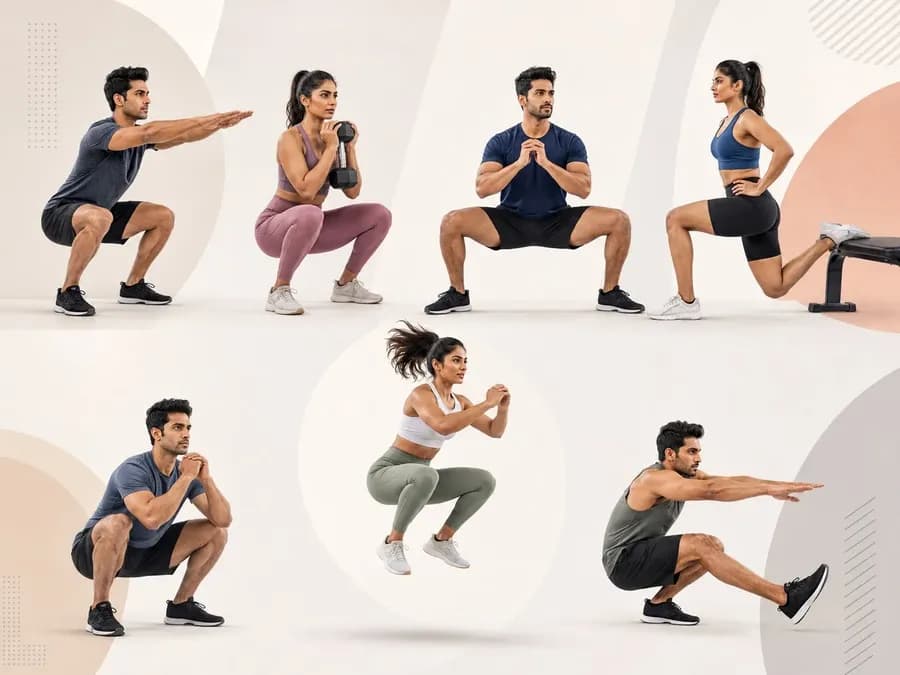
Different Types of Squats — 7 Variations to Build Stronger Legs, Glutes, and Functional Strength
The right squat variations target different muscles, mechanical positions, and movement patterns, building complete lower-body strength rather than partial development. See all 7 most effective variations.