
How Many Squats Should I Do a Day?
Beginners benefit from 20-30 bodyweight squats daily, intermediates 50-75, and advanced trainees 100 or more. See how the right number depends on your level and goal.
Key Takeaways
- Beginners: 20-30 daily; intermediates: 50-75; advanced: 100 or more.
- For weight loss, spreading 150-200 squats across the week beats one big session.
- Recruits quads, glutes, hamstrings, and core simultaneously in a single movement.
- Soreness after early sessions is normal; knee or lower back pain signals bad form.
- Ten squats done daily with good form beats fifty done carelessly once.
How many squats should I do a day depends on your fitness level and goal. Beginners benefit from 20–30 bodyweight squats daily, intermediates can work up to 50–75, and advanced trainees handle 100 or more. For weight loss, spreading 150–200 squats across the week is more effective than cramming them into a single session.
Squats work your quads, glutes, hamstrings, and core all at once — making them one of the most efficient movements in any strength routine. The right daily number varies by fitness level, goal, and recovery. This guide breaks down targets by level and gives you a clear framework, whether you’re just starting out or looking to push further.
Benefits of Doing Squats Every Day
- Builds Lower Body Strength Squats primarily target the quadriceps, hamstrings, and glutes — the largest muscle groups in your body. Consistent daily practice gradually strengthens these muscles, improving your ability to perform everyday movements like walking, climbing stairs, and lifting objects off the floor.
- Supports Fat Loss Over Time Because squats recruit multiple large muscle groups simultaneously, they burn more calories per rep than isolation exercises. Paired with a structured strength training plan for weight loss, a daily squat habit can meaningfully support a caloric deficit over weeks of consistent practice.
- Improves Core Stability Maintaining an upright torso through each rep actively engages your core, lower back, and stabilising muscles. Over time, this builds the kind of functional core strength that supports better posture and reduces lower back fatigue.
- Enhances Bone Density Weight-bearing exercises like squats place mild, beneficial stress on your bones. Practised regularly, this can contribute to improved bone density — particularly relevant for women and adults over 40 working to maintain skeletal health.
- Boosts Metabolism Muscle tissue burns more calories at rest than fat tissue. As squats help build lean muscle in your lower body, your resting metabolic rate gradually improves. This is one reason strength training for metabolism consistently outperforms cardio-only approaches over the long term.
How to Get Started with Squats
What You Need to Begin
Almost nothing. Bodyweight squats require no equipment and very little space — a yoga mat or a clear patch of floor is enough. Once you’ve built a foundation of strength and form, you can progress to resistance bands, dumbbells, or a barbell. For most beginners, bodyweight is the right starting point.
Setting Realistic Goals
The most common mistake is chasing a big daily number before your form and recovery can support it. Start with a number that feels manageable — even slightly easy — and add reps gradually each week. Soreness after the first few sessions is normal. Pain in your knees, lower back, or hips is not: that is a signal to slow down and check your technique.
Consistency over weeks matters far more than an impressive single-day number. Ten squats done daily with good form will outperform 100 squats done once a week with poor mechanics.
Start with the Basics
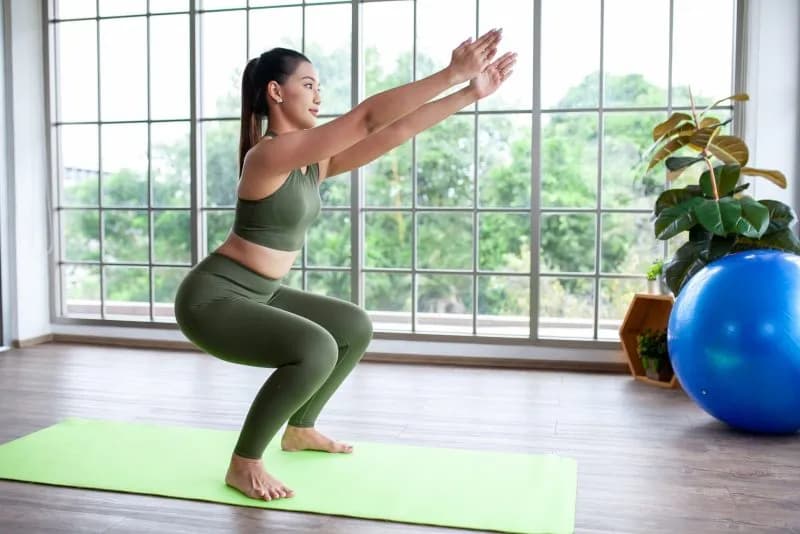
Before worrying about volume, get the pattern right. Stand with feet shoulder-width apart, toes pointed slightly outward. Push your hips back and down as if sitting into a chair. Keep your chest up, knees tracking over your toes, and heels flat on the floor. Drive through your heels to return to standing. Practise this movement slowly until it feels natural before increasing speed or reps.
How Many Squats Should You Do Each Day — By Level
Beginners: 20–30 Squats Per Day
If you’re new to strength training or returning after a long break, start with 2–3 sets of 10 bodyweight squats per session. This gives your muscles, joints, and connective tissue time to adapt without overloading them. Perform these on 4–5 days per week initially, allowing at least one rest day between sessions. Focus entirely on movement quality before adding more reps.
Intermediate: 50–75 Squats Per Day
Once you can complete 3 sets of 15 with controlled form and no joint discomfort, you’re ready to increase volume. At this stage, 3–4 sets of 15–20 reps is a solid daily target. You can also begin incorporating variations like sumo squats, pulse squats, or tempo squats to challenge your muscles differently. For a broader lower body protocol, explore the squat workout guide on Habuild.
Advanced: 100+ Squats Per Day
Experienced trainees who have built a consistent base can handle higher daily volumes — often broken into 4–5 sets of 20–25 reps. At this level, variation matters: mix jump squats, Bulgarian split squats, or single-leg squats to continue driving adaptation. Recovery, sleep, and nutrition become increasingly important at higher volumes.
How Many Bodyweight Squats every Day to Lose Weight
For fat loss specifically, total weekly volume matters more than daily rep count. Aiming for 150–200 bodyweight squats spread across the week — combined with a mild caloric deficit — is more effective than cramming 200 squats into a single session. Spreading the work also reduces injury risk and keeps your training sustainable over months, which is where real body composition change happens.
Squats for Glutes and Thighs
If your goal is to build and shape your glutes and thighs, incorporate hip-width and sumo squat variations. Pause at the bottom of each rep for 2–3 seconds to increase time under tension. Combine with glute-focused strength training for better results than squats alone.
Common Mistakes to Avoid
- Poor Form Knees caving inward, heels lifting off the floor, and excessive forward lean are the three most common form errors. All three increase joint stress and reduce the effectiveness of the movement. Slow down, record yourself from the side, or train with guidance to identify and correct your patterns early.
- Skipping the Warm-Up Cold muscles and joints are more prone to injury. Spend 5 minutes warming up before squatting — leg swings, hip circles, and bodyweight lunges are all effective. Even a brisk 3-minute walk gets blood flowing to the muscles you’re about to load.
- Overtraining More is not always better. If you’re doing 200+ squats daily without adequate rest, you’ll likely experience cumulative fatigue, joint irritation, or a plateau rather than continued progress. Schedule at least 1–2 full rest days per week, especially when first increasing volume.
- Inconsistency The biggest obstacle to squat progress isn’t rep count — it’s showing up. Doing 30 squats every day for 30 days creates far more measurable change than 200 squats done sporadically. Build the habit first; volume can follow.
Who Should Try Squats Every day?
- Beginners Squats are one of the most beginner-friendly exercises available. No equipment, no gym, no prior fitness experience required. Starting with just 20 bodyweight squats a day is a completely valid entry point — and it builds the foundation for everything that follows in a strength programme.
- Women A common concern is that squats will make legs bulky. In practice, this doesn’t happen with bodyweight or moderate resistance training for most women. What squats consistently do is build tone, improve muscle definition, and strengthen the glutes and thighs. The bulk myth persists but isn’t supported by what actually happens over weeks of consistent training.
- Older Adults For adults over 50, squats are particularly valuable for maintaining leg strength, knee stability, and hip mobility — all of which decline with age and contribute to fall risk. Starting with chair-assisted squats or reduced depth is perfectly appropriate. Always consult your doctor before beginning any new exercise programme if you have pre-existing joint or bone conditions.
- Working Professionals Squats are one of the most time-efficient exercises available. A 10-minute session in the morning or during a lunch break delivers genuine training stimulus with no commute, no equipment, and no gym membership required. For people who sit at desks for long hours, squats also actively counteract the hip flexor tightness and glute inhibition that prolonged sitting causes.
Build Strength with a Routine That Actually Works
Building a squat habit — or any strength habit — isn’t about finding the perfect rep count. It’s about having a structured plan, showing up consistently, and progressing at a pace your body can handle. That’s exactly what Habuild’s Strong Everyday programme is designed to deliver.
What you get with Habuild’s Strong Everyday programme:
- Daily live guided strength sessions — including squats, compound movements, and progressions
- Beginner to advanced level options so you train at the right intensity
- No equipment required — everything works from home
- Expert guidance to ensure your form is correct from day one
- A community of consistent practitioners to keep you accountable
If you’ve been looking for a structured way to make strength training a daily habit, Habuild’s beginner strength training programme is built exactly for that transition — from occasional workouts to consistent daily practice.
Start Your Strength Training Journey
Related reads: How Many Pushups Should I Do a Day? · 10 Benefits of Squats for Men
The right number of squats matters less than whether you’re doing them inside a plan that adjusts as you get stronger — thirty squats a day means little without any progression behind it. A structured program can scale that volume up steadily as your fitness level changes, rather than leaving the number static for months. Habuild’s Strong Everyday program offers guided, progressive strength training that takes the guesswork out of how much is actually enough.
Frequently Asked Questions
Related Articles

How Many Pushups Should I Do a Day?
There's no single number — it depends on your current level, goals, and how consistently you show up. See how to figure out the right target and train past a plateau.
Strength Training for Beginners at Home: The Complete Guide
Bodyweight or light resistance exercises, done consistently at home, progressively build muscle and improve posture — no gym membership or prior experience required. See the complete guide.
Strength Training for Beginners Women: Your Complete Guide
Building lean muscle and boosting metabolism doesn’t require a gym membership or expensive equipment — just a clear starting point. See the real benefits and how to build a consistent habit.
How Many Sets Per Muscle Group Per Week? A Complete Volume Guide
Most people need 10-20 working sets per muscle group per week to build muscle consistently, hitting each group at least twice. See the volume guide by experience level.

How to Reduce Muscle Soreness After a Workout
Muscle soreness is the body's repair signal, not a stop sign — active recovery, sleep, protein, and structured movement keep it manageable. See every meaningful recovery method.
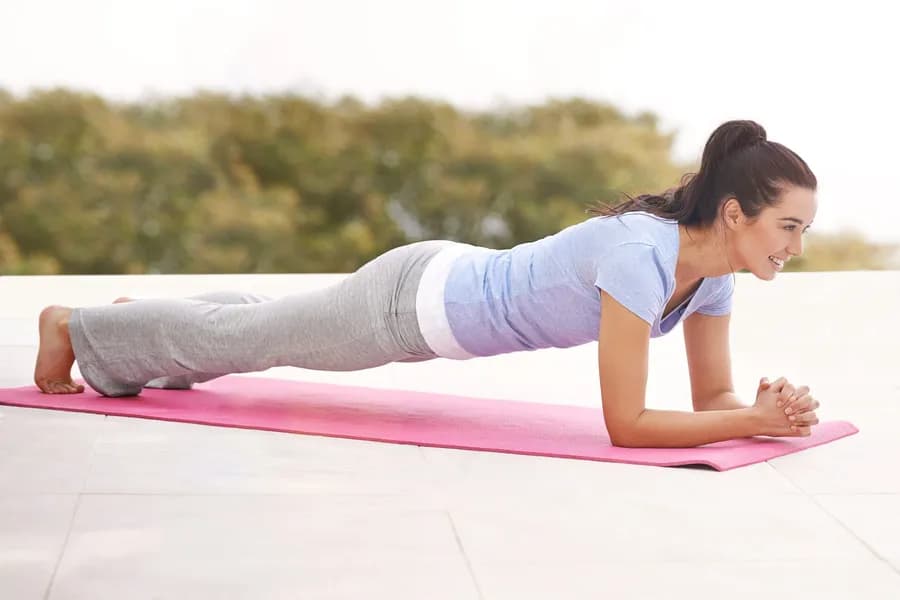
Best Exercises for Core Strength
The plank, dead bug, hollow body hold, glute bridge, bird dog, mountain climbers, and side plank train the deep stabilisers and posterior chain — no equipment needed. See the full list.