
How to Improve Running Endurance: 10 Proven Tips for Lasting Stamina
Running endurance builds through progressive training, targeted strength work, and consistent scheduling — most beginners see real gains within four to six weeks. See 10 proven tips.

Key Takeaways
- Most beginners see measurable gains within four to six weeks of structured practice.
- A stronger aerobic base is often the most reliable path to improving running speed.
- Gradual endurance training strengthens tendons and ligaments, reducing injury risk.
- Long, steady-state runs teach the body to use fat as fuel more efficiently.
- Endurance running consistently engages glutes, hamstrings, and calves, building strength.
Running endurance is your body’s ability to sustain continuous aerobic effort over distance and time without fatiguing early. It improves through progressive training, targeted strength work, and consistent scheduling. Most beginners see measurable gains — longer runs, easier breathing, better pace — within four to six weeks of structured practice.
If you’ve ever hit a wall mid-run or felt winded after just a few minutes, you’re not alone. Knowing how to improve running endurance is one of the most common goals among beginner and intermediate runners alike. The good news: endurance isn’t a fixed trait — it’s a trainable skill that responds to the right structure, consistency, and supporting exercise habits. This guide breaks it all down simply and practically.
10 Benefits of Building Running Endurance
- Stronger Cardiovascular System Regular endurance training strengthens your heart and lungs, enabling them to deliver oxygen more efficiently to working muscles. Over time, your resting heart rate drops and your cardiovascular capacity grows noticeably.
- Better Running Economy As your endurance builds, your body becomes more efficient at using energy. You’ll cover the same distance with less effort — your stride, breathing, and pacing all become smoother and more controlled.
- Improved Running Speed Endurance and speed are closely linked. A runner with a stronger aerobic base can sustain faster paces for longer without fatiguing. Building endurance first is often the most reliable path to improving running speed over time.
- Reduced Injury Risk Gradual endurance training strengthens connective tissues — tendons, ligaments, and joints — making them more resilient. Runners who build their base slowly are far less prone to stress fractures and overuse injuries.
- Enhanced Mental Toughness Pushing through a long run trains your brain as much as your body. Consistent endurance work builds the mental discipline to push past discomfort — a skill that carries over into every area of life.
- Better Fat Metabolism Long, steady-state runs teach your body to use fat as a fuel source more efficiently. This supports weight management and keeps your energy levels stable throughout the day.
- Increased Lung Capacity Endurance training gradually expands how much air your lungs can process per breath. Many runners notice they can hold a conversation during a jog that once left them gasping.
- Improved Running Stamina Day-to-Day Beyond the track or trail, improved running stamina translates into everyday energy. Climbing stairs, carrying groceries, or keeping up with kids becomes noticeably easier as your base fitness rises. Understanding how to build and sustain overall stamina can reinforce the gains you make on every run.
- Stronger Lower Body Muscles Endurance running consistently engages glutes, hamstrings, calves, and hip flexors. Over weeks, this builds practical functional strength that supports posture and reduces lower back strain.
- Consistent Progress You Can Measure Unlike many fitness goals, endurance gains are easy to track — distance covered, pace per kilometre, or time before fatigue sets in. Watching these numbers improve week over week is a powerful motivator to keep going.
How to Get Started with Building Running Endurance
What You Need to Begin
The barrier to entry for endurance running is refreshingly low. A good pair of supportive running shoes is your most important investment. Beyond that, a flat outdoor route or treadmill, comfortable clothes, and a phone to track time are all you need. No gym membership required.
If you want to complement your runs with strength work — which significantly accelerates endurance gains — bodyweight exercises at home are equally effective. Learning how to do strength training at home alongside running is one of the smartest combinations for building lasting stamina.
Setting Realistic Goals
Avoid the trap of trying to run 5 km on day one if you’ve never built a base. Start with a goal like: “Run for 20 minutes without stopping by the end of week 3.” Incremental targets feel achievable, keep motivation high, and protect you from early burnout or injury.
Rule of thumb: increase your weekly running volume by no more than 10% from one week to the next. This single principle prevents most overtraining injuries.
Start with the Basics
Run-walk intervals are the most beginner-friendly approach to building endurance. Alternate 2 minutes of jogging with 1 minute of walking, and gradually extend the running intervals over 4–6 weeks. This trains your cardiovascular system without overwhelming your joints. From there, progress to easy continuous runs at a conversational pace — you should be able to speak a full sentence while running.
Best Exercises to Improve Running Endurance

Running alone isn’t always enough. The following exercises directly support and accelerate your endurance gains by strengthening the muscles and systems running depends on most.
Long Slow Runs
The cornerstone of endurance training. Once a week, run at 60–70% of your maximum effort for a longer duration than your regular runs. Keep pace comfortable and prioritise time on feet over speed. Aim for 30–60 minutes depending on your current fitness level.
Squats
Squats build the glutes, quads, and hamstrings that power every stride. Strong legs delay fatigue on long runs. Do 3 sets of 12–15 bodyweight or goblet squats, 2–3 times per week. Focus on sitting back through the heels and keeping the chest upright.
Lunges
Walking lunges mimic the single-leg loading pattern of running, making them highly specific to endurance athletes. They also improve hip flexibility and balance. Try 3 sets of 10 per leg, progressing to reverse lunges for added stability work.
Plank and Core Holds
A strong core keeps your running form intact when fatigue sets in — preventing the hunching and lateral sway that slow you down and cause injury. Hold a forearm plank for 30–60 seconds, 3 sets. Progress to side planks and dead bugs for greater core endurance.
Glute Bridges
Weak glutes are one of the most common contributors to poor running form and knee pain. Lie on your back, feet flat, and drive your hips toward the ceiling. Hold for 2 seconds at the top. Do 3 sets of 15. This directly supports building your running stamina by reinforcing posterior chain strength.
Jump Rope or High Knees
Both are excellent for improving cardiovascular conditioning and foot turnover rate. Even 5–10 minutes of jump rope before a run raises your heart rate efficiently and primes the calves and ankles for the impact ahead.
Step-Ups
Step onto a sturdy box or stair with one foot, then drive the opposite knee up. This is a low-impact way to train unilateral leg strength and mimic the demands of uphill running. Do 3 sets of 10 per side.
Common Mistakes to Avoid When Building Endurance
- Running Too Fast Too Soon Most beginner runners make the mistake of running their easy days at race pace. Easy runs should feel genuinely easy — you’re building aerobic base, not setting records. Running too hard too often leads to burnout, chronic fatigue, and a plateau in progress. Slow down to speed up later.
- Skipping the Warm-Up Jumping straight into a run with cold muscles is a fast track to tightness and injury. Spend 5–8 minutes on dynamic movements — leg swings, hip circles, high knees in place, and ankle rotations. Your first kilometre will feel dramatically better.
- Ignoring Strength Training Many runners believe that the only way to get better at running is to run more. In reality, targeted strength work fills the gaps in your fitness that running alone cannot address. Stronger muscles mean better form retention late in a run — exactly when fatigue tries to break your technique. Deepening your understanding of how to improve overall muscle strength gives your running a durable physical foundation.
- Inconsistency Between Sessions Endurance is built through cumulative stress and recovery, not from heroic single efforts. Missing three sessions and then doing a massive run doesn’t build the same adaptation as three consistent, moderate runs per week. Regularity always beats intensity for endurance athletes.
Who Should Work on Running Endurance?
- Beginners If you’ve never run consistently before, endurance training is the perfect entry point. The run-walk method means you don’t need to be fit to start — you just need to start. Progress comes quickly in the first few weeks, which keeps motivation high. There’s no prerequisite fitness level required.
- Women Running is one of the most accessible and empowering forms of fitness for women. The common concern that distance training will lead to excessive bulk is unfounded — endurance running promotes a lean, functional physique. It also supports bone density, cardiovascular health, and stress management through regular practice.
- Older Adults Low-intensity endurance work — including brisk walking that progresses to jogging — supports joint health, cardiovascular function, and mental sharpness. If you have existing joint or heart concerns, please consult your doctor before beginning a running program. Start slow, listen to your body, and progress gradually.
- Working Professionals Endurance runs of even 25–30 minutes three times a week are enough to build meaningful stamina. Runs can fit around early mornings or lunch breaks with minimal gear. Pairing this with structured strength sessions — as explored in strength training for runners — delivers posture and energy benefits that carry directly into long desk-bound workdays.
Build Endurance with a Routine That Actually Works
Building running endurance isn’t about doing random workouts every few days — it’s about structured, progressive effort supported by the right coaching. With the right guidance, you can train effectively from home and see real, measurable progress week after week.
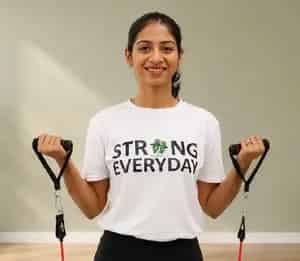
What You Get with Habuild’s Strong Everyday Program:
- Daily live guided strength and conditioning sessions
- Beginner-to-advanced progression — no experience needed
- Home-friendly, no-equipment workouts that support your running
- Expert coaching to maintain correct form and prevent injury
- A supportive community that keeps you consistent on the hard days
Start Your Running Endurance Journey
Related reads: Strength Training and Endurance: Benefits, Exercises & Tips · वजन कैसे कम करें — घर पर असरदार तरीके
Stamina doesn’t arrive from running harder on a random Tuesday — it’s built through weeks of progressive mileage, strength work, and rest days placed at the right intervals. Trying to work out that balance alone often means either plateauing or getting injured before the gains show up. Habuild’s Strong Everyday program sequences the strength and conditioning work runners need so endurance keeps climbing instead of stalling.
Frequently Asked Questions
Related Articles

Strength Training Workout for Runners: Build Power, Prevent Injury, Run Better
A structured resistance programme targeting the glutes, core, and hip stabilisers builds what running alone can't — done twice a week, it reduces injury risk and improves running economy. See the full workout.

What Is Aerobic Exercise? Benefits, Types and How to Get Started
Aerobic exercise is any sustained, rhythmic activity — walking, jogging, cycling, swimming, yoga flows — that raises your heart rate and uses oxygen as its primary fuel. See the benefits, types, and how to get started.

Strength Training Leg Workout: Best Exercises, Benefits & How to Start
Training legs two to three times a week builds functional power, supports fat metabolism, and improves everyday movement, using the largest muscle groups in the body. See the best exercises.

Is Running Good for Weight Loss?
Running burns 400-600 calories an hour and raises your resting metabolic rate, though it often plateaus alone after the first few weeks. See why pairing it with strength training produces lasting results.

Benefits of Running for Men: What Happens When You Lace Up Every Day
Regular running supports cardiovascular health, mental sharpness, hormonal balance, and muscular endurance, compounding with consistent practice. See what running does for the male body.

10 Benefits of Running in Morning That Will Change How You Start Your Day
A consistent morning run can reshape energy levels, mental clarity, and sleep quality, with no gym or equipment needed. See all 10 benefits and how to start safely.