
Oblique Exercises Without Equipment: 10 Best Moves for a Stronger Core
Side planks, bicycle crunches, Russian twists, and heel touches target the muscles along the sides of your torso using only floor space and a mat. See 10 best no-equipment oblique moves.
Key Takeaways
- Obliques stabilise the spine during rotation, lateral bending, and everyday movement.
- Side planks, bicycle crunches, Russian twists, and heel touches need only a mat.
- A well-trained oblique group can take pressure off the lumbar spine over time.
- Rotational power for running, swimming, or sports originates largely in the obliques.
- Training alone won’t spot-reduce fat, but it supports a more toned midsection with activity.
Oblique exercises without equipment are bodyweight movements that target the muscles along the sides of your torso — the internal and external obliques — using only floor space and a mat. The best no-equipment oblique moves include side planks, bicycle crunches, Russian twists, heel touches, and standing oblique crunches, all of which can be done at home with no gym membership required.
If you want a stronger, more functional core, oblique exercises without equipment are one of the most effective places to start. Your obliques stabilise your spine during rotation, lateral bending, and everyday movement. The best part? You don’t need a single piece of gym equipment to train them effectively. This guide covers the top 10 benefits, beginner-friendly technique, the most effective moves, and a structured no-equipment oblique workout you can start today.
10 Benefits of Oblique Training Without Equipment
- Builds Functional Core Strength Your obliques stabilise your spine during everyday movements — bending, twisting, carrying. Training them without equipment builds real-world strength, not just aesthetic muscle.
- Improves Posture and Spinal Alignment Weak obliques often contribute to poor posture and lower back strain. Consistent training gradually supports better spinal alignment, especially for those who sit for long hours.
- Reduces Lower Back Discomfort Over Time A well-trained oblique group takes pressure off the lumbar spine. Regular practice may gradually ease the discomfort many desk workers experience in their lower back.
- Enhances Athletic Performance From running to swimming to everyday sports, rotational power originates in the obliques. Strengthening them supports better performance across almost every physical activity.
- Supports a More Toned Midsection While oblique training alone won’t spot-reduce fat, building muscle in the side core — combined with consistent activity — contributes to a more toned waistline over time.
- Improves Balance and Coordination Many oblique exercises challenge single-leg or unstable positions, which trains your body’s balance system alongside muscle strength.
- Complements Full-Body Strength Routines A strong lateral core makes compound movements like squats, lunges, and push-ups more stable and effective. If you’re already following a Full Body Workout For Strength program, oblique training is a natural and productive addition.
- Requires Zero Equipment or Gym Membership All the exercises in this guide need only a mat and floor space — accessible to anyone, anywhere, at any time.
- Easily Scalable for All Fitness Levels Each move has a beginner and an advanced variation, so whether you’re just starting out or already active, you can find the right challenge level.
- Supports Consistent Daily Practice Because there’s no equipment barrier, you’re far more likely to show up regularly. Consistency — not intensity — is what drives lasting results in core training.
How to Get Started with Oblique Training at Home
What You Need to Begin
All you need is a yoga mat or a firm, non-slip surface and enough floor space to lie flat with your arms extended. No dumbbells, resistance bands, or machines required. Comfortable, non-restrictive clothing helps you move through full ranges of motion without interference.
Setting Realistic Goals
Aim for 3–4 oblique-focused sessions per week, with at least one rest day in between. Steady progress in form and rep quality matters far more than chasing soreness. Keep sessions to 15–25 minutes initially to avoid overtraining the core. If you want a broader foundation, understanding What Are Strength Training Exercises is a useful starting point before building out a full routine.
Start with the Basics
If you’ve never trained obliques directly before, begin with side-lying crunches and standing oblique crunches before moving to plank variations and twisting movements. Focus on feeling the target muscle contract — not on speed or volume. Two to three sets of 10–12 reps per exercise is a solid starting point.
Best Oblique Exercises Without Equipment
This is the core of your oblique workout without equipment. Each move is described with technique cues and a recommended rep range.
Side Plank
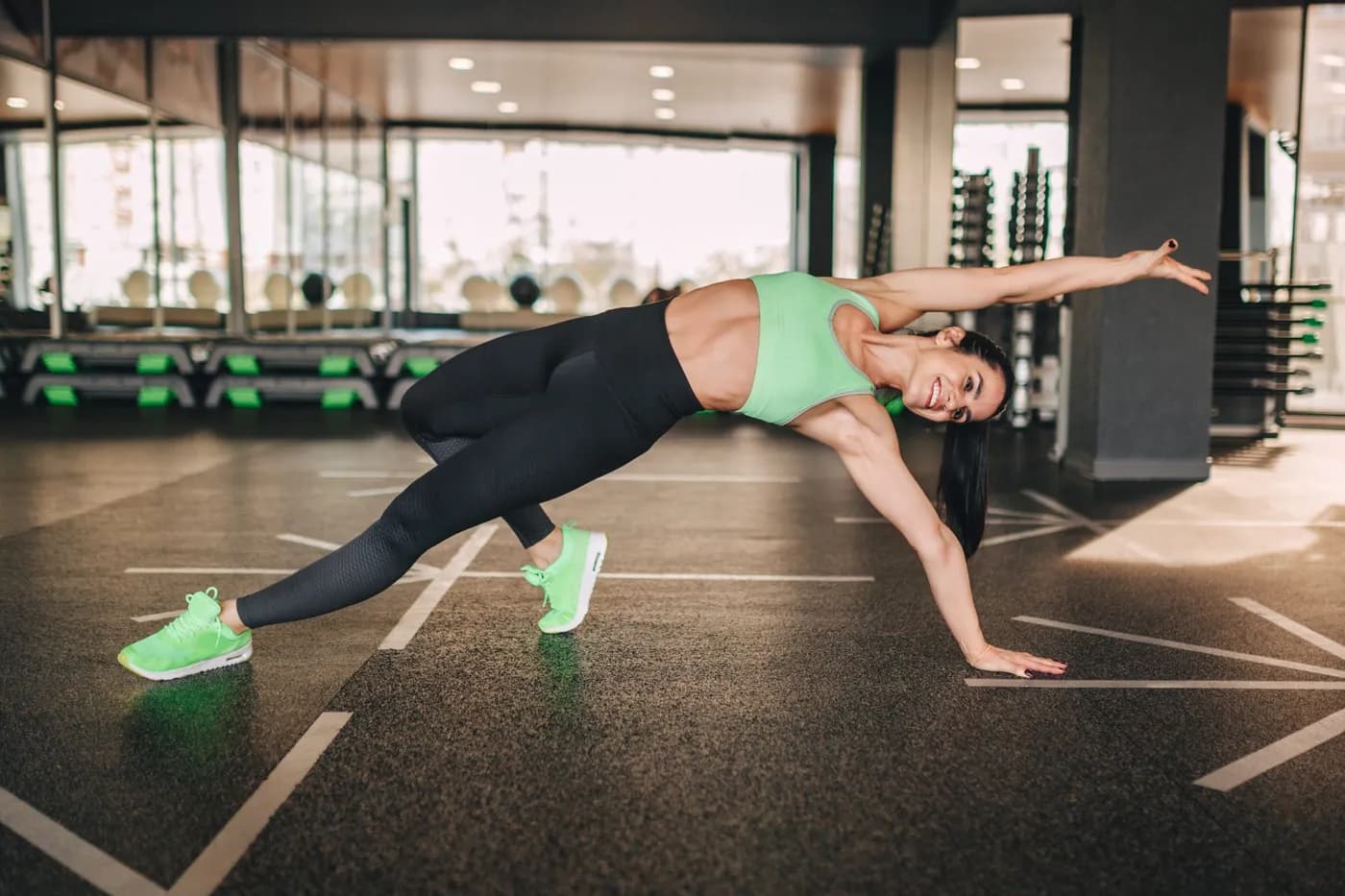
Start in a forearm plank and rotate to one side, stacking your feet or placing one foot in front of the other for support. Hold your hips lifted, forming a straight line from head to heel. This is one of the most effective isometric exercises for the lateral core. Hold for 20–40 seconds per side, 2–3 sets. Progress to a full straight-arm side plank as you get stronger — Habuild’s structured sessions cover this as part of a dedicated Core Strength Plank progression.
Bicycle Crunches
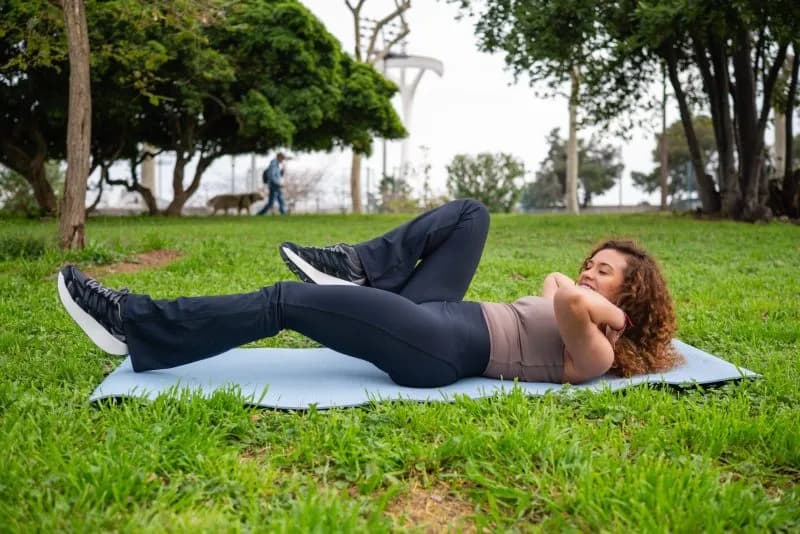
Lying on your back, bring opposite elbow to knee in a controlled rotating motion while extending the other leg. Slow the movement down — rushing this exercise strains the neck rather than working the obliques. Aim for 12–15 reps per side, 3 sets.
Russian Twists
Sit with your knees bent and feet lifted slightly off the floor. Lean back to about 45 degrees and rotate your torso side to side, tapping the floor beside each hip. Keep your spine long — don’t collapse through the lower back. Do 15–20 total rotations per set, 3 sets.
Standing Oblique Crunches
Stand with feet shoulder-width apart and hands behind your head. Lift one knee and bring the same-side elbow to meet it, contracting the side of your torso. This is a beginner-friendly move that trains the obliques in an upright position. Perform 12–15 reps per side, 2–3 sets.
Mountain Climbers (Lateral)
From a high plank position, drive one knee toward the opposite elbow instead of straight to the chest. This rotational variation targets the obliques while keeping your heart rate elevated. Perform 10–12 reps per side at a controlled pace, 3 sets.
Heel Touches
Lying on your back with knees bent and feet flat on the floor, crunch slightly to one side and tap your heel with the same-side hand. Alternate sides in a slow, controlled rhythm. This underrated move directly isolates the lateral abdominals. Do 15–20 reps per side, 3 sets.
Side Crunches
Lie on your side with your bottom arm extended and your top hand behind your head. Lift your torso laterally, bringing your elbow toward your hip. Lower slowly. This direct oblique isolation move is especially effective for beginners. Aim for 12–15 reps per side, 3 sets.
Common Mistakes to Avoid in Oblique Workouts
- Poor Form The most common issue in oblique training is pulling on the neck during crunching movements. Your hands are there for light support — your obliques should be doing the work. If your neck is sore after a session, that’s a form red flag, not a sign of a good workout.
- Skipping Warm-Up Cold muscles are more prone to strains, especially during rotational movements. Spend 5 minutes on dynamic warm-ups — torso rotations, hip circles, and light marching — before starting your oblique workout. This also improves your range of motion during the session.
- Overtraining Your obliques are muscles like any other — they need recovery time. Training them every single day without rest can lead to stiffness, reduced performance, and overuse issues. Three to four sessions per week is optimal for consistent progress.
- Inconsistency The most common reason people don’t see results from their oblique workout without equipment isn’t the exercises themselves — it’s sporadic training. One intense session followed by five days off won’t build a stronger core. Short, regular sessions consistently performed over weeks and months will. This is exactly the consistency gap that Habuild’s guided program is designed to close.
Who Should Try Oblique Exercises Without Equipment?
- Beginners These exercises require no prior fitness experience and have very low entry barriers. Starting with standing oblique crunches and heel touches gives beginners an immediate, accessible way to build lateral core strength. Progress at your own pace — there’s no rush.
- Women A common concern is that oblique training will create a blocky waistline. Bodyweight training doesn’t work that way — without heavy external resistance, you’re building muscle tone, not bulk. Oblique exercises support a stronger, more defined midsection and better posture. Those interested in a fuller approach can explore Strength Training For Women for a structured program built around these goals.
- Older Adults Lateral core strength declines with age, affecting balance and fall risk. Gentle oblique exercises like side-lying crunches and standing crunches are appropriate for most older adults. Always consult your doctor before beginning a new routine if you have existing spinal or joint conditions.
- Working Professionals If you sit at a desk for 8+ hours a day, your obliques are likely underactive and your posture is suffering for it. A 15-minute oblique workout without equipment — done before work or during a lunch break — can meaningfully support spinal health and reduce the cumulative toll of prolonged sitting.
Build Strength with a Routine That Actually Works
Building a stronger core — including your obliques — isn’t about doing random exercises on a random day. It’s about following a structured plan, getting guided feedback on your form, and showing up consistently. That’s exactly what Habuild’s Strong Everyday program is built around.
What you get with Habuild’s Strong Everyday program:
- Daily live guided strength and yoga sessions
- Beginner-to-advanced progression — start where you are
- No-equipment, home-friendly workouts including core and oblique training
- Expert guidance to ensure correct form from day one
- A supportive community to keep you consistent
Related reads: Oblique Workout for Women: 10 Best Exercises to Strengthen Your Core · Beginner Bodyweight Exercises: Build Strength at Home Without Equipment
Side planks and Russian twists strengthen the obliques, but that core stability holds up over time only if the training stays consistent rather than showing up in isolated bursts. A structured program sequences core work alongside everything else your body needs to stay balanced. Habuild’s Strong Everyday program builds that kind of guided core training into a broader, progressive routine.
Frequently Asked Questions
Related Articles
Oblique Workout for Women: 10 Best Exercises to Strengthen Your Core
An oblique workout targets the muscles along the sides of the core through lateral bends, trunk rotation, and anti-rotation holds — no equipment needed. See 10 best exercises.
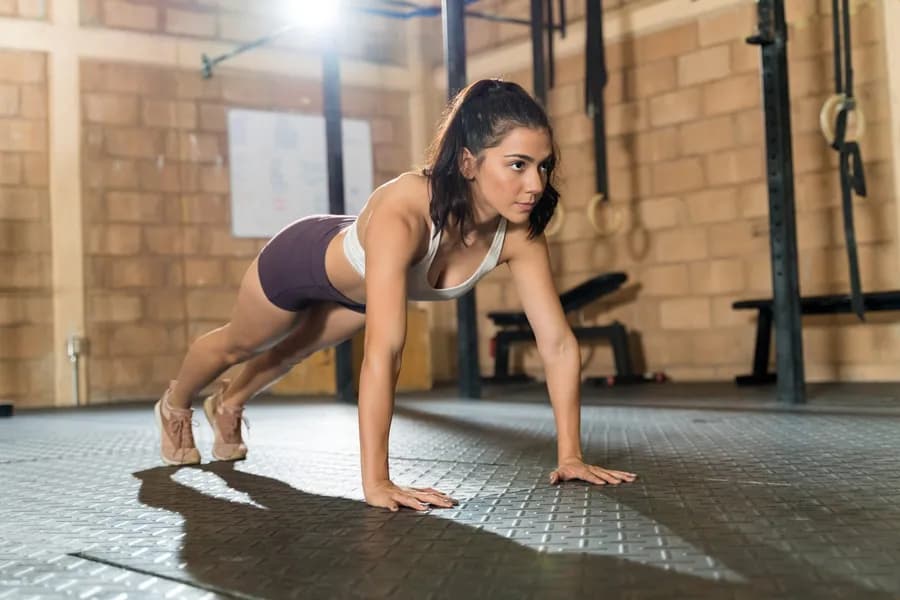
Beginner Bodyweight Exercises: Build Strength at Home Without Equipment
Bodyweight exercises are the most accessible way to start building real strength — no gym membership, no equipment, no experience required. See 8 key benefits and how to begin.
What Is Strength Training? Benefits, Exercises & How to Get Started
Strength training uses resistance — bodyweight, dumbbells, or bands — to challenge muscles and stimulate growth, building lean muscle and raising metabolism for all ages and experience levels. See the benefits and how to start.
Strength Training for Women at Home: The Complete Guide
With three structured sessions a week, most women notice measurable gains in strength and posture within four to six weeks — using only bodyweight, dumbbells, or bands. See the complete guide.
Quad Workout at Home: Best Exercises, Benefits & Beginner Guide
A quad workout at home uses squats, lunges, wall sits, and split squats to target the four muscles along the front of your thigh — no gym needed. See the best exercises and how often to train.