
Oblique Workout for Women: 10 Best Exercises to Strengthen Your Core
An oblique workout targets the muscles along the sides of the core through lateral bends, trunk rotation, and anti-rotation holds — no equipment needed. See 10 best exercises.
Key Takeaways
- Obliques work alongside the deep transverse abdominis to form an internal belt around the spine.
- Share the load with the lumbar spine, easing chronic lower back tension when strengthened.
- Assist with forced exhalation and trunk compression, tying into breathing efficiency too.
- Trained obliques absorb rotational forces more safely during uncontrolled twisting.
- Complements squats, lunges, and presses since every major lift needs a stable core.
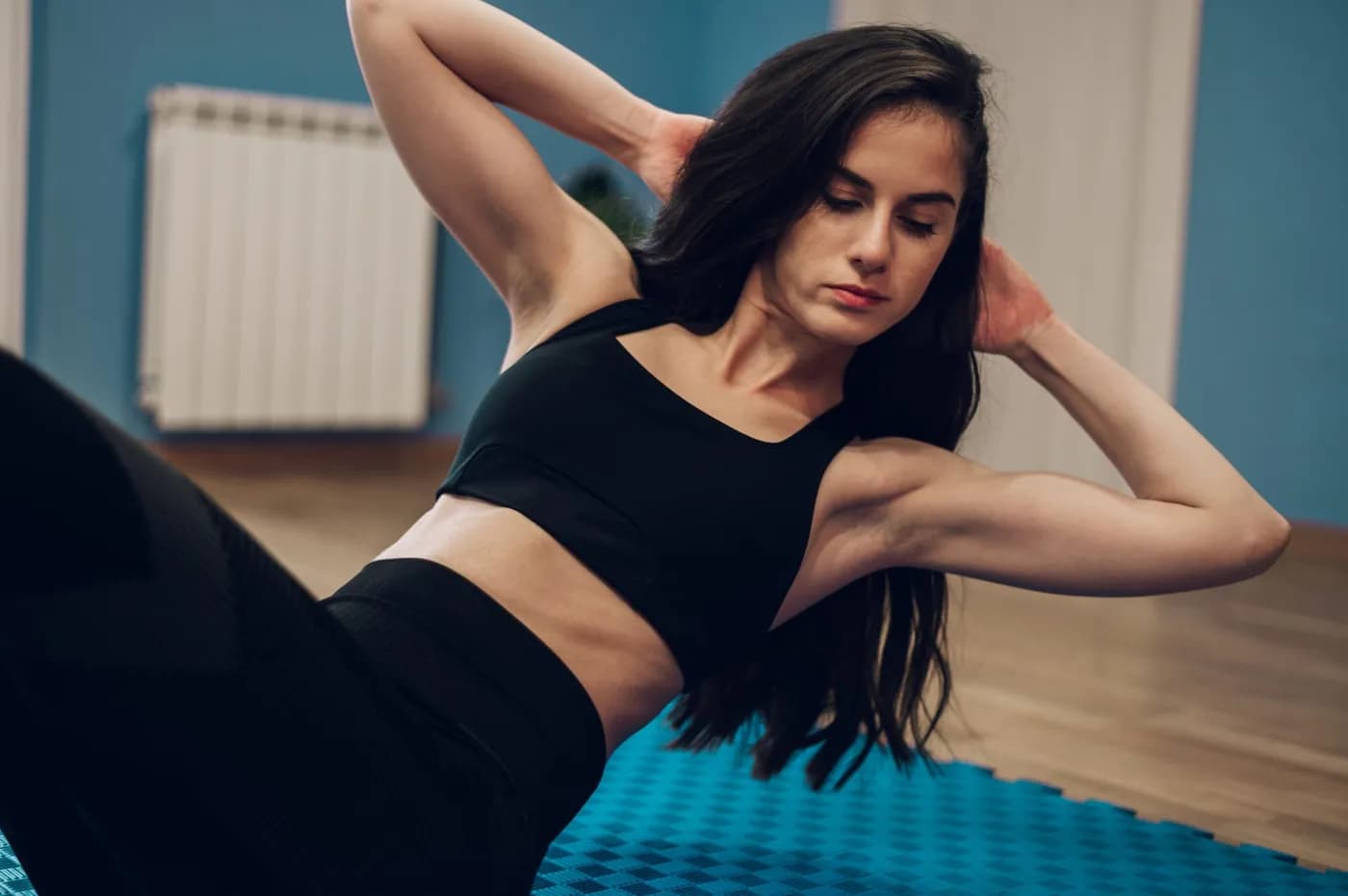
An oblique workout for women targets the internal and external oblique muscles along the sides of the core through lateral bending, trunk rotation, and anti-rotation holds. These exercises build functional stability, improve posture, and support everyday movement — and can be done at home with no equipment.
Your obliques play a central role in every rotation, bend, and stabilisation movement your body makes. Whether you're lifting groceries, sitting at a desk for eight hours, or working through a fitness program, strong obliques make everything feel easier and more controlled.
This guide walks you through the ten best oblique exercises for women, how to get started, common mistakes to avoid, and why consistent practice makes all the difference.
10 Benefits of Oblique Training for Women
- Builds a Stronger, More Stable Core Your obliques work alongside the deep transverse abdominis to form a natural internal belt around your spine. Strengthening them creates genuine stability — not just surface-level tightness.
- Improves Posture and Spinal Alignment Weak obliques often contribute to excessive arching or rounding of the lower back. Training them regularly helps you sit, stand, and move with better alignment — which matters especially if you spend long hours at a desk.
- Reduces Lower Back Discomfort The obliques share the load with your lumbar spine during everyday movements. When they're stronger, your lower back doesn't have to overcompensate — many women find that consistent core training gradually eases chronic back tension through regular practice.
- Enhances Functional Strength Bending, twisting, carrying — nearly every real-world movement involves your obliques. Training them directly translates to easier, more capable movement in daily life.
- Supports Athletic Performance Whether you run, swim, cycle, or do yoga, rotational core power is fundamental. Stronger obliques can meaningfully improve how efficiently you move in any sport or physical activity.
- Boosts Metabolism Through Muscle Development Like all muscle tissue, developed obliques contribute to a higher resting metabolic rate. More lean muscle means your body continues burning energy even at rest.
- Improves Breathing and Trunk Control Your obliques assist with forced exhalation and trunk compression. This makes them relevant not just to fitness, but to breathing efficiency during exercise and recovery.
- Protects Against Injury During Rotation Uncontrolled twisting — whether during sport or a simple reach — is a common source of muscle strain. Trained obliques absorb and manage rotational forces far more safely.
- Builds Confidence Through Functional Fitness Progress in core strength is tangible. Women who train their obliques consistently often notice they feel more capable, grounded, and physically confident in their day-to-day lives.
- Complements Other Strength Work Squats, lunges, upper body presses — every major lift benefits from a stable, trained core. Full body strength training becomes significantly more effective when your obliques are doing their share of the work.
How to Get Started with Oblique Training
What You Need to Begin
You need very little to start. A yoga mat or soft surface is sufficient for most oblique exercises. Bodyweight movements cover the majority of effective oblique work — no dumbbells or cables required. If you want to progress intensity, a light resistance band or a single dumbbell is enough.
Setting Realistic Goals
Oblique strength is built incrementally. Begin with two to three sessions per week, allow at least one full rest day between core-focused workouts, and resist the urge to rush to advanced movements. Consistency over four to eight weeks will produce meaningful, noticeable changes in strength and control. Jumping to high-volume training too soon is one of the fastest routes to burnout or injury.
Start with the Basics
If you're new to core training, begin with side planks, dead bugs, and bicycle crunches. These movements teach your obliques to fire correctly and build the foundational control you'll need for more demanding exercises. As you grow comfortable, layer in rotation-based movements and progressively increase hold times or repetitions.
Best Oblique Exercises for Women
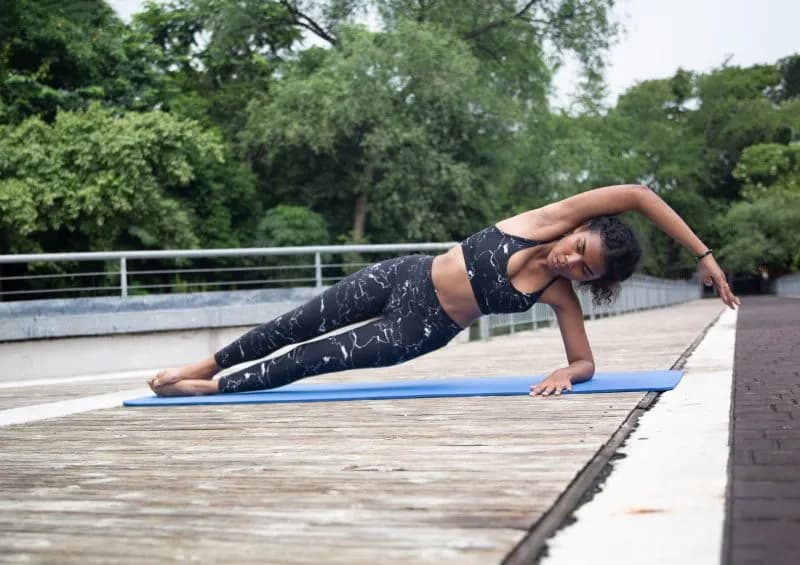
These ten exercises represent the most effective movements for targeting the internal and external obliques. Each can be performed at home with no equipment unless noted.
Side Plank
Lie on your side and prop yourself up on one forearm, stacking your feet or keeping one knee on the ground. Hold your hips raised with your body forming a straight line. This is one of the single best anti-lateral flexion exercises available. Aim for 20–40 second holds per side; build to 60 seconds as strength improves.
Bicycle Crunch
Lying on your back, hands behind your head, alternate bringing opposite elbow toward opposite knee while extending the other leg. The rotation under control is what activates the obliques — speed matters less than a full twist at each repetition. Do 12–16 reps per side.
Russian Twist
Seated with knees bent and feet either flat or elevated, lean back slightly and rotate your torso from side to side, touching the floor on each side. Add a weight plate or water bottle when bodyweight becomes easy. Aim for 10–15 rotations per side.
Dead Bug
Lying on your back, arms extended toward the ceiling and knees at 90 degrees, slowly lower opposite arm and leg toward the floor while keeping your lower back pressed flat. This trains anti-rotation stability — a critical component of oblique function. Do 8–10 reps per side.
Standing Oblique Crunch
Stand with feet hip-width apart. Place one hand behind your head and lift your knee toward that elbow in a controlled side crunch. This is particularly beginner-friendly and easy on the lower back. Perform 12–15 reps per side.
Plank with Hip Rotation
From a standard forearm plank, rotate your hips to dip one side toward the floor then the other in a controlled arc. Avoid letting your hips sag or your lower back arch. This dynamically loads the obliques through rotation. Do 10–12 dips per side.
Side Crunch (Floor)
Lying on your back, drop both knees to one side so they rest on the floor. Then perform a standard crunch — this angles your body so the obliques on the upper side take most of the load. Switch sides after each set. Aim for 12–15 reps.
Wood Chop (with Resistance Band or Dumbbell)
Stand and hold a resistance band or dumbbell at one hip. Rotate diagonally upward across your body to the opposite shoulder, engaging the obliques throughout the arc. Reverse with control. Do 10–12 reps per direction.
Mountain Climber with Twist
In a high plank position, drive your right knee toward your left elbow, then alternate. The cross-body drive directly targets the external obliques while also building cardiovascular endurance. Aim for 20–24 total reps at a controlled pace.
Side Bend (with Dumbbell)
Standing tall, hold a dumbbell in one hand and let it lower along the outside of your thigh as you bend sideways, then return to upright. Keep the opposite side from swinging — slow and deliberate movement matters here. Do 12–15 reps per side.
Common Mistakes to Avoid
- Poor Form The most common error in oblique training is relying on momentum rather than muscular control. Bicycle crunches done at full speed with minimal rotation, or Russian twists swung loosely side to side, miss the target entirely. Slow down every movement and feel the lateral contraction on each repetition.
- Skipping the Warm-Up Cold muscles and connective tissue are far more prone to strains, particularly in the torso during rotation. Spend at least five minutes doing light cardio and trunk mobility — cat-cow, torso rotations, and hip circles — before beginning oblique work. Understanding the fundamentals of strength training and conditioning reinforces why this step is never optional.
- Overtraining the Core Your obliques are muscles like any other — they need recovery time. Training them every single day without rest will lead to fatigue and diminishing returns. Two to three targeted sessions per week with adequate recovery is the effective range for most women.
- Inconsistency Sporadic training produces sporadic results. The women who see the clearest improvements in core strength and posture are those who show up consistently week after week — not those who push intensely for two weeks and then stop. Building a sustainable routine matters more than any single session.
Who Should Try Oblique Workouts?
- Beginners Oblique training is one of the most beginner-accessible forms of strength work. You can start with just bodyweight movements on a mat, build control at a low intensity, and progress naturally. There's no equipment barrier and minimal technique risk when movements are performed slowly.
- Women A common concern is that core training will create a bulky or overly muscled appearance. In practice, oblique training for women builds functional strength and muscle tone — not bulk. Women have lower testosterone levels than men, which means hypertrophy of this kind simply doesn't happen through bodyweight and light resistance training. What you'll typically notice is greater definition, better posture, and improved strength. Strength training designed for women addresses these concerns directly and in depth.
- Older Adults Oblique strength is closely tied to balance, fall prevention, and spinal stability — all of which become more important with age. Gentler variations like standing side crunches and modified side planks are appropriate starting points. As always, consult your doctor before beginning a new fitness program if you have any existing medical conditions.
- Working Professionals Desk workers are particularly prone to postural imbalances from prolonged sitting — a weak core and tight hip flexors are nearly universal. A 15–20 minute oblique-focused session a few times a week can make a measurable difference in how your back feels by the end of a workday.
Build Strength with a Routine That Actually Works
Building a stronger core isn't about doing random exercises — it's about consistency, structure, and having the right guidance to keep you on track. With the right support, you can train effectively from home and see real, gradual progress over time.
What You Get with Habuild's Strength Training Program:
- Daily live guided strength sessions including core and oblique work
- Beginner to advanced progression — no experience required
- No-equipment and home-friendly workouts
- Expert guidance to ensure correct form throughout
- Community support to help you stay consistent week after week
Ready to build a core routine you'll actually stick to? Start your strength training journey with expert guidance from day one.
Related reads: Strength Training Core Workout: 10 Best Exercises · Oblique Exercises Without Equipment: 10 Best Moves for a Stronger Core
Functional core stability from oblique training — the kind that actually improves posture and everyday movement — comes from lateral bending and rotation work repeated consistently, not tried once and set aside. A structured plan keeps that core work progressing alongside the rest of your training. Habuild's Strong Everyday program guides that kind of consistent core and strength training so the stability keeps building.
Frequently Asked Questions
Related Articles
Oblique Exercises Without Equipment: 10 Best Moves for a Stronger Core
Side planks, bicycle crunches, Russian twists, and heel touches target the muscles along the sides of your torso using only floor space and a mat. See 10 best no-equipment oblique moves.
Strength Training Exercises for Women: The Complete Beginner’s Guide
Strength training builds lean muscle, improves metabolism, and supports bone health — consistency, not intensity, is the variable that actually matters. See 10 benefits and how to start.
Strength Training for Women at Home: The Complete Guide
With three structured sessions a week, most women notice measurable gains in strength and posture within four to six weeks — using only bodyweight, dumbbells, or bands. See the complete guide.
Strength Training Exercises at Home for Women
Building lean muscle and improving metabolism doesn't require a gym — just a routine that accounts for real life and actually sticks. See the benefits, best exercises, and common mistakes to avoid.
Inner Thigh Workout at Home: 10 Best Exercises to Tone and Strengthen
An inner thigh workout strengthens the adductors and improves hip stability using bodyweight moves alone, right from your living room floor. See 10 best exercises.