
Strength Training for Women Over 40: Benefits, Exercises & How to Start
After 40, women naturally lose muscle mass, about 3-5% per decade, while bone density also shifts — a structured strength routine directly addresses both. See how to begin safely.
Key Takeaways
- Women lose about 3-5% of muscle mass per decade after 40 if not regularly challenged.
- Declining oestrogen around menopause can accelerate bone density loss.
- May help modulate cortisol and support insulin sensitivity as hormonal shifts occur.
- Targeted work on core, glutes, and upper back eases postural discomfort from desk work.
- Small wins like holding a plank longer build a deeper sense of physical capability.
Strength training for women over 40 is one of the most evidence-backed investments you can make in your long-term health. After 40, women naturally lose muscle mass — about 3–5% per decade — while bone density and metabolic rate also shift. A consistent, structured strength training routine directly addresses these changes and helps you move, feel, and recover better with every passing year.
This guide covers why it matters, how to begin safely at home, the best exercises to try, and what mistakes to avoid so you can build real results from day one.
8 Benefits of Strength Training for Women Over 40
- Builds and Preserves Lean Muscle From your early 40s onward, the body gradually loses lean muscle if it isn’t regularly challenged. Resistance-based movement signals muscles to adapt and rebuild, helping you maintain the functional strength that makes everyday tasks — carrying groceries, climbing stairs — feel effortless.
- Boosts Resting Metabolism Muscle tissue burns more calories at rest than fat tissue. Building even a small amount of lean muscle through regular training may gradually improve how efficiently your body uses energy throughout the day, supporting healthy weight management over time.
- Improves Bone Density Weight-bearing and resistance exercises place mild stress on bones, which encourages bone remodelling. This is particularly important for women approaching or in menopause, when declining oestrogen can accelerate bone density loss. For a deeper look at how exercise supports this, explore strength training for bone density.
- Supports Hormonal Balance Consistent strength training may help modulate cortisol and support insulin sensitivity — two areas that become increasingly relevant for women over 40. Regular movement complements your existing care routine; it is not a replacement for medical advice.
- Enhances Functional Strength for Daily Life Bending, lifting, balancing — these everyday movements rely on the same muscle groups you train during a structured workout. Functional strength reduces the risk of minor injuries and keeps you moving confidently across decades.
- Improves Posture and Reduces Aches Desk work, reduced activity, and cumulative postural habits can lead to muscular imbalances. Targeted strength work — especially for the core, glutes, and upper back — may gradually ease postural discomfort when practiced consistently.
- Elevates Mood and Mental Clarity Exercise promotes the release of endorphins and other mood-regulating neurochemicals. Many women over 40 report improved focus, reduced anxiety, and better sleep quality after building a consistent movement habit — benefits that compound over weeks and months.
- Builds Lasting Confidence Strength training creates measurable, visible progress. Lifting heavier, holding a plank longer, recovering faster — these small wins accumulate into a deeper relationship with your own physical capability, independent of the number on a scale.
How to Get Started with Strength Training for women Over 40
What You Need to Begin
You don’t need a gym membership or expensive equipment. A yoga mat, a pair of light-to-medium dumbbells (or even water bottles), and a clear space of about 6 feet are enough for a highly effective home session. Resistance bands are a low-cost addition that expands your exercise variety — particularly for shoulders, hips, and glutes.
If you prefer a guided approach with zero guesswork on equipment, Habuild’s strength training programme for women is designed around home-friendly formats with expert instruction built in.
Setting Realistic Goals
Avoid measuring progress only by weight. Track how you feel: energy levels through the day, how your clothes fit, whether you recover faster after a session, or whether a movement that felt hard in week one feels manageable in week four.
Two to three sessions per week is an excellent starting frequency. This gives your muscles adequate recovery time — which is when the actual adaptation occurs.
Start with the Basics
Before loading up with weights, master the fundamental movement patterns: squat, hinge, push, pull, and carry. Bodyweight versions — air squats, glute bridges, push-ups on knees, rows with a band — build the motor patterns and joint stability that make heavier training safer later.
Warm up for five to seven minutes with light mobility work before every session. For a comprehensive home-friendly starting point, explore the best exercises for building strength at home.
Best Strength Training Exercises for Women Over 40

Goblet Squat
Hold a dumbbell or water bottle at chest height, feet hip-width apart, toes slightly turned out. Lower until thighs are parallel to the floor, keeping your chest tall. Builds quads, glutes, and core stability simultaneously. Start with 3 sets of 10–12 reps.
Glute Bridge
Lie on your back, knees bent, feet flat. Drive your hips toward the ceiling, squeezing your glutes at the top, then lower with control. Essential for hip strength and lower back support. Try 3 sets of 15 reps, progressing to a single-leg version when ready.
Dumbbell Row (or Resistance Band Row)
Hinge at the hips with a flat back, one hand braced on a chair for support. Pull the dumbbell toward your hip, leading with your elbow. Trains the upper and mid back — critical for countering the forward rounding that often develops with desk work. 3 sets of 10–12 reps each side.
Push-Up (Modified or Full)
Start on your knees if needed, hands slightly wider than shoulder-width. Lower your chest toward the floor in a controlled line, then press back up. Builds chest, shoulder, and tricep strength. Progressing from knee to full push-ups over weeks is a reliable indicator of real strength gains. 3 sets of 8–12 reps.
Deadlift (with Dumbbells)
Hold dumbbells in front of your thighs, hinge at the hips with a neutral spine, lower the weights along your legs to mid-shin, then drive your hips forward to stand. This is one of the most effective posterior chain exercises — glutes, hamstrings, and lower back all in one movement. 3 sets of 10 reps. Keep the weight manageable until form is solid.
Plank (Forearm or High)
Hold a straight line from shoulders to heels, engaging your core and glutes. Avoid letting your hips sag or rise. Start with 20–30 second holds and build toward 60 seconds over four to six weeks. Deep core work like this underpins every other strength movement you do.
Lateral Band Walk
Place a resistance band just above your knees. With a slight squat, step sideways for 10–12 steps, then return. This directly targets the glute medius — a muscle that supports the knee, hip, and lower back — which is frequently undertrained and commonly linked to joint discomfort in women over 40. 3 sets of 10 steps each direction.
Common Mistakes to Avoid
- Poor Form at the Start Rushing into heavier weights before mastering movement patterns is the most common reason women hit plateaus or experience discomfort. Spend your first two to four weeks building form with lighter loads. A structured programme with live guidance makes this significantly easier than solo trial-and-error.
- Skipping the Warm-Up Jumping straight into weighted movements without warming up the joints and activating key muscle groups increases the chance of strain, particularly in the knees, hips, and lower back. Five minutes of dynamic mobility work before every session is non-negotiable.
- Overtraining Without Adequate Recovery Muscle is built during rest, not during the workout itself. Training the same muscle group on consecutive days without recovery time leads to fatigue and stalled progress. Two to three days of strength training per week, with rest or light movement in between, is optimal for most women over 40.
- Inconsistency The most effective programme is the one you actually stick to. Sporadic bursts of intense training followed by long breaks produce far less benefit than moderate, consistent effort over months. This is the core reason Habuild is built around daily habit formation — structure and accountability make the difference between a two-week phase and a genuine lifestyle shift.
Who Should Try Strength Training Over 40?
- Beginners with No Prior Training If you’ve never lifted a weight before, your 40s are an excellent time to start. The body responds well to resistance training at any starting point — and beginners often see the most noticeable early improvements. A guided beginner programme removes the overwhelm of knowing where to start. For structured options, see strength training for beginners.
- Women Over 50 Maintaining Strength Strength training for women over 50 focuses less on rapid muscle gain and more on maintenance, bone health, and mobility. Lower-load, higher-rep training with controlled tempo is particularly effective at this stage. The principles remain the same — consistency and progressive challenge are what matter.
- Older Adults Managing Bone and Joint Health For women dealing with reduced bone density, joint stiffness, or early mobility concerns, resistance training offers meaningful support — particularly when combined with complementary practices like yoga. Always consult your doctor before beginning a new exercise programme if you have existing health conditions. Strength training complements your medical care; it does not replace it.
- Working Professionals with Limited Time Strength training for women over 40 doesn’t require an hour in the gym. A focused 30-minute home session three times a week, built around compound movements, delivers real results. The posture and energy benefits are especially noticeable for women who spend hours at a desk.
Build Strength with a Routine That Actually Works
Starting strength training for women after 40 isn’t about doing random workouts — it’s about consistency, expert guidance, and following a structured plan that fits your life. With the right support, you can train effectively from home and see real progress over time. If you’re also interested in how movement supports overall wellness, yoga for strength is a complementary practice many Habuild members combine with their training.
What You Get with Habuild’s Strength Training Programme:
- Daily live guided strength sessions — no pre-recorded loops
- Beginner-to-advanced progression built into the curriculum
- No-equipment and home-friendly workout formats
- Expert guidance on form to keep every session safe and effective
- Community support to help you stay consistent week after week
Start Your Strength Training Journey
Related reads: Strength Training Exercises for Women Over 50 · Strength Training Exercises at Home for Women
The muscle and bone density changes that come with age respond best to strength training that’s consistent and appropriately progressed, not occasional bursts of effort. A structured program can pace that progression with recovery and joint health in mind as training age increases. Habuild’s Strong Everyday program offers women over 40 that kind of guided, structured strength training built to support long-term health.
Frequently Asked Questions
Related Articles
Strength Training for Beginners Women: Your Complete Guide
Building lean muscle and boosting metabolism doesn’t require a gym membership or expensive equipment — just a clear starting point. See the real benefits and how to build a consistent habit.
Strength Training for Beginners at Home: The Complete Guide
Bodyweight or light resistance exercises, done consistently at home, progressively build muscle and improve posture — no gym membership or prior experience required. See the complete guide.
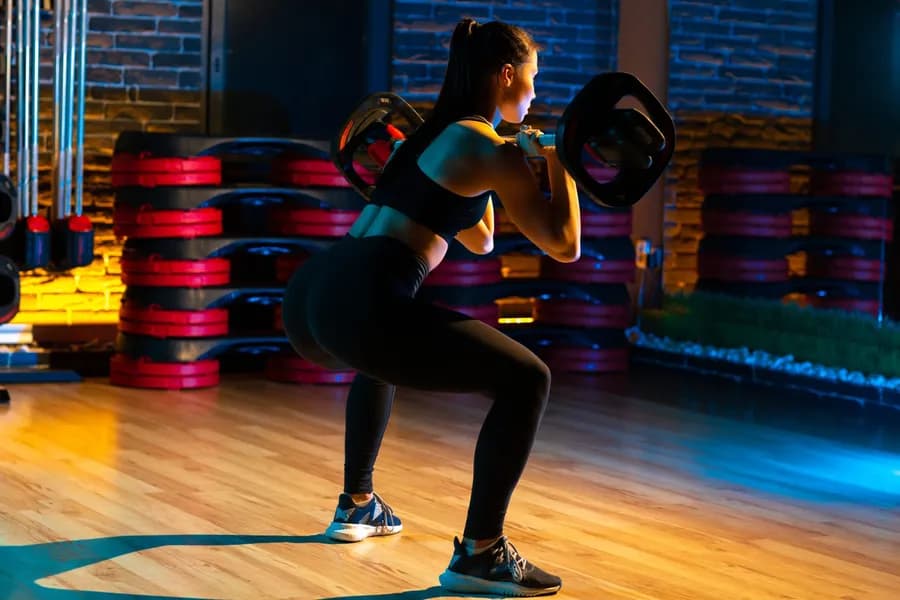
10 Benefits of Deadlifts for Women
The deadlift trains the glutes, hamstrings, core, and upper back in a single lift — one of the most time-efficient exercises you can add to a weekly routine. See all 10 benefits.

How to Reduce Muscle Soreness After a Workout
Muscle soreness is the body's repair signal, not a stop sign — active recovery, sleep, protein, and structured movement keep it manageable. See every meaningful recovery method.
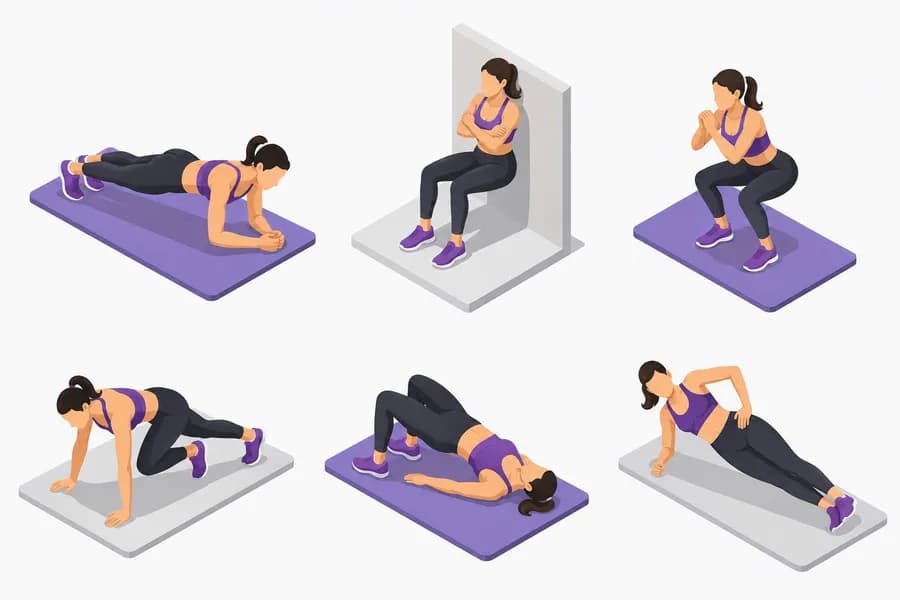
10 Benefits of Isometric Exercises for Strength and Daily Fitness
Isometric exercises hold a muscle contraction at a fixed angle, with no joint movement and no equipment, in sessions under 15 minutes. See all 10 benefits.
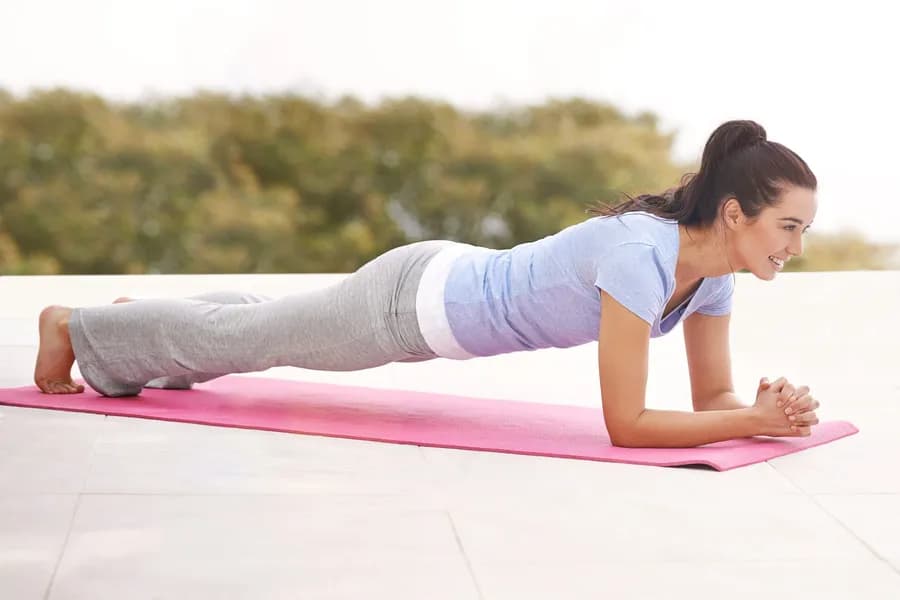
Best Exercises for Core Strength
The plank, dead bug, hollow body hold, glute bridge, bird dog, mountain climbers, and side plank train the deep stabilisers and posterior chain — no equipment needed. See the full list.