
What Are Crunches Exercises? Benefits, Types & How to Do Them
Discover what crunches exercises are, their key benefits, common mistakes, and how to start. Try Habuild's guided strength training for ₹1.
Key Takeaways
- Curl only the upper back off the floor to engage the rectus abdominis directly.
- Take under 10 minutes and require no equipment beyond a mat and floor space.
- Activate deep stabilizing muscles around the spine, easing lower-back strain over time.
- Serve as an excellent anchor exercise for building a daily movement habit for beginners.
- Pair well with compound movements like squats and lunges for balanced full-body strength.
- Core strength built through crunches translates into better performance across physical activities.
Crunches exercises are a bodyweight abdominal movement that curl the upper back off the floor to engage the rectus abdominis. They require no equipment, take under 10 minutes, and when done consistently, gradually help build a stronger, more stable core — making them one of the most practical starting points for home-based strength training.
If you’ve ever wondered what crunches exercises are and whether they’re worth adding to your routine, you’re in the right place. Crunches are a foundational abdominal movement that target the muscles along the front of your core. They can be done at home in minutes, and with proper form and consistency, they may gradually support a stronger, more stable midsection over time. If you’re exploring what strength training exercises involve, crunches are an excellent place to begin.
7 Benefits of Crunches Exercises
- Strengthens Core Muscles Crunches directly engage the rectus abdominis — the muscle group running down the front of your abdomen. Regular practice builds muscular endurance and tone in this area, making everyday movements like bending, lifting, and twisting feel more controlled and supported.
- Improves Posture A stronger core doesn’t just show — it helps you stand and sit more upright. When your abdominal muscles support your spine more effectively, you’re less likely to slouch during long desk hours or tiring commutes.
- Supports Spinal Stability Crunches, when done correctly, activate deep stabilizing muscles around the spine. This can help reduce lower-back strain over time, especially when combined with other core strength exercises that train the full midsection.
- Boosts Athletic Performance From running to sports to everyday physical tasks, core strength is the foundation. Crunches help build the base of stability that translates directly into better performance across physical activities.
- Accessible and Equipment-Free All you need is a mat and floor space. There’s no gym, no machine, and no special gear required — making crunches one of the most practical exercises for anyone beginning a home fitness habit.
- Complements a Full-Body Routine Crunches work well as part of a broader training plan. Pairing them with compound movements like squats and lunges helps you build balanced strength across the entire body.
- Builds the Consistency Habit Because crunches are short, repeatable, and measurable, they’re an excellent anchor exercise for building a daily movement habit — especially for beginners who are just finding their rhythm.
How to Get Started with Crunches Exercises
What You Need to Begin
Almost nothing. A yoga mat or a soft surface is ideal, but even a carpet works. You don’t need dumbbells, resistance bands, or any gym equipment to start doing crunches effectively. This is why they’re a go-to exercise for home-based fitness routines.
Setting Realistic Goals
Beginners often make the mistake of starting with too many repetitions, too soon. Begin with 2–3 sets of 10–15 reps performed slowly and with control. The goal in the first few weeks is muscle activation and form, not volume. Consistency across days matters far more than the number you hit in a single session.
Start with the Basics
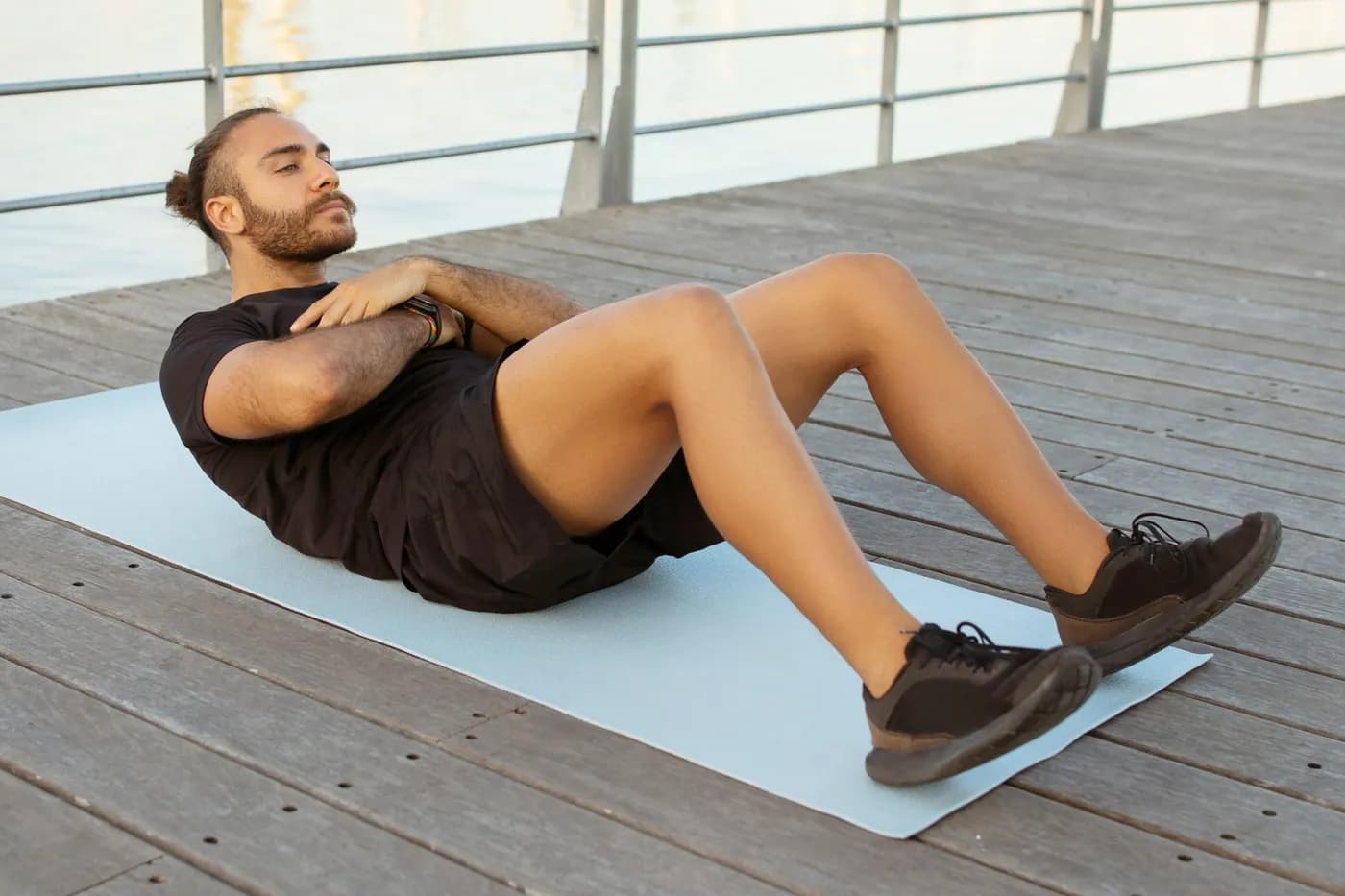
Before attempting variations, master the standard crunch. Lie flat on your back, knees bent, feet flat on the floor hip-width apart. Place your fingertips lightly behind your ears — not interlocked at the back of your head. Exhale as you curl your shoulders off the floor toward your knees. Pause briefly at the top. Inhale as you lower back down with control. Keep the lower back in gentle contact with the mat throughout.
Best Crunches Exercises to Know

Standard Crunch
The baseline movement described above. Targets the upper rectus abdominis. Focus on a slow, controlled curl — not a full sit-up. Aim for 3 sets of 12–15 reps with a 1-second pause at the top.
Reverse Crunch
Instead of lifting your shoulders, you draw your knees toward your chest while keeping your upper body flat. This variation shifts emphasis to the lower abdominal region. Try reverse crunches as a complement to the standard version for more complete core coverage. Aim for 3 sets of 10–12 reps.
Bicycle Crunch
A full crunch movement combined with a rotating trunk to bring alternate elbows toward alternate knees. This activates the obliques in addition to the front abdominals — one of the most effective crunch variations for overall core engagement. 3 sets of 12–15 reps per side.
Vertical Leg Crunch
Lie on your back and extend both legs vertically toward the ceiling. Crunch your shoulders upward as if trying to reach your toes. This increases the workload on your core by removing the grounded-foot base. 2–3 sets of 10 reps is a solid starting point.
Cross-Body Crunch
From a standard crunch position, bring your right elbow toward your left knee as you lift. Alternate sides each rep. This oblique-focused variation adds rotational strength to your crunch training. 3 sets of 10 reps per side.
Cable or Weighted Crunch (Advanced)
For those progressing beyond bodyweight, a weighted crunch using a resistance band or cable adds progressive overload. Beginners should build at least 6–8 weeks of bodyweight crunch consistency before adding resistance.
Full Body Crunch
A dynamic variation where both the upper and lower body move simultaneously — knees draw in as shoulders curl up. This taxes the entire abdominal wall and adds a mild cardio element to the movement. 3 sets of 10–12 reps works well here.
Common Mistakes to Avoid
- Poor Form The most frequent error is yanking the neck forward with the hands, which shifts strain from the abs to the cervical spine. Your fingertips should rest lightly behind your ears — your neck should stay neutral throughout. The curl must come from your abdominal muscles contracting, not from momentum.
- Skipping the Warm-Up Jumping straight into crunches without warming up the spine and hip flexors increases the risk of discomfort and reduces the quality of muscle activation. Spend 3–5 minutes on light movement — cat-cow stretches, pelvic tilts, or a short walk — before beginning your crunch sets.
- Overtraining Muscles need recovery time to adapt and grow stronger. Doing crunches every single day without rest can lead to muscle fatigue and reduced effectiveness. For most people, 3–4 sessions per week with rest days in between allows for better long-term progress.
- Inconsistency The biggest obstacle to seeing gradual improvement isn’t the number of reps — it’s showing up regularly. A short, consistent crunch routine done 4 days a week will produce far better results over 90 days than occasional intense sessions followed by long gaps.
Who Should Try Crunches Exercises?
- Beginners Crunches are an ideal starting point for anyone new to fitness. There is zero equipment required, the movement is easy to learn, and the barrier to entry is low. Starting with 10 slow, controlled reps per set is completely sufficient in week one.
- Women A common misconception is that abdominal training leads to a bulky midsection. That’s not how it works. Crunches and core work help women build functional strength, improve posture, and support the lower back — without building bulk. They’re especially beneficial for women looking to rebuild core strength post-pregnancy or manage lower-back discomfort over time.
- Older Adults For adults above 50, core strength plays a significant role in balance, fall prevention, and spinal support. Gentle crunch variations — especially those with reduced range of motion — can be safely practiced to support mobility and everyday function. Always consult your doctor before beginning a new exercise program if you have any existing spinal or joint conditions.
- Working Professionals Long hours at a desk weaken the core and tighten the hip flexors — a combination that worsens posture and contributes to back pain over time. A 10-minute crunch routine before or after work takes minimal time and may gradually ease the postural strain that builds up through the day.
Build Core Strength with a Routine That Actually Works
Building a stronger core isn’t about doing hundreds of crunches in isolation — it’s about consistency, correct form, and a structured plan that progresses with you. With the right guidance, you can train effectively from home and see real, gradual improvement over time.
What You Get with Habuild’s Strength Training Program:
- Daily live guided strength and core sessions
- Beginner-to-advanced progression built in
- No equipment needed — fully home-friendly
- Expert guidance to help you maintain correct form
- A consistent community to keep you showing up
Ready to build the habit? Explore resistance exercises that pair well with crunches for a complete home strength routine — then take the first step with Habuild’s guided program.
Related reads: What Are Kegel Exercises for Men? Benefits & How to Do Them · What Are Burpees Exercises? Benefits & How To Do Them
Crunches build core strength only when the form stays sharp and the reps are repeated with progression, not just done occasionally between other exercises. Getting that consistency right on your own is where most people lose momentum. Strong Everyday program keeps your core training structured and progressive, so those crunches actually add up to visible strength.
Frequently Asked Questions
Related Articles
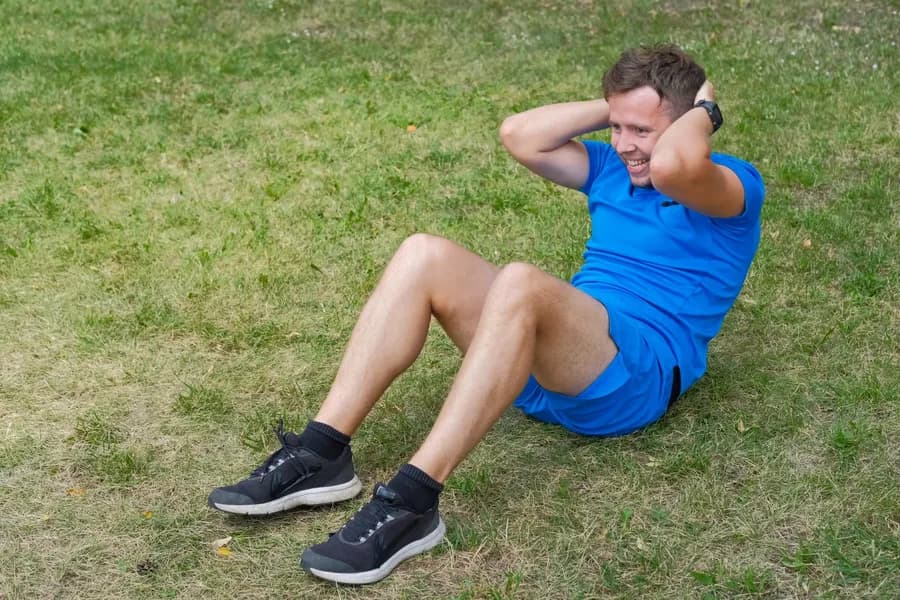
What Are Crunches Workout? Benefits, Types & Tips
What are crunches workout? Learn benefits, proper form, best variations, and common mistakes. Start your core training journey with a 14-day free trial.

Which Exercise Is Best for Abs? Top Moves Ranked
Wondering which exercise is best for abs? Discover the most effective ab exercises, common mistakes, and how to build real core strength at home.
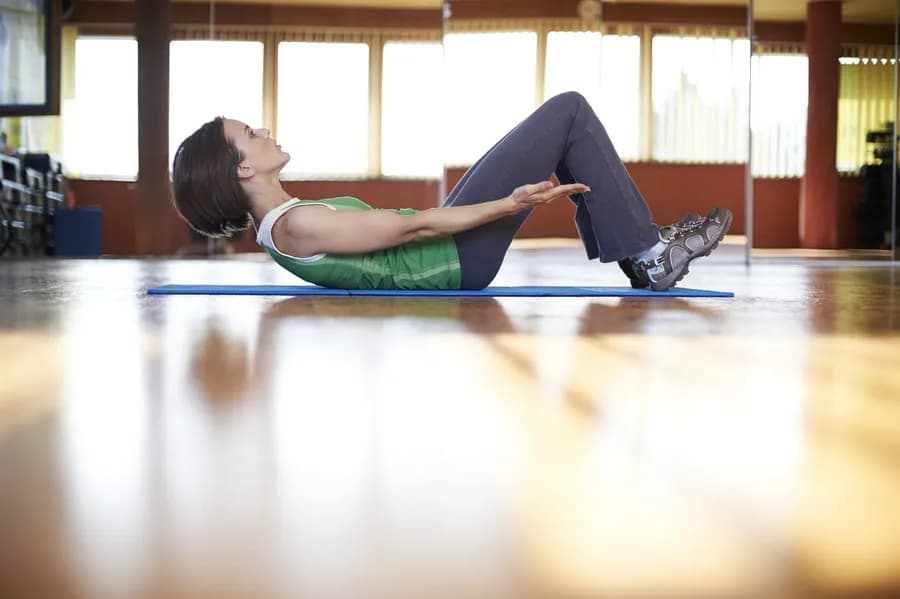
What Is a Core Strength? Benefits, Exercises & How to Build It
What is a core strength? Learn what it means, why it matters, and the best core exercises to build it with Habuild's guided strength training.

Six Pack Exercise at Home: Core Workouts That Actually Work
Visible abdominal definition requires two things at once — core muscle development and fat reduction through a caloric deficit — not endless crunches alone. See the most effective exercises at home.

Benefits of Crunch Exercise: Core Strength, Abs and Beyond
Done correctly, the crunch produces real rectus abdominis strength and core stability; done incorrectly, it strains the cervical spine and recruits the hip flexors instead. See the full evidence base and technique.