Zone 2 Walking: Heart Rate, Pace and Benefits
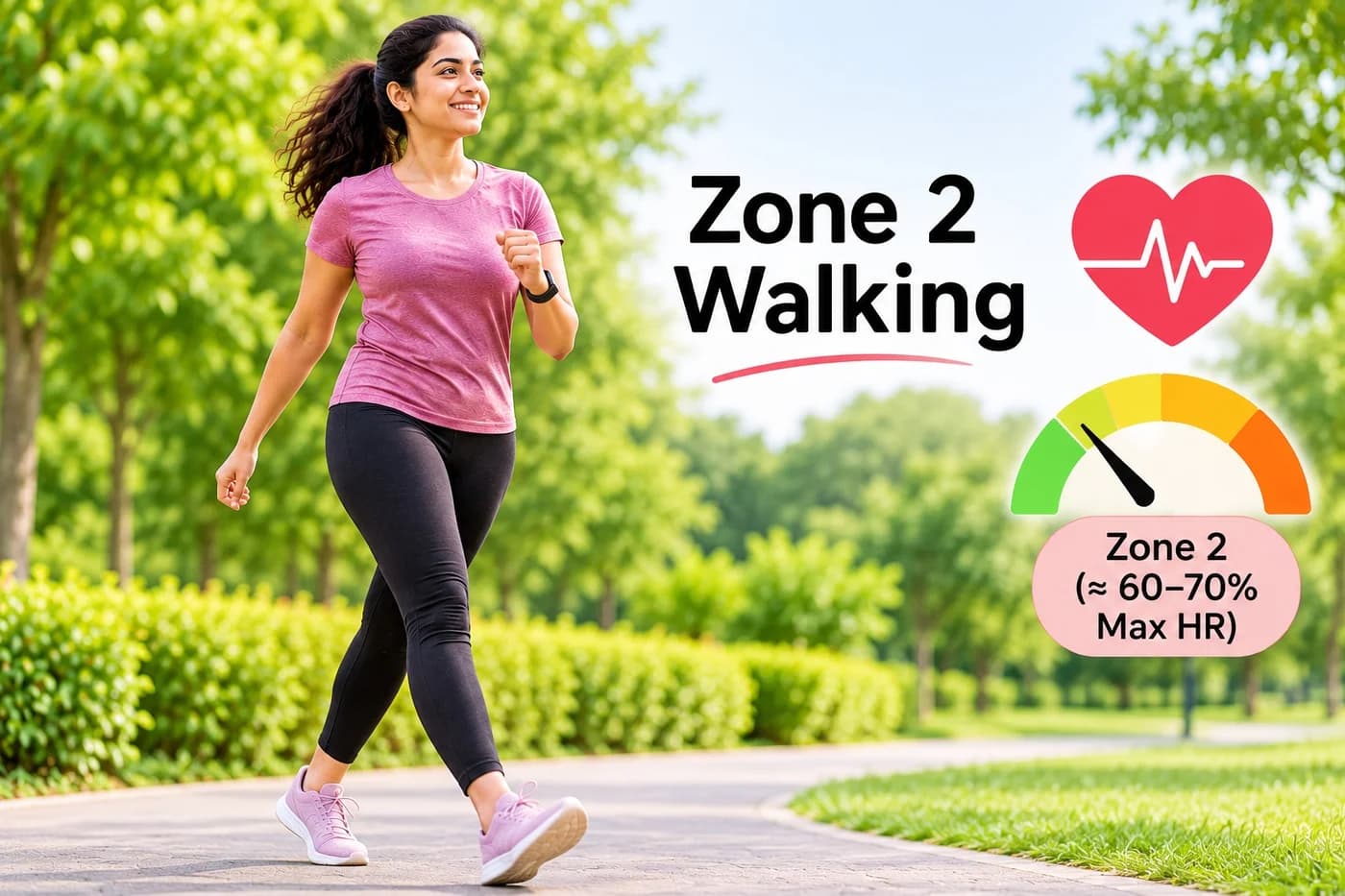
Zone 2 walking means keeping your heart rate at a steady, comfortable level you can hold for a long time. Here's how to find your zone and make your walks count.
Key Takeaways
- Zone 2 is about 60 to 70% of your maximum heart rate.
- A simple estimate of maximum heart rate is 220 minus your age.
- In zone 2, you can still hold a light conversation.
- Brisk or uphill walking is an easy way for many people to reach zone 2.
- Zone 2 walking counts towards WHO's 150 to 300 minutes of moderate activity a week.
What Is Zone 2?
Exercise scientists often divide effort into heart rate zones, ranging from very easy (zone 1) to all-out (zone 5). Each zone is a band of heart rates expressed as a percentage of your maximum heart rate. Zone 2 sits near the lower end: a steady, moderate effort that feels comfortable but purposeful. According to Cleveland Clinic, it's when your heart rate is at about 60 to 70% of your maximum, and you can still carry on a light conversation.
Zone 2 has become popular among runners, cyclists and fitness fans because it's an effort level you can keep up for a long time without exhausting yourself. For many people, a brisk walk is one of the easiest and most practical ways to get there, with no running required.
How to Find Your Zone 2 Heart Rate
The simplest way to estimate your maximum heart rate is to subtract your age from 220. You then multiply that number by 0.6 and 0.7 to find the bottom and top of your zone 2 range. Here are the approximate ranges by age:
- Age 30: maximum about 190 bpm, zone 2 about 114 to 133 bpm
- Age 40: maximum about 180 bpm, zone 2 about 108 to 126 bpm
- Age 50: maximum about 170 bpm, zone 2 about 102 to 119 bpm
- Age 60: maximum about 160 bpm, zone 2 about 96 to 112 bpm
- Age 70: maximum about 150 bpm, zone 2 about 90 to 105 bpm
Keep in mind that the 220-minus-age formula is only an estimate. Your real maximum heart rate may be higher or lower, sometimes by a fair amount. Some medicines, such as beta-blockers, also lower your heart rate, so if you take them, ask your doctor what range is right for you.
No Heart Rate Monitor? Use the Talk Test
You don't need a smartwatch to walk in zone 2. Your breathing and how you feel are surprisingly reliable guides. In zone 2, you're breathing faster than normal but not gasping. You can speak in full sentences, though you wouldn't want to sing. You feel warm and may sweat lightly, and you feel as though you could keep going for 30 to 60 minutes.
If you can only manage a few words at a time, you've gone above zone 2 and should ease off. If you could happily sing along to a song, you're probably in zone 1 and could pick up the pace.
Can Walking Get You Into Zone 2?
For many people, yes. Beginners and less active people often reach zone 2 with an ordinary brisk walk, because their heart has to work relatively hard even at a moderate pace. Older adults also tend to reach zone 2 at a moderate walking pace, because their maximum heart rate is lower.
Fitter people may find that flat walking keeps them in zone 1. In that case, walking faster, choosing a route with hills or stairs, or using a treadmill incline can raise your heart rate enough. If your heart rate stays low even when you walk fast, adding some incline is usually the easiest fix.
Benefits of Zone 2 Walking
The biggest benefit of zone 2 walking is that you can keep it up. A steady, comfortable effort makes longer walks possible, and longer walks mean more time being active. Over weeks and months, regular moderate exercise like this builds your aerobic base, the stamina that makes everyday activities, from climbing stairs to playing with children, feel easier.
Zone 2 walking also counts towards health targets. WHO recommends 150 to 300 minutes of moderate activity a week for adults, and zone 2 walking fits squarely into that category. Because it's gentle, you're less likely to get exhausted or injured than with very hard workouts, and it's easy to recover from, so you can walk in zone 2 on most days of the week.
How Much Zone 2 Walking Do You Need?

Aim for at least 150 minutes a week, such as 30 minutes on 5 days. If you have more time, building up to 300 minutes a week, about 45 minutes on most days, gives extra benefit.
A Simple Zone 2 Walking Plan
Start each session with 5 minutes of easy walking to warm up. Then walk for 20 to 45 minutes, keeping your heart rate in your zone 2 range or passing the talk test. Finish with 5 minutes of easy walking to cool down. Aim for 4 to 6 sessions a week, and add about 5 minutes to your walk each week until you reach your goal.
Common Mistakes
The most common mistake is going too hard. Many people walk too fast and drift into zone 3, where they're breathing hard and can't talk comfortably. If that happens, simply slow down. The opposite mistake is going too easy: a slow stroll may stay in zone 1, so pick up the pace or add an incline.
It's also easy to trust the 220-minus-age formula too much. Use it as a guide, but pay attention to how you feel as well. And remember that zone 2 walking isn't the whole picture. Strength training on 2 days a week is still important for muscles and bones.
Safety Notes
Check with your doctor before starting a new exercise plan if you have heart disease, high blood pressure, diabetes or another health condition, or if you take medicines that affect your heart rate. Stop if you feel chest pain, dizziness or unusual breathlessness. Habuild's live sessions include walking along with exercises, yoga and breathing, and the Habuild app's Walk Daily habit helps you track your walks.
Editorial Sources
- Cleveland Clinic – Zone 2 cardio
- WHO Europe – Physical activity fact sheet
- WHO – Be Healthy: Physical activity
Health Disclaimer
This article is for general information only and is not medical advice. Please consult a doctor before starting heart-rate training, especially if you have a heart condition or take medicines that affect your heart rate.
Frequently Asked Questions
Related Articles

Which Exercise Is Best for Heart Health?
Discover which exercise is best for heart health — from yoga to strength training. Start a 14-day free trial trial with Habuild’s guided daily sessions today.

How to Strengthen Heart Muscle: Best Exercises & Tips
Learn how to strengthen heart muscle with the best exercises, routines & lifestyle tips. Start your 7-day trial for 14-day free trial with Habuild's guided program.

10 Benefits of Walking 30 Minutes a Day for Health, Fitness, and Weight Loss
The trick isn't to walk longer, it's to walk daily, at the right pace, with consistency over months. See all 10 benefits for health, fitness, and weight loss.


Incline Walking Benefits: Why Walking Uphill Changes Everything
Raising the gradient on a walk — treadmill or hilly path — makes your heart work harder and burns significantly more energy than flat ground. See why.