
Shankhaprakshalana (Conch Cleansing Kriya): Steps, Benefits, Side Effects & Precautions
Warm salt water is consumed alongside a specific sequence of five asanas to flush the entire gastrointestinal tract from mouth to anus. See the steps.

Key Takeaways
- Moves roughly 1.5-3 litres of warm salt water through the entire digestive tract in one session.
- One of the six classical shatkarma purification techniques alongside Neti, Dhauti, and Nauli.
- Codified in the modern era by Swami Satyananda Saraswati’s ‘Asana Pranayama Mudra Bandha.’
- Combines salt water consumption with a specific five-asana sequence to drive water through the gut.
- Laghoo Shankhaprakshalana, a lighter version, exists as the recommended entry point for beginners.
- Practised only once or twice yearly under direct supervision – never as a frequent routine.
What is Shankhaprakshalana?
Shankhaprakshalana derives from two Sanskrit words: ‘shankha’ meaning conch shell and ‘prakshalana’ meaning washing or cleansing — together translating to “the conch cleansing.” Pronounced shahnk-prah-kshah-LAH-nah, the practice is also known in English as Conch Cleansing Kriya or Master Cleanse. Importantly, Shankhaprakshalana is not a single asana but a complete yogic cleansing practice (kriya) — combining the consumption of warm salt water with a specific sequence of five asanas to flush the entire gastrointestinal tract from mouth to anus. The “conch” name reflects the spiral shape of the digestive tract that the practice systematically cleanses.
Critical safety note: Shankhaprakshalana is one of the most demanding traditional yogic cleansing practices and carries genuine medical risks if performed improperly. It must be undertaken only under the direct supervision of a qualified yoga teacher experienced in cleansing kriyas, and ideally with prior medical clearance. This guide provides educational information only — not standalone instruction for self-practice.
The practice is documented in classical Hatha yoga texts including the Hatha Yoga Pradipika and the Gheranda Samhita as one of the six purification techniques (shatkarma). It was systematically codified and popularised in the modern era by Swami Satyananda Saraswati of the Bihar School of Yoga in his foundational text “Asana Pranayama Mudra Bandha.” The traditional purpose is comprehensive intestinal cleansing — moving roughly 1.5–3 litres of warm salt water through the entire digestive tract using a specific sequence of asanas to drive the water through. A lighter version called Laghoo Shankhaprakshalana exists for less experienced practitioners and is recommended as the introductory version.
In the broader yoga system, Shankhaprakshalana belongs to the family of shatkarma (six purification techniques) alongside Neti (nasal cleansing), Dhauti (digestive tract cleansing), Nauli (abdominal massage), Kapalabhati (skull cleansing breath), and Trataka (concentrated gazing). It is most commonly practised once or twice yearly under guided supervision — never as a frequent or casual practice. The intensity and risks involved make it categorically different from the daily asana practice most yoga students perform.
Shankhaprakshalana Benefits
Physical Benefits
Benefit 1: Comprehensive Gastrointestinal Cleansing
The most direct benefit. Shankhaprakshalana mechanically flushes the entire digestive tract — from oesophagus to small intestine to colon — removing accumulated waste, mucus, and stagnant matter that ordinary digestion cannot fully address. Practitioners report dramatic improvements in digestive function for weeks following the practice. Members focused on broader digestive support often pair their work (where appropriate and under guidance) with ouryoga for digestion programme.
Benefit 2: Resets Gut Flora and Supports Microbiome Health
The cleansing creates an opportunity to systematically rebuild healthy gut flora through prescribed post-practice diet. Combined with the gentle re-introduction of probiotic foods, the practice supports broader microbiome health. Members focused on broader gut health often pair their practice with ouryoga for gut health programme.
Benefit 3: Supports Liver and Kidney Function
The salt water solution and movement sequence stimulate liver and kidney function — supporting the broader detoxification systems that healthy ageing depends on. Members focused on broader liver support often pair their practice with ouryoga for liver programme.
Mental and Emotional Benefits
Benefit 4: Builds Mental Discipline and Patience
The 2–3 hour duration of the practice — combined with the dietary preparation and recovery requirements — builds significant mental discipline. The practice teaches patience and process-orientation in ways few other practices can replicate.
Benefit 5: Produces Lightness and Mental Clarity
Practitioners report significant lightness, mental clarity, and improved energy in the days following Shankhaprakshalana. The traditional yogic interpretation connects the digestive cleansing with the corresponding lightness of consciousness. Members managing concurrent stomach concerns often pair their work with ouryoga for stomach programme.
Benefit 6: Supports Long-Term Yoga Practice Foundation
For dedicated yoga practitioners, the periodic practice of Shankhaprakshalana (1–2 times yearly under guidance) supports the digestive lightness that classical yogic texts associate with deeper meditation states.
How to Do Shankhaprakshalana — Step-by-Step Instructions
CRITICAL: This guide is educational reference only. Shankhaprakshalana must be practised under the supervision of a qualified yoga teacher. Self-practice without guidance carries genuine medical risks.
Key Principles
Three foundational principles must be in place before attempting: medical clearance from a doctor (particularly important for those with any health condition), guidance from an experienced kriya teacher, and 1–2 days of dietary preparation prior to the practice (light, easily digestible food only).
Step 1: Preparation — Warm Salt Water
Prepare 2–3 litres of warm filtered water (body temperature) with sea salt or rock salt added at the rate of approximately 1 teaspoon per litre. The salt concentration prevents the water from being absorbed by the intestines, allowing it to flow through the digestive tract. Begin practice on an empty stomach in the morning.
Step 2: Drink Two Glasses of Salt Water
Drink two glasses (approximately 400 ml) of the warm salt water continuously without pause. The water will sit in the stomach until the asanas drive it through the digestive system.
Step 3: Perform the Five Specific Asanas
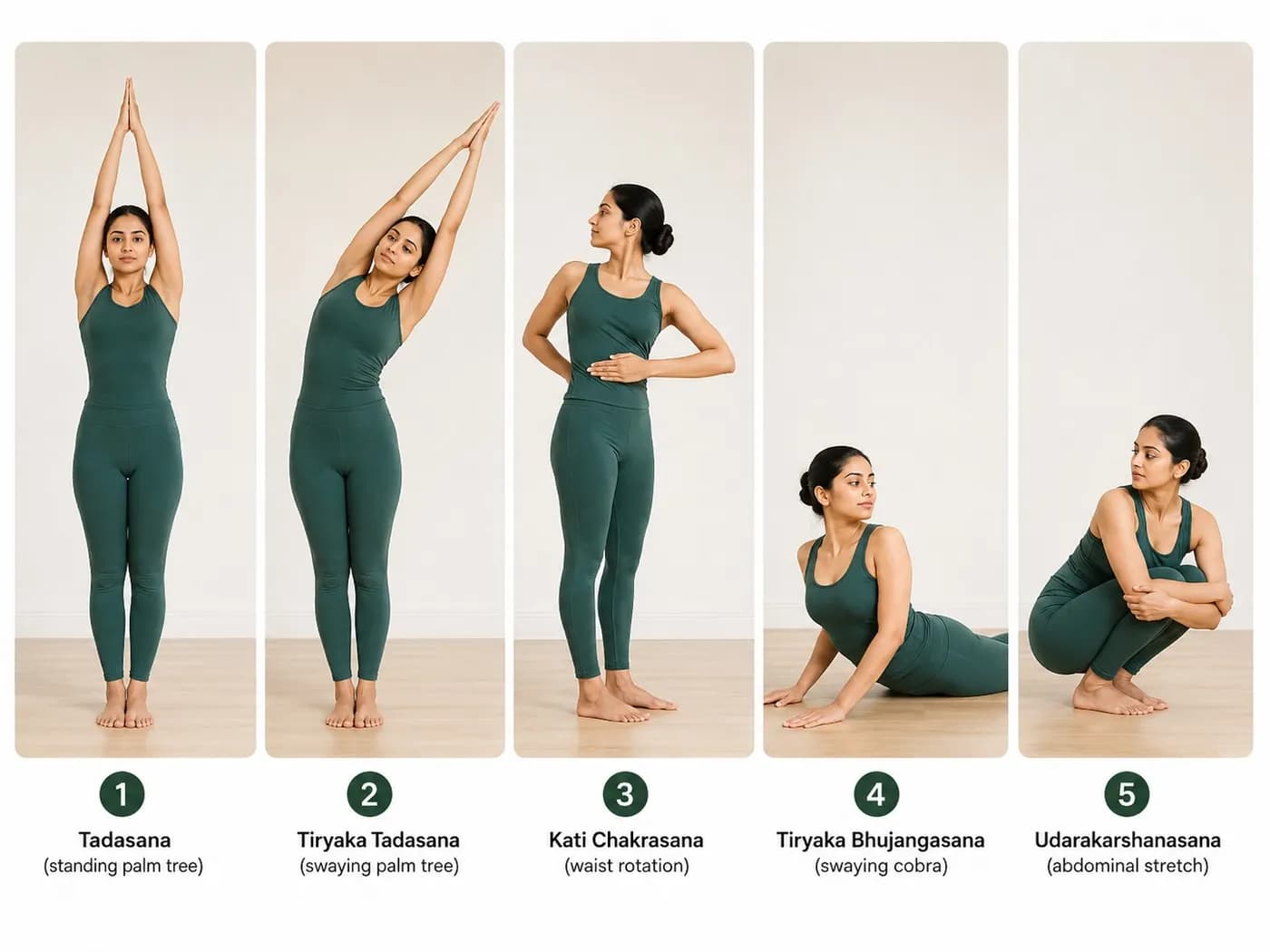
Perform the prescribed five asanas in sequence — Tadasana (standing palm tree), Tiryaka Tadasana (swaying palm tree), Kati Chakrasana (waist rotation), Tiryaka Bhujangasana (swaying cobra), and Udarakarshanasana (abdominal stretch). Each asana performed 8 times in sequence. The asanas systematically drive the water through different sections of the digestive tract.
Step 4: Repeat the Drinking and Asana Cycle
Repeat the cycle of drinking 2 glasses of salt water followed by the 5 asanas. Continue for 6–8 cycles or until water begins to pass through the system as elimination. The complete practice typically takes 2–3 hours.
Step 5: Final Position — Eliminate and Continue Until Clear
Continue the cycle until the water passing through is mostly clear (similar in colour to the water being consumed). This signals that the digestive tract has been cleared. Most practitioners require 12–16 glasses total. After completion, rest in Savasana for 30–45 minutes.
Step 6: How to Come Out of Shankhaprakshalana
After the rest period, the practitioner must consume a specific recovery meal — traditionally khichdi (rice and dal) with ghee, prepared without significant spices. This meal coats the intestinal walls and provides the gentle restoration the cleansed digestive tract requires. Avoid all other food for 12 hours after the practice.
Breathing in Shankhaprakshalana
Throughout the practice, maintain steady deep diaphragmatic breathing. Avoid breath-holding during the asanas. The practice is physically demanding — smooth steady breath supports both performance and safety.
Preparatory Poses Before Shankhaprakshalana
Preparation extends well beyond yoga poses — encompassing dietary preparation, mental readiness, and qualified guidance.
Laghoo Shankhaprakshalana (Lighter Version)
The introductory version of the practice — uses fewer glasses and requires less commitment. Should be practised first before attempting full Shankhaprakshalana.
Daily Asana and Pranayama Practice
A consistent daily yoga practice of at least 6–12 months provides the foundation that Shankhaprakshalana requires.
Light Dietary Preparation (1–2 Days Prior)
Easily digestible foods, no caffeine, no heavy proteins for 24–48 hours prior to practice.
Medical Clearance
Consultation with a doctor regarding any existing conditions before attempting the practice.
Variations of Shankhaprakshalana
Variation 1: Laghoo Shankhaprakshalana (Light Conch Cleansing)
Difficulty: Beginner Uses fewer glasses (typically 4–6 cycles) and focuses on the upper digestive tract only. The mandatory introductory version before attempting full Shankhaprakshalana.
Variation 2: Standard Shankhaprakshalana
Difficulty: Advanced The complete cleansing practice described in this guide — requires 12–16 glasses and 2–3 hours under supervision.
Variation 3: Modified Shankhaprakshalana for Specific Conditions
Difficulty: Therapeutic Modified versions for specific conditions, always under direct medical and yogic supervision. Members focused on broader stomach concerns often pair their work with ouryoga for stomach programme.
Variation 4: Annual Practice Schedule
Difficulty: Advanced Practitioner Schedule Some practitioners follow seasonal cleansing schedules (1–2 times yearly) under guidance — never frequent practice.
Common Mistakes to Avoid in Shankhaprakshalana — and Side Effects
- Mistake 1: Attempting Self-Practice Without Qualified Guidance The most dangerous mistake. Self-practice without a qualified teacher risks severe dehydration, electrolyte imbalance, and other complications. Correction: only attempt under direct supervision of an experienced kriya teacher.
- Mistake 2: Ignoring Medical Contraindications Shankhaprakshalana is contraindicated for: hypertension (high blood pressure), heart conditions, hernias, ulcers, hyperthyroidism, diabetes, kidney disease, pregnancy, breastfeeding, and several other conditions. Correction: consult a doctor before attempting; do not practise if any contraindication applies.
- Mistake 3: Skipping the Recovery Diet The post-practice khichdi meal is mandatory — skipping it can cause digestive distress and undermine the practice’s benefits. Correction: prepare the recovery meal before beginning the practice; consume it within 30–45 minutes of completion.
- Mistake 4: Practising Too Frequently Shankhaprakshalana is intended for occasional practice (1–2 times yearly maximum). Frequent practice can deplete electrolytes, disrupt gut microbiome, and cause weakness. Correction: respect the traditional practice schedule — never more than twice yearly.
- Mistake 5: Ignoring Side Effects Common side effects include weakness, fatigue, mild headache, and dehydration. More serious effects (severe weakness, electrolyte imbalance, fainting) require immediate medical attention. Correction: monitor for side effects; seek medical care if symptoms persist or worsen.
- Mistake 6: Practising During Illness or Stress The practice requires significant physical reserves — attempting it during illness, stress, or weakness can cause dramatic complications. Correction: practise only when in good general health and with adequate emotional and physical reserves.
Who Should Practise Shankhaprakshalana?
- Experienced Yoga Practitioners Under Qualified Guidance The audience that benefits most. Practitioners with 6+ months of consistent yoga foundation, medical clearance, and access to qualified kriya teachers find Shankhaprakshalana a powerful occasional practice. Members focused on broader liver support often pair their work with ouryoga for liver programme.
- Is Shankhaprakshalana Good for Beginners? No — Shankhaprakshalana is not appropriate for yoga beginners. New practitioners should establish 6+ months of consistent daily yoga before considering Laghoo Shankhaprakshalana, and only then progress to full Shankhaprakshalana under supervision.
- Those with Specific Digestive Concerns (Under Medical Guidance) For those with specific digestive conditions where the practice may help, the cleansing must be done under combined medical and yogic supervision. Disclaimer: never attempt self-treatment of medical conditions through this practice. Members focused on broader gut health often pair their work with ouryoga for gut health programme.
- Practitioners Following Traditional Yogic Schedules Dedicated practitioners following traditional yogic cleansing schedules (typically 1–2 times yearly aligned with seasonal transitions) integrate Shankhaprakshalana into their broader practice. Members focused on broader stomach support often pair their training with ouryoga for stomach programme.
This kriya is a periodic practice, not a daily one — which is exactly why the days between cleanses matter, when a steadier yoga and breath routine keeps the digestive and nervous systems in the balanced state Shankhaprakshalana aims to restore. Habuild’s Yoga Everyday program offers that kind of grounding daily practice to maintain between more intensive cleansing sessions.
Frequently Asked Questions
Related Articles

How to Reduce Neck Hump: 7 Exercises to Straighten Posture and Remove Hump Fat
Forward head posture, weak upper-back muscles, and tight chest muscles combine to create the protrusion at the base of the neck — and it responds well to consistent daily exercise. See all 7 exercises.


Walking Exercise: a Complete Guide to Walking Programs, Treadmill Plans, and Daily Workouts
The difference between a casual stroll and a transformative walking routine isn't speed or distance — it's intentional pacing, consistent volume, and progression. See the complete guide to programs and plans.

Exercise for Diabetes: 7 Best Daily Exercises for Sugar Control and Healthier Living
Daily movement reduces blood sugar in the moment, improves insulin sensitivity over weeks, and lowers long-term complications across years, all from the same habit. See 7 best daily exercises.