
What Is Aerial Yoga? Benefits, Poses, and How to Get Started
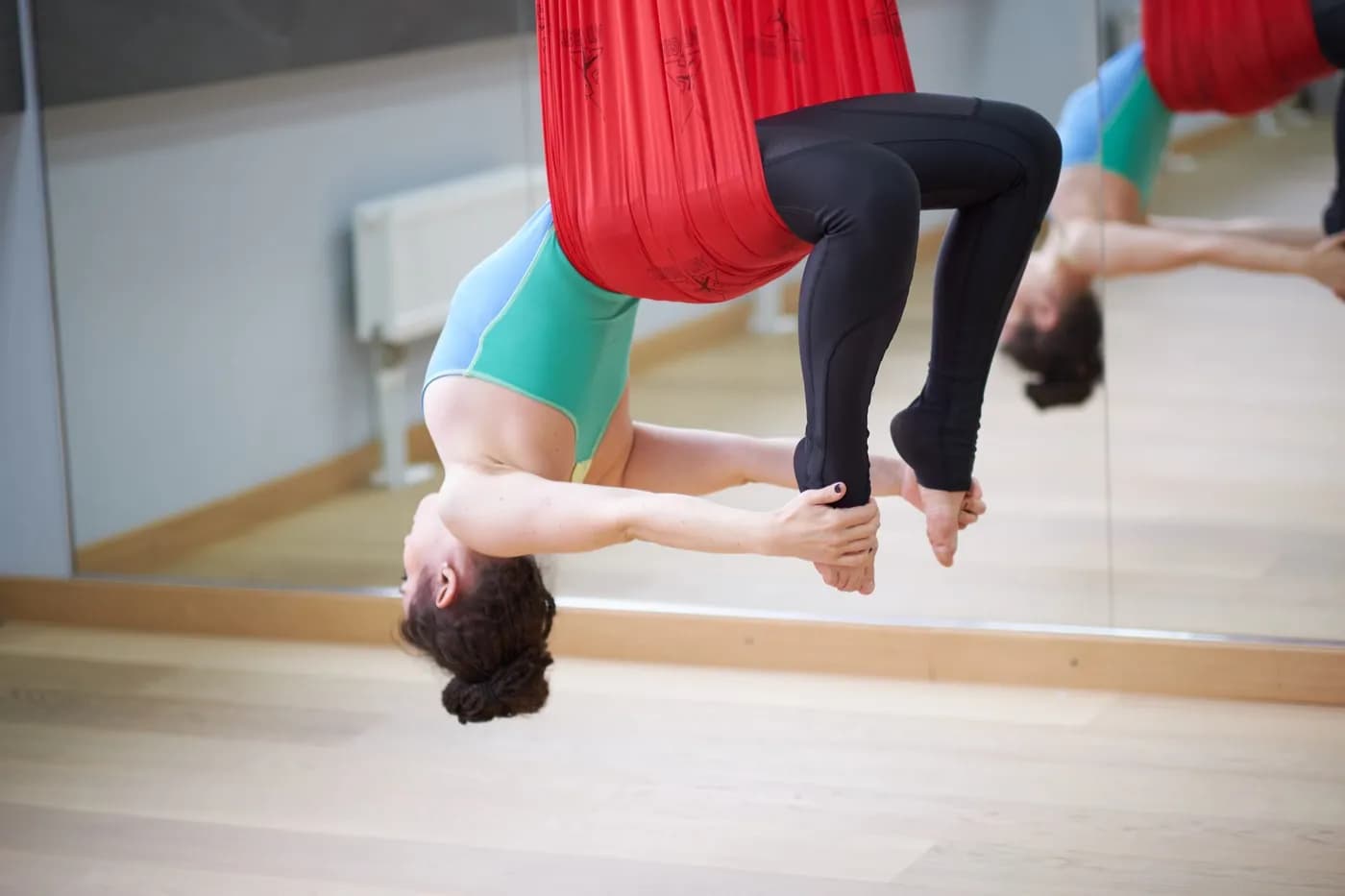
Aerial yoga combines traditional postures, Pilates-inspired movements, and aerial acrobatics, all supported by a fabric hammock suspended from the.
Key Takeaways
- Combines yoga postures, Pilates-inspired movement, and aerial acrobatics in a fabric hammock.
- Hanging freely lets the spine lengthen naturally under gravity, easing daily compression.
- The hammock’s instability quietly engages the core, obliques, and lower back throughout.
- Suspension forces the body to work harder to sense its own position, sharpening proprioception.
- Gentle hammock traction can ease tension stored around the hip capsule and shoulder girdle.
- The floating, rhythmic quality tends to quiet a busy mind fairly quickly during a session.
What is aerial yoga? It is a practice that combines traditional yoga postures, Pilates-inspired movements, and elements of aerial acrobatics — all supported by a fabric hammock suspended from the ceiling. Unlike mat-based yoga, aerial yoga uses gravity and gentle suspension to help you move, stretch, and breathe in a way that feels both accessible and genuinely different.
Whether you are completely new to yoga or looking to add depth to an existing practice, this guide walks you through everything you need to know before your first session — from the benefits aerial yoga delivers for your body and mind, to the beginner poses you will encounter and the mistakes worth avoiding early on.
10 Benefits of Aerial Yoga for Your Body and Mind
- Improves Spinal Decompression Hanging freely in the hammock allows the spine to lengthen naturally under gravity. Inverted and semi-inverted positions help ease the compression that builds up from sitting and standing throughout the day. With consistent practice, this may gradually support better spinal alignment and posture over time.
- Deepens Flexibility Safely The hammock acts as a gentle prop, allowing you to ease deeper into stretches without forcing your joints. Hip flexors, hamstrings, and the thoracic spine benefit in particular — areas that are notoriously difficult to release with floor-based practice alone. Pairing aerial work with foundational yoga asanas builds a well-rounded flexibility routine.
- Builds Core Strength Every aerial yoga posture requires the core to stabilise the body as it moves through space. Unlike mat yoga, where the floor provides a steady base, the hammock introduces instability that quietly but effectively engages the deep abdominal muscles, obliques, and lower back throughout each session.
- Reduces Stress and Supports Emotional Wellbeing The sense of floating and the rhythmic quality of aerial movements tend to quiet a busy mind fairly quickly. Regular aerial yoga practice may gradually help manage stress and anxiety — not as a replacement for professional support, but as a consistent tool for nervous system regulation.
- Enhances Balance and Proprioception When your body is suspended rather than grounded, it has to work harder to sense its own position in space. Over time this sharpens proprioception — your body’s awareness of where it is and how it is moving — which carries over into everyday balance and coordination.
- Supports Better Sleep The physical release combined with the meditative quality of aerial yoga often leaves practitioners feeling deeply settled after a session. Many people find that consistent practice helps them wind down more effectively in the evening and experience more restful nights over time.
- Decompresses the Hips and Shoulder Joints The hammock provides gentle traction that can help ease tension stored around the hip capsule and shoulder girdle — areas that carry a disproportionate amount of postural stress, particularly for desk workers. This traction is passive, meaning the body relaxes into it rather than forcing a range of motion.
- Boosts Circulation Inversions — even gentle ones supported by the hammock — encourage blood flow toward the upper body and head. Regular inclusion of these positions may support overall circulation and leave you feeling more alert after practice.
- Builds Upper Body and Grip Strength Gradually Holding and manoeuvring through the fabric develops grip, forearm, and shoulder strength in a functional, low-impact way. This is a quieter benefit that accumulates across weeks rather than days — making consistency the key variable.
- Elevates Mood Through Playful Movement There is something about swinging, floating, and inverting that taps into a childlike sense of play. Many practitioners describe aerial yoga as one of the few forms of exercise that genuinely feels enjoyable rather than effortful — which makes it far easier to show up for regularly.
How to Get Started with Aerial Yoga
What You Need to Begin
The main equipment in aerial yoga is a silk or nylon hammock, usually provided by a studio or included in a guided online class setup. At home, a properly installed ceiling anchor and a quality aerial silk are the only requirements. Comfortable, form-fitting clothing works best since loose fabric can catch on the hammock. Bare feet or grip socks are ideal.
Setting Realistic Goals
Start with sessions of 30–45 minutes, two to three times per week. The goal in the beginning is not to achieve complex inversions — it is to build trust in the hammock, develop body awareness, and grow comfortable with basic shapes. Expect gradual progress over four to six weeks. Consistency will always deliver more than intensity in early practice.
Start with the Basics
Begin with seated and standing hammock positions before attempting any inversions. Focus on breath awareness throughout — exhale as you deepen into a position, inhale as you come out. If you are newer to yoga in general, spending a few weeks with foundational beginner yoga before transitioning to aerial work will give you a stronger base in breath and body alignment.
Best Poses for Aerial Yoga Beginners
Tadasana in the Hammock (Mountain Pose with Support)
Stand upright with the hammock behind you at hip height, hands resting lightly on the fabric. This grounding posture establishes your relationship with the silk and helps calibrate balance before you begin moving. Breathe steadily, rooting through both feet while the hammock offers gentle support behind you.
Adho Mukha Svanasana Variation (Aerial Downward Dog)
Place both feet in the hammock at ankle height and walk your hands to the floor, creating an inverted V shape. The fabric supports the lower body, allowing the spine and hamstrings to lengthen more deeply than in the floor-based version. Explore the full setup and alignment cues in this Adho Mukha Svanasana guide. Hold for five breaths, keeping the neck relaxed.
Virabhadrasana Supported (Warrior Variation)
Step one foot forward while resting the back shin across the hammock for support. This variation allows a longer hold in the warrior position, encouraging hip flexor release on the back leg side. The supported format makes it accessible even if your balance on the ground is still developing.
Balasana in the Hammock (Child’s Pose Suspended)
Sit inside the hammock as if in a cocoon, draw the knees toward the chest, and allow the fabric to fully support your weight. This is one of the most restorative positions in aerial yoga — ideal for the end of a session or whenever you need to pause and reset. The gentle compression around the torso feels deeply calming.
Bhujangasana Supported (Aerial Cobra Pose)
Lie face down with the hammock under the pelvis and lower abdomen, hands on the floor. Press gently through the palms to lift the chest into a supported backbend. The hammock allows a deeper spinal extension than the floor-based version while keeping the lower back protected. Breathing cues for this posture are covered in detail on the Bhujangasana reference page.
Savasana in the Hammock (Suspended Corpse Pose)
Lie fully inside the hammock with the fabric supporting the entire body like a cocoon. Allow gravity to do the work completely — no engagement, no effort. This is the definitive aerial yoga rest position and one of the most effective ways to close a session. Many practitioners describe it as the deepest relaxation they experience in any form of exercise.
Paschimottanasana Variation (Seated Forward Fold with Hammock)
Sit at the edge of the hammock with legs extended forward, using the fabric at the lower back as a gentle support as you fold. The hammock prevents the lower back from rounding excessively, making this a safer and more effective entry point into deep forward folding for beginners.
Common Mistakes to Avoid in Aerial Yoga
- Skipping Warm-Up Arriving at the hammock without warming up the wrists, shoulders, and hips first is one of the most common errors. Even five minutes of gentle joint circles and breath work on the mat before touching the fabric makes a measurable difference in how your body responds — and significantly reduces the risk of strain.
- Holding Breath During Poses When learning unfamiliar positions, many people unconsciously hold their breath. In aerial yoga this is particularly counterproductive because breath is what signals the nervous system to release into a stretch. If you notice yourself holding, that is a cue to back out of the position slightly and re-establish steady breathing before going deeper.
- Forcing into Inversions Too Soon Full inversions — where the head is completely below the heart — should be approached after several weeks of building comfort and strength in the hammock, not in the first session. Rushing this transition bypasses the proprioceptive learning that makes inversions safe and enjoyable. Trust the progression.
- Inconsistent Practice Aerial yoga rewards regularity far more than intensity. A 40-minute session three times a week will deliver noticeably more progress than an occasional two-hour class. The body learns spatial awareness and builds supporting strength incrementally — and only when given repeated, consistent stimulus to adapt to.
Who Should Try Aerial Yoga?
- Beginners Aerial yoga is genuinely accessible for people with no prior yoga experience. The hammock acts as a prop that simplifies many postures rather than complicating them — making it easier to find correct alignment than on a flat mat. The barrier to entry is low, and the learning curve is gentle when guidance is good.
- Women Many women find aerial yoga particularly supportive during phases of hormonal fluctuation. The decompressive and restorative elements of the practice may help ease physical tension and support emotional regulation across the month. Gentle inversions and hip-opening positions are especially valued during this time.
- Older Adults For adults over 50, aerial yoga can offer meaningful mobility and joint health benefits when practised with appropriate modifications. The hammock reduces load on the knees and hips during many standing and balancing postures. However, anyone with a history of joint conditions, high blood pressure, glaucoma, or recent surgery should consult a doctor before beginning. The practice complements medical care — it does not replace it.
- Working Professionals For people spending long hours at a desk, the spinal decompression and shoulder release built into aerial yoga targets exactly the areas that accumulate the most tension from sedentary work. Many professionals also find the playful, absorbed quality of aerial sessions makes it one of the easier forms of exercise to maintain through a busy week — because it genuinely does not feel like a chore.
Build Flexibility with a Routine That Actually Works
Building flexibility and strength through aerial yoga is not about performing impressive shapes — it is about showing up consistently with the right guidance. A structured daily practice, delivered live by an expert instructor, is what separates people who see gradual, real progress from those who stay stuck in the same place.
With Habuild’s Yoga Everyday program, you get exactly that structure — from the comfort of home, with no special studio required.
- Daily live guided yoga sessions
- Beginner to progressive advancement — no experience needed
- No equipment and home-friendly formats
- Expert guidance to ensure correct alignment and safety
- Community support that keeps you consistent week after week
Explore what the full aerial yoga practice looks like in Habuild’s dedicated programme guide, or browse the range of yoga for flexibility sessions available to help you build on what you learn here.
Start Your Yoga Journey
Frequently Asked Questions
Related Articles
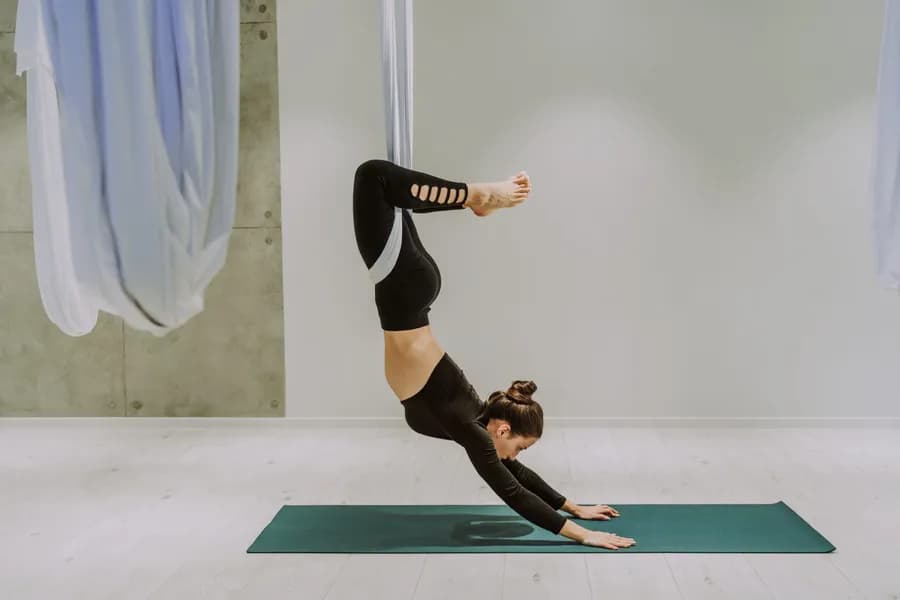
10 Benefits of Aerial Yoga
Discover the top 10 benefits of aerial yoga — from spinal decompression to core strength. Try guided yoga sessions free for 14 days.

Ashtanga Yoga Kya Hai | Habuild पर जानें पूरी जानकारी
Ashtanga yoga kya hai? जानें इसके फायदे, आसन, शुरुआत कैसे करें और रोज़ अभ्यास से जीवन कैसे बदलता है। Habuild के साथ शुरू करें।

Matsyasana (Fish Pose): Steps, Benefits & Precautions
Fish Pose opens the chest, deepens breathing, and stimulates circulation through the thoracic region, counteracting the postural collapse from prolonged.