
What Is Heart Chakra? Meaning, Representation, and How Yoga Supports It
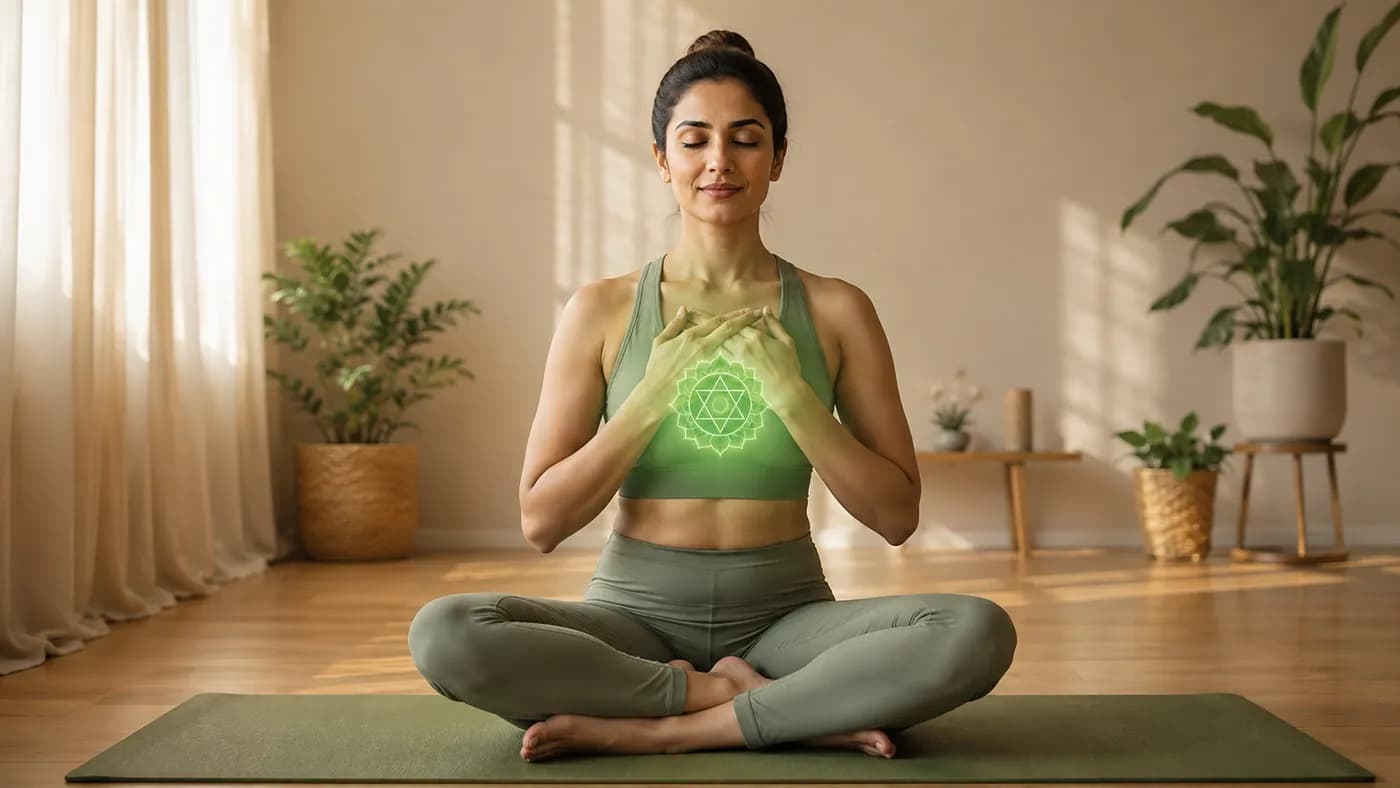
Anahata, the fourth energy centre, sits at the centre of the chest and governs love, compassion, and emotional balance. See what it represents and how.
Key Takeaways
- Anahata sits at the chest center, governing love, compassion, and forgiveness.
- A balanced heart chakra shows up as warmth in relationships and less held resentment.
- Governs the ability to move through grief and emotional pain rather than let it stagnate.
- Sits as the bridge chakra, connecting the grounding lower three with the spiritual upper three.
- Chronic stress, grief, and self-criticism are common contributors to heart chakra blockage.
- Blockage often shows up physically as chest tightness, shallow breathing, and withdrawal.
The heart chakra, known as Anahata in Sanskrit, is the fourth primary energy centre in the body’s chakra system, located at the centre of the chest. It governs love, compassion, emotional balance, and forgiveness. When open and balanced, Anahata supports meaningful connection, self-acceptance, and a sense of inner steadiness that carries into daily life.
If you have been asking what is heart chakra and how it shapes your emotional and physical experience, the answer begins at the midpoint of the body — where Anahata sits as the bridge between the lower, more physical chakras and the upper, more spiritual ones. When this centre is open and balanced, you may notice a greater sense of compassion, ease in relationships, and a quiet inner steadiness.
What Does the Heart Chakra Represent?
Love and Compassion
Anahata is most closely associated with unconditional love — not only romantic feeling, but a broader capacity for empathy and genuine kindness toward yourself and the people around you. A balanced heart chakra often shows up as warmth in relationships and a reduced tendency to hold onto resentment.
Emotional Balance and Forgiveness
The heart chakra governs your ability to move through grief, process emotional pain, and ultimately arrive at forgiveness. When this centre is functioning well, difficult emotions tend to flow through rather than stagnate. Forgiving others — and yourself — becomes something you can access more readily.
Connection and Belonging
Anahata is strongly linked to your sense of connection: with the people you love, with your community, and with something larger than yourself. It shapes how open or guarded you feel in relationships and how willing you are to both give and receive care. Exploring yoga practices that engage the broader chakra system can provide helpful context for understanding how Anahata fits within the whole.
Self-Acceptance and Inner Harmony
Beyond outward relationships, the heart chakra also shapes your relationship with yourself. A nourished Anahata is associated with self-acceptance — being at ease with who you are without the constant pull of external validation.
The Bridge Between Body and Spirit
As the middle chakra in a system of seven, Anahata holds a unique integrative role. It connects the grounding energy of the lower three chakras with the higher-frequency awareness of the upper three, representing wholeness — the union of the physical and the spiritual.
Understanding what causes heart chakra blockage is equally important. Unprocessed emotional pain, chronic stress, grief, and persistent self-criticism are among the most common contributors. In the body, these blockages often show up as tightness across the chest, shallow breathing, and a tendency to withdraw emotionally from those around you.
How to Get Started with Heart Chakra Awareness
What You Need to Begin
Working with the heart chakra requires very little equipment. A comfortable mat, loose clothing that allows free movement around the chest and shoulders, and a quiet space are all you need. Most practices associated with Anahata — breathwork, gentle backbends, and seated meditation — are fully home-friendly.
Setting Realistic Goals
Chakra work is gradual by nature. Rather than expecting a dramatic shift after a single session, aim for short, consistent daily practice — even 10 to 15 minutes. The changes tend to be subtle at first: a slight softening in how you respond to stress, a bit more ease across the chest, or a greater willingness to be open. Consistency, not intensity, drives lasting progress here.
Start with the Basics
Begin with simple breath awareness. Sit comfortably, place one hand on your heart, and take slow, even breaths — noticing the rise and fall of the chest. This practice, done regularly, is a meaningful first step toward greater heart chakra awareness before you introduce yoga postures into your routine.
Best Poses for Heart Chakra Opening
Tadasana (Mountain Pose)
Standing tall with feet grounded and shoulders rolled back and down, Tadasana encourages you to open the front of the chest and breathe fully. Inhale as you lengthen through the spine; exhale as you soften the shoulders away from the ears. Explore the full depth of Mountain Pose benefits to get more from this foundational posture.
Bhujangasana (Cobra Pose)
Lying face down with palms beneath the shoulders, Bhujangasana gently lifts the chest as you inhale. It creates a soft opening across the sternum and the front of the shoulders — areas directly associated with the Anahata region. Hold for three to five breaths, keeping the elbows slightly bent to protect the lower back.
Ustrasana (Camel Pose)
A deeper backbend, Ustrasana involves kneeling upright and arching the upper back while reaching the hands toward the heels. This pose creates a pronounced opening of the chest, making it one of the most direct heart chakra postures available. Move into it slowly and support yourself with your hands on your lower back if needed.
Adho Mukha Svanasana (Downward-Facing Dog)
While often associated with the shoulders and hamstrings, Downward Dog also creates length along the thoracic spine and allows the chest to release toward the floor. Breathe steadily here and let the upper back soften with each exhale, using it as a grounding counterpose between deeper backbends.
Balasana (Child’s Pose)
Balasana offers the heart a moment of quiet inward rest. Kneeling and folding forward with arms extended, this pose encourages you to turn awareness inward. It is an excellent closing posture after a heart-opening sequence. Read more about the benefits of Balasana and how it supports a well-rounded practice.
Virabhadrasana I (Warrior I)
With one foot forward and arms raised overhead, Warrior I opens the front of the chest while building grounded stability in the legs. It combines strength with openness — a quality that closely mirrors what a healthy heart chakra feels like. Inhale as you lengthen upward; exhale as you sink deeper into the lunge.
Setu Bandhasana (Bridge Pose)
Lying on your back with knees bent and feet flat, pressing the hips upward into Bridge Pose gently lifts the chest toward the chin. This accessible backbend suits most levels and directly engages the thoracic region, supporting both physical and energetic opening around the heart centre.
Common Mistakes to Avoid
- Skipping Warm-Up Heart-opening backbends place specific demands on the thoracic spine, chest, and shoulders. Moving directly into poses like Ustrasana or Bhujangasana without warming up can lead to unnecessary strain. Start with a few rounds of gentle cat-cow movements and shoulder rolls before attempting deeper chest openers.
- Holding the Breath During Poses One of the most common errors in heart chakra practice is unconsciously gripping the breath — particularly in backbends, where the chest is exposed and a degree of vulnerability is involved. Smooth, continuous breathing is essential. If you notice you are holding your breath, ease back slightly until you can breathe freely again.
- Forcing into Advanced Poses Too Soon Deeper backbends like Ustrasana require significant thoracic mobility that builds over time. Attempting them before the body is ready often results in the lower back compensating, which can cause discomfort. Spending several weeks with simpler openers before advancing yields far better and safer results.
- Inconsistent Practice Sporadic sessions — one intense practice followed by days of nothing — rarely produce lasting change in either physical flexibility or energetic awareness. The heart chakra responds to regularity. Even 10 to 15 minutes daily builds cumulative benefit far more effectively than occasional longer sessions.
Who Should Try Heart Chakra Yoga?
- Beginners Heart chakra practices are among the most accessible in yoga. The postures are generally gentle, the breathwork is simple, and no prior experience is needed. Starting with poses like Balasana and Bhujangasana gives you an immediate, low-barrier entry into both the physical and energetic dimensions of the practice. Yoga for beginners at Habuild is structured with exactly this kind of gradual progression in mind.
- Women Heart chakra yoga may be particularly supportive during periods of hormonal change, emotional turbulence, or times when stress accumulates. Gentle backbends and focused breathwork can help support emotional regulation and build a sense of calm resilience over time, without requiring any special equipment or a studio membership.
- Older Adults The heart-opening postures described here are generally joint-friendly and can be modified easily for reduced mobility. Gentle chest-opening work may also support thoracic mobility and posture, which becomes increasingly relevant with age. If you have existing health conditions, consult your healthcare provider before beginning any new movement practice.
- Working Professionals Hours at a desk tend to produce rounded shoulders and a compressed chest — a posture that contributes to physical discomfort and a sense of heaviness over time. Brief heart-opening sequences during or after the workday can support better posture, easier breathing, and a more settled mind by the time the evening begins.
Build Flexibility with a Routine That Actually Works
Developing a sustainable relationship with your heart chakra — or with yoga more broadly — is not about finding the perfect pose. It is about showing up consistently, with guidance that meets you where you are. A structured daily practice done from home is one of the most effective ways to build that consistency over time.
What You Get with Habuild’s Yoga Everyday Program:
- Daily live guided yoga sessions with expert instructors
- A beginner-to-advanced progression that builds gradually
- No equipment required — fully home-friendly
- Form guidance to ensure you are practising safely and correctly
- A supportive community to help you stay consistent when motivation dips
Frequently Asked Questions
Related Articles

Matsyasana (Fish Pose): Steps, Benefits & Precautions
Fish Pose opens the chest, deepens breathing, and stimulates circulation through the thoracic region, counteracting the postural collapse from prolonged.

Ajna Chakra Benefits: Activate Your Third Eye
Discover the key ajna chakra benefits — from sharper intuition to emotional clarity. Start your guided yoga practice for just ₹1.
Manipura Chakra Benefits: Poses, Mudras & Practice Guide
Discover manipura chakra benefits for confidence, digestion & energy. Learn poses, mudras & how to activate your solar plexus chakra with guided practice.