Online Surya Namaskar Classes: Learning the Sun Salutation the Right Way
Online Surya Namaskar classes: the 12 steps, breath with movement, easier variations and safety.
Key Takeaways
- Surya Namaskar (sun salutation) is a flowing sequence of 12 positions linked with the breath.
- It works the whole body: spine, legs, arms, shoulders and core, in a few minutes.
- Learning the positions slowly and with the breath matters far more than doing many rounds quickly.
- Easier variations, like bending or lowering the knees, make it accessible for beginners.
- With back problems, high BP, heart conditions, wrist pain or pregnancy, check with a doctor first.
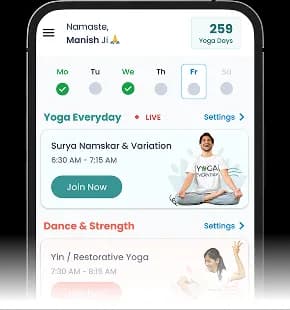
- Habuild's Sunday sessions include a Surya Namaskar practice you can do at a time that suits you.
Surya Namaskar is one of the most familiar yoga practices in India. Many people learned it at school, and many more have seen it done at sunrise in parks. Yet most people have never been taught the sequence properly, with correct positions and breathing.
Online Surya Namaskar classes let you learn and practise it at home with a trainer guiding each step. This guide breaks down the sequence, the breath, the modifications and the safety points.
What Is Surya Namaskar?
Surya Namaskar means "salutation to the sun". It is a sequence of 12 positions performed in a continuous flow, with each movement linked to an inhale or exhale. One round usually means completing the sequence twice, leading with the right leg and then the left.
Because it combines forward bends, backward bends, lunges and a plank-like position, it moves almost every part of the body.
The 12 Steps, Explained Simply
- Pranamasana (prayer pose): stand tall, palms together at the chest. Breathe normally.
- Hasta Uttanasana (raised arms): inhale, lift the arms up and gently arch back.
- Padahastasana (standing forward bend): exhale, fold forward, hands towards the floor. Bend your knees if needed.
- Ashwa Sanchalanasana (lunge): inhale, step one leg back, look up.
- Dandasana (plank): hold the breath briefly or breathe naturally, step the other leg back into a straight line.
- Ashtanga Namaskara (eight-point pose): exhale, lower knees, chest and chin to the floor, hips slightly raised.
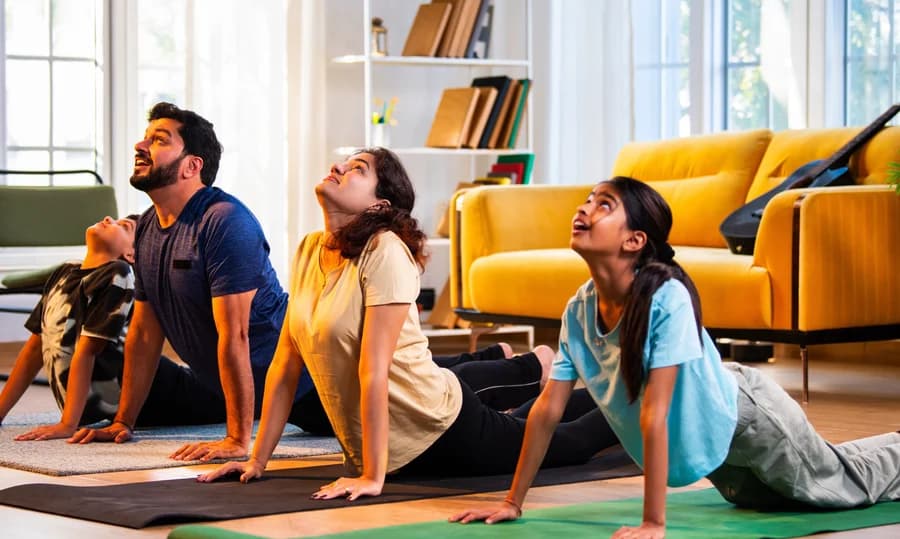
- Bhujangasana (cobra): inhale, slide forward and lift the chest.
- Adho Mukha Svanasana (downward dog): exhale, lift the hips up and back.
- Ashwa Sanchalanasana (lunge): inhale, step the same leg forward as in step 4.
- Padahastasana (forward bend): exhale, bring the back foot forward and fold.
- Hasta Uttanasana (raised arms): inhale, rise up with arms overhead.
- Pranamasana (prayer pose): exhale, return to standing with palms together.
Teachers may use slightly different versions, so follow the instructions given in class.
Linking Breath and Movement
The breath is what turns Surya Namaskar from exercise into yoga:
- Inhale when opening or lifting the chest (arms up, lunge, cobra).
- Exhale when folding forward or moving the hips back (forward bend, downward dog).
- Move slowly enough to finish each movement within a single breath.
- If you lose your breath, pause in a comfortable position and rejoin.
Easier Variations for Beginners and Stiff Bodies
- Bend your knees in forward bends so your hands can reach the floor without straining your back.
- Lower your knees in the plank and eight-point positions.
- Keep the backbend small in raised arms and cobra.
- Use a low cobra, lifting only the chest slightly.
- Rest in child's pose between rounds if needed.
How Many Rounds Should You Do?
- Beginners: start with two to four rounds, done slowly and correctly.
- After a few weeks: build up gradually as stamina and comfort improve.
- Quality first: fewer rounds with steady breath and good positions are better than many rushed ones.
Who Should Be Careful
Speak to your doctor before practising Surya Namaskar if you:
- Have back problems, including a slipped disc or sciatica
- Have high blood pressure or heart disease
- Have wrist, shoulder or knee injuries
- Have a hernia or recent surgery
- Are pregnant or recently gave birth
Stop if you feel dizzy, breathless beyond normal effort, or pain in any joint.
Habuild's Sunday Special: Surya Namaskar Practice
Habuild's regular sessions combine walking, exercises, yoga poses and pranayama. On Sundays, Surya Namaskar is one of the special sessions you can choose, at a time that suits you, giving you a weekly practice to refine the sequence, link it with your breath and gradually build rounds at your own pace.
Health Disclaimer
This article is for general information only and is not medical advice. Please consult a doctor before practising Surya Namaskar, especially if you have back problems, high blood pressure, a heart condition or are pregnant.
Flexible Batch Timing
Choose morning or evening classes and join the slot that suits your day.
Morning
6:30 AM
7:30 AM
8:30 AM

Evening
5:00 PM
6:00 PM
7:00 PM


Choose Your Membership Plan
Continue after the trial with membership options designed for long-term consistency support.
Continue your habit on the Habuild app
Use the Habuild app for reminders, live access, progress support, and habit tracking.