Online Yoga Classes for Students: A Calmer Mind for Busy Study Years
Online yoga classes for students: handle exam stress, long study hours, poor sleep and posture.

Key Takeaways
- Student life brings exam pressure, long sitting and irregular sleep; yoga can help with each.
- Slow breathing can help settle nerves before exams, presentations or interviews.
- Gentle stretching eases the stiff neck, shoulders and back that come from hours of study.
- A short daily session builds a routine that gives structure to unpredictable college days.
- A yoga mat's worth of floor space in a hostel or PG room is enough.
- Habuild's classes are designed for adults, so they suit college students, not young children.
College years are exciting, but they can also be stressful. Deadlines pile up, exams arrive in clusters, sleep becomes irregular, and many students spend most of the day sitting at a desk or looking at a screen.
Online yoga classes for students offer a simple counterbalance: a daily session of movement, breathing and relaxation you can join from your room. This guide explains how yoga fits into student life and how to make it a habit.
How Yoga Helps With Student Stress
- Breathing practice helps you slow down when your mind is racing.
- Movement releases physical restlessness after hours of sitting.
- A fixed routine gives you one predictable part of an unpredictable day.
- Relaxation at the end of class gives your mind a short break from studying and screens.
Many students say the biggest benefit isn't flexibility; it's feeling calmer and more in control.
Breathing Before Exams and Presentations
Pranayama, or breathing practice, is part of Habuild's regular yoga sessions. You can also use simple breathing on your own:
- Sit upright and relax your shoulders.
- Breathe in slowly through your nose for a count of four.
- Breathe out even more slowly for a count of six.
- Repeat for one to two minutes.
Many students use this before an exam, a viva or an interview. If you feel light-headed, return to normal breathing.
Undoing Study Stiffness
Hours bent over books or laptops tighten the neck, shoulders, hips and lower back. Regular yoga helps by:
- Opening the chest and shoulders with gentle backbends and arm stretches
- Loosening the hips with lunges and seated stretches
- Strengthening the core and back so sitting upright feels easier
- Easing neck tension with slow neck movements
Between study sessions, stand up every hour, roll your shoulders and look away from the screen for a minute.
Yoga and Sleep for Students
Late nights, screens and irregular routines disrupt sleep, which then affects focus and memory. A regular yoga practice can help:
- A consistent class time anchors your day.
- Gentle evening practice helps you wind down.
- Less screen time just before bed makes falling asleep easier.
If you have ongoing trouble sleeping, speak to a doctor.
Practising in a Hostel or PG Room
- Space: clear an area the size of a yoga mat with room to stretch your arms.
- Roommates: agree on a time, or invite them to join.
- No mat? A folded blanket on a non-slip floor works to begin with.
- Slow Wi-Fi: lower video quality instead of leaving the class.
- Noise: keep the volume low or use earphones.
Fitting Yoga Into a Student Timetable
- Early morning before lectures is often the easiest time to protect.
- Evening works well to switch off after classes and before studying.
- During exams, even part of a session, like the breathing and relaxation, is better than skipping entirely.
- After holidays, restart in the first week back so the habit doesn't fade.
Health Disclaimer
This article is for general information only and is not medical advice. Please consult a doctor before starting yoga if you have a health condition or an injury.
Flexible Batch Timing
Choose morning or evening classes and join the slot that suits your day.
Morning
6:30 AM
7:30 AM
8:30 AM

Evening
5:00 PM
6:00 PM
7:00 PM


Choose Your Membership Plan
Continue after the trial with membership options designed for long-term consistency support.
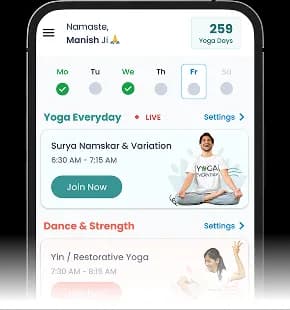
Continue your habit on the Habuild app
Use the Habuild app for reminders, live access, progress support, and habit tracking.