Yoga for Health
A comprehensive daily yoga practice for overall health covering cardiovascular, metabolic, digestive, and nervous system benefits.

Key Takeaways
- Surya Namaskar offers full-body cardiovascular benefits
- Kapalbhati supports metabolic and respiratory health
- Sarvangasana benefits thyroid and systemic health
- Guided by senior instructor Saurabh Bothra's live sessions
- Savasana supports nervous system restoration
Transform Your Health Journey with Daily Yoga

Most people know yoga is good for them. Very few practise it consistently enough to feel the difference.
The gap is not motivation — it is structure. Without a fixed time, a live instructor, and a community that shows up daily, even the most well-intentioned practice fades within weeks.
Over 1.1.5 Crore+ members have built a lasting yoga habit with Habuild — improving their physical health, managing stress, sleeping better, and feeling measurably stronger within weeks of regular practice.
Start your 14-day free trial and experience the difference a structured daily practice makes.
Can Yoga Really Improve Your Health?
Yes. Yoga improves health across multiple dimensions simultaneously — and the evidence is robust.
The World Health Organisation recognises yoga as one of the most evidence-supported complementary health practices, with meaningful benefits documented for over 80 health conditions. Meta-analyses published in peer-reviewed journals confirm yoga’s effectiveness for cardiovascular health, mental health, metabolic regulation, and musculoskeletal function.
The key distinction: benefits accumulate with consistency. A single session reduces cortisol and improves circulation. A daily practice over 8–12 weeks produces measurable changes in blood pressure, HbA1c, anxiety scores, and sleep quality.
Benefits of Yoga for Health
1. Cardiovascular Health
Regular yoga reduces blood pressure, improves lipid profiles, and enhances heart rate variability. Dynamic sequences like Surya Namaskar provide aerobic conditioning that is gentle on the joints but effective for cardiovascular fitness. Habuild members interested in dedicated heart-focused practice can explore Yoga For Heart Health for a targeted approach.
2. Metabolic Health
Yoga improves insulin sensitivity, supports healthy weight regulation, and reduces inflammatory markers linked to metabolic syndrome. Daily practice — particularly Kapalbhati and active asana — has been shown to reduce HbA1c in type 2 diabetes patients when incorporated as part of a broader management plan.
3. Mental Health and Stress Reduction
Multiple meta-analyses confirm yoga’s effectiveness in reducing anxiety and depressive symptoms — in some studies, comparable to pharmacological approaches for mild-to-moderate presentations. The breath-body connection yoga builds gives you real tools for emotional regulation that work outside the session too. For a dedicated approach, Yoga For Stress Management covers the specific techniques that matter most.
4. Musculoskeletal Health and Pain Relief
Yoga builds functional strength, improves joint mobility, and reduces chronic pain from conditions including lower back pain, arthritis, and neck tension. It is one of the most joint-friendly comprehensive fitness practices available — no impact, no equipment, adaptable to any fitness level. Members managing chronic neck discomfort will find Yoga For Neck Pain especially relevant.
5. Sleep Quality
Yoga’s cortisol-lowering and parasympathetic activation effects directly improve sleep onset, sleep depth, and total sleep duration. Members consistently report better sleep as one of the first changes they notice — often within the first two weeks of daily practice.
6. Face Yoga for Dark Circles
One lesser-known but highly practical benefit of yoga for health is its effect on facial circulation and lymphatic drainage. Face yoga for dark circles involves targeted exercises — gentle tapping around the orbital bone, upward eye-roll movements, and facial muscle contractions — that stimulate blood flow and reduce puffiness around the eyes.
Yoga for reducing dark circles works through two mechanisms: – Improved systemic circulation from daily asana reduces the pooling of deoxygenated blood beneath the eyes – Pranayama and relaxation techniques lower cortisol, which directly affects skin quality and the appearance of fatigue
A consistent yoga for health practice — combined with targeted face yoga exercises — is one of the most sustainable, side-effect-free approaches to reducing the appearance of dark circles over time.
Best Yoga Poses for Health
1. Surya Namaskar — Complete Health Sequence
12 rounds of Surya Namaskar delivers cardiovascular, strength, and flexibility benefits in 20 minutes. It is the single most time-efficient yoga for health sequence — warming every major muscle group, elevating heart rate, and preparing the body for the day ahead.
How it helps: Full-body activation, cardiovascular conditioning, improved circulation to the face and extremities.
2. Kapalbhati Pranayama — Metabolic and Respiratory Health
15 minutes of Kapalbhati daily strengthens respiratory muscles, activates the abdominal core, and stimulates metabolic function. Research consistently links regular Kapalbhati practice with improved oxygen utilisation and reduced markers of metabolic dysfunction.
How it helps: Metabolic activation, detoxification, improved lung capacity.
3. Sarvangasana — Systemic Health (Shoulderstand)
Often called the queen of asanas, Sarvangasana held for 3–5 minutes provides thyroid stimulation, improved venous return, and the calming inversion effect that benefits both cardiovascular and nervous system health.
How it helps: Thyroid support, improved systemic circulation, stress relief.
4. Paschimottanasana — Digestive and Posterior Chain Health (Seated Forward Bend)
A deep forward fold that stimulates digestive organs, stretches the entire posterior chain, and activates the parasympathetic nervous system. Essential for both physical and mental health.
How it helps: Digestive health, hamstring and back flexibility, nervous system calming.
5. Viparita Karani — Restorative Inversion (Legs-Up-the-Wall)
A gentle inversion accessible to all levels. Improves venous return from the legs, reduces inflammation, and is one of the most effective restorative poses for fatigue and sleep quality improvement.
How it helps: Circulation, reduced swelling, improved sleep onset.
6. Balasana — Nervous System Reset (Child’s Pose)
A resting posture that actively decompresses the spine, calms the nervous system, and provides a moment of genuine restoration within a practice. Non-negotiable for health-focused yoga.
How it helps: Spinal decompression, stress reduction, nervous system restoration.
7. Savasana — Integration and Recovery (Corpse Pose)
The most underrated pose in yoga. Savasana allows the nervous system to integrate the benefits of the preceding practice, shifting the body from sympathetic to parasympathetic dominance. Skipping Savasana reduces the health return of every other pose you have done.
How it helps: Complete nervous system restoration, cortisol reduction, cardiovascular recovery.
How Habuild's Live Yoga Classes Help with Yoga for Health
1. Daily Practice Builds Lasting Whole-Body Resilience
The systemic health benefits of yoga — improved cardiovascular function, metabolic regulation, immune modulation, stress resilience, and musculoskeletal strength — develop through consistent daily practice, not occasional sessions. Habuild’s six-days-a-week live class structure transforms yoga from an occasional activity into a daily health investment that compounds over months and years.
2. Live Guidance for Correct Form
Safe, effective whole-body yoga requires correct alignment and progressive technique — particularly in backbends, inversions, and pranayama. Without live guidance, common technique errors lead to joint strain and missed therapeutic benefit. Habuild’s instructors provide real-time correction that keeps every session both safe and maximally effective for whole-body health.
3. Community Accountability Keeps You Consistent
One of the most powerful predictors of long-term health behaviour maintenance is social accountability. Habuild’s live class format means you are practising alongside a community of 1.5 Crore+ members every morning — creating the shared commitment that keeps health habits alive through the weeks and months when motivation alone is insufficient.
4. Sessions Designed for All Fitness Levels
Habuild’s sessions are designed for all ages, fitness levels, and health backgrounds — from complete beginners to experienced practitioners maintaining an established practice. Every session offers modifications for any pose, and the pace is set to be accessible and sustainable over the long term. Whatever your current health baseline, there is a level of practice that works for you.
Who is Yoga for Health Best Suited For?
1. Complete Beginners
No experience required. Habuild’s 45-minute sessions are structured to guide complete beginners through safe, effective practice — building strength, flexibility, and confidence simultaneously.
2. Working Professionals with Limited Time
30–45 minutes daily is enough to produce meaningful health outcomes. Morning batches at 6:00 AM and 7:00 AM IST mean your practice is complete before the demands of the day begin.
3. People Managing Chronic Conditions
Yoga for health has documented benefits for hypertension, type 2 diabetes, chronic stress, insomnia, and musculoskeletal conditions. Always consult your doctor before beginning a new practice if you are managing a diagnosed condition.
4. Anyone Who Has Tried Other Methods Without Success
Yoga’s adaptability — no impact, no equipment, scalable to any fitness level — makes it accessible when other exercise approaches have felt unsustainable or inaccessible.
5. Senior Citizens (50+)
The health benefits of yoga are particularly significant for older adults. Gentle yoga for health addresses the cardiovascular, musculoskeletal, and psychological challenges of ageing safely and effectively. Consult your doctor before beginning any new physical practice.
How Long Does It Take to See Results?
1. Week 1–2: First Changes
Improved energy on waking, reduced post-session tension, better sleep onset. Many members notice improved mood and reduced afternoon energy crashes within the first week of consistent practice.
2. Week 3–4: Noticeable Improvements
Measurable increases in flexibility, reduced resting heart rate, and early changes in body composition. Members managing blood pressure or blood sugar typically begin to see early positive movement in readings.
3. Month 2–3: Significant Transformation
Sustained energy improvements, meaningful cardiovascular adaptation, visible physical changes. Mental health benefits — particularly anxiety reduction and sleep quality — are typically most pronounced at this stage.
4. Month 4 and Beyond: Lasting Lifestyle Change
Yoga transitions from a practice you do to a habit that defines your health baseline. Long-term members report that missing a session feels noticeably different — not out of guilt, but because the physical and mental benefits have become the new normal.
Flexible Batch Timing
Choose morning or evening classes and join the slot that suits your day.
Morning
6:30 am - 7:15 am
7:30 am - 8:15 am
8:30 am - 9:15 am

Evening
5pm - 5:45pm
6pm - 6:45pm
7pm - 7:45pm

Meet Your Yoga for Health Instructor: Saurabh Bothra

Saurabh Bothra
Founder, Habuild
Your yoga for health journey is guided by one of India's most qualified instructors—Saurabh Bothra.
Choose Your Membership Plan
Continue after the trial with membership options designed for long-term consistency support.
Continue your habit on the Habuild app
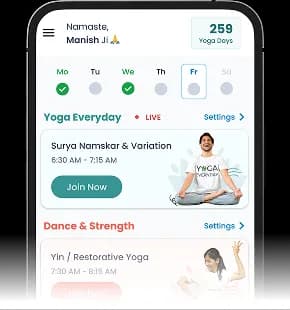
Use the Habuild app for reminders, live access, progress support, and habit tracking.