Yoga for Hunchback: Correct Kyphosis, Strengthen the Back and Restore Natural Posture
A yoga practice for hunchback that corrects kyphosis by stretching tight chest muscles and strengthening the upper back.

Key Takeaways
- Stretches tight anterior chest muscles
- Strengthens weak upper back muscles
- Restores healthy spinal posture over time
- Guided by senior instructor Saurabh Bothra's live sessions
- Works alongside broader posture-correction practice
Transform Your Hunchback Journey with Daily Yoga

Thoracic kyphosis — the forward rounding of the upper spine that most people call a hunchback — has become increasingly common as desk work, smartphone use, and sedentary lifestyles create the sustained forward flexion posture that progressively shortens the chest and weakens the upper back. The condition is not merely aesthetic: it restricts breathing capacity, compresses the thoracic discs, creates neck pain through compensatory cervical hyperlordosis, and produces the chronic shoulder and upper back tension that millions of Indians experience daily. Yoga for posture directly addresses all these dimensions.
Yoga for hunchback works by simultaneously stretching the tight anterior chest and shoulder structures that pull the spine forward, and strengthening the weak posterior chain — rhomboids, mid and lower trapezius, thoracic extensors — that is unable to hold the spine upright. Habuild’s live daily sessions provide the consistent, supervised postural training that produces the lasting structural improvements that occasional correction attempts cannot achieve. Many members have experienced meaningful postural correction through dedicated yoga for upper back pain practice.
Can Yoga Really Help with Hunchback?
Yes, yoga may help correct hunchback posture by addressing its two primary muscular drivers: tight chest and anterior shoulder muscles that pull the thoracic spine into flexion, and weak upper back muscles that cannot resist this pull. Research on yoga and kyphosis consistently shows improvements in thoracic curvature angle, shoulder mobility, and pain reduction in people who practise consistently. Yoga for kyphosis provides the most targeted approach to this specific postural condition, with dedicated thoracic extension, rhomboid strengthening, and pectoral stretching sequencing.
Benefits of Yoga for Hunchback
1. Stretches the Tight Anterior Structures Driving Forward Curvature
The pectoralis major and minor, anterior deltoids, and intercostal muscles become shortened and tight in kyphotic posture, actively pulling the thoracic spine into flexion. Yoga chest openers — Camel Pose, Fish Pose, and supported backbends — stretch these anterior structures, reducing the tension that maintains the forward curve and creating the space for the posterior chain to draw the spine back to neutral.
2. Strengthens the Upper Back Muscles That Maintain Upright Posture
The rhomboids, mid-trapezius, and thoracic extensors are the muscles responsible for drawing the shoulder blades together and maintaining thoracic extension. In kyphosis, these muscles are chronically lengthened and weak, unable to resist the forward pull of the tight anterior chest. Yoga poses like Locust Pose (Shalabhasana), Cobra, and seated rows build these muscles in their shortened position, restoring the strength they need to maintain upright posture throughout the day. This directly complements yoga for upper back pain practice.
3. Improves Breathing Capacity Restricted by Thoracic Compression
Thoracic kyphosis mechanically restricts rib cage expansion during inhalation, reducing lung capacity and producing the shallow, restricted breathing pattern that both reduces energy levels and increases anxiety. Opening the thoracic spine through yoga backbends restores rib cage mobility and improves the depth of every breath — one of the most immediately perceptible benefits of consistent hunchback yoga practice.
4. Reduces Neck Pain Caused by Compensatory Cervical Hyperlordosis
Thoracic kyphosis forces the cervical spine to hyperextend to bring the eyes to a horizontal position, creating the forward head posture and cervical hyperlordosis that produce chronic neck pain and headaches. Correcting the thoracic kyphosis through yoga reduces the compensatory cervical extension, addressing the neck pain at its structural origin rather than treating only the symptomatic site.
5. Builds Body Awareness for Lasting Postural Correction
Postural correction is not merely a structural challenge — it requires building the proprioceptive awareness to detect and correct postural drift in real time throughout the day. Yoga develops this body awareness through the sustained focus on spinal position that every pose requires, building the postural habit alongside the physical capacity for upright posture.
Best Yoga Poses (Asanas) for Hunchback
1. Camel Pose (Ustrasana)
Difficulty: Intermediate
A deep thoracic and cervical extension that directly opposes the kyphotic curve, stretching the anterior chest and building the thoracic extensor engagement needed for upright posture. This is the most powerful single pose for kyphosis correction. Always warm up thoroughly before attempting full Camel.
2. Locust Pose (Shalabhasana)
Difficulty: Beginner
A prone back extension that activates the thoracic extensors, rhomboids, and lower trapezius in their shortened position — directly building the posterior chain strength that resists kyphotic forward pull. One of the most effective and safe poses for building upper back strength for hunchback correction.
3. Fish Pose (Matsyasana)
Difficulty: Beginner
A supported backbend that opens the anterior chest and throat while providing passive thoracic extension. Fish Pose stretches the pectorals and intercostals that maintain the forward thoracic curve, making it an essential complement to the posterior chain strengthening poses.
4. Supported Bridge Pose (Setu Bandhasana (supported))
Difficulty: Beginner
Using a block under the sacrum for support, this pose provides a sustained, passive thoracic extension that stretches the anterior chest without demanding the active engagement of unsupported backbends. Particularly valuable for beginners or those with significant thoracic stiffness.
5. Eagle Pose (Garudasana)
Difficulty: Intermediate
The arm wrapping of Eagle Pose stretches the posterior shoulder capsule and rhomboids in a dynamic loading position that improves upper back mobility and shoulder range of motion. A valuable complement to the extension-focused poses in any yoga for posture programme.
How Habuild's Live Yoga Classes Help with Yoga for Hunchback: Correct Kyphosis, Strengthen the Back and Restore Natural Posture
1. Daily Practice Builds Lasting Postural Restoration
Hunchback correction requires daily postural retraining — the anterior chest and shoulder muscles that pull the spine into kyphosis must be lengthened daily, and the posterior thoracic and rhomboid muscles must be strengthened consistently. The neuromuscular pattern of upright posture must be reinforced in every daily session to become automatic. Habuild’s daily live sessions build this postural retraining into every morning.
2. Live Guidance for Correct Thoracic Alignment
Thoracic extension and shoulder opening require precise alignment — particularly preventing the lumbar compensation that occurs when the thoracic spine is too restricted to extend. Without live guidance, members commonly develop increased lumbar lordosis rather than true thoracic extension, producing no hunchback benefit. Habuild’s instructors provide the specific thoracic cueing that ensures every session correctly targets the rounded upper back.
3. Community Accountability Keeps You Consistent
Postural correction is one of the slowest and most easily discouraged health journeys. Practising alongside Habuild’s live community every morning provides the daily reinforcement and social accountability that keeps members consistent through the months of gradual postural improvement. Thousands of members working on the same postural goals together creates a motivating environment where progress — however slow — is shared and celebrated.
4. Sessions Designed for All Fitness Levels
Habuild’s sessions are designed to be accessible for all fitness levels and degrees of thoracic rounding. Every spinal extension and shoulder-opening exercise is offered with modifications for members who are significantly restricted or experiencing active upper back pain. Progression is always gentle and gradual, and every session provides a safe and effective postural correction practice.
Who is Yoga for Hunchback Best Suited For?
1. Complete Beginners
All backbend and posterior chain strengthening poses are offered in beginner-appropriate versions. No prior yoga experience or current back flexibility is required.
2. Working Professionals with Busy Schedules
The hunchback posture is most common in working professionals. Morning yoga sessions provide a daily counter to the hours of desk posture that follows, making the practice both practically relevant and achievable within a working schedule.
3. People Who Have Tried Other Methods Without Success
If posture braces, ergonomic interventions, or occasional physiotherapy have provided incomplete results, yoga’s approach to building the active muscular correction of kyphosis — rather than passively supporting it — provides the sustainable structural change that passive aids cannot deliver.
4. Anyone Looking for a Sustainable, Long-Term Solution
Building the muscle strength and body awareness for good posture is a lifelong investment. Yoga provides the daily practice framework that maintains this investment indefinitely, adapting to any life stage or physical condition.
How Long Does It Take to See Results?
1. Week 1–2: Initial Changes
Improved thoracic mobility, reduced upper back tension, and the improved breathing depth that comes with even small improvements in thoracic extension — typically the first benefits reported.
2. Week 3–4: Noticeable Improvements
Noticeable improvement in resting posture, reduced neck and shoulder pain, and the visible postural improvement that those around the practitioner begin to comment on.
3. Month 2–3: Significant Transformation
Significant reduction in thoracic kyphosis angle, sustained upright posture requiring less conscious effort, and the reduction in headaches and neck pain that follows from reduced compensatory cervical extension.
4. Month 4+: Lasting Lifestyle Change
Natural upright posture becoming the body’s resting default rather than requiring conscious correction. Breathing depth and lung capacity measurably improved from initial assessment.
Flexible Batch Timing
Choose morning or evening classes and join the slot that suits your day.
Morning
6:30 am - 7:15 am
7:30 am - 8:15 am
8:30 am - 9:15 am

Evening
5pm - 5:45pm
6pm - 6:45pm
7pm - 7:45pm

Meet Your Yoga for Hunchback: Correct Kyphosis, Strengthen the Back and Restore Natural Posture Instructor: Saurabh Bothra

Saurabh Bothra
Founder, Habuild
Your yoga for hunchback: correct kyphosis, strengthen the back and restore natural posture journey is guided by one of India's most qualified instructors—Saurabh Bothra.
Choose Your Membership Plan
Continue after the trial with membership options designed for long-term consistency support.
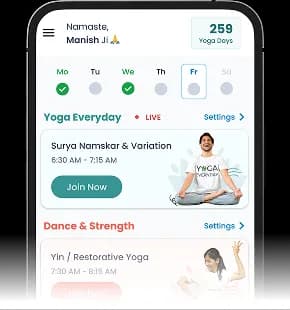
Continue your habit on the Habuild app
Use the Habuild app for reminders, live access, progress support, and habit tracking.