Yoga for sugar control
An evidence-backed yoga practice that supports blood sugar control by improving insulin sensitivity alongside medical care.

Key Takeaways
- Complements medical treatment for diabetes, not a replacement
- Improves insulin sensitivity through consistent daily practice
- Reduces cortisol-driven blood sugar spikes
- Guided by senior instructor Saurabh Bothra's structured sessions
- Used by 3.5+ lakh members managing sugar levels naturally
Manage Blood Sugar, Restore Insulin Sensitivity, and Take Back Control with Yoga for Sugar Control

The thirst that never quite goes away. Energy that crashes without warning. A blood sugar report that climbs despite your best efforts with diet and medication. Whether you are managing Type 2 diabetes, living with prediabetes, or carrying a strong family history that makes you determined to intervene before a diagnosis arrives — the frustration of watching numbers refuse to cooperate is one of the most demoralising experiences in modern health.
Yoga for sugar control works at the metabolic root of the problem. Specific asanas stimulate the pancreas and abdominal organs, improve insulin receptor sensitivity in muscle tissue, reduce the chronic cortisol elevation that directly raises blood glucose, and build the lean muscle mass that is the body's primary glucose disposal mechanism. Yoga for diabetes is not an alternative to medical management — it is the daily therapeutic practice that makes medical management work significantly better.
Over 50,000+ Habuild members have used our expert-guided online yoga sessions to complement their diabetes care — reporting improved fasting glucose levels, reduced HbA1c, better energy, healthier weight, and a restored sense of agency over a condition that can otherwise feel entirely beyond control.
Can Yoga Really Help Control Blood Sugar?
Yes and the clinical evidence is robust and growing.
Type 2 diabetes and prediabetes develop through a combination of insulin resistance, progressive pancreatic beta-cell dysfunction, chronic low-grade inflammation, and the cortisol-driven glucose dysregulation of unmanaged stress. Yoga for diabetic patients addresses every one of these mechanisms in parallel. This is part of a broader category of yoga for health conditions where consistent practice creates measurable physiological change.
A landmark study published in the Journal of Clinical and Diagnostic Research found that yoga for diabetes significantly reduced fasting blood glucose, postprandial glucose, and HbA1c in Type 2 diabetic patients over ninety days of consistent practice. Research in Diabetes Care confirmed that yoga exercises to control sugar improve insulin sensitivity comparably to moderate aerobic exercise with the additional advantage of simultaneously reducing cortisol and systemic inflammation.
Yoga to reduce blood sugar works not by replacing the pancreas's function, but by improving every surrounding system that determines how effectively the body uses the insulin it produces.
Benefits of Yoga for Sugar Control
1. Improves Insulin Sensitivity in Skeletal Muscle
Skeletal muscle accounts for up to 80% of glucose disposal after a meal — making muscle insulin sensitivity the single most important determinant of blood sugar control. Yoga exercises to control sugar activate muscle tissue through sustained isometric and dynamic loading, improving glucose transporter (GLUT-4) expression and upregulating the insulin signalling pathways that allow muscle cells to absorb glucose efficiently. This is the primary mechanism through which yoga to reduce blood sugar delivers its most clinically significant effects.
2. Stimulates Pancreatic Function and Insulin Secretion
Yoga for diabetes includes specific abdominal compression, twisting, and extension poses that directly massage and stimulate the pancreas — improving blood supply to the beta cells responsible for insulin secretion. Regular stimulation through the best yoga for sugar control poses supports pancreatic health and may slow the progressive beta-cell decline that characterises advancing Type 2 diabetes.
3. Reduces Cortisol and Stress-Driven Blood Sugar Spikes
Every stress response triggers cortisol and adrenaline — hormones that directly raise blood glucose by stimulating glycogen breakdown and gluconeogenesis in the liver. Yoga for sugar control systematically reduces cortisol through breathwork, relaxation, and parasympathetic activation. Improving your energy & vitality alongside blood sugar management creates a more comprehensive metabolic recovery.
4. Builds Lean Muscle Mass for Long-Term Glucose Disposal
Muscle tissue is metabolically active glucose storage — the more lean muscle mass you carry, the greater your body's capacity to absorb and buffer post-meal glucose spikes. Yoga for diabetic patients builds functional strength through bodyweight resistance across multiple muscle groups, progressively improving the body's glucose disposal capacity with every session.
5. Supports Healthy Weight and Reduces Visceral Fat
Visceral abdominal fat is the most metabolically harmful adipose depot — secreting inflammatory cytokines that directly worsen insulin resistance and accelerate pancreatic dysfunction. Yoga to avoid diabetes and manage existing conditions reduces visceral fat through a combination of caloric expenditure, cortisol reduction, and the metabolic improvements that shift the body toward more efficient fat utilisation.
6. Manages Sugar and Cholesterol Together
Dyslipidaemia — elevated triglycerides and LDL alongside low HDL — almost universally accompanies Type 2 diabetes as part of metabolic syndrome. Yoga for sugar and cholesterol management simultaneously improves both. Supporting your practice with good nutrition guidance creates the most comprehensive approach to managing the full metabolic syndrome picture.
Most Effective Yoga for Diabetes: Poses and Practices
1. Seated Spinal Twist — Ardha Matsyendrasana
The most powerful pancreatic stimulation pose in the yoga tradition and the most widely cited in diabetes management research. Ardha Matsyendrasana compresses and then releases the abdominal organs, creating a pump-and-flush effect on pancreatic blood supply that directly supports insulin-producing beta-cell function. It is universally considered among the best yoga for diabetes poses for glycaemic management and is central to every Habuild diabetes session.
Difficulty Level: Beginner to Intermediate
2. Bow Pose — Dhanurasana
A dynamic prone backbend that compresses the entire abdominal cavity, stimulating the pancreas, liver, and kidneys simultaneously while strengthening the back and posterior chain. Dhanurasana is one of the most effective yoga exercises to control sugar through direct abdominal organ stimulation, and it simultaneously stretches the hip flexors that are chronically shortened by the sedentary behaviour most associated with Type 2 diabetes risk.
Difficulty Level: Beginner to Intermediate
3. Bridge Pose — Setu Bandhasana
A fundamental yoga for diabetic patient posture that activates the glutes, hamstrings, and spinal muscles while gently compressing the abdominal organs. Bridge Pose builds the posterior chain muscle mass critical for glucose disposal, improves insulin sensitivity in the large lower-body muscle groups, and provides the mild cardiovascular activation that reduces fasting blood sugar levels with consistent daily practice.
Difficulty Level: Beginner
4. Forward Bend — Paschimottanasana
A seated forward fold that stretches the entire posterior chain while applying sustained compression to the abdominal organs, stimulating the pancreas, liver, and intestines in a single pose. Paschimottanasana activates the parasympathetic nervous system deeply, reduces cortisol-driven blood sugar elevation, and is one of the best yoga for sugar control poses for combining metabolic stimulation with nervous system regulation.
Difficulty Level: Beginner
5. Wind-Relieving Pose — Pawanmuktasana
A supine abdominal compression pose that directly massages the pancreas and digestive organs, improves intestinal motility — which directly influences postprandial blood sugar absorption rates — and activates the vagus nerve to shift the body toward parasympathetic dominance. Pawanmuktasana is among the most accessible yoga to reduce blood sugar postures, making it ideal for beginners and those with limited mobility.
Difficulty Level: Beginner
6. Legs Up the Wall — Viparita Karani
A restorative inversion that reverses venous pooling, reduces cortisol, and activates the parasympathetic nervous system without physical exertion. Viparita Karani is particularly valuable as yoga for preventing diabetes and managing existing conditions because its profound stress-reduction effect addresses the cortisol-glucose axis that medication alone cannot reach.
Difficulty Level: Beginner
7. Kapalabhati Pranayama — Skull-Shining Breath
The most clinically supported pranayama practice for blood sugar management. Kapalabhati's rapid abdominal contractions vigorously massage the pancreas and liver, improve oxygenation of the abdominal organs, stimulate insulin secretion, and activate the sympathetic nervous system in a controlled, beneficial way that improves glucose metabolism without raising cortisol. It is an indispensable component of the most effective yoga for diabetes breathwork practice.
Difficulty Level: Beginner to Intermediate
How Habuild's Online Classes Support Your Diabetes Management Journey
1. Sessions Sequenced Around Metabolic Physiology
The best yoga for diabetes is not a random collection of poses — it requires deliberate sequencing that prioritises pancreatic stimulation, abdominal organ activation, muscle group loading, and parasympathetic recovery in the right order. Habuild's sessions are structured precisely around this metabolic logic, ensuring every yoga for sugar control practice delivers maximum glycaemic benefit.
2. Safe Intensity Management for Diabetic Patients
Exercise intensity management is critical for yoga for diabetic patients — hypoglycaemic risk during practice, post-exercise glucose fluctuation, and the needs of those managing comorbidities like neuropathy or retinopathy require specific safety protocols. Habuild's certified instructor provides real-time guidance on intensity, modifications, and rest — ensuring every yoga exercises to control sugar session is safe, therapeutic, and appropriately calibrated.
3. Pranayama Embedded in Every Session
Breathwork is as therapeutically important as posture for blood sugar management. The abdominal stimulation and cortisol-reduction effects of Kapalabhati and the parasympathetic activation of Nadi Shodhana are structurally embedded in every Habuild session — not reserved for advanced practitioners. Every member receives the full metabolic benefit of yoga to reduce blood sugar through breathwork from their very first class.
4.Daily Consistency Through Community and Live Structure
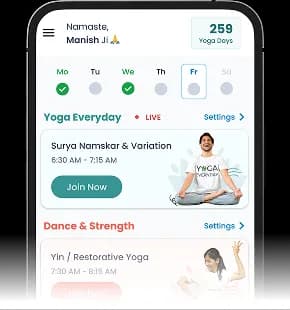
Blood sugar management responds to sustained daily lifestyle intervention — not episodic effort. Habuild's six-days-a-week live schedule, WhatsApp streak tracking, and thousands-strong community ensure that yoga to avoid diabetes becomes a non-negotiable daily practice. Members managing related conditions also benefit from our yoga for thyroid and yoga for diabetes programmes for a comprehensive endocrine and metabolic health approach.
Flexible Batch Timing
Choose morning or evening classes and join the slot that suits your day.
Morning
6:30 am - 7:15 am
7:30 am - 8:15 am
8:30 am - 9:15 am

Evening
5pm - 5:45pm
6pm - 6:45pm
7pm - 7:45pm

Meet Your Yoga for Sugar Control Instructor: Saurabh Bothra

Saurabh Bothra
Founder, Habuild
Your yoga for sugar control journey is guided by one of India's most qualified instructors—Saurabh Bothra. Saurabh's online yoga class for sugar control sessions combine traditional yoga wisdom with practical techniques for modern lifestyles. His best yoga for sugar control methods have helped thousands achieve sustainable results.
Choose Your Membership Plan
Continue after the trial with membership options designed for long-term consistency support.
Continue your habit on the Habuild app
Use the Habuild app for reminders, live access, progress support, and habit tracking.