
Ardha Matsyendrasana: Steps Benefits and How to Practice v2
Learn ardha matsyendrasana with Habuild. Discover ardha matsyendrasana benefits for spinal health, improved digestion, and flexibility. Start your practice now!
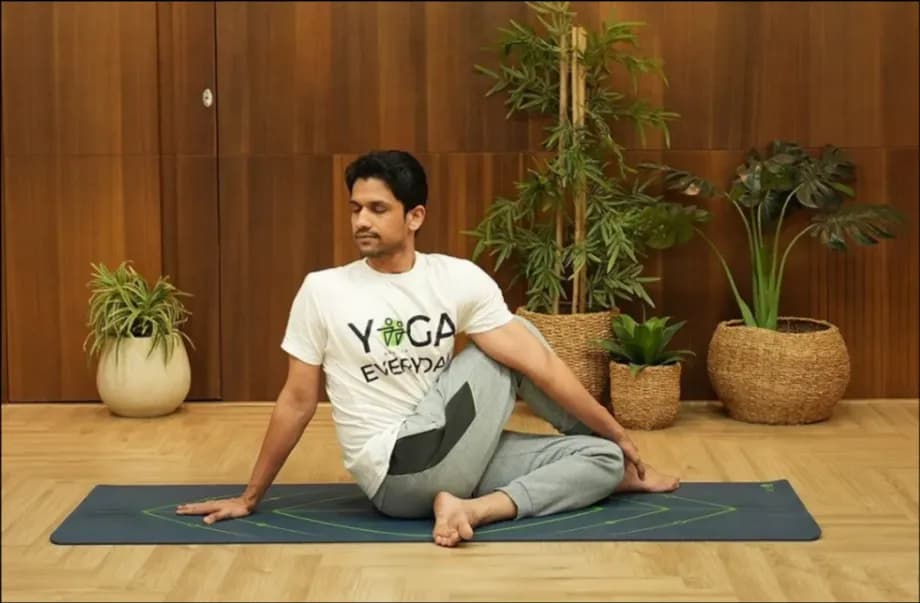
Dummy caption for the image will look like this
Key Takeaways
- Hand fat reduces through overall body fat loss, not spot reduction.
- Daily yoga tones arms, wrists, and hands for a leaner appearance.
- Surya Namaskar boosts metabolism and supports full-body fat reduction.
- Plank, Chaturanga, and Downward Dog strengthen upper body muscles.
- Consistent yoga and a healthy diet deliver lasting visible results.
Ardha Matsyendrasana — the Half Lord of the Fishes Pose — is one of yoga’s most therapeutically powerful seated spinal twists. Named after the sage Matsyendra, this half spinal twist detoxifies the spine and abdominal organs, improves spinal rotation, stimulates digestion, and activates the nervous system through the deep bilateral rotation that the pose uniquely provides. It is a foundational pose in the classical Hatha yoga tradition and one of the most complete single poses for spinal health.
Watch the video
What is Ardha Matsyendrasana?
Ardha Matsyendrasana — pronounced ar-dha-mot-see-en-DRAS-ana — translates as the Half Pose of the Lord of the Fishes. It is named after the great yogi Matsyendranath, who is said to have received the secrets of yoga directly from Shiva while transformed into a fish. The “Ardha” (half) distinguishes this seated twist from the more demanding full Matsyendrasana, making it accessible to intermediate practitioners while retaining the full therapeutic depth of the original.
In the ardha matsyendrasana pose, the practitioner sits with one leg extended, the other knee bent with the foot placed outside the opposite thigh. The torso rotates fully toward the bent knee — one arm hooking outside the bent knee, the other grounding behind the spine. This bilateral rotation wrings the spine, massages the abdominal organs, and creates the lateral spinal freedom that forward-dominated modern movement never accesses.
At Habuild, Ardha Matsyendrasana is taught within our spinal health and detoxification curriculum — with careful progression from preparatory twists to the full pose. Members managing lower back pain and spinal stiffness consistently report the half spinal twist as one of their most transformative daily practices.
Ardha Matsyendrasana Benefits
Physical Benefits
- Improves Spinal Rotation and Vertebral Mobility
The half spinal twist is the most direct yoga pose for restoring full spinal rotation — the plane of movement that sitting, driving, and screen time most severely restricts. Ardha matsyendrasana benefits include measurable improvement in thoracic and lumbar rotation within 2–3 weeks of daily practice, making it indispensable for spinal health maintenance. - Stimulates Digestion and Detoxifies Abdominal Organs
The deep abdominal compression and release of Ardha Matsyendrasana directly massages the liver, kidneys, stomach, and intestines — stimulating digestive enzyme secretion, improving peristalsis, and supporting the detoxification function of the abdominal organs. Habuild members managing constipation and digestive discomfort find this pose one of the most immediately effective in the yoga repertoire. - Relieves Back Pain and Cervical Tension
Ardha matsyendrasana yoga releases the deep paraspinal muscles and thoracic rotators that chronic sitting compresses — producing immediate and lasting relief from the axial back tension that accumulates with modern postural habits. Practitioners managing cervical pain report significant improvement in neck mobility and upper back tension relief with regular half spinal twist practice. - Stretches the Hips, Shoulders, and Outer Thighs
The ardha matsyendrasana pose creates a simultaneous multi-joint stretch — the bent-knee hip rotating externally, the extended-leg hip lengthening through the piriformis and IT band, and the posterior shoulder and chest opening through the rotational bind. Few single poses produce this range of combined hip, shoulder, and spinal opening.
Mental and Emotional Benefits
- Activates the Nervous System and Improves Energy
The spinal twist of Ardha Matsyendrasana directly stimulates the sympathetic nerve ganglia that run alongside the vertebral column — improving nerve conduction, increasing alertness, and creating the energising effect that distinguishes twisting poses from forward folds and backbends. Habuild members practising the half spinal twist in morning sessions report sustained energy and mental clarity throughout the day — benefits that overlap with yoga for concentration. - Reduces Stress and Supports Emotional Release
The thoracic region — opened and rotated in Ardha Matsyendrasana — is where emotional tension and stress physically accumulate. The rotational opening of the chest and the breath expansion that the twist enables produces the release of held tension and the sense of emotional lightness that deep spinal twists are specifically known for.
How to Do Ardha Matsyendrasana — Step-by-Step Instructions
Key Principles
Key Principles The twist initiates from the base of the spine and travels upward — not from the shoulders pulling. The spine lengthens on every inhale before deepening the rotation on the exhale. The sitting bones stay grounded throughout. Both sides of the waist lengthen equally — the twist is not a collapse to one side.
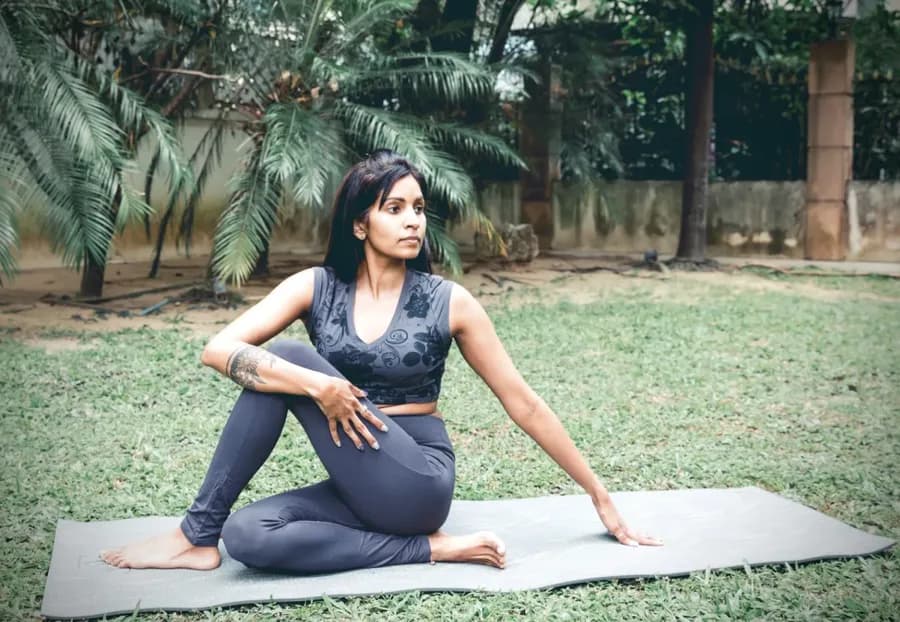
Step 1: Starting Position
Sit in Dandasana — both legs extended forward, spine tall, sitting bones grounded. Relax the jaw and shoulders. Establish a steady Ujjayi breath before beginning.
Step 2: Set the Left Leg
Bend the left knee and bring the left foot to the outside of the right hip — the left foot resting flat on the floor beside the right thigh. Alternatively, keep the left leg extended for a less demanding variation.
Step 3: Cross the Right Foot Over
Bend the right knee and place the right foot flat on the floor to the outside of the left knee. The right knee points straight up toward the ceiling. Both sitting bones remain grounded.
Step 4: Inhale and Lengthen the Spine
Inhale deeply and grow the spine tall — creating maximum length from the sitting bones to the crown of the head before initiating the rotation. This lengthening is the most critical step; twisting a compressed spine produces strain, not benefit.
Step 5: Exhale and Twist Toward the Right Knee
Exhale and rotate the torso to the right — bringing the left elbow to the outside of the right knee. Press the elbow against the knee as a lever to deepen the twist. The right hand rests on the floor behind the right hip, fingertips pointing away. Gaze over the right shoulder.
Step 6: Hold, Breathe, Then Release
Hold for 5–8 breaths — inhaling to lengthen, exhaling to rotate fractionally deeper. To release, exhale, unwind the torso to centre, and repeat on the left side.
Breathing in Ardha Matsyendrasana
Inhale to create spinal length — the breath acting as an internal axial elongation. Exhale to deepen the rotation — the releasing out-breath allowing the torso to turn fractionally further. Breathe into the side body rather than the compressed abdomen throughout the hold.
Preparatory Poses Before Ardha Matsyendrasana
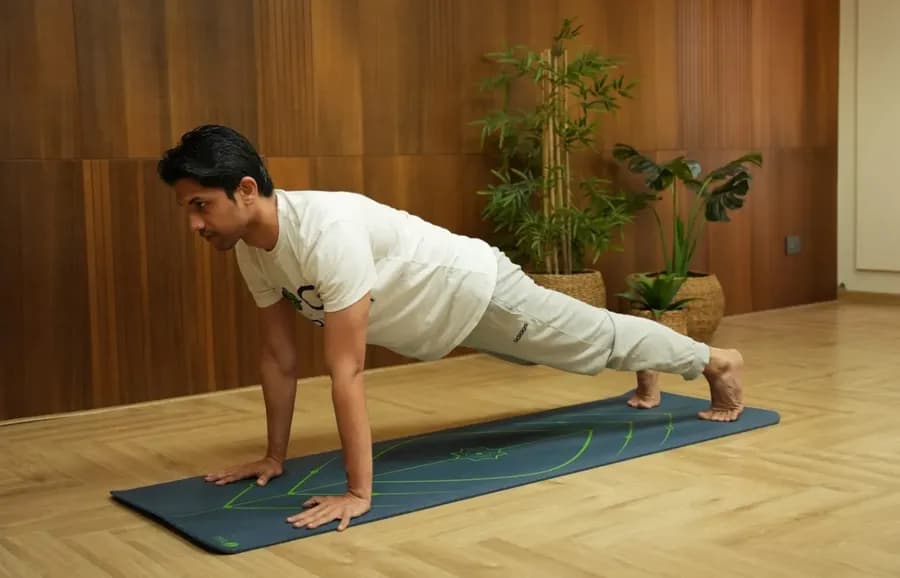
- Dandasana (Staff Pose, 5 breaths) — Establishes the upright spinal posture and active sitting bones required for the twist.
- Marichyasana A (Seated Forward Fold with Bind, 5 breaths) — Opens the hamstrings and activates the spinal extensors before rotation.
- Cat-Cow Flow (10 rounds) — Warms the thoracic and lumbar spine through flexion-extension before asking for rotation.
- Supine Spinal Twist (Supta Matsyendrasana, 5 breaths each side) — Introduces the rotational pattern in the more accessible supine position before moving to the seated version.
Variations of Ardha Matsyendrasana
- Variation 1: Ardha Matsyendrasana with Extended Leg — Beginner
Keep the bottom leg extended rather than bent — reducing the hip demand while retaining the full spinal rotation of the pose. A folded blanket under the sitting bones helps maintain upright spinal posture for those with tight hamstrings or hips. This is the recommended entry point for all beginners to the ardha matsyendrasana pose. - Variation 2: Ardha Matsyendrasana with Bind — Intermediate
From the full pose, wrap the left arm around the right knee and reach the right hand behind the back to bind the fingers. The bind deepens the shoulder and thoracic rotation significantly and requires open shoulders and hip flexibility in addition to the spinal rotation. A yoga strap between the hands is used when the full bind is not yet accessible. - Variation 3: Parivrtta Ardha Matsyendrasana — Advanced
The full rotational variation where the arm extends beyond the knee in a deep wrap — the chest fully opening perpendicular to the front leg. This advanced variation requires significant thoracic mobility, open shoulders, and deep hip external rotation. It is the bridge between Ardha and the full Matsyendrasana.
Common Mistakes to Avoid in Ardha Matsyendrasana
- Twisting before lengthening the spine — The spine must be elongated on an inhale before each rotation. Twisting a compressed spine strains the discs and facet joints rather than mobilising them.
Sitting bones lifting off the floor — Both sitting bones must remain grounded throughout. If one lifts, place a folded blanket beneath the raised side to restore the bilateral grounding. - Initiating the twist from the shoulders — The rotation travels from the lumbar spine upward through the thoracic region to the cervical spine. Leading with the shoulders bypasses the mid-back rotation that the pose targets.
Forcing depth by pulling on the knee — The elbow-knee contact is a gentle lever — not a pulling mechanism. Excessive force on the knee joint risks medial knee strain. - Holding the breath — The detoxifying and mobilising benefits of ardha matsyendrasana yoga depend on continuous breath cycling. Breath-holding stops the rotational deepening and reduces the digestive stimulation the pose provides.
Who Should Practise Ardha Matsyendrasana?
- Those with Back Pain and Spinal Stiffness
Ardha Matsyendrasana is the yoga tradition’s most direct intervention for the rotational spinal stiffness that causes or worsens back pain. By restoring the rotation that sitting and forward-facing activity progressively eliminates, the half spinal twist relieves the muscular imbalances that drive lower back pain and promotes the spinal health that prevents recurrence. - Those with Digestive Conditions
The abdominal massage effect of the deep spinal twist makes Ardha Matsyendrasana one of the most effective yoga poses for gas, acidity, and bloating. The compression and release of the digestive organs directly stimulates peristalsis and digestive enzyme secretion — producing immediate relief for abdominal discomfort. - Is Ardha Matsyendrasana Good for Beginners?
Ardha Matsyendrasana is accessible to intermediate beginners — those who have established a basic seated yoga practice and can sit upright with both sitting bones grounded. The extended-leg variation makes it approachable from the very first attempt. Complete beginners should spend 2–3 weeks with supine twists before attempting the seated version.
Watch the video
Make Ardha Matsyendrasana a Part of Your Practice
Ardha Matsyendrasana is among yoga’s most therapeutically complete poses — restoring spinal rotation, stimulating the digestive organs, activating the nervous system, and releasing the held tension of modern postural habits in a single, accessible seated position.
Whether you are a desk worker reclaiming the rotational spinal freedom that sitting progressively eliminates, someone managing digestive discomfort, or a practitioner building toward the full half spinal twist and its advanced variations, Ardha Matsyendrasana delivers compounding benefits with every daily practice.
The most effective way to learn the correct alignment — spinal lengthening before rotation, sitting bone grounding, breath integration — is under live guidance with real-time corrections. Habuild’s daily sessions are built precisely for this.
Start your 14 day free yoga journey with Habuild, today!
Frequently Asked Questions
Related Articles

Iron rich foods need protein: 1/4th plate habit
Learn why iron-rich vegetarian foods work better when paired with protein and simple Indian meal habits.

How to Reduce Hand Fat with Yoga: Best Exercises, Steps & Tips
Learn ardha matsyendrasana with Habuild. Discover ardha matsyendrasana benefits for spinal health, improved digestion, and flexibility. Start your practice now!

Practical guides on daily habits: 5 routines that actually stick
Small, repeatable daily habits beat strict routines. Here are five practical habit-building ideas that fit real, busy days.


Vajrasana (Thunderbolt Pose): Steps, Benefits and Alignment Tips
Master Vajrasana (Thunderbolt Pose) with Habuild. Practise Vajrasana to improve digestion, strengthen your posture, calm the mind, and enhance meditation. Start your wellness journey today.
Marjaryasana–Bitilasana — The Cat–Cow Pose
Marjaryasana–Bitilasana, commonly known as Cat–Cow Pose, is a gentle, dynamic flow between two postures that warms up the body and brings flexibility to the entire spine.