
Cow Pose (Bitilasana): How to Do It, Steps & Key Benefits
On an inhale, the belly drops toward the floor, the tailbone and heart lift, and the head rises naturally — always paired with Cat Pose to warm the spine. See how to do it, the steps, and key benefits.
Key Takeaways
- Bitilasana comes from Sanskrit ‘Bitila,’ meaning cow, paired always with cat pose as Cat-Cow.
- The inhale phase decompresses lumbar vertebrae while opening the entire anterior chest.
- Cat-Cow rounds continue for 10-20 repetitions, moving slower with each cycle.
- Engages the erector spinae, multifidus, and glutes to build posterior chain strength.
- Teaches breath-movement synchronisation – every inhale opens, every exhale releases.
- Warns not to force the neck backward – let the head follow the spine’s natural movement.
Cow pose — Bitilasana in Sanskrit — is the foundational spinal extension pose of yoga, always paired with Marjaryasana (cat pose) to create the Cat-Cow vinyasa that warms the spine, relieves back tension, and coordinates breath with movement.
What is Cow Pose (Bitilasana)?
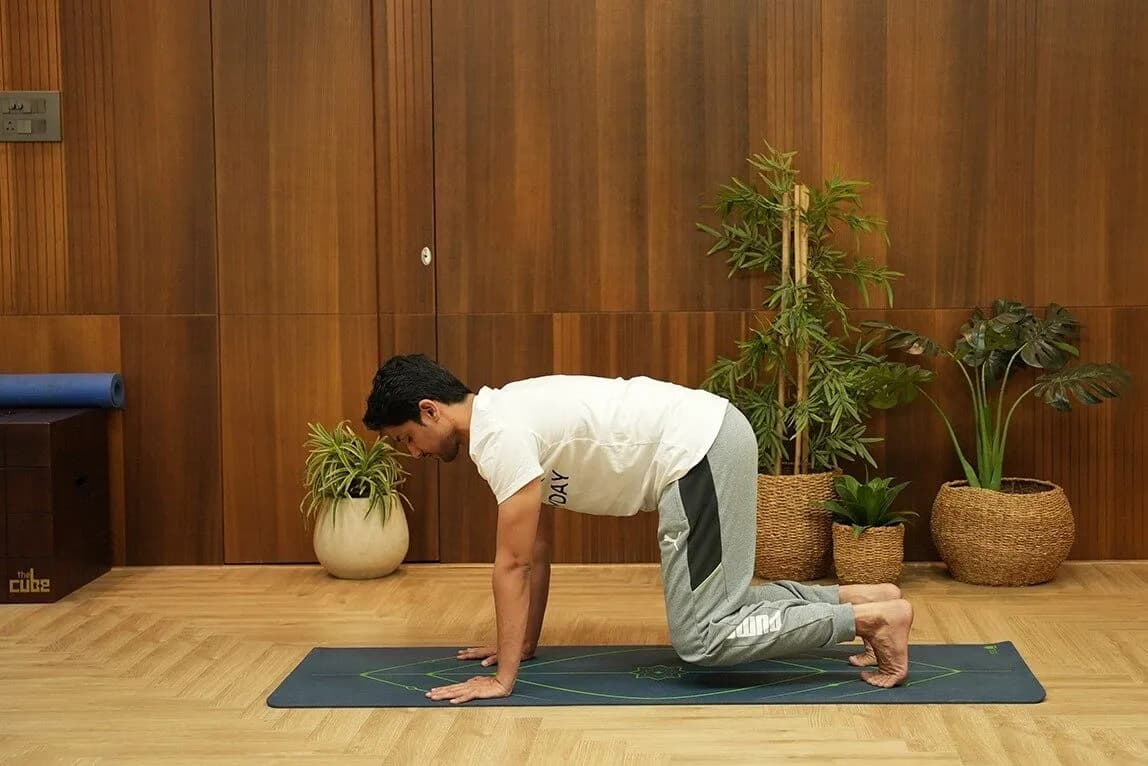
Bitilasana comes from ‘Bitila’ (cow) and ‘asana’ (pose) in Sanskrit. It is performed on all fours (table-top position) — on an inhale, dropping the belly toward the floor, lifting the tailbone and heart upward, and letting the head rise naturally. This creates a gentle backbend through the entire spine that decompresses the lumbar vertebrae and opens the anterior chest.
Cow pose is almost always practised as part of the Cat-Cow vinyasa — alternating between the spinal extension of Bitilasana (cow) and the spinal flexion of Marjaryasana (cat). This rhythmic spinal mobilisation warms the spine, lubricates the facet joints, and provides one of the most therapeutic movement practices available for chronic back pain and spinal stiffness.
At Habuild, Cow pose is a fundamental warm-up asana in every daily session. It forms the foundation of our yoga for lower back pain and spinal health curriculum.
Cow Pose Benefits
Physical Benefits
Decompresses and Mobilises the Entire Spine
The lumbar extension of Bitilasana decompresses the posterior facet joints that become compressed by prolonged sitting. The cervical extension releases the chronic forward-head tension of screen work. The thoracic opening counters the habitual rounded posture of daily life. All three spinal regions benefit simultaneously.
Strengthens the Erector Spinae and Core
Maintaining the active backbend of cow pose engages the erector spinae, multifidus, and gluteal muscles — building the posterior chain strength that supports healthy spinal posture throughout the day.
Mental Benefits
Breath-Spine Coordination
The inhalation-with-cow-pose coordination of Cat-Cow teaches the fundamental yoga principle of breath-movement synchronisation — every inhale opening the chest, every exhale rounding and releasing. This basic principle deepens all yoga and pranayama practice.
How to Do Cow Pose (Bitilasana) — Step by Step
Starting Position
Come to all fours with wrists directly below shoulders and knees below hips. Spread the fingers wide, press firmly through the palms. The spine is neutral — parallel to the floor.
The Cow – Pose Movement
Inhale fully. On the inhale: drop the belly toward the floor (spinal extension), lift the tailbone toward the ceiling, and allow the head to rise naturally so the gaze goes forward and slightly up. Feel the entire spine extending from tailbone to crown. Hold for the full inhale.
Cat-Cow Vinyasa
Exhale into Marjaryasana — rounding the spine upward, tucking the tailbone, dropping the head. Inhale back into cow pose. Continue 10–20 rounds, making each movement slower and more complete with every cycle.
Common Refinements
Do not force the neck backward — let the head follow the natural curve of the extending spine. Press firmly through the palms to protect the wrists. Keep the knees hip-width apart. In cow pose, the movement should be felt through the entire spine, not just the lower back.
Common Mistakes to Avoid
Collapsing into the lower back — Cow pose is an active backbend — the movement should be distributed evenly through the spine. Collapsing exclusively into the lumbar area compresses the lower back rather than decompressing it.
Wrist pain from flat palms — If wrists hurt, make fists, use yoga wedges, or come onto the forearms. Wrist pain during cow pose indicates wrist flexor tightness that requires gradual conditioning.
Moving only the neck — Many beginners only lift the head without moving the thoracic spine into extension. Focus on moving every segment of the spine — the thoracic extension is most important for desk workers.
Rushing the movement — The therapeutic benefit of Cat-Cow comes from slow, deliberate breath-coordinated movement. Rushing through the motion produces minimal benefit.
Who Should Practise Cow Pose?
Start your 14 day free yoga journey with Habuild, today!
Cow Pose does most of its work in the repetition — each round of the Cat-Cow flow nudges the spine a little further into extension and flexion, and that gradual opening is what loosens a stiff back over weeks, not a single stretch. Folding this pairing into a daily sequence, rather than reaching for it only when your back already aches, is what turns it into real spinal mobility. It’s one of the foundational movements included in Habuild’s Yoga Everyday program, sequenced alongside complementary poses for a well-rounded morning routine.
Frequently Asked Questions
Related Articles
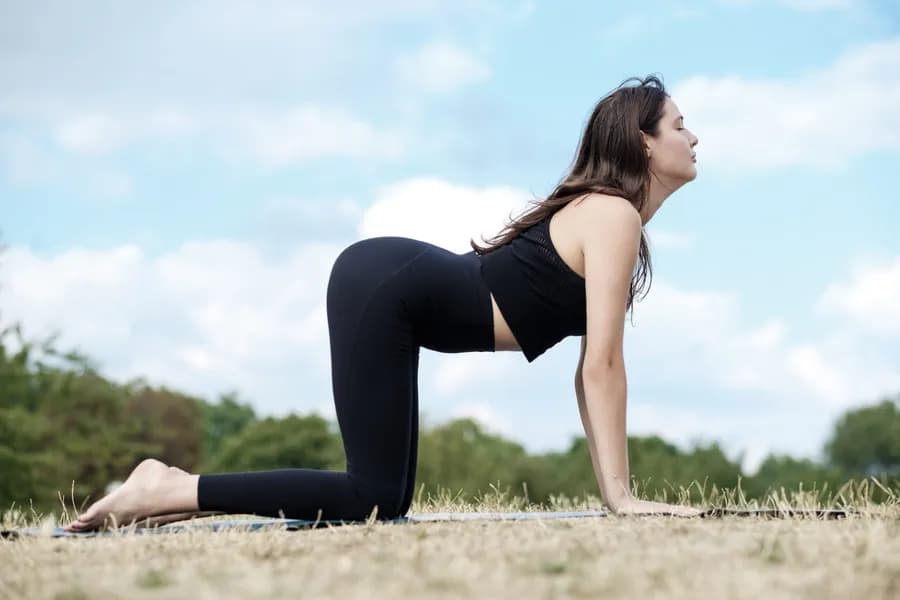
Bitilasana (Cow Pose): Steps, Benefits and Precautions
The gentle spinal arch, lifted tailbone, and broad chest expansion resemble the rounded back of a grazing cow — almost always paired with Cat Pose. See the steps, benefits, and precautions.

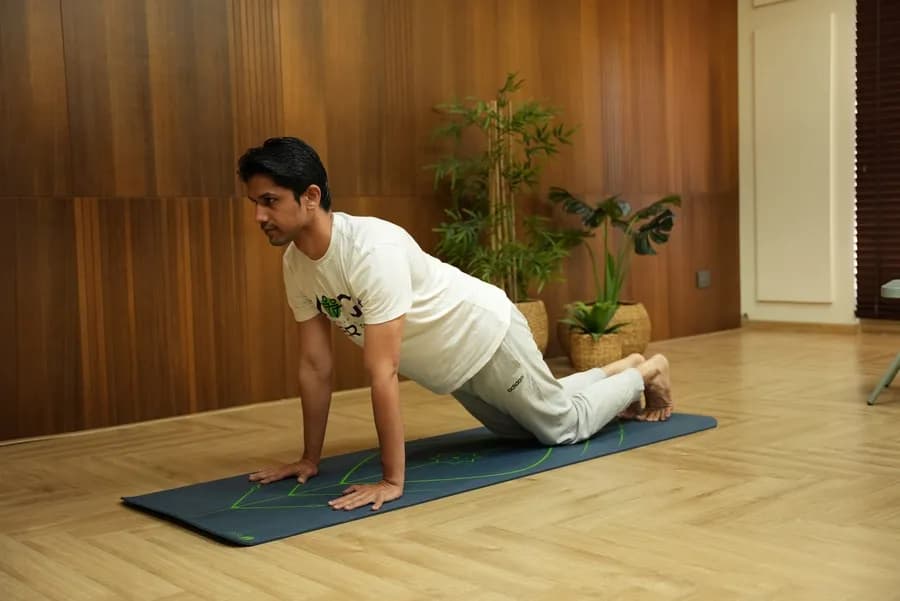
Marjariasana (Cat Cow Pose): Steps and Spine Flexibility Benefits
Practice Marjariasana with Habuild. Follow the cat-cow pose steps to improve spinal flexibility, relieve back pain, and boost digestion daily. Start today!
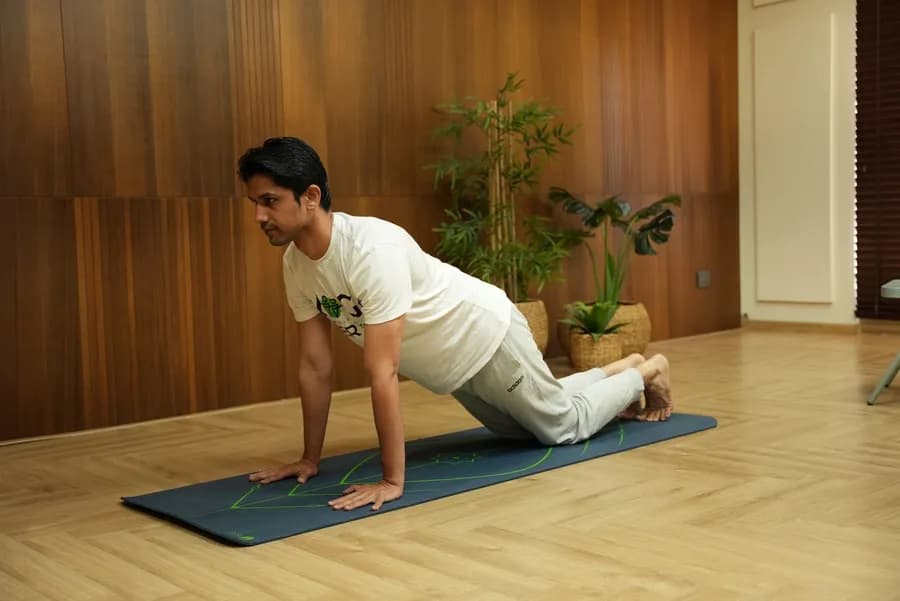
Marjariasana (Cat Pose): Steps, Benefits & Precautions
This mimics the natural stretch a cat makes upon waking, an arched, rounded spine that pairs with Cow Pose to form one of yoga’s most foundational warm-up sequences. See the steps, benefits, and precautions.