Basil seeds: benefits, uses and safety
Basil seeds, or sabja, add fibre and texture to food. Learn their benefits, how to soak them, safe serving ideas and what research really shows.

Key Takeaways
- Soak basil seeds before eating them.
- They add fibre, some protein and plant fats.
- Start small because extra fibre may cause gas or bloating.
- Health claims are stronger than the current human evidence.
Basil seeds, also called sabja, can add fibre and texture to drinks and meals. Learn how to soak them, use them safely and understand the evidence.
What are basil seeds?
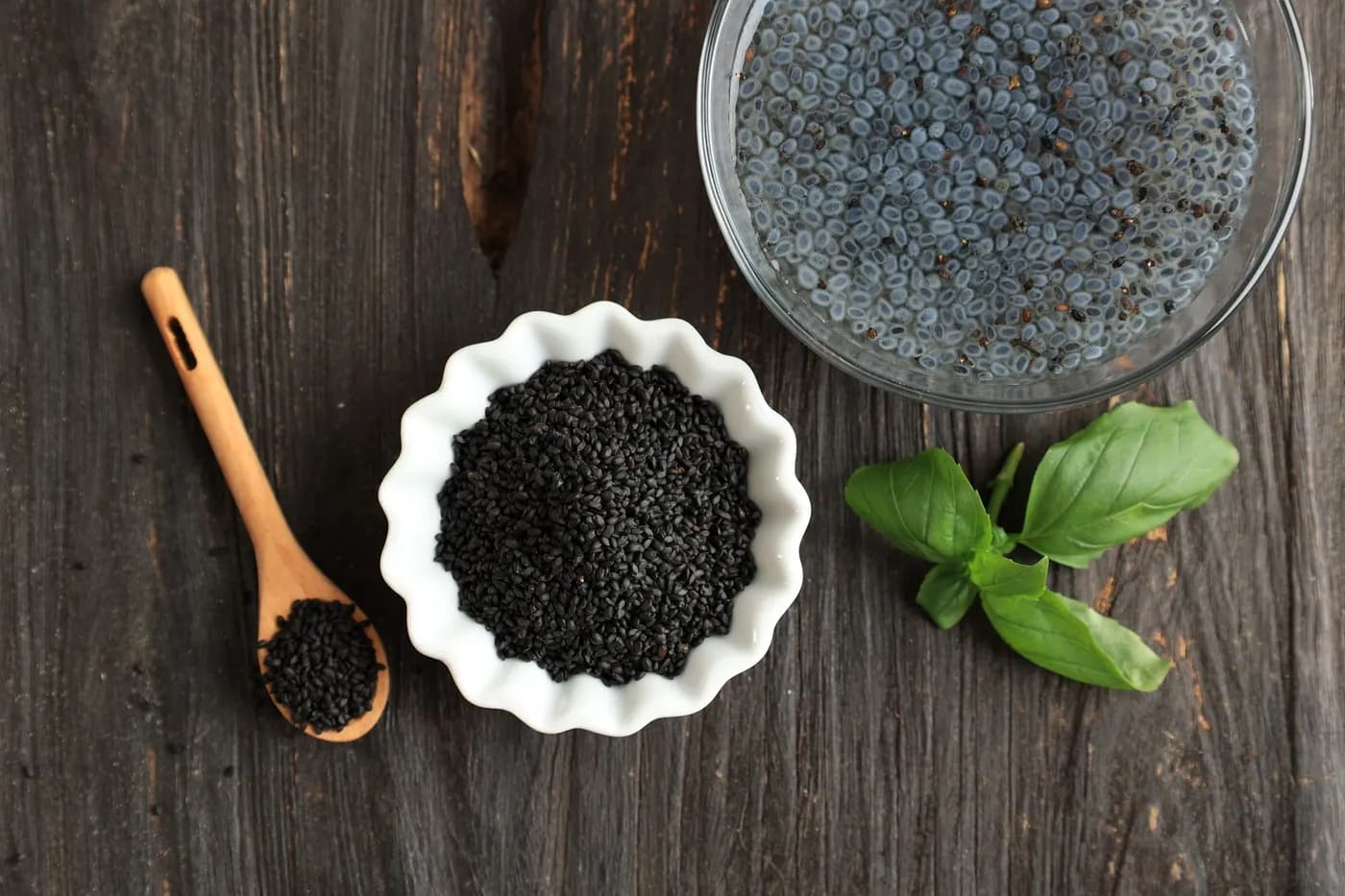
Basil seeds are the small black seeds of sweet basil, or Ocimum basilicum. In India, they are often called sabja or falooda seeds. They are not the same as tulsi seeds, even though both plants belong to the basil family.
Dry basil seeds look a little like chia seeds. When soaked, they quickly form a pale gel around a dark centre. This coating is called mucilage. It holds water and gives the seeds their soft, slippery texture.
Food studies show that basil seeds contain fibre, protein, plant fats and minerals. The exact amounts vary by seed type, growing conditions and testing method. (1)
Possible benefits of basil seeds
They can help you add fibre
Basil seeds contain both soluble and insoluble fibre. Fibre supports normal digestion and helps add bulk to stools. The gel may also make a drink or bowl feel more filling.
This does not mean basil seeds treat constipation or cause weight loss. They are one fibre-rich food, not a medicine. If your diet is low in fibre, increase it slowly and drink enough fluid. A sudden jump can cause gas, cramps or bloating. (2)
They provide useful nutrients
Basil-seed composition studies report protein, alpha-linolenic acid and minerals such as calcium, magnesium and potassium. However, a spoonful is a small serving, so it should complement—not replace—dal, beans, vegetables, fruit, nuts and other nourishing foods. (1)
They contain plant compounds
Researchers have found phenolic compounds in basil seeds. These compounds can show antioxidant activity in laboratory tests. Lab activity does not prove that eating basil seeds prevents disease in people.
Claims about diabetes, cholesterol, inflammation and cancer mostly come from laboratory, animal or early research. Reviews describe promising properties but also show that good human trials are limited. (1)
Basil seeds versus chia seeds
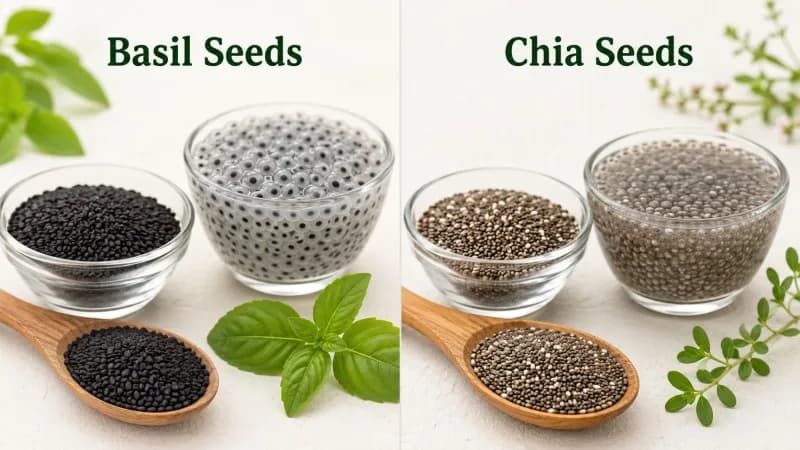
Basil and chia seeds come from different plants. Both absorb water and add fibre, but they behave differently in food.
- Basil seeds swell quickly and form a gel mainly around the outside.
- Chia seeds usually need more time and make a thicker, more even gel.
- Basil seeds stay black in the centre; chia seeds may be black, grey, brown or white.
- Their nutrient amounts vary, so one is not automatically better.
Choose based on taste, price, availability and the recipe. Do not assume the same tablespoon gives identical nutrition.
How to soak basil seeds
Use food-grade seeds sold for eating, not seeds sold for gardening. Gardening seeds may be treated for planting.
- Put 1 teaspoon of basil seeds in a cup or bowl.
- Add at least ½ cup of clean drinking water.
- Stir well so the seeds do not clump.
- Leave them for about 10 to 15 minutes.
- Check that a gel has formed around every seed.
- Drain extra water if the recipe does not need it.
Start with a small amount. Product directions differ, so follow the label when it gives a soaking ratio.
For related reading, see Chia Seeds for Constipation and Diet and Nutrition.
Easy ways to use soaked basil seeds
- Stir them into nimbu pani with little or no added sugar.
- Add them to plain chaas or unsweetened lassi.
- Mix them into curd with fruit.
- Spoon them over oats or a fruit bowl.
- Add a small amount to falooda as an occasional dessert.
The healthy part of the habit is the whole recipe. Adding sabja does not cancel the sugar in a sweet drink or dessert.
Can basil seeds help with weight loss?
Their fibre and gel may help some people feel full, but basil seeds do not burn fat. Body weight changes through the overall pattern of food, movement, sleep, stress, medicines and health.
Try using soaked seeds in a balanced snack instead of adding them on top of an already large meal. Notice whether they help your hunger and whether your stomach feels comfortable.
For a practical food routine, read Habuild’s Diet and Nutrition guide.
Safety and side effects
Basil seeds are fibre-rich and swell in water. Soaking them before use makes their texture easier to manage. Avoid swallowing a spoonful of dry seeds and then drinking water.
Start with 1 teaspoon if you are not used to high-fibre foods. Too much too quickly may cause gas, bloating, loose stools or discomfort. The NIDDK advises adding fibre gradually and drinking enough liquids. (2)
Young children, older adults and anyone with swallowing difficulty should only have foods in a texture a clinician considers safe. Seek urgent help for choking, trouble breathing, facial swelling or fainting.
Ask a doctor or dietitian before regular use if you have bowel narrowing, a recent digestive operation, severe digestive symptoms, fluid restrictions, pregnancy concerns or medicines that need careful timing.
Basil seeds are not a substitute for diabetes, cholesterol or blood-pressure treatment. Keep taking prescribed medicine unless your clinician changes it.
A simple seven-day habit
For one week, soak 1 teaspoon properly and add it to one familiar food three times. Keep the rest of the meal unchanged. Notice taste, fullness and digestion.
If it suits you, keep it as one option among many seeds. If it causes discomfort or feels inconvenient, choose another fibre source such as fruit, vegetables, oats, dal or chia.
Frequently Asked Questions
Related Articles
Baking Soda Uses: Health Claims and Safety
Understand safe baking soda uses, why home-remedy doses can be dangerous, sodium concerns and when to contact Poison Control.


Bharangi: Benefits, Uses & Ayurvedic Properties
Bharangi (Clerodendrum serratum) is a classical Ayurvedic herb for asthma, sinusitis, and chronic cough. Explore its properties, dosage, and evidence-based respiratory benefits.