
Black Pepper Benefits, Uses and Safety
What black pepper (kali mirch) really adds to food, how piperine affects turmeric, myths about metabolism and when to be careful.
Key Takeaways
- Black pepper adds aroma and heat, which can help make lower-salt dishes tasty.
- Seasoning amounts differ from concentrated piperine supplements.
- Piperine can raise curcumin absorption, but that does not prove a health benefit.
- Large amounts may cause reflux; piperine supplements can alter medicine levels.
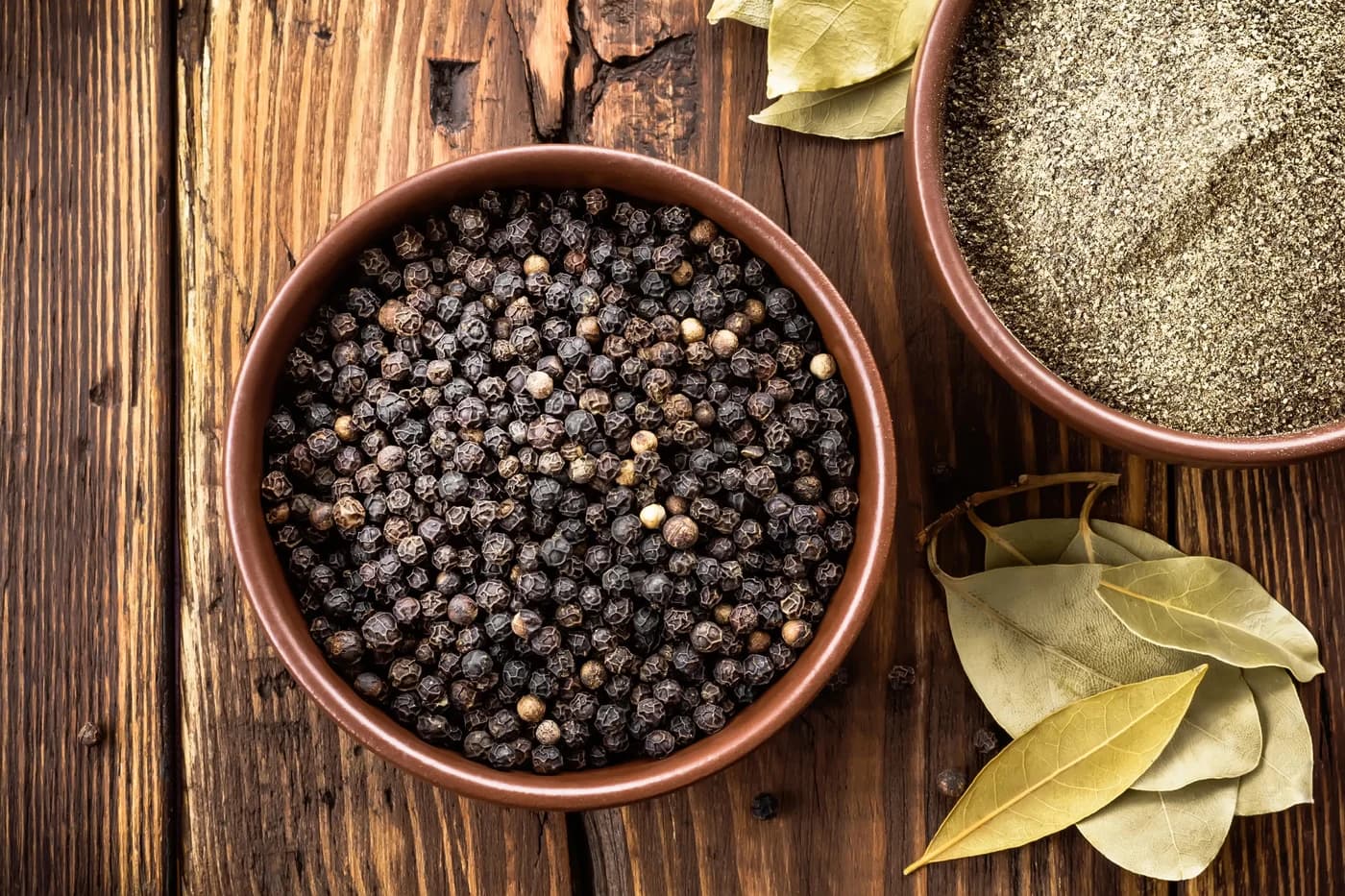
Black pepper (kali mirch) is a spice containing piperine and other aromatic compounds. Culinary amounts add aroma and heat but supply only small quantities of nutrients. This guide explains what black pepper realistically offers, how to get the best flavour from it and why a piperine supplement is a different matter from a pinch of pepper.
What black pepper adds to food
Black pepper provides strong aroma and gentle heat in a very small serving. Its benefits are mainly practical: it can lift vegetables, dal, eggs, soups and salads without adding sugar, and flavourful spice mixtures can sometimes make gradual salt reduction easier. Nutrient tables based on 100 grams do not reflect the amount used at one meal, so pepper should not be promoted as a major source of iron, fibre or antioxidants. Those nutrients come from foods eaten in meaningful portions.
Piperine claims need careful interpretation
Piperine can affect enzymes and transporters involved in how the body handles some compounds and medicines. Supplement marketers often describe this as "improved absorption", but increasing exposure to a medicine is not automatically beneficial; it can also increase side effects. Findings from concentrated piperine cannot be transferred to a normal twist of pepper.
Claims that pepper "activates" every nutrient are too broad. Absorption depends on the nutrient, the food, the dose and the person, and more exposure to a compound does not always translate into a useful health outcome.
Does pepper make turmeric work better?
Combining curcumin with piperine is one way to increase how much curcumin the body absorbs, which is why many turmeric supplements contain black pepper extract. This does not prove that the combination treats a health condition or is safe with every medicine. A curry containing both spices is not equivalent to a concentrated capsule.
Pepper, metabolism and digestion myths
Black pepper stimulates taste and can make the mouth feel warm, but it has not been shown to permanently speed metabolism or target body fat in culinary amounts. Some people enjoy the digestive sensations it brings, while others get burning or reflux. Listen to your tolerance rather than treating discomfort as proof that the spice is working, and ignore promises of detox or fat burning.
Using pepper for freshness and flavour
- Grind pepper close to serving for a brighter aroma.
- Add it at the end of cooking when you want a sharper taste.
- Combine it with cumin, coriander, ginger or lemon to build flavour with less salt.
- Check packaged spice mixes, because they may already contain added salt.
There is no required daily amount of black pepper. Use enough to suit the dish and the people eating it; someone with reflux or mouth ulcers may prefer less. Black pepper benefits do not require "shots", large spoonfuls or a turmeric-piperine capsule.
Serving children and sensitive eaters
When cooking for a group, add pepper gradually and let people season their own plate where practical. Fine powder can trigger coughing when inhaled, so keep the grinder away from a child's face. For older adults with swallowing problems, avoid dry powder that could be inhaled. Good seasoning should make food more enjoyable, not turn a meal into a test of endurance.
Storage and kitchen quality
Keep pepper dry and airtight, away from heat and direct light. Whole peppercorns generally hold their aroma longer than pre-ground spice. Discard any product with mould, insects, moisture damage or an unusual stale smell, and buy quantities the household can finish while the flavour is still good.
Possible drawbacks and warning signs
Large amounts may cause burning, reflux, coughing or stomach discomfort, and spicy foods are a common heartburn trigger. Inhaling powder can irritate the airways. Concentrated piperine supplements may alter medicine levels and need professional review, particularly alongside medicines with a narrow safety margin. If you take several medicines, bring the supplement label to a pharmacist instead of assuming the amount is food-like. Stop and seek advice for allergy or significant symptoms.
The bottom line
Black pepper is a flavour tool, not a therapeutic dose. Choose fresh-smelling pepper, store it well and stop at a comfortable level of heat. Treat concentrated piperine as a supplement and disclose it alongside any medicines.
Editorial sources
Frequently Asked Questions
Related Articles
Haldi Milk Benefits: Turmeric Milk Recipe & How to Make It
Haldi doodh, or turmeric milk, solves turmeric’s biggest problem — poor absorption — since milk’s fat helps curcumin absorb better. See the benefits and.

Coriander Seeds: Nutrition, Uses and Evidence Behind the Claims
Coriander (dhania) seeds explained: flavour and nutrition per teaspoon, evidence on digestion and blood sugar, storage and safety of extracts.


Acidity Home Remedies (Heartburn & GERD Relief Guide)
Acidity is a burning sensation in the chest or throat after eating, caused by stomach acid moving up the food pipe. See home remedies for instant relief.