
Digestive Enzymes: When They Help and What Food Can Do
Your body normally produces digestive enzymes. Learn when a specific treatment helps and why fruit or a general supplement is not a universal answer.
Key Takeaways
- Your body already makes digestive enzymes.
- Enzyme deficiency is a specific diagnosis.
- Lactase helps only with lactose intolerance.
- Bloating has more than one explanation.
Digestive enzymes break food into smaller components that the body can absorb. Your digestive system normally makes them, so healthy digestion does not depend on finding an enzyme-rich fruit at every meal. Some people do need a specific enzyme treatment, while broad supplements sold for bloating have much less certain value. Understanding those different situations helps you choose a useful response rather than treating every uncomfortable meal as an enzyme shortage.
Your body already does much of the work
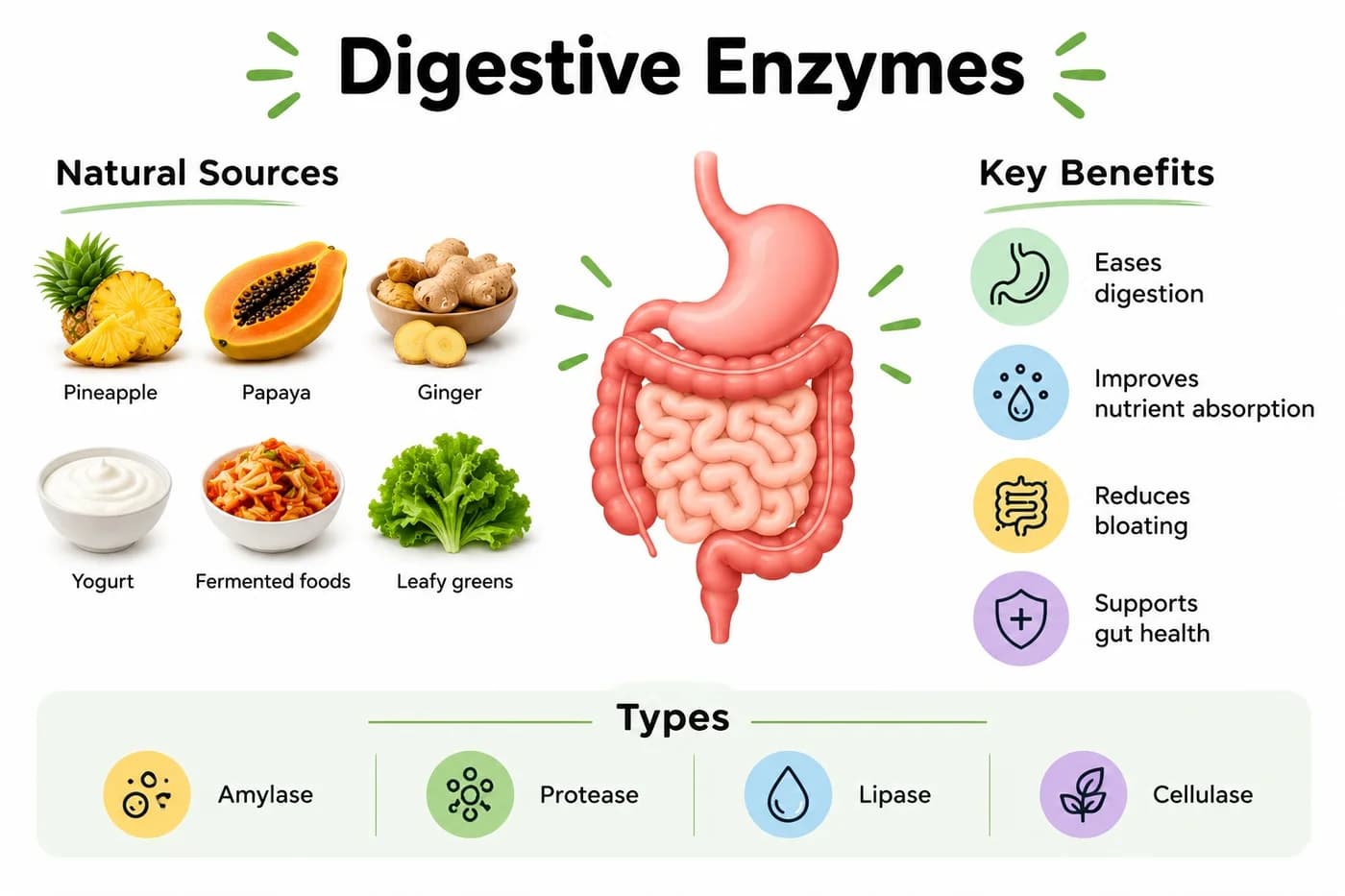
Enzymes are proteins that help chemical reactions happen. Digestive enzymes come from several places, including the mouth, pancreas and small intestine.
Different enzymes act on different components. Amylase helps break down starch, proteases act on proteins and lipase acts on fat. Lactase helps digest lactose, the sugar in milk.
The names describe jobs rather than ingredients everyone needs in a capsule. A meal can be digested normally without containing a special enzyme food, because the body supplies the machinery. You do not need to judge every cooked dish by whether its original enzymes remain active.
Enzyme deficiency is a particular diagnosis
In exocrine pancreatic insufficiency, or EPI, there are problems with pancreatic digestive enzymes reaching or working in the gut. Food may not be digested and absorbed properly.
Symptoms can include ongoing digestive trouble, greasy or difficult-to-flush stools and unintentional weight loss. These symptoms can have other causes too, so they do not diagnose EPI by themselves.
When EPI is established, pancreatic enzyme replacement therapy can be an important treatment. It has a specific role in digestion and nutrition, rather than simply making a large meal feel lighter. The right treatment can matter for maintaining weight and absorbing nutrients.
Prescribed pancreatic enzymes go with food
Pancreatic enzyme replacement is used during meals or snacks according to the prescribed plan. The amount depends on the person and food, so a generic online capsule count is not reliable.
Follow the directions for swallowing and timing. Do not crush or chew a preparation that is designed to be swallowed whole unless the treating team gives an appropriate alternative method.
If symptoms continue, review the treatment rather than deciding it has failed or increasing it indefinitely yourself. Timing, dose, the underlying condition and other factors may need attention. A retail digestive blend is not automatically equivalent to the prescribed preparation.
Lactase is a different example
Some people make less lactase and have symptoms after an amount of lactose their gut cannot manage. Lactase products can help some of them digest milk or other lactose-containing foods.
This is a targeted use, not proof that every person should take a multi-enzyme tablet. Lactose-free milk, smaller portions or certain dairy foods may also fit, depending on tolerance.
Milk allergy is separate. Lactase does not remove milk proteins or make dairy safe for a person with a milk allergy. Matching the enzyme to the problem is what makes the approach useful.
What about papaya, pineapple and fermented foods?
Papaya and pineapple contain enzymes such as papain and bromelain. These are interesting food components, but eating a serving has not been established as a way to replace deficient pancreatic enzymes or treat every digestive symptom.
Fermented foods are also discussed in this context, but enzymes, live microbes and fibre are different subjects. A food's popularity as a gut food does not show which problem it can treat.
Enjoy fruit and fermented foods when they suit you. You do not need to eat raw pineapple after every meal, and discomfort from a sharp or acidic fruit is not evidence that digestion is improving. These foods can remain part of a varied diet without becoming a treatment ritual.
Does cooking make food harder to digest?
Cooking can change or deactivate enzymes originally present in food, but it can also make many foods safer and easier to eat. Thoroughly cooked pulses are an obvious example.
Your own digestive enzymes still work on the meal. The loss of a food's original enzyme activity does not make it nutritionally useless or leave your body unable to digest it.
Avoid a rigid raw-food rule for this reason. Choose appropriate preparation for the ingredient and your comfort. A cooked meal with adequate nourishment is more useful than an uncomfortable or unsafe plan built around preserving every plant enzyme.
Bloating has more than one explanation
Large meals, eating quickly, constipation, lactose intolerance, certain gut conditions and other factors can cause bloating. An enzyme blend cannot identify which applies.
Notice one repeatable pattern rather than cutting out several food groups at once. Does discomfort follow a very large dinner, an abrupt increase in pulses or a particular milk portion? A specific observation is easier to use than a conclusion that all food is poorly digested.
Persistent symptoms, unexplained weight loss, blood in stool, severe pain or repeated vomiting need assessment. Those are reasons to look for a cause rather than keep trying stronger supplements. Ordinary occasional fullness does not automatically mean a deficiency.
Keep broad supplements in perspective
Over-the-counter blends vary in enzymes, strength and other ingredients. Evidence for one targeted use does not establish every mixture as useful for general gut health.
Possible adverse effects and allergies depend on the product, and concentrated ingredients can interact with medicines. A food-derived description does not settle those questions.
You do not need a complicated buying exercise if there is no clear reason to start. For most people, regular meals, comfortable portions, adequate fibre and attention to a specific trigger are more useful first steps. A supplement should solve a defined problem, not become a permanent fee for eating.
Editorial sources
Frequently Asked Questions
Related Articles
Gut Health Diet: What to Eat for a Healthier Digestive System
A good gut health diet isn’t about one superfood — it’s consistent daily habits: enough fibre, a variety of plants, some fermented food, and enough.


How to Strengthen Digestive System: 10 Natural Ways That Actually Work
Improving gut motility and building the right movement and breathing habits can gradually ease bloating and improve regularity — without overhauling your.

How to Improve Gut Health: Natural Methods through Yoga, Exercise and Diet
Intestinal motility, microbiome diversity, and the vagal-gut axis are the three correctable factors behind digestion, immune function, mood, and even.
Probiotic Foods: Real Indian Sources and How Much You Need
Probiotic foods contain live, beneficial bacteria that support your gut when eaten regularly — dahi, buttermilk, and fermented pickles are everyday.
