Vitamins for Hair Growth: What Actually Helps and Why
Certain nutrients do support the hair growth cycle, but supplementing only helps if your body is actually short on them. See which vitamins matter, and.
Key Takeaways
- Supplements only help visibly if your body is actually short on that specific nutrient.
- Low iron (ferritin) is one of the strongest, most evidence-backed causes of hair thinning.
- True biotin deficiency is uncommon in people eating a reasonably varied diet.
- Hair is roughly 90% keratin, so inadequate protein shows up in hair quality within weeks.
- Checking ferritin with a doctor is more useful than guessing with a supplement.
Vitamins for hair growth get a lot of attention, but the honest picture is narrower than most bottles claim: certain nutrients genuinely support the hair growth cycle, and supplementing with them only makes a visible difference if your body is actually short on them. Hair is made mostly of protein, and its growth depends on a steady supply of specific vitamins and minerals reaching the follicle — when one of these is missing, hair fall or thinning often follows, but flooding an already well-nourished body with extra supplements rarely speeds things up further.
Vitamins for hair growth at a glance
- Biotin (vitamin B7) — supports keratin production; deficiency is rare but does cause hair thinning when it occurs
- Iron — low iron stores are one of the most common, evidence-backed causes of diffuse hair fall, especially in women
- Zinc — needed for tissue growth and repair, including the hair follicle; both deficiency and excess can affect hair
- Vitamin D — receptors for it exist in hair follicles, and low levels are linked to hair thinning in several studies
- Protein — hair is roughly 90% keratin, a protein, so inadequate protein intake shows up in hair quality within weeks
- Vitamin B12 — supports the red blood cell production that carries oxygen to follicles
Biotin for hair: useful, but often overstated
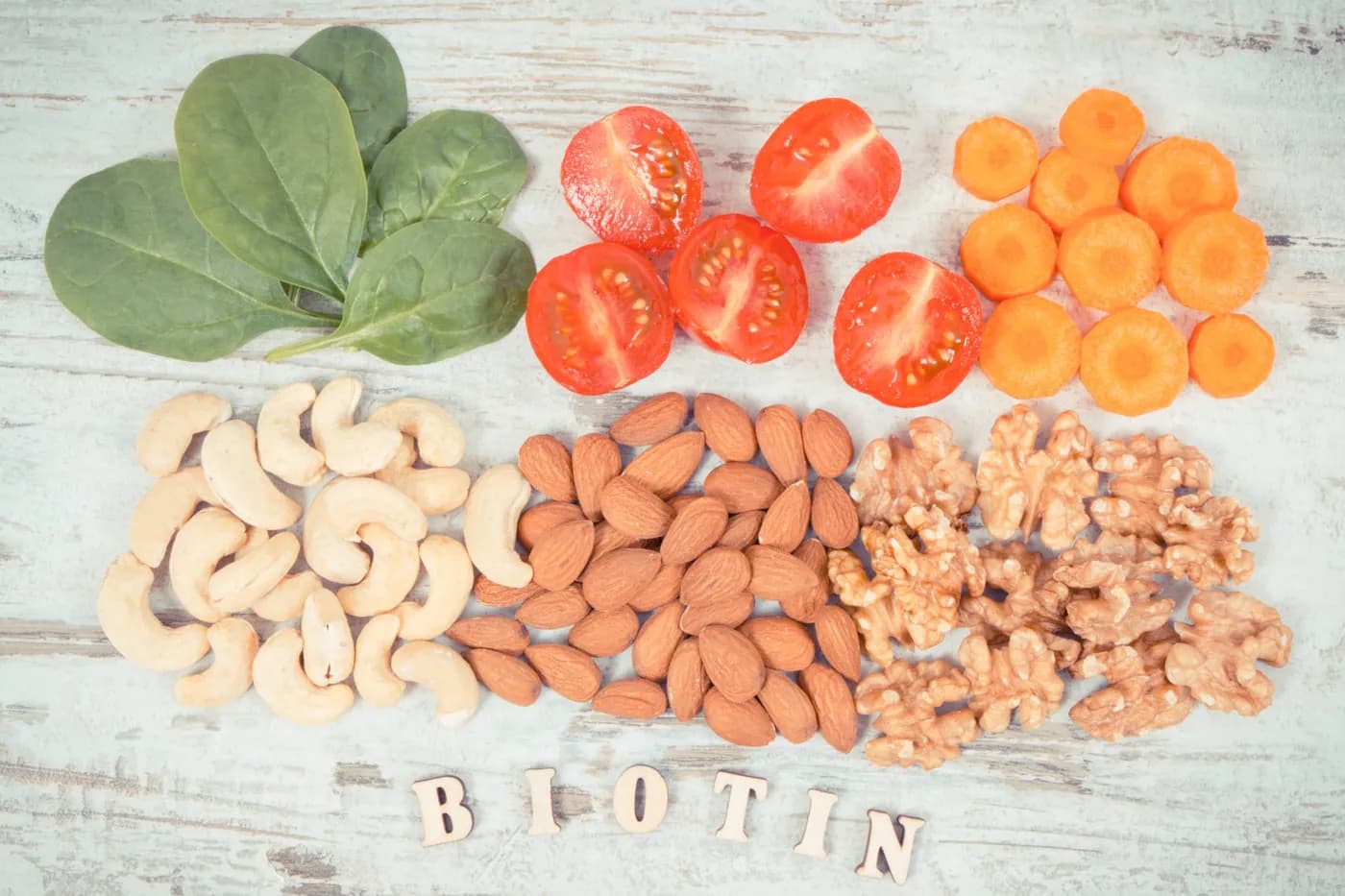
Biotin for hair growth is probably the most heavily marketed of all hair supplements, yet true biotin deficiency is uncommon in people eating a reasonably varied diet — it’s found in nuts, seeds, sweet potatoes, and whole grains. Biotin supplements tend to help most when someone has a confirmed deficiency, is on certain long-term medications, or eats raw egg whites regularly (which block biotin absorption). For everyone else, extra biotin beyond what food already provides is unlikely to add much. Biotin is just one nutrient among several, and when people search for vitamins for hair growth, they’re often surprised to learn it plays a smaller role than iron or vitamin D for most cases of thinning.
Photo: NIAID, CC BY 2.0, via Wikimedia Commons
Iron and hair fall: one of the strongest links
Iron and hair fall are connected more consistently in research than almost any other nutrient on this list. Iron is needed to carry oxygen to the rapidly dividing cells at the hair root, and low ferritin (the body’s iron storage marker) is common in menstruating women, vegetarians, and vegans. If you’re noticing increased shedding along with fatigue or pale skin, checking ferritin levels with a doctor is more useful than guessing with a supplement. Food sources like lentils, spinach, and jaggery, paired with a source of vitamin C to aid absorption, are a sensible first step. Of all the vitamins for hair growth discussed here, correcting low iron tends to produce the most noticeable improvement.
If iron turns out to be your gap, it helps to know which iron rich foods pack the most punch alongside a vitamin C source for better absorption — and since zinc plays its own supporting role in follicle repair, zinc rich foods are worth having on the same list.
Vitamin D hair loss and the zinc-protein connection
Vitamin D hair loss is an area where research is still developing, but several studies have found lower vitamin D levels in people experiencing hair thinning, particularly alopecia areata. Since most people get limited sun exposure and vitamin D from food alone, a blood test is the most reliable way to know if this applies to you before supplementing. Zinc works alongside this — it supports the oil glands around hair follicles and general tissue repair, but very high supplemental doses can actually interfere with copper absorption and worsen hair health, so more is not automatically better. Getting these vitamins for hair growth right is really about balance rather than maximizing any single one of them.
Protein for hair growth deserves equal attention alongside vitamins for hair growth, because severe or crash dieting is one of the fastest ways to see hair thinning within two to three months. Including dal, paneer, curd, soy, or nuts across your meals gives hair the raw material it needs to keep growing in its normal cycle.
When vitamins for hair growth make sense — and when they don’t
Vitamins for hair growth work best as a correction, not a routine add-on. If bloodwork shows a genuine deficiency in iron, vitamin D, or B12, supplementing under medical guidance often improves hair over three to six months, since that’s roughly how long a hair growth cycle takes to show visible change. If your levels are already normal, taking more rarely produces extra growth, and in the case of some minerals like zinc, excess intake can even backfire. Hair fall also has non-nutritional causes — stress, thyroid issues, post-illness shedding, and hormonal changes — so persistent hair loss is worth discussing with a doctor rather than addressing with supplements alone. In other words, vitamins for hair growth are a tool for a specific problem, not a general-purpose fix for every kind of shedding.
Frequently Asked Questions
Related Articles
Meditation for Hair Growth: What the Science Actually Says
Meditation for hair growth doesn't stimulate follicles directly — its role is calming the chronic stress that often makes hair loss worse. See what the science actually says, with Habuild's guided sessions.
Mudra for Hair Growth (Prithvi Mudra): Steps, Benefits and Precautions
Activating the earth element stimulates the Kapha dosha associated with growth, improving scalp circulation and supporting hair thickness over 4-8 weeks.


Hair Growth Kaise Badhaye – Baalon ko Ghana Banane ke Upay
Hair growth kaise badhaye? Exercise, yoga aur sahi dincharya se baalon ki growth badhayein. Habuild ke saath 14-day free trial mein shuru karein.