
Honeycomb: Nutrition, Edible Wax and Safety
How to eat honeycomb and its wax, why it still counts as free sugar, how to buy and store it, and who should avoid it, including babies.

Key Takeaways
- Honeycomb is raw honey in edible beeswax cells; nutritionally it is mostly sugar.
- Honey sugars count as free sugars: WHO advises under 10% of daily energy.
- Never give honeycomb or any honey to babies under 12 months (infant botulism risk).
- Eat a small piece with curd or fruit; chew the wax and discard it if you prefer.
- Honeycomb toffee is cooked sugar, not comb honey, so check the label.
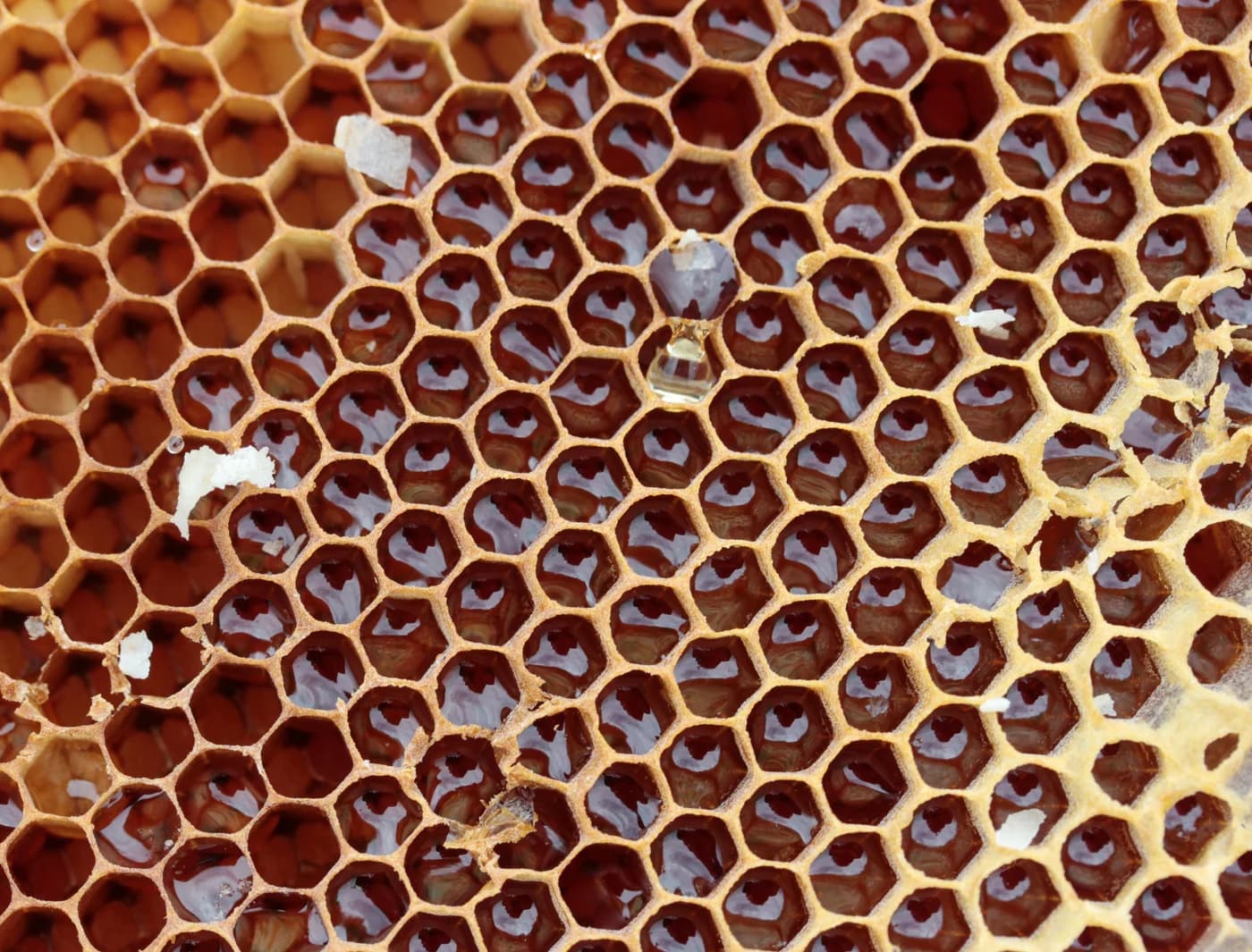
Honeycomb is raw honey still sealed in the hexagonal beeswax cells that bees build. Both the honey and the wax are edible for most adults in small amounts. Nutritionally, though, honeycomb is mostly sugar: it is a concentrated sweet food, and the usual honey safety rules apply, especially for babies under one year and people managing blood sugar. For honey in general, see our guide to honey benefits, uses and safety.
What is inside honeycomb?
The cells hold honey, which is mainly fructose and glucose with water and small amounts of plant compounds and pollen. The structure is beeswax, which the body does not digest. Colour and flavour vary with the flower source and season, but a darker colour does not guarantee any particular health effect. At usual servings, honeycomb is not a meaningful source of protein, vitamins or minerals.
Crunchy "honeycomb toffee" sold as a sweet is a different product. It is usually sugar and syrup cooked and aerated with baking soda, not comb honey.
Is honeycomb healthier than honey?
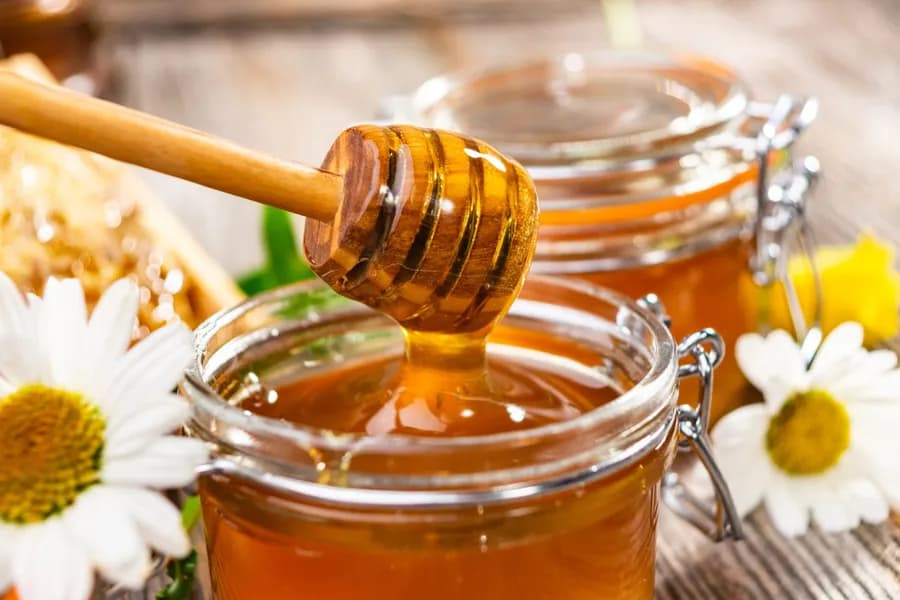
Not substantially. Words such as raw, organic or unprocessed do not change the sugar content. The WHO counts sugars naturally present in honey as free sugars and recommends keeping free sugars below 10% of daily energy, with further benefit below 5%. For an adult eating about 2,000 kcal a day, 10% is roughly 50 g of free sugars from all sources, honey included. The wax also makes portions harder to judge than a measured spoonful of liquid honey.
How to eat honeycomb
- Cut a small piece with a clean knife and put the rest away before eating, rather than nibbling from the block.
- Place it on plain curd, spread a little on toast or serve it beside fruit or paneer, so the rest of the snack supplies protein and fibre.
- Chew the wax gently. You can swallow a small amount or discard what remains once the honey is gone.
- Enjoy it with a meal rather than grazing on sticky sweets over many hours, and keep up regular dental care.
Warmth softens the wax and makes cutting messy, so follow the producer's handling directions.
Honeycomb and blood sugar
For people with diabetes, honeycomb counts as concentrated carbohydrate. The useful question is how much honey is in the piece and how it fits the rest of the meal. If precise carbohydrate counting matters, use the pack's nutrition label and your care team's advice rather than estimating by eye. Swapping honeycomb for sugar in drinks such as honey lemon water does not make them sugar-free.
Buying and storing honeycomb
Choose a producer that provides full food labelling and a traceable source; a picture of a hive is not proof of purity. Check whether a product sold as honeycomb is actual comb honey or a flavoured sweet made with syrup.
Store it as directed in a clean, closed container and use a clean, dry utensil. Honey can crystallise naturally, and this alone does not mean it has spoiled. Leaking packaging, visible contamination or a fermented smell are reasons to discard it.
Who should avoid honeycomb?
Babies under 12 months
Never give honey in any form, including honeycomb, to a baby under one year. Honey can contain bacterial spores that may cause infant botulism, a serious illness. Cooking does not make honey safe for infants, and it should never be added to a baby's food, water, formula or dummy. Children over one still need supervision with sticky, chewy textures.
Other cautions
- People with pollen or bee-product allergy may react. Breathing trouble or swelling needs emergency help.
- Large amounts of wax may upset the stomach, and people with chewing or swallowing difficulties should avoid hard or sticky pieces.
- People with weakened immunity should ask their clinician before eating raw products.
Honeycomb is not an allergy treatment, and kitchen honey should not be put on wounds; medical-grade honey is a separately prepared product. A warm honey and lemon drink may ease a cough a little in adults and children over one, but a cough lasting more than three weeks, or one with breathlessness, chest pain or blood, needs a doctor.
Editorial sources
Frequently Asked Questions
Related Articles
Honey Benefits: Uses and Safety
Honey may soothe some coughs but is still added sugar. Learn honey benefits, safe portions, and what the evidence actually supports.

Honey Lemon Water Benefits: Limits and Safety
Honey and lemon can make warm water pleasant, but the drink is not a detox treatment, fat burner or cure for infection.

Milk with Honey: Is It Helpful or Just Comforting?
Warm milk with honey can be a soothing bedtime ritual. See what it really does for sleep and coughs, and who should skip or adapt it.